Maintaining a Social Life with a Chronic Illness

When you have to frequently cancel plans at the last minute because of a chronic illness, you miss out on having a social life. You miss out on activities, games, new friendships, weddings, graduations, girls’ trips, guys’ nights, travel, craft fairs, home and garden shows, game nights, going out to dinner with friends, and every kind of celebration.

You feel left out because you are left out, even though it isn’t anyone’s fault. Eventually, your friends stop including you, and who can blame them? You become unreliable. It feels like too much trouble to include you. You stop getting asked. You start self-isolating to avoid constant disappointment, both yours and theirs.

When you stop being included and you are alone most of the time, you don’t really have much to talk about except the daily intrusions of your illness. That becomes too heavy to carry when it’s your only source of conversation. Something that is already uncomfortable becomes the center of every interaction. Over time, people, often without realizing it, start to distance themselves.

This is how people with chronic illnesses lose social connection and their sense of belonging. Isolation reduces anyone’s quality of life. When you feel like you’re merely existing instead of living, your mental and physical health suffer. When you don’t feel like you belong, you lose that lifeline that binds people together. The world feels bleak. You start to feel hopeless because you can’t see a way out of the isolation.

It’s often hard for an able-bodied person to understand just how isolating this life can be.  It can be even harder to imagine ways around this isolation.  Here are just a few ways that people with a chronic illness can stay connected and maintain a social life.

If You Are the Friend of a Chronically Ill Person

If you love someone whose health limits them, don’t just keep inviting them to things that are beyond what they can do. Instead, create activities and conversations where they can succeed. Make flexible plans. Keep visits short. Go to them when they can’t get out. Use Zoom or FaceTime when in-person visits aren’t possible. Meet them where they are. And don’t stop asking.

Focus on one-on-one time instead of group plans. Build simple micro-rituals, like a weekly 20-minute phone call or video chat. Replace big outings with couch chats or car-side visits. Those are much easier to manage than a two-hour concert or dinner in a crowded restaurant.

When you talk with your friend, don’t always lead with “How are you?” That centers the conversation on illness. Widen it. Ask about books they’ve read, shows they’ve watched, ideas they’ve had, memories they want to share, or their thoughts on current events. Let them exist as more than their symptoms.

If they have to miss an event they were really looking forward to, you can still include them. Step outside and video chat for a few minutes. Let mutual friends take turns saying hello. A small window into the gathering can mean more than you realize.

You could also watch the same show at the same time and text during it. Play online games together for short, flexible blocks of time. Choose a book you both want to read and message each other as you move through the chapters.

Remind yourself that most chronically ill people cancel because they physically cannot function, not because they don’t care. Holding on to that truth changes everything.

If You Are the Chronically Ill Person Who Is Trying to Stay Connected

If you’re the one who keeps canceling, don’t disappear in shame. Stay connected in small ways. Send a short text. Leave a voice message. Let people know you’re thinking about them.

If your world feels like it’s shrinking and your social life is fading, it’s okay to admit that not every friendship is meant to last forever. People move in and out of our lives. That’s part of being human.

Look for ways to bring new people into your world. Join an online support group. Play online games and connect with others who enjoy them. Start or join a writing group or interest group on Zoom. Building new friendships with chronic illness isn’t easy, but it isn’t impossible.  Friendships may look different now, but you still have chances to build social connections.


Here are some other articles by Jan Mariet that you might enjoy:

When Change Sneaks Up on You – Jan Mariet’s A Day in the Life

Recognizing When You’re Struggling with Chronic Illness – Jan Mariet’s A Day in the Life

How People Disappear – Jan Mariet’s A Day in the Life

Can I or Should I? Living With Disability, Risk, and Hard Choices – Jan Mariet’s A Day in the Life

Living with Invisible Losses: Finding Meaning in Chronic Illness – Jan Mariet’s A Day in the Life

Accessibility Is Not a Privilege

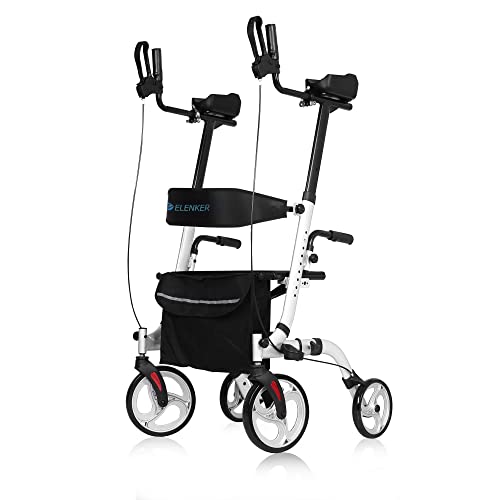
A decorative image of the author using her upright rollator.

As a person with a disability, I often get frustrated when people treat my need for accessibility as if it were a special privilege. I have heard people say, “Oh, you are so lucky you have a handicap parking placard.” I am not lucky that I need one. I would give anything to park at the far end of a lot and walk in without pain, fatigue, or risk. That is simply not an option for me.

Accessibility is not a favor. It is a basic right in our society. We have laws that are supposed to protect that right, yet those laws are not enforced the way they should be. Too many people, both in leadership and in the general community, still do not see accessibility as essential, so they ignore it, assuming nothing will happen if they cut corners. Most of the time, they are right and nothing does happen.

Even with laws in place, people with disabilities have to do extra work before going out. They search online for entrance photos, call ahead to ask about elevators, ramps, and accessible restrooms. and make backup plans in case those features are broken or blocked. Most people never have to think about any of this. For a person with a disability, it is part of daily life.

As a person with a disability, this is my reality because accessibility is often overlooked or an afterthought. Sometimes, the automatic door doesn’t work. The ramp might be hidden behind the building near the trash dumpster. The front door may be open, but the door leading from the ramp may be locked. There might be an accessible restroom, but it could be out of order for weeks or down a hallway made too narrow by chair storage. I’ve learned to expect these problems, but I shouldn’t have to.

So understand, I refuse express gratitude for the bare minimum. I’m not going to gush with thanks because a public space has a ramp or an elevator. They are basic requirements that allow disabled people to participate in everyday life. They are required. Expecting us to be thankful for access to the world around us is so unfair.

Real progress will only happen when businesses and public places stop treating accessibility as a charitable gesture and start treating it as a core responsibility. This will happen when enforcement is taken seriously and accessibility is seen as nonnegotiable.  Equal access is not a special privilege. It is a fundamental right.

I Couldn’t Even Get in the Door – Jan Mariet’s A Day in the Life

Why Disabled People Are Still Shut Out of Leadership – Jan Mariet’s A Day in the Life

Reimagining Accessibility:  Undoing Ableism Among  Disabled and Medical Communities – Jan Mariet’s A Day in the Life

Teaching in Tampa Bay: What It Really Costs to Live and Work in Hillsborough, Pinellas, Pasco, and Manatee Counties (2025–2026)

Every year, teachers from northern states consider relocating to Florida for the weather, perceived lower taxes, or lifestyle. Florida can be a beautiful place to live, but the Tampa Bay region is not inexpensive, and teaching conditions differ significantly from many other states. Anyone considering relocation should understand the full financial and professional realities before making the move.

This information applies specifically to Hillsborough, Pinellas, Pasco, and Manatee counties.


Housing Costs and Rental Requirements

Housing is the single largest expense and the biggest shock for newcomers.

Typical Monthly Rent (2025–2026)

One-bedroom apartments:

  • Manatee and Pasco counties: approximately $1,400 to $1,800 or more
  • Hillsborough and Pinellas counties: approximately $1,700 to $2,200 or more

Two-bedroom apartments:

  • Manatee and Pasco counties: approximately $1,900 to $2,500 or more
  • Hillsborough and Pinellas counties: approximately $2,300 to $3,200 or more

These figures represent modest, basic apartments in safe areas, not luxury properties. Most affordable housing is located inland, not near the Gulf of Mexico.

Move-In Costs

Most landlords require:

  • First month’s rent
  • Last month’s rent
  • Security deposit
  • Application fees for each adult
  • Utility deposits
  • Renter’s insurance

Total move-in costs commonly range from $5,000 to $9,000 or more.

Additional requirements often include:

  • Verifiable income equal to at least three times the monthly rent
  • Credit score typically between 600 and 700 or higher
  • Clean rental history
  • Background checks for all adults
  • Pet fees, often $300–$400 per pet plus monthly pet rent

Many apartment complexes require proof of employment from a local employer or a formal job offer letter.


Income Needed to Qualify for Apartments

Because landlords typically require income equal to three times the rent, many starting teachers do not qualify for market-rate apartments on salary alone.

Examples for one-bedroom units:

  • $1,500 rent requires $4,500 monthly income ($54,000 annually)
  • $1,800 rent requires $5,400 monthly income ($64,800 annually)
  • $2,000 rent requires $6,000 monthly income ($72,000 annually)
  • $2,200 rent requires $6,600 monthly income ($79,200 annually)

Examples for two-bedroom units:

  • $2,300 rent requires $6,900 monthly income ($82,800 annually)
  • $2,600 rent requires $7,800 monthly income ($93,600 annually)
  • $3,000 rent requires $9,000 monthly income ($108,000 annually)

Beach Living Expectations

Many people assume that living in the Tampa Bay area means living near the beach. In reality, affordable housing is usually far inland.

Typical home prices:

  • Inland homes not near water: roughly $350,000 to $600,000 or more
  • Modest homes within a short driving distance of beaches (30 minutes or less): roughly $600,000 to $900,000 or more
  • Modest homes in true beach communities or on barrier islands: commonly $1 million to $5 million or more

A budget of $500,000 rarely buys a home near the beach in this region.

Even residents of the Tampa Bay area often live 45 to 90 minutes from Gulf beaches depending on traffic.

Beach Access Challenges

During winter tourist season, spring break, and summer weekends:

  • Parking lots frequently fill by 7:00 to 8:00 AM
  • Traffic to barrier islands becomes gridlocked
  • Some beaches close access when parking is full
  • Leaving the beach can take several hours

Many locals avoid weekend beach trips for this reason.


Buying a Home: Property Taxes and Homestead Exemption

Florida property taxes differ from those in many other states.

If the property is your primary residence, you may apply for the Homestead Exemption, which provides:

  • A property tax reduction (minimum $25,000 exemption)
  • Limits on annual tax increases through the Save Our Homes provision
  • Strong legal protection against forced sale by most creditors

Requirements include establishing Florida residency and applying by March 1 of the year following purchase.

Properties without homestead status can be taxed at much higher rates.


Home Insurance and Hurricane Risk

Insurance costs are one of the largest ongoing expenses for homeowners in Florida.

Premiums have risen dramatically statewide, especially in coastal regions.

Most policies include a separate hurricane deductible that applies when a storm is officially named. This deductible is typically $5,000 at minimum and may be far higher depending on the home’s value.

Wind damage during named storms is extremely common. Homes may lose:

  • Roof shingles or entire roofing sections
  • Fences
  • Sheds
  • Pool enclosures
  • Screens
  • Trees and landscaping
  • Exterior structures

Flooding is not required for significant damage to occur.

After major storms, insurance claims may take months or even years to resolve due to high demand, contractor shortages, and disputes over coverage.


Utilities and Transportation Costs

Common ongoing expenses include:

  • Very high electric bills during summer due to continuous air conditioning
  • Variable water and sewer costs depending on municipality
  • Auto insurance rates among the highest in the United States
  • Potential flood insurance requirements for homeowners

Public transportation is limited in most areas. Most residents need a personal vehicle, and traffic congestion is severe, especially in Hillsborough and Pinellas counties. Population increases during winter due to seasonal residents further worsen traffic conditions.


Teaching in Tampa Bay Area School Districts

Florida eliminated traditional tenure for most teachers. Employment is generally based on annual contracts renewed each year. Job security depends heavily on evaluations and district funding. As an ‘at will’ employment state, districts do not have to give a reason for non-renewing a teacher.

Advancement positions such as instructional coach or literacy specialist are typically filled internally. New hires often must teach for several years in that specific district before being eligible to join that hiring pool.

Teacher unions have less bargaining power than in many northern states, and raises are often modest. Health insurance premiums typically increase annually.

Some districts provide additional pay only if advanced degrees directly match the teacher’s current assignment. Changing positions can eliminate these supplements.


Starting Teacher Salaries for 2025–2026

The following figures represent approximate base salaries for new teachers with a bachelor’s degree.

Hillsborough County (Tampa)
Starting salary approximately $48,000 per year.

Pinellas County (St. Petersburg and Clearwater)
Starting salary approximately $52,000 to $53,000 per year.

Pasco County
Starting salary approximately $47,000 to $50,000 per year.

Manatee County
Starting salary approximately $55,000 per year including local referendum supplement.


Estimated Monthly Take-Home Pay

Florida teachers contribute 3 percent of salary to the Florida Retirement System and pay federal taxes, Social Security, Medicare, and insurance premiums. Total deductions typically range from about 22 percent to 30 percent of gross salary.

Estimated monthly net pay for a single teacher:

Hillsborough County
Gross monthly about $4,000
Estimated take-home about $2,850 to $3,050

Pinellas County
Gross monthly about $4,350
Estimated take-home about $3,050 to $3,300

Pasco County
Gross monthly about $3,900 to $4,150
Estimated take-home about $2,750 to $3,100

Manatee County
Gross monthly about $4,580
Estimated take-home about $3,200 to $3,450

Actual take-home varies depending on insurance selections and optional benefits.


Family Logistics

School bus service does not reach all neighborhoods, requiring parents to provide transportation. Childcare costs are high, and quality daycare programs often have waiting lists.


Climate and Weather Conditions

Living in Florida is very different from visiting.

Summer temperatures frequently reach the 90s with heat index values between 100 and 110 degrees Fahrenheit, making outdoor activity difficult during midday.

The rainy season typically runs from June through September. Daily afternoon thunderstorms are common, bringing heavy rain, lightning, and occasional street flooding. High humidity can cause mold problems in homes, and power outages sometimes occur.

Hurricane season runs from June through November. Storms may require evacuations, school closures, and significant preparation expenses.


Tourism and Seasonal Population Changes

Many parts of the Tampa Bay region rely heavily on tourism. Population increases substantially during winter months when seasonal residents arrive. Traffic congestion worsens, hotel rates increase, and public spaces become crowded.

Some industries experience reduced hours during off-peak periods, making financial planning important. This is especially true for teachers counting on a second income to afford basic expenses.


Moving Without a Plan

Local community groups frequently report families who relocate without securing housing or employment first and struggle to meet rental requirements or save for deposits. Hotel living is expensive and can quickly deplete savings.

Experts strongly recommend securing both employment and housing before relocating and maintaining savings sufficient to cover at least three to six months of expenses.


Positive Aspects of Living in the Region

Despite the challenges, many people enjoy living in the Tampa Bay area. Advantages include no state income tax, mild winters, access to beaches and natural areas, diverse communities, and ongoing demand for teachers.


Final Advice

Anyone considering relocation should:

  • Visit during the summer, not just winter
  • Research the specific school district thoroughly
  • Secure a written job offer
  • Secure housing before moving
  • Budget for full living costs, not just rent
  • Maintain substantial savings

With careful planning, relocating to Florida can be successful. Without preparation, it can be financially and professionally difficult.


The Cost of Looking Away

Why Silence Enables Injustice

There is so much happening in our country right now. It can be hard to make sense of what we’re seeing, or to even know where to place our attention.

In every society, especially in chaotic times, people fall into roles. There are the perpetrators, the bystanders, the upstanders, the protesters, and the rescuers.

But these roles are not permanent identities. In different circumstances, the very same person can move between them, depending on their courage, their convictions, and how much they fear losing if they refuse to remain silent.

Perpetrators -- Less than 5%.  The image shows a man in a non-descript military uniform, a political leader, and a masked federal agent.

There is a pattern that repeats itself throughout modern history. It’s a pattern we have seen again and again, even when we don’t want to recognize it. It starts with a small group of people who seek power by villainizing another group of people; people who are different from the majority in some visible or cultural way.

The people who do the villainizing are often referred to as perpetrators. Perpetrators don’t see themselves as villains.  They see themselves as heroic. They are often ordinary people who convince themselves that harm is necessary, justified, deserved, or simply not their responsibility to question.  They convince themselves that their actions are not only acceptable but heroically justified.

Sometimes they do it for power or political gain. Sometimes, they do it for a financial benefit. Sometimes they believe they are protecting something important: a way of life, religious beliefs, or moral traditions. They tell themselves stories that make their actions easier to live with.

History is full of examples of this; ordinary people who participated in systems that harmed or brutalized others because they were told it was acceptable, necessary, or for the greater good, and they allowed themselves to believe it.

And here’s something important to understand — perpetrators  are typically a very small percentage of the population — often around three to five percent, but they are very vocal and make promises that, at first, seem very beneficial to the majority.

Perpetrators usually begin as people who are deeply disgruntled because their lives are not what they believe they should be. They feel held down, cheated, or overlooked. And rather than examining systems or circumstances, they find a group of people to blame.

They band together, they form a mission, and that mission becomes singular:  defeat those they believe are responsible for their dissatisfaction.

As they grow louder, they build a base of followers. But most of the harm they cause is not driven by their increasing their numbers.  It’s driven by something else entirely — the silence of the majority.

The group targeted by perpetrators becomes the persecuted. They absorb the anger and frustration of a society looking for someone to blame. And when the majority remains silent, perpetrators grow bolder. They grow more confident, more brazen, and more brutal.

Meanwhile, the perpetrators repeat the same messages, over and over again.

They tell people:
“This group is evil.”
“They are criminals.”
“They are murderers and rapists.”
“Because of them, you are not safe. Your children are not safe.”

They insist:
“This group is taking your jobs.”
“They are taking your money, your future.”
“You are struggling because of them.”
“If they were gone, your life would finally be better.”

At this stage, the perpetrators themselves still represent a very small portion of the population, often less than five percent.

In truth, large-scale cruelty is rarely powered by millions of villains.
It is driven by a few and enabled by the silence of many.

Bystanders -- Around 60-70%.  The image shows a group of ordinary citizens, ranging from a small girl to an elderly man.

This majority, on the other hand, are often called the bystanders. They see what is happening. Many of them disagree with it, sometimes vehemently. But they remain largely silent, usually for one of three reasons: fear, personal benefit, or uncertainty.

Typically, sixty to seventy percent of people remain bystanders. They have thoughts. They have opinions, but they keep them private or confined to safe conversations with friends. They don’t participate in cruelty, but they don’t intervene either.

Sometimes they remain silent because they are afraid. Sometimes it’s because they do not want to lose social standing. Sometimes it’s because they are overwhelmed. And often, it’s because they assume someone else will step in.

Bystanding feels safer than action. It preserves comfort. It protects reputations. It avoids conflicts. But silence has it’s price. And history shows us that widespread silence is often what allows brutality to grow.

Upstanders - About 10-20%.  THe image shows a woman with a "Speak Out" sign, and  man writing a speech.

Then there are the upstanders. They usually make up about ten to twenty percent. These are the people who do speak out — to friends, colleagues, neighbors, and yes, sometimes publicly.

They do not always stand on stages or hold signs. Sometimes they simply refuse to participate in something they believe is wrong. Sometimes they ask hard questions in quiet rooms. Sometimes they speak up when something feels wrong, even when it draws negative attention to them.

Upstanding is often small, personal, and costly. It may mean challenging a policy at work. It may mean correcting misinformation in a conversation.
It may mean refusing to laugh at a cruel joke. Upstanders disrupt the ease of wrongdoing. They make silence harder to maintain.

Protestors - Around 5-10%.  The image shows a group of protestors holding signs and banners at a protest march.

A smaller group — often about five to ten percent — become active protestors.
They organize. They gather.  They march.  They write.  They demand change.  They attend vigils, demonstrations, and public actions.

Some are injured. Some are targeted. Some lose their jobs, their status, or their sense of safety and security. Protesters step into public view. And they often pay a huge for doing so. Their actions are visible, and visibility carries risk.

Protesters are often dismissed as dramatic, extreme, or disruptive, especially by the persecutors. Yet protest has been a catalyst for nearly every major expansion of rights and protections in modern history.

Protest is rarely comfortable. It requires time, energy, and a willingness to endure criticism. But protest moves issues from private discomfort into public visibility.

Rescuers -- Less than 3%.  The image shows a woman and her child huddled together, with a man guiding them to a safe place.

And finally, there is the smallest group of all — often less than three percent. These are the rescuers.  Rescuers go further. They intervene directly. They shield. They protect. They sometimes place themselves in personal danger to defend someone else. Rescuers rarely know they are rescuers at the time. They simply recognize that silence has a cost they are unwilling to pay.

Rescuers are often remembered by history because their actions are unmistakable. They do not simply object. They act.

Rescuers like Irena Sendler, Viola Liuzzo, Judith Heumann and Nelson Mandela did not act because it was safe, or popular, or rewarded.  They didn’t do it to be heroes. They were ordinary people who made a decision in a moment when inaction would have been easier.  They acted because doing nothing was not an option they could live with.

This image shows photographs of Irena Sendler, Viola Liuzzo, Judith Heumann, and Nelson Mandela.

Rescuers actively help people who are being persecuted. They take enormous risks — risks that could cost them their livelihoods, their freedom, and sometimes their lives. And often, those risks extend to their families as well.

We like to imagine that we would all be rescuers – that we would all live our beliefs in heroic ways —  but history tells us something much harder to face.  Very few people are willing to risk everything.  Most of us turn away.

The Uncomfortable Truth

The unsettling reality is this. Most of us have been in more than one category at different points in our lives.

We may have been a bystander in one situation and an upstander in another. We may have protested one injustice and ignored another. We may have benefited from systems we privately questioned. Character is not tested in calm seasons. It is tested when something costs us.

This image is titled "Can't Decide" and shows a man trying to decide between being a bystander, an upstander, a protestor, and a rescuer.

When speaking up risks our reputation, when refusing participation risks our income, when intervening risks our safety, or when dissent risks our belonging, that is when our character is truly tested.

In chaotic times, the pressure to stay silent increases. The fear of losing status, relationships, or security becomes real. That is when categories shift. That is when we decide who we are willing to be.

What Do We Stand to Lose

One of the most powerful forces shaping behavior is not cruelty. It is fear.

It is the fear of losing a job, fear of social isolation, fear of being labeled as difficult, the fear of legal consequences, or the fear of standing alone, that leads most people to be bystanders.

The question is not whether people know right from wrong. The question is what they are willing to risk to act on what they know.

And that calculation is different for everyone. Some people have more to lose. Some people are already vulnerable. Some people are protected by privilege. Those realities matter but they do not erase responsibility.

Our Country Today

What we are seeing now, in our country, follows this same historical pattern. But there is one difference that matters. We have something that people in the past did not; we have immediate access to information.

In earlier eras, perpetrators could travel from place to place, making promises to one group and then offering completely different promises somewhere else. They could break the law with impunity, confident that there would be no real consequences. By the time information was gathered, printed, and distributed, events had already unfolded.

News rarely traveled far or fast, and often, it came from a single source. When that source was biased, or controlled by the perpetrators themselves, the full truth was never told.

Today, that is no longer the case. We often see video of events within minutes of them happening. We can see the same moment from multiple angles.  We can uncover blatant lies. Even the most skeptical among us can watch and decide for themselves what actually occurred.

This doesn’t mean we should believe everything we see online. We still have to question, verify, and slow down our reactions.

But it does mean this: when what we are being told directly contradicts what we can see with our own eyes, we have a responsibility to pause and to believe what is real, not rhetoric we are being told or propaganda that directly contradicts the reality we see and hear. We have the choice to make our own determinations.

That choice matters because the simple act of refusing to look away can move someone from being a bystander to being an upstander. And upstanders, quietly, steadily, and often without recognition, can change the course of history.   

The question is whether we are willing to see what is happening, or if we can live with the cost of looking away.

History’s Memory

When we look back at difficult periods in history, we rarely ask what people believed privately. We look at what they did.

We remember the architects of brutality. We remember, but can’t quite understand, the quiet majority who did nothing. We remember the voices that that did speak out. We remember the ones who resisted. And we remember the ones who sheltered and protected those being unjustly harmed.

History does not record what people intended. It records the actions they took, the lives they saved, and the justice they restored.

Our Choice

The categories are always present. The scapegoated groups of people will always exist. Perpetrators will exist. Bystanders, Upstanders, Protesters, and Rescuers will exist. The only real question is who we become when staying quiet would be easier.

Silence always gives more power to the perpetrators and increases brutality towards the persecuted. And in the end, what will matter is not what we thought or believed in private, but what we said aloud in public, what we demanded, and yes, what we did.

Every action carries a cost. Even silence. Even looking away. The only question is who will pay it.


Still Within Our Grasp: The Promise of a Nation – Jan Mariet’s A Day in the Life

“Life Unworthy of Living” Response – Jan Mariet’s A Day in the Life

I Couldn’t Even Get in the Door

A Rollator and Wheelchair User’s Experience Navigating Inaccessible Medical Offices

Often, when I venture out into the ‘real world’ on days I need my upright rollator, I’m reminded just how inaccessible that world can be for rollator and wheelchair users.  The places you would expect to be the most accessible, like doctor’s offices, are, in reality, often the least accessible.  This is especially true for the smaller medical practices in older buildings and at specialists’ offices.

Almost every doctor’s office I’ve visited using my rollator has been surprisingly difficult to navigate. First, many of the specialists I deal with have only one or two handicapped parking places in very overcrowded parking lots, and they always seem to be taken. 

I can understand that, and I park wherever I can, but often, the only way to get to the ramp that leads to the entrance if I’m not parked in the handicapped accessible parking spot means I have to walk in traffic to get to it, and that isn’t always safe.  So often, the sidewalks at medical practices lack curb cuts until you get to the actual handicapped ramp.  People who walk without assistance can utilize the sidewalks, but without appropriate curb cuts, wheelchair users and rollator users are forced to wheel behind parked cars that may back up at any minute, or risk rolling through the  driving lane.

I live in an area where the number of people with handicapped placards is much higher than the actual number of handicapped parking places available.  Our area has a large elderly population and honestly handicapped placards are held by a large percentage of our residents. 

I don’t judge people, if they have a placard, then their doctor certified that they met the requirements and that they need it; I’m not going to argue with that.  I realize many people have invisible disabilities, and I’m glad people get what they need. 

But I can’t imagine how hard it is for wheelchair users with so few accessible spaces available. Most need to extend a ramp to get in and out of their vehicle, and you can’t do that in a regular parking space; they aren’t wide enough.  So, if the accessible spaces are filled, they simply can’t get out of their van.

There are also people like me, who don’t necessarily need an oversized parking place, but I can only walk short distances.  I can’t tell you how many times I’ve had to call inside a medical office to tell them that I’m outside in the parking lot, but because I can’t find a parking space close enough that I can actually walk in, that I’m going to be late. It’s great that they have an overflow lot across the street, but I can’t walk that far, even with my rollator. 

Once I get there, and find a parking space that is close enough that I can get in, I’m faced with the fact that there are rarely automatic or accessible doors at doctors’ offices.  The doors at doctors’ offices are typically security doors, and they are incredibly heavy, and nearly impossible to open while using an upright rollator. If you have weak arms or hands, or are a person seated in a wheelchair, they are next to impossible to open.

You have to remember, not every person in a wheelchair is being pushed by a caregiver.  Many wheelchair users are on their own, and have lightweight chairs they can push themselves, or powerchairs.  The doors to most doctor’s offices are not made to be opened from a seated position, or when both hands are occupied by a rollator or crutches.

Once you get inside the doctor’s office, the check-in desk is usually too high for a wheelchair user which makes checking-in a bit awkward.  As a rollator user, I don’t have that issue, but it does make me stand further back from the desk, and if they hand me a clipboard and pen, I can’t carry it and hold on to my rollator.  Rollators, like crutches, take both hands.  Holding it under my arm makes it awkward, too.

I’ve noticed there is almost never open space for a person in a wheelchair to “sit.” Instead, there are rows upon rows of chairs but with no designated open areas for wheelchairs to remain while waiting, which means they end up parked in the walkway, and that’s really awkward.  It must be frustrating to be in the way and there is nothing you can do about it.

As a rollator user, I can tell you, there is rarely a place where I can sit and keep my upright rollator within reach.  Usually, there are tables, or other rows of chairs in the way. Often, I have to ask other people to move so I can find a place I’ll fit. 

People are very nice about it, and often move without me saying a word, but sometimes, they are absorbed in their own issues, or busy on their cell phone, and they don’t notice.  It can be uncomfortable to have to ask people to rearrange themselves for me.  It’s hard to ask strangers ‘for a favor’ because the waiting room isn’t set up for the assistive devices many people use.

My upright rollator is customized, and many people are curious about it.  I tend to field questions from other people in the waiting room about where I got it, would it work for their aunt or mother-in-law, and that it looks so much better than a regular rollator.  I don’t mind answering their questions, but sometimes when you are at the doctor’s office, you aren’t at your best, and you’d really rather just be left alone.

Once you are called into a clinical room, you often have to follow a medical assistant down a long, narrow hallway.  They tend to walk very quickly, which is something people using rollators or crutches aren’t really able to do.  I can’t tell you how many times the medical assistant disappears around a corner, and I stand there lost until they come back looking for me. 

If there is an exam table, it often lacks grab bars or any way to use it safely. The token two-step platform attached to most exam tables offers little help for people with balance issues or who cannot safely climb steps. Adjustable exam tables that lower for patient access and then raise for the physician do exist, but very few medical practices actually have them.

Fortunately, most exam rooms have chairs in them.  The only problem is that my upright rollator is quite large, and often, it takes up the only vacant space in the exam room, leaving no room for the doctor or nurse to work.  I’m often told by the nurse that they need to move it outside of the exam room but can’t leave it in the narrow hallway because that would be a fire hazard.  When they say this, I always wonder what I’d do without my assistive device if there were a fire and I couldn’t get out by myself, and I was left by myself in an exam room with the door closed.  

They say they will bring it back when the exam is over. I cannot tell you how many times, even after I remind the doctor that I need it, the doctor leaves quickly and no one returns with my rollator. It is not safe for me to try to go searching for it on my own.

So I am left there, waiting until someone eventually comes, usually when a medical assistant arrives with the next patient. Then there is a sudden rush to locate my rollator and return it to me so the room can be turned over. Often this happens 20 minutes or more after the doctor, who always promises to let someone know, has already left.

More than once, I have resorted to calling out just to get someone’s attention, so I do not have to wait indefinitely. It is embarrassing, but honestly, they are the ones who should be embarrassed.

I want to be clear, I’m not here to shame doctor’s offices or their medical staff. Many staff haven’t been trained to realize that separating a disabled person from their assistive device is simply not an acceptable practice.

Some offices have a larger exam room for power wheelchair users or for patients who are much larger than a typical patient, but these rooms aren’t always available because of the variety of disabled patients who need to use it.

I understand that medical offices must serve patients with many different types of disabilities, and I do not expect them to anticipate every possible need. But some accommodations should not be considered unusual or optional. Patients who use rollators or wheelchairs are among the most common mobility-impaired visitors to any medical practice, so spaces that can safely accommodate them should be standard.

Features such as doors that are easy to open, front desks that are not so high that a shorter person or wheelchair user cannot see the receptionist, and exam rooms large enough to maneuver with a wheelchair or rollator are not extraordinary requests. They are basic elements of accessible healthcare.

Doctors’ offices do not intentionally set out to be inaccessible. Accessibility gaps are usually not about intent; they arise from not seeing the space from the perspective of a patient who cannot even open the door. No one may be trying to exclude disabled patients, but good intentions do not erase real barriers or their impact.

Seeing a doctor is stressful enough. For someone with a disability, there is something quietly discouraging about pulling into the parking lot and immediately wondering, “Can I even get inside?”

From that moment on, every step requires calculation. Will I find a parking spot close enough to walk from? Is the ramp actually usable, or too steep or tight for my rollator to navigate? Will I be able to open the door without help?

Once you’re inside, there is the stress of wondering, will I be able to sign-in at the desk?  Where will I be able to fit in the waiting room with my assistive device?  Will I be able to get on their scale when they take my weight?  Will I be left behind by a medical assistant rushing to the exam room, when I just can’t walk that fast?  Will I even fit into the exam room with my rollator?

What assumptions are being made about me just because of how I walk? If I bring someone with me, will the doctor talk to her instead of me, as if I am unable to understand or speak for myself? (Don’t worry — I always set them straight.) Will I be treated as a capable, intelligent adult? Will I be treated with dignity?

Will my medical concerns be taken seriously, or will I hear that familiar line, “This is probably just part of your disability progressing,” without any effort to investigate the real cause? Will my physical limitations lead the doctor to assume I am not willing or able to do the hard work required to recover from a separate condition? Will certain treatments or options simply not be offered to me because I am less mobile? Will I be seen as a “poor dear” whose quality of life is not worth the effort or assumed to matter less?

All of these questions would make anyone’s head’s spin.  The stress of a doctor’s visit is so intensified for a disabled patient. 

And if you happen to be a medically complex patient, you have the added worry that the doctor will only look at one small part of your complex medical issues, and never look at you as whole person with multiple medical needs.

Some of these barriers are physical, like the heavy doors, the too-steep ramp, or the cramped exam rooms.  But there are also so many attitudinal barriers as well, such as your intelligence being discounted due to the fact you have a physical disability, decisions to move a patient’s assistive device out of reach, or failing to offer newer treatments because your life is assumed to be limited anyway.

People with disabilities already know the world was not built with us in mind. Realizing that the very places meant to help us, medical offices, often present additional barriers to care only adds to that burden. These obstacles do not merely inconvenience us. They quietly exclude us and, at times, openly diminish us. No one should feel shut out of medical care simply because their mobility looks different.

I am not sharing this because I enjoy complaining or want special treatment. I am sharing it to offer a small glimpse into what it can be like to seek medical care as a person with a mobility difference.

I don’t for one second believe that medical offices don’t want to be accessible.  Many practices do not own their buildings and may have little control over the parking lot, ramps, or curb cuts. Still, accessibility laws exist for a reason. Property owners can be required to make needed improvements if a tenant insists on them. Practices also make decisions about where they lease space, and they can choose not to occupy buildings that fail to meet basic accessibility requirements. Occupying a space that doesn’t meet basic accessibility standards is ultimately a decision.

Most of the improvements needed to make doctors’ offices more accessible are not expensive. Many do not require major renovations. Small changes can make a meaningful difference.

Installing automatic door openers or adjusting door pressure, leaving intentional open spaces in waiting areas instead of filling every gap with chairs or displays, ensuring there is at least one flat, accessible unloading area near entrances, and training staff to recognize barriers and offer appropriate assistance are all practical steps that can dramatically improve access.

Accessibility is not about special treatment. It is about equal participation and equal access. Disability is the one minority group that anyone can join at any time. The shift from able-bodied to disabled can happen in an instant, through one accident, one illness, or one unexpected medical event.

Accessibility is not about convenience. It’s about dignity, safety, and the basic ability to participate in our own healthcare. When medical offices remove barriers, they are not offering special treatment. They are simply making it possible for patients to be patients. No one should have to fight their way into a doctor’s office before they can even ask for help. No one should ever have to say, “I needed help, but I couldn’t even get in the door.”

When People Say Teachers Knew What They Signed Up For

You say that when I became a teacher, I knew what I was “signing up for.”

I’m here to tell you that I didn’t. I don’t think most of us did.

When I accepted the job and saw that wonderful, yet modest, pay scale, I didn’t know I didn’t know it existed mostly on paper.  I didn’t know that for the first five years I taught, all pay increases would be frozen. I didn’t know we would receive only a one- or two-percent cost-of-living increase while, at the same time, the cost of our “free” healthcare quietly increased.

I didn’t realize that for five straight years, my actual take-home pay would decrease each year, even with outstanding evaluations and high test scores. By year five, I was earning several thousand dollars less than I had in my first year in the exact same position. I certainly didn’t realize I would never recover the raises that were promised but never delivered.

I didn’t realize the pay scale would be “revised” later in my career, revised in ways that paid new teachers more while experienced teachers earned less.

I didn’t realize the system would change so that no matter how many years I had taught, I would have to be renewed every single year, and could lose my job without explanation, no matter how long I had taught. I certainly didn’t sign up to spend every spring wondering whether I would still have a job the next fall.

I thought I was hired to teach during contracted hours, with time built into each day to plan lessons, prepare materials, make copies, grade papers, and return calls and emails. I didn’t realize that much of that existed only on paper. I didn’t realize that most of it would spill into evenings and weekends, carving out large pieces of my personal life.

Instead of planning and grading during the school day, we sat through mandatory meetings, answered administrative emails, graphed data, and completed endless administrative forms and sumamries.

I didn’t sign up for a job that required so much unpaid labor after hours that I couldn’t hold the second job I needed just to make ends meet.

I didn’t realize I would be so physically and emotionally drained that I would have little energy left for the people and things I loved.

I came prepared to teach content. I came prepared to understand pedagogy and child development. I came prepared to nurture, engage, and inspire.

I didn’t sign up to produce mini theatrical performances for every lesson, productions that often took longer to plan than to teach. I didn’t know I would be expected to compete with Emmy-winning actors, multimedia designers, and video game developers just to hold my students’ attention.

I also didn’t know how many things would be completely outside my control.

I didn’t know I wouldn’t be allowed to send an unruly student to the office.

I didn’t know that when a student spit on another student, or defiantly refused to stop, that I would be blamed for that child’s actions.  Somehow, it became my failure as a teacher.

I didn’t know that when a student failed to complete work, I would be required to call, email, text, write notes home, and even send letters; and when none of those were acknowledged, I would still be held responsible for the lack of response.

I didn’t know that if a parent failed to attend conferences, I would have to document every attempt at communication as proof that I had done my job, because the default assumption was that I hadn’t.

I didn’t know that a parent could appear two days before the end of the school year claiming they had never been contacted, demand make-up work and extra credit, and that I would be required to not only to provide it, but then grade that last-minute, incomplete work as though it were a heroic effort deserving praise and a passing grade.

I didn’t know that I would have no say in the curriculum or how it must be delivered.

I didn’t know that schools could advertise small class sizes that didn’t match reality. Class size was calculated by dividing the total number of teachers, including specialists who didn’t have their own classrooms, by the total number of students.

On paper, our second-grade classes had 18 students. In reality, there were 24 children in each room.

A high school math class might be listed as having 28 students — but if you walked in, you might count 42 desks filled.

I didn’t know I would have no meaningful input in how many students with significant behavioral challenges were placed in my classroom, or that I might receive no warning at all, even when their behaviors were already well known by the people making those decisions.

I didn’t know that violent outbursts could become normalized. I didn’t know that a student who overturned tables or threw chairs might return to my room the same day, sometimes with a bag of chips and a Capri Sun in hand.

I didn’t know I would have no real control over whether students with disabilities actually received the services and accommodations they were promised, and that I would not be permitted to speak openly about those gaps, even when parents asked directly.

I didn’t know I would be held accountable for test scores tied to curriculum I didn’t choose, pacing guides I couldn’t adjust, and students who arrived multiple grade levels behind.

I didn’t know I wouldn’t be allowed to slow down for struggling students even when I knew they needed it.

I didn’t know that students who were years behind would be moved forward regardless, and that when they became frustrated, disengaged, or disruptive, I would be the one who was blamed.

Teachers have very little authority over the systems that shape their classrooms, and yet their work is micromanaged at every turn.

We’re told to “keep control of the classroom,” while the very tools that used to help us do that have slowly and systematically been taken away.

We are told to hold students accountable while our hands are tied.

We’re judged by test scores, even when the tests don’t line up with the curriculum we’re mandated to teach.

No, I didn’t know all of this when I “signed up.”

And neither did most of us.

So, the next time you’re tempted to say that teachers shouldn’t complain because they “knew what they signed up for,” understand this: we didn’t sign up for most of what the job has become.


Why More Money Will Not Fix Teaching – Jan Mariet’s A Day in the Life

What Teachers Wish They Could Tell You – Jan Mariet’s A Day in the Life

The Quiet Heart of Teacher Burnout – Jan Mariet’s A Day in the Life

Teaching Without Trust: How Scripted Lessons Undermine Learning – Jan Mariet’s A Day in the Life

Surviving Cancer Is Not the Finish Line

We talk about surviving cancer as though it’s the finish line. You ring the bell, everyone cheers, and you move on. What rarely gets mentioned is that sometimes the treatment that saves your life also leaves lasting damage that deeply affects your quality of life.

I can’t tell you how many times I’ve heard this whispered in private, “I’m grateful to be alive, but if I’d known how damaged I’d be after radiation and chemo, how much it would limit my life, I’m not sure I’d have gone through with it. I’m not sure I’d have agreed to the treatment.”

Most survivors barely dare to say that out loud, but we sometimes share it quietly with each other. The world assumes that once you survive cancer you’re beaming with gratitude, you live a wonderful life, and everything goes back to normal. What people don’t see is what many of us live with afterward.

Some end up with stents, feeding tubes, or ostomy bags. Some live with bowel obstructions, chronic diarrhea, constipation, or malabsorption that leads to malnutrition. There are fistulas and radiation damage that never fully heal. There is neuropathy, nerve damage, vocal cord paralysis, balance problems, hearing loss, or changes in memory and concentration.

Skin can become fragile and tear easily, and wounds may take far longer to heal than they once did. Bones can weaken, and joints can stiffen, making ordinary movement more difficult. Breathing may not come as easily as it used to, and the heart itself can be affected by treatment.

Hormones shift in ways that disrupt sleep, mood, and overall health. Fatigue is not occasional but persistent, and the immune system often never fully regains its former strength.

The daily reality can be far more personal.  You learn that you need to know where every bathroom is before you agree to go anywhere. You avoid long car rides and carry discrete personal supplies. Some survivors are left with digestive damage that severely limits what they can safely eat, and that can make eating outside the house feel stressful instead of enjoyable.

You have to calculate how long you can stand, how far you can walk, and whether there will be a place to sit. Sometimes, you decide it is safer not to go at all.

Along with everything else, there’s grief. You miss the body you lived in before every ache and twinge meant something. You miss the freedom of saying yes without having to think through every possible consequence. You miss the person you were before your life had to be rebuilt around limitations, and you grieve the future you once assumed was secure.

There’s another layer to all of this, and that’s the financial side of things.  Cancer treatment can financially bankrupt you.  Treatment costs more than most people have, and the bills don’t stop when treatment ends. The complications that follow often require ongoing appointments, medications, supplies, and procedures that add up quickly.

Even ordinary things like going out to dinner, attending a wedding, or contributing to a group gift can become stressful decisions when money is tight. For many survivors, the cost of staying alive slowly erodes financial stability in ways that are hard to explain to people who have never faced it.

Cancer doesn’t just affect your body; it changes your personality in ways you’d never expected. You stop being spontaneous because everything requires thought, planning, and a careful analysis of whether you can tolerate the consequences. Do you have the energy? Can you drive that far or ride in a car that long? Will you be able to park close enough? Will there be a place to sit? Is there a restroom nearby?

Instead of saying yes with excitement, you find yourself saying, “Let me check,” because you need time to think it through. You hesitate, not because you don’t want to go, but because you’re trying to be realistic about what your body can handle. Sometimes you end up canceling when you realize it will cost you more than you can physically afford. Other times, you wait so long to decide that the moment passes, and the choice is made without you.

Some friends or family members may think you’ve become distant or negative. They may wonder why you’re still talking about things they believe you should be over by now. A few may quietly decide that staying close to you requires more effort than they want to give. Simply speaking, they quietly decide that you’re too much work.

They don’t realize that while surgery and radiation can leave visible changes to your body, it also leaves damage you can’t see. They don’t see the numerous complications that now dictate what you can do, how long you stay, and whether you can go at all. They don’t see that movement can hurt, breathing can be strained, and fatigue often gets in the way. They don’t understand that you’ve had to rebuild your entire life around staying functional.

There is also an emotional cost that lingers long after treatment ends. You do not simply forget what your body went through. The procedures, the scars, the burns, the vomiting, the needles; and that vulnerability stays with you long after treatment is finished.

When you feel a new ache, you immediately wonder it might be.  Scans and follow-up appointments can bring a kind of anxiety that is hard to explain to anyone who has not lived it. And somewhere in the background, there is often a quiet panicky thought that you cannot quite silence; you wonder if it’s come back.

I’m not pretending that surviving cancer isn’t something to be thankful for, because it is.  But that doesn’t mean everything goes back to the way it was. It doesn’t mean the damage disappears, or that life feels simple and easy again. A lot of us are learning how to live in bodies that were permanently changed, and we’re doing it while people assume we should just feel lucky and move on.

If you haven’t walked this road yourself, I hope what I’ve shared here makes it a little easier to understand. And if you have walked this road, I hope you know you’re not wrong for admitting it’s been hard.

You can be grateful to be here and still be honest about what it cost you. Those two things don’t cancel each other out.


Cancer Always Has the Final Word – Jan Mariet’s A Day in the Life

Cancer Changes Everything – Jan Mariet’s A Day in the Life

Accessibility Is a Leadership Decision

Accessibility Does Not Mean Everything for Everyone

Accessibility does not require that every space be usable by every person with every possible disability, nor has that ever been the standard. Absolute accessibility is neither realistic nor necessary. The relevant question for leaders is not whether perfection is possible, but whether reasonable and foreseeable barriers are being left in place without justification.

A rock-climbing wall, for example, cannot be made accessible to a person without upper or lower limb function without ceasing to be a climbing wall. These are legitimate limits and acknowledging them is not discrimination. It is clarity.

This image is titled the "Cycle of Exclusion & Invisibility."  It shows a four-part cycle.  First, the disabled people are unable to participate due to lack of accessibility.  Second, disable people are not visible at events (because they cannot access them.)  Third, people assume disabled people do not want to participate (since they never seem them there.)  Fourth, people believe there is no need to consider disbled people or to provide accessibiity (since they never see them at events) and this returns to the original part of the cycle, that disabled people are unable to participate due to a lack of accessibility.

Most public spaces and civic functions, however, do not fall into this category. Meeting rooms, polling places, sidewalks, libraries, schools, parks, public hearings, and community events lose nothing by being designed or renovated to be accessible. In these settings, barriers such as stairs without ramps, hallways being used for storage that makes them inaccessible for mobility-impaired people, meetings without captions or interpreters, inaccessible seating, or restrooms that cannot be utilized by wheelchair users do not serve the function of the space at all. They simply exclude people.

The False Dilemma of “You Can’t Include Everyone”

When leaders argue that “you cannot include everyone,” they often confuse real limitations with design choices that could easily be changed. This framing creates a false dilemma that justifies inaction. The appropriate standard is inclusion wherever access does not interfere with the intended function of the space, and exclusion only where that function would be fundamentally altered.

Doing nothing about accessibility is still a decision about who gets to participate. It is a policy decision that prioritizes convenience, tradition, or cost over participation. Effective leadership treats accessibility as infrastructure rather than accommodation, assumes disabled people will be present, and removes barriers that exist only because no one in authority bothered to question them.

The Problem with “Accessibility Reactions”

But another way of not planning for accessibility is by doing “accessibility reactions.” Accessibility reactions are when new or modified accessibility is determined only by requests from a single family seeking a modification for one specific disabled child, family member, or small, yet vocal advocacy group. Leaders and front-end staff should of course respond with care and urgency when a need is raised, but the request should also trigger a broader question: is this an isolated situation, or is it a visible symptom of a larger access gap that affects many disabled people?

If accessibility is handled only through one-off requests, communities risk investing time and money in highly specialized solutions that serve one person while leaving larger, more basic barriers untouched. That approach can create the appearance of inclusion while continuing to exclude a far greater number of people from essential services, public participation, and civic life.

Baseline Access Must Come First

A better approach is to look for baseline access barriers first and then layering individualized accommodations on top of that foundation when needed. For example, a city might install a wheelchair-accessible swing at one park to meet the needs of a child who uses a heavy electric wheelchair. That may be a meaningful improvement for that family, but it does not address the larger question of whether wheelchair users can access the pavilions at any of the parks, whether there is usable seating throughout the space, or whether restrooms and pathways are truly accessible.

Similarly, holding a major public meeting in a venue where the only seating is bleachers sends a clear message about who is expected to attend. Even if staff are willing to “make adjustments” on request, the default setup already excludes wheelchair users and others who cannot use bleachers. If leaders want participation, access cannot be optional, improvised, or dependent on individuals having to ask for what should have been anticipated.

When Easy Fixes Replace Real Solutions

Too often, community leaders are willing to address accessibility issues that are easy, visible, and politically safe, while avoiding harder, more systemic barriers that require coordination, enforcement, or internal conflict. Installing a ramp in a location where there is ample space and minimal pushback may be straightforward.

Addressing the fact that on-street parallel parking is the only parking available, making access impossible for wheelchair users, is not. Enforcing laws against residents who block sidewalks with parked cars is not. When people park across sidewalks so they can fit more vehicles into their driveways, they block access not only for wheelchair users, but also for people using rollators, parents with strollers, and others with mobility needs.

Yet these violations are often ignored because enforcing them would require police departments, public works, and local leadership to prioritize accessibility over convenience. When a police chief dismisses parking enforcement by claiming there are more important things to do, the result is predictable. Disabled people are the ones who lose access to essential meetings, services, and civic life.

Internal power struggles and departmental avoidance may be invisible to the public, but their impact is not. When leaders fail to resolve these conflicts, accessibility becomes optional, and people with disabilities pay the price.

When Accessibility Exists Only on Paper

Another critical and often overlooked area is code enforcement. Many communities are diligent about regulating visible, easily measured requirements such as the number of designated accessible parking spaces in shopping centers, which are typically calculated by square footage and routinely inspected. These requirements are clear, familiar, and relatively easy to enforce.

Accessibility inside buildings, however, is far less consistently monitored. Small stores and boutiques often fill their spaces with merchandise to the point that aisles are too narrow for a wheelchair user, a person using a rollator, or someone with mobility limitations to even enter the store, let alone shop independently. Beauty shops and nail salons, particularly those that are independently owned rather than national chains, frequently create similar barriers. In an effort to maximize revenue, they install too many service stations or crowd their floors with product displays, leaving insufficient space for disabled customers to navigate safely or reach services. These barriers are rarely checked proactively. At best, they are addressed only after a complaint is filed, and even then, follow-up is inconsistent or incomplete.

The same pattern appears in restaurants and public buildings where accessible restrooms technically exist, but hallways leading to them are blocked by boxes, stacked chairs, or stored equipment. When access routes are obstructed, the presence of an accessible restroom becomes meaningless. In many retail stores, accessible changing rooms are routinely used for storage, filled with boxes of hangers, incoming stock waiting to be put out, or outgoing trash, rendering them unavailable to the people who need them.

In larger buildings, elevators that serve both the public and janitorial staff are frequently treated as storage or transport space. Trash bins, laundry carts, bundled linens, or bags of refuse are left inside, sometimes for extended periods. When this happens, a disabled person may be completely blocked from reaching another floor, with no way to alert staff or meeting participants that access has been cut off.

Outdoor access is undermined in similar ways. The striped access areas next to designated parking spaces are often blocked by motorcycles or street-legal golf carts. This can make it impossible for a wheelchair user to deploy a ramp or safely exit their vehicle. In some cases, people return to their cars only to find they must wait until the motorcycle or golf cart owner reappears, which is especially dangerous in extreme heat, high winds, or heavy rain. Sidewalks are also frequently obstructed by bicycles or scooters chained to poles and traffic signs, blocking passage for hours at a time. When this happens, disabled people who are stopped by the obstruction often have no practical way to resolve the situation.

In each of these cases, accessibility exists on paper but not in reality. Without consistent enforcement and clear accountability, basic access can be undone by everyday operational decisions. The result is predictable. People with disabilities are excluded from spaces and services they are legally entitled to use, not because access was impossible, but because maintaining it was not treated as a priority.

Rethinking “The Greatest Good for the Greatest Number”

For community leaders, the answer to accessibility cannot be reduced to the old adage of “doing the greatest good for the greatest number,” because that logic breaks down the moment disability is involved. If left unchallenged, it simply becomes a way to justify serving the largest non-disabled majority while treating disabled people as a secondary concern or an added expense. That is not sound leadership.

Accessibility is not about maximizing convenience for most people. It is about removing barriers that prevent entire groups from participating in shared civic life. The right question is not “who represents the largest group,” but “who is being prevented from entering, participating, or being heard at all.”

When leaders focus on removing the barriers that fully block participation, access decisions become clearer and more defensible. Designing for people who are most likely to be excluded almost always improves the experience for everyone else as well. Ramps also help parents with strollers and workers with carts. Clear signage benefits visitors and first-time attendees. Wider aisles reduce congestion and improve safety.

Accessibility works best when it is treated as a requirement for full participation, not as a favor or an exception. A community should be judged by whether people with the least power can take part without having to ask for special permission or extraordinary help.

Making Hard Choices with Limited Resources

Communities also have to acknowledge that accessibility decisions are made within real budget limits. City and county resources are not infinite, and leaders are often faced with difficult choices, such as whether to allocate funds to make one public building accessible or to direct those same funds toward improving access in a park, library, or transportation corridor.

These decisions are especially complex in historic communities, where many civic buildings were constructed long before accessibility standards existed. Stair-only entrances, inadequate or poorly placed ramps, buildings without elevators, and narrow interior layouts are common. Mixed-use neighborhoods further complicate the issue, with government offices, private homes, apartments, and businesses sharing limited on-street parking and constrained public space.

Acknowledging these constraints is necessary, but it cannot become a reason for inaction. Prioritization must be guided by impact.

Leaders should focus first on changes that open access to essential services, public decision-making, and daily civic participation for the greatest number of people. When budgets are limited, the question is not whether accessibility can be afforded everywhere at once, but whether investments are being directed where exclusion is most severe and consequences are highest.

In historic communities especially, thoughtful planning, phased improvements, and coordinated use of funds are essential to avoid preserving tradition at the expense of participation.

Accessibility as a Measure of Leadership

At its core, accessibility is a leadership decision. It reflects whose time, presence, and participation are valued enough to plan for in advance. Communities already make choices every day about where to invest, what to enforce, and which problems are considered urgent. Accessibility belongs in those decisions.

Accessibility is not achieved through good intentions or symbolic gestures. It is built through planning, enforcement, and follow-through. Communities that treat access as optional, reactive, or secondary inevitably create systems that work only for those already able to navigate them.

Communities that plan for access make a different choice. They recognize that participation in civic life is not a privilege reserved for those who can climb stairs, fit into narrow aisles, or advocate loudly for themselves. It is a shared responsibility. Leadership is not defined by how well a community preserves convenience or tradition, but by whether it makes room for people who have too often been pushed aside or left unheard.


Why Disabled People Are Still Shut Out of Leadership – Jan Mariet’s A Day in the Life

Living Life Without Explanations

Healing from Trauma and Reclaiming Boundaries

When you come from a world shaped by trauma, you learn to explain and justify everything so others don’t misunderstand you or get upset with you. You are always bracing for the explosion of anger, dismay, or indignation. You assume their response might be to tear you down, no matter how carefully you choose your words or how hard you try to do everything “right.”

This is the reality of some forms of trauma. You are kept off balance because you never know whether you will be appreciated, dismissed, or attacked. That instability is often intentional on the part of those who traumatized you, even if they will never admit it.

As you heal, you begin to understand that you only need to explain yourself when you choose to. You learn that how others perceive your truth is up to them. And if there is misunderstanding, the people meant to be in your circle will ask, not assume, not explode, and not tear you down.

So when you feel the urge to over explain, to justify ordinary actions, or to soothe ruffled feathers before they are even ruffled, pause. Notice how far you have come. Remind yourself that you don’t just need people in your life. You need the right people. The people who listen. The people who respect you. The right people.


Other articles by Jan Mariet that you might enjoy:

When Change Sneaks Up on You – Jan Mariet’s A Day in the Life

A Small Tablecloth from France – Jan Mariet’s A Day in the Life

Why We Stay Silent – Jan Mariet’s A Day in the Life

I’m Glad You Didn’t Stay

Life didn’t stop
when you left.

I made a new plan,
headed off
for a new adventure.

Planned a new life
without you.

And when things fell apart,
spun out of control,
sideswiped me
with a shocking jolt,

all I could think of
was how much I wished
you could be there.

And the emptiness
hit me
in ways I never imagined
it could.

But I did, as I always do,
what had to be done
as wave after wave
of devastation
rolled over me.

I reached out,
desperately trying
to find one steady hand

and found nothing
to steady me.

I moved on.
I took steps each day
that led nowhere
in particular.

I trudged on,
but still haven’t found
my way out.

I remember holding
your hand,
telling you I understood
it was time for you to go.

I remember telling you,
Don’t worry about me,
promising you
I’ll be fine.

In case you are watching,
I refuse to be
anything but fine,
no matter how out of control
my world is.

In so many ways,
I’m glad you aren’t here
to see my world
spin apart.

I’m so glad you left
before cancer destroyed
what I was building.

You couldn’t have borne it.
I couldn’t have watched
you try.

I am glad you left
me when you did.

How did the universe
know what lay
in store for me?

I have fought
until it broke
my soul.

I carry scars
I never believed
I could survive.

And I have memories
of you
that sometimes help.

2/3/2025


More poetry by Jan Mariet

My Mother, Myself – Jan Mariet’s A Day in the Life

When Your Voice Fell Silent – Jan Mariet’s A Day in the Life

Time to Rise Again (Poetry) – Jan Mariet’s A Day in the Life

Nobody’s First Choice (Poetry) – Jan Mariet’s A Day in the Life

When Your Voice Fell Silent

You live in every corner of my heart.
I hear your voice
In the quiet pauses
And gentle glances that fill a room.
I think about you most during
Ordinary moments.

Thinking back, when I was young,
You were strong
And the world seemed safe.
You hugged me tight
And I thought you’d
Never let me go.

Now, I remember you most
When time stole your thoughts
And memories.

You’d look to me
In the confusing moments.
I’d smile,
Hug you tight,
And you knew
You were safe.

As your thoughts
Disappeared into the haze,
I held your hand tight
And reminded you
That you were safe.

I wish I had hugged you tighter
But I didn’t realize it would be
Our last hug.

When your voice fell silent
I heard my soul break
Into a million small memories
That don’t fit together
But that define
Us together
More than any
Mere words.

02/03/2025

If you’d like to read more poetry, try these links.

My Mother, Myself – Jan Mariet’s A Day in the Life

Time to Rise Again (Poetry) – Jan Mariet’s A Day in the Life

Poetry Archives – Jan Mariet’s A Day in the Life

Why Disabled People Are Still Shut Out of Leadership

If you think ableism is just about rude comments or outdated language, you couldn’t be further from the truth. It runs far deeper than that. Ableism is structural. It is embedded in how our communities are designed and who is allowed to shape them.

You can see this most clearly when disabled people are shut out of leadership and decision-making roles—by the very glass ceilings and systemic inaccessibility that prevent us from rising into those positions in the first place. Yes, disabled people are sometimes “included,” but too often only as symbolic representation, limited to one narrow or convenient form of disability access.

These are not accidents. They are the predictable outcomes of excluding disabled people from authority and leadership.

This is what happens when disabled people are pushed to the margins instead of trusted as experts in our own lives. And it shows up everywhere.

  • No accessible entrances.
  • Accessible bathrooms used as storage for boxes and supplies.
  • Baby-changing tables mounted so high a wheelchair user couldn’t possibly reach them.
  • Inaccessible public meetings.
  • Housing policies built around a mythical “one size fits all.”
  • Services optimized for cost savings instead of human impact.
  • “Alzheimer’s” jokes tossed around casually.
  • Public meetings held without sign-language interpreters.
  • Schools without adapted facilities.
  • The R-word still being used as a punchline.

And the list goes on.

Ableism is so ingrained in our society that many people don’t even see it anymore. It’s normalized, excused, and minimized. Most people aren’t even aware they’re being ableist until someone points it out, often after harm has already occurred.

Representation cannot be merely symbolic. It is too important for that. Current statistics estimate that one in ten people has a disability. So why aren’t one in ten politicians disabled? Why aren’t one in ten CEOs disabled? If one in ten people has a disability, why are so few leaders disabled? 

And while there is no single, universally agreed-upon statistic for daily wheelchair use in the U.S., multiple sources estimate that approximately one in forty people use a wheelchair as their primary mobility device. When was the last time you saw a top politician or community leader who was a daily wheelchair user? What about community planners, landscape designers, or architectural designers? 

If one in approximately 40 people are wheelchair users, why isn’t a single member of the House of Representatives a daily wheelchair user?  Why is only one member of the Senate an occasional wheelchair user?  There are 535 voting members of Congress, and yet, only one is a wheelchair user. 

If Congress reflected the general U.S. population, you would expect about 13–14 daily wheelchair users among its members.  In reality, there is only one wheelchair user. 

Obviously, some professions have essential physical requirements that naturally exclude wheelchair users. You would not expect to find NFL players who are daily wheelchair users, nor active-duty firefighters, combat soldiers, roofers, or commercial airline pilots.

These are roles in which the core physical functions of the job genuinely cannot be performed from a wheelchair. This is not discrimination; it is reality. It would be no more reasonable than expecting a deaf and non-speaking person to be an opera singer, or a person missing both upper and lower limbs to be a rock climber.

There are, in fact, a small number of professions where essential physical requirements naturally exclude wheelchair users or people with other disabilities, but they are the exception, not the rule. Yet these few examples are routinely used to justify exclusion everywhere else.

When we talk about the absence of people with disabilities, community and political leadership do not fall into that category. Our leaders come from a wide range of backgrounds, professions, communities, and educational paths. These roles are not defined by physical endurance, speed, or mobility, but by judgment, experience, and the ability to serve

The absence of disabled leaders isn’t accidental. Leadership in the U.S. has long been built around an able-bodied ideal, and when disability appears, it’s either hidden, reframed, or erased. 

When disabled people are in leadership, systems shift. Barriers are anticipated instead of apologized for later. Access is built in, not patched on afterward. Exclusion is prevented, not explained away.

Nothing changes unless we, disabled people and those who support full accessibility, use our voices. Real change does not come from isolated stories spoken into the social-media void. It comes from collective pressure, shared advocacy, and disabled people showing up together where decisions are actually made — if we can get through the door, up the steps, or find accessible seating.


Reimagining Accessibility:  Undoing Ableism Among  Disabled and Medical Communities – Jan Mariet’s A Day in the Life

My Mother, Myself

My mother, myself,
Two sides of a mirror,
When the glass is dim
And cloudy.

Stained in a few places,
A scratch here or there,
There is no doubt
We are alike in so many ways
And yet, we always
Moved in different directions.

I recall the similarities
And the differences
As if they were items on a shopping list
I left home on the counter
Even though I knew it well.

Same disability,
Both treated differently.
One in the 1930s and the other
In the 1960s.
So differently, but still
Barbaric by any modern definition.

Cloaked in trauma
That ruled our adult lives
While we were both so clueless
About how it affected us.

We were both told stories
About ourselves that hid the truth.

You, the child of a disabled father
Who was denied an education
That was considered a waste
Of time and resources
In a world that once
Considered a handicap
A moral failing.

Me, the child of a disabled mother
Who never allowed that word to cross
Her lips or be said in any conversation
And who overcame every obstacle.

Also me, the child who never understood
How dangerous the word ‘handicapped’
Used to be back when
Handicapped children had no legal right
To a public education.

You taught me to say, I’m not
Handicapped.
There was a little problem with my legs
When I was born, and I had surgery
To fix it, and it left me a little bit lame.

Just as you were taught to say you weren’t
Either.
You were simply dropped
Down a flight of concrete stairs
By an elderly aunt
And that injury led to your issues.

You grew up believing your story
As much as I grew up believing mine
Until the facts that had been concealed
So long ago, could no longer
Be hidden.

Until the photos, the records, the
Whispered stories among relatives,
Could no longer be denied.

You spent your life
Saying only what needed to be said,
Keeping silent
Or spinning a story that made things
Less dangerous, less ominous
Until neither of us could tell
The truth from the story.
You chose the reality
You could bear.

I spent my life
Saying everything
That came into my mind
Oversharing with anyone who’d listen
Or spinning an ever-changing story that made things
Happier, calmer, or in some way richer,
Until I became lost in it
As well.
I chose the reality
I could bear, too.

My mother, myself,
Two sides of a mirror,
We became the flip side
Of each other.
Forever imitating one another
But always moving to
The opposite side.

Only able to touch
Through the cold, shivery
Smoothness
That kept us eternally moving
The other way.

by Jan Mariet 02/01/2025

How People Disappear

I’m right here. You may not notice me anymore, but I am still here.

You may think my smile means something. You may believe me when I say, “I’m fine,” because you want to believe me — and then move on.

What else am I supposed to say? When your body repeatedly falls apart, and there is nothing left to try to stop it, are you going to announce, “I’m desperately ill… again”?

I’ve learned that my reality makes people uncomfortable, because eventually, even compassion has a limit. But it’s still my reality.

My reality is more than you want to know, or maybe more than you can handle knowing.  But either way, I’m still here, handling it, because what other choice do I have?

Planning feels pointless when every plan dissolves before my eyes.  It’s hard to take action when your body repeatedly, relentlessly lets you down; when illness and medical urgency demand to be heard above all else.

I hold back even on the things I genuinely want to do, not because I don’t care, not because I don’t have desires, but because caring has become exhausting, and hoping has a cost I can no longer pay.

I’ve stopped imagining the future, not because I don’t care, not because I don’t want one, but because I no longer know where I fit inside it.  Every time I imagine a life ahead, it crumbles before my eyes, and no amount of work or effort changes that reality.

Hope becomes dangerous. Planning becomes cruel. When every plan is eventually taken from you, what is the point of hoping?

The dreams I held, and still hold, don’t disappear, I just quietly let them go as quickly as they appear.  My hand can’t hold the string tight enough, and I watch them, like balloons, disappear into the sky.

They linger as reminders that I am no longer fully living, and yet, I am not dead yet, either.  I’m living in the ether of illness.  I am slowly becoming a memory; someone old friends check in on once in a while before scurrying on with their real lives, that no longer include me.

Empathy becomes cruel when it is the only pattern left in your life. Sympathy is even crueler. 

When your choices are ‘hope and constant disappointment’ or
‘planning for something that will be taken from you and leave you emptier than before’, what do you choose? After a while, you stop choosing at all.

Do you sit and watch the world go by? Do you keep talking about the illnesses that quietly steal your life away? Or do you try to converse, carefully, briefly, until even that becomes too much for others to carry?

After a while, conversation seems useless, too.  You stop contacting anyone, and you imagine their great relief.  And in many ways, your voice starts to embrace the silence.  It’s just easier.

So, I read. I think. I write about things that seem important to fill the minutes and hours that I exist. I tell myself these things matter. And I try to believe it.

Then, even that becomes hollow, because I know, so well, that words are not actions, and the actions are beyond what I can do.  Naively, I thought maybe my words would enough, but slowly, relentlessly, I have realized that is not true – at least not for me. 

How desperately I want it to be true, how desperately I wanted my written words to become my voice, but desperation does not change reality.  Words unread are nothing at all. Words just become something to fill the relentless time that each day takes.

That is the rhythm of my life now.  I am a songbird that no longer has a voice.  I am an eagle that can no longer soar.  I am the broken-down old horse that grazes on a barren field, trudges to a cold stall at night, and searches for a slice of apple in the empty pockets of faceless people I no longer know. 

This is nothing like living.  I have lived and I remember what it feels like. I remember having a small spark that lit one person’s way. The spark is gone, the way has gone dark, and this is nothing like living.

I am the old dog who waits by the door for an owner that has passed away, and I have no idea – only long, empty, faithful days of waiting for a joyful reunion that will never come. 

I’m right here. You may not notice me anymore, but I am still here.  Please, someone notice me.

02/01/2025


Still Within Our Grasp: The Promise of a Nation

The image shows one hand reaching for another, and says, "I don't share my thoughts because I think it will change the minds of people who think differently.  I share my thoughts to show people who already think like me that they are not alone."

Our country’s original promise is still within our grasp. It has not vanished. It has not expired. And it can be rebuilt, one deliberate, intentional act at a time. We do not have to agree on everything, but we must agree on the foundations on which this nation was built. We can work toward shared goals: safety for our children, dignity for one another, and a real path for every citizen and invited guest to have a livable job, a stable home, enough food, and access to complete medical care.

Throughout human history, the Oppressor has always thrived on chaos, deception, and dissonance. Today is no different. Tomorrow will be no different unless we make the choice for it to be otherwise. Those who attempt to bury us beneath verbosity, rapid-fire whataboutisms, and scattershot questions designed to derail honest conversation are not seeking truth. They are sowing cynicism. They are cultivating hopelessness. And we have had enough.

We are tired of the lies. We are tired of the excuses. We refuse to deny what our own eyes can see simply because we are told to. Our moral courage will not be broken. Our spirits will not be cowed.

We are the hopeful. The fixers. The builders. The balancers. The believers in democracy. We are the ones who understand that our forefathers’ vision was not a finished product, but a starting point, a framework upon which a nation could grow. Have we made mistakes? Countless ones. Have we reached our highest ideals? Not even close. But we are standing on a battleground that tests whether this nation can long endure, and the answer, still, is yes.

We believe a better life and a better country are possible. And we intend to redeem our nation’s promise through positive, persistent effort: that we are one nation, conceived in liberty, dedicated to the proposition that all people are created equal. And while the names we use for God may differ, God, Allah, Jehovah, Yahweh, or the vast universe that surrounds us and to which our energy returns, the rights themselves do not change. They remain the same, and they belong to us all.

by Jan Mariet 01/28/2026

The Roles People Play During Oppression and Atrocities – Jan Mariet’s A Day in the Life

Cancer Always Has the Final Word

Image of a teal ribbon, which is the symbol for cervical cancer.

It doesn’t matter if the ribbon is pink, or teal, or any other of a myriad of colors. It means another person has heard those heart-stopping words: You have cancer.

Once those words are spoken, disbelief does something strange. From that moment on, you barely hear anything else that is said. Or maybe you hear it, but you don’t understand it. You certainly don’t remember it. The words bounce around the room like sound effects in a movie theater, echoing without meaning, until everything turns into a kinetic blur.

And if you happen to be alone when those words are spoken, the first time you try to say them yourself, they come out one of only a few ways.

Sometimes they are choked out through sobs, leaving the listener struggling to understand what you are trying to say, only knowing that whatever it is has shattered you.

Sometimes they come as a low, gravelly whisper, barely audible, but powerful enough to silence the room.

And sometimes, you don’t say them at all. You keep them locked inside, afraid to even whisper the words you are certain you must have misheard, even though deep down you know they are true.

The unfairness hits hard. Why me?  Reality hits.  Why not me?

All the qualifiers the oncologist offers, “We’ve caught it early.” “The chances of getting this under control are promising.” “Surgery alone may take care of things.”  They ring in your ears. But your heart and your mind hear something else entirely. They see the worst. The awful realization that your life might be ending, and that there is still so much you planned to do. Wanted to do. Needed to do.

The people you might be leaving behind.
The good you always meant to do.
The changes you intended to make.
The challenges you believed you would someday meet.

All of it floods your thoughts and your body at once. It spins together into a blinding, hopeless spiral of the life you could have had, if only you had known.

But don’t we all know that life is finite? Fragile? And yet we are stunned when that truth becomes more real than we ever imagined it could be.

Reality is something we push aside while we live our daily lives. Sleep. Wake. Dress. Eat. Work. Repeat. Over and over, without much thought.

The plans we always meant to follow through on slowly slip away with each step we take and each quiet thought we set aside. The day-to-day cycle becomes the pattern. The pattern becomes everything. It spins until we barely recognize that there was ever anything else.

Until the word, barely spoken, speaks: cancer.  And the pattern changes so quickly it disarms us.

Now the pattern is appointments. Recovery. Radiation. Chemo. Maybe immunotherapy. So much stops mattering. The world shrinks almost overnight.

Nausea.  Retching. Exhaustion.  Malaise.  Shrinking.  An endless fog of confusion.  Alternating devastation and hope.

We live for the day this aggressive pattern ends. We wait to be finished. To be well. To continue our lives. We believe that once this is over, everything we dreamed of will still be waiting for us.  But cancer always has the final word.

For some, life itself ends the conversation. For others, the collateral damage left behind by the disease, and even more by the treatment, forces life to be reordered. Reorganized. Reassembled. Reimagined.

The things we mourned when we first heard that word are no longer possibilities. We recover. We mourn. We go on. But we are never the same.

Regardless of the ribbon color. Despite the unpronounceable name that both specifies and reduces our lives. Not even when survival is the outcome.

We return to a pattern. A slightly altered one. Waking. Dressing. Eating. Working. Resting. Dreaming. A life reshaped by a single word that still echoes, long after it was first spoken: cancer.


Cancer Changes Everything – Jan Mariet’s A Day in the Life

“I’m Fine” – The Reality of Surviving Cancer – Jan Mariet’s A Day in the Life

Products That Make Life Easier When You are Battling Cancers of the Mouth, Tongue, or Throat – Jan Mariet’s A Day in the Life

Products That Make Life Easier When You are Battling Cervical Cancer or Cancers in the Abdominal or Pelvic Area. – Jan Mariet’s A Day in the Life

Where Were You? – Jan Mariet’s A Day in the Life

Navigating Care as a Medically Complex Patient

What Care Exists for Medically Complex Patients, What’s Missing, and Why It Matters

A patient is at the elevator in a medical building seeing the long lists of medical specialists in the building and trying to remember which doctor she is supposed to be seeing today.

Living with multiple interacting conditions means navigating trade-offs, dealing with fragmented care, and finding your way through systems not designed for medical complexity. This article explores what support actually exists for medically complex patients, where care breaks down, and why coordination and integration of care matters.

What Does It Mean to Be Medically Complex?

A person is often described as medically complex when they live with multiple chronic or serious conditions that interact with one another. These conditions are not neatly separated. They affect different body systems, require different specialists, and often demand treatments that overlap or conflict. Care becomes less about fixing a single problem and more about managing trade-offs.

For medically complex patients, care often requires choosing a priority condition. This is not because other conditions matter less, but because treating everything at once can do more harm than good. Multiple medications can interact, side effects can accumulate, and energy, resilience, and recovery time are limited resources.

Sometimes the choice is between partial relief and total exhaustion.  Other times, it is between managing pain and protecting organ function or deciding whether a treatment will make life more livable or simply increase appointments, medications, and side effects. These are not choices patients should have to make alone, yet they often are.

When Specialty Care Misses the Bigger Picture

Specialists are experts in their fields, and that expertise matters. Problems arise when care stops at the boundaries of that specialty. Many specialists focus narrowly on the condition they are trained to treat, without fully accounting for the other conditions a patient lives with. Treatments are prescribed in isolation, as if the body functioned in departments rather than as an integrated whole.

When a treatment improves one condition but worsens another, the patient is left managing the consequences. The specialist may see success, while the patient lives with side effects and a reduced quality of life.

The Illusion of “Coordinated Care”

Specialists often say they will “coordinate care” with the referring physician. For medically complex patients, that phrase sounds reassuring, but it rarely reflects reality.

In most cases, the referring physician is the patient’s primary care provider, not the many other specialists actively involved in treatment. A medically complex patient may be seeing a rheumatologist, nephrologist, gastroenterologist, dermatologist, hematologist, and internal medicine specialist at the same time. These providers are not routinely communicating with one another in meaningful ways.

When a specialist says they will “keep your other doctors in the loop,” what this usually means is that visit notes or test results will be electronically transmitted to one or two providers listed in the system. These records are often received by support staff, uploaded into the chart, and marked as completed. They may never be reviewed in real time by the other treating physicians. Even when they are reviewed, they are rarely discussed across specialties in a way that considers how one treatment plan may affect another condition.

The Burden Placed on Primary Care Providers

As a result, primary care providers are often left attempting to coordinate complex, overlapping care without the time, access, or support required to do so effectively. The average primary care physician can see a patient only every six to eight weeks, sometimes longer. For a medically complex patient, that span of time is significant.  Medically complex patients often need to be seen by their PCP on a more regular basis, especially when conditions flare, or when  side effects from one treatment make other conditions worse.

During those weeks of waiting to see their PCP, medications may be started, stopped, or adjusted by multiple specialists. Side effects can add up, conditions can flare, and the patient’s health can decline substantially before the next primary care appointment is even available.

This is not a failure of individual physicians, it is a structural problem. The system is not designed to support the level of communication and responsiveness medically complex patients require. What results is care that forces patients and primary care providers to bridge gaps that should not exist in the first place.

What Is a Critical Care Manager?

A Critical Care Manager is a healthcare professional who helps coordinate care for patients with serious, complex, or high-risk medical needs. The role exists to bridge gaps between providers, treatments, and systems when a patient’s care has become too complicated to manage through routine appointments alone.

Despite the name, a Critical Care Manager does not work only in intensive care units, and the role is not limited to end-of-life care. In outpatient and chronic illness settings, Critical Care Management refers to coordination-based care for medically complex patients. It is often provided by a nurse, nurse case manager, social worker, or care coordination specialist working within a medical practice, hospital system, or insurance plan.

The core purpose of a Critical Care Manager is coordination, not making specific diagnoses.

What Does a Critical Care Manager Actually Do?

A Critical Care Manager focuses on the full scope of a patient’s health. This may include coordinating communication among multiple specialists, reviewing medications for interactions or conflicting goals, tracking changes across conditions, helping prioritize treatment when everything cannot be treated simultaneously, identifying red flags early, assisting with referrals and authorizations, and helping patients understand how different treatments interact.

For medically complex patients, a Critical Care Manager may be the only professional who consistently sees the entire care landscape at once.

How Medically Complex Patients Qualify for Critical Care Management

Eligibility varies by healthcare system and insurer, but patients typically qualify when they meet several criteria, such as having multiple serious chronic conditions affecting different body systems, conditions that conflict in treatment, frequent specialist involvement, a high medication burden, functional decline, or elevated risk for complications without close monitoring.

Medical complexity is defined by the interaction of multiple conditions, not just by the number of diagnoses a person has. A patient whose conditions must be balanced against one another is often more complex than someone with many conditions treated independently.

Many patients who qualify for Critical Care Management never receive it simply because it is not offered or explained, and they don’t know to ask. There are eligible patients who have no idea the service exists, despite evidence that effective care coordination reduces emergency visits and extended hospitalizations. This benefits both patients and insurers, yet access remains limited.

How Critical Care Management Differs from Typical Primary Care

Primary care physicians are essential, but the structure of primary care limits what can realistically be provided to medically complex patients.

Typical primary care involves brief scheduled visits, a focus on immediate concerns, limited coordination time, reliance on specialist notes, and long intervals between appointments. Primary care providers are not set up to coordinate complex care.  They simply do not have the infrastructure to follow up with a plethora of specialists, track medications from multiple doctors, determine possible drug interactions, and take urgent calls or texts from a medically complex patient when they are in crisis or need immediate assistance.   

Critical Care Management-supported care offers ongoing oversight, active monitoring between visits, intentional cross-specialty communication, early intervention when problems emerge, and a designated professional responsible for coordination.

The difference between primary care and critical care is not skill or commitment, it is timing and infrastructure. 

Why Critical Care Management Matters

For medically complex patients, the greatest risk is not a single diagnosis, it is fragmented care. When treatments are prescribed independently, the patient becomes the coordinator by default. The patient may have a thorough understanding of his or her diagnoses, but this still doesn’t make the patient a medical doctor.  When patients have to coordinate their own care, it becomes unsafe and eventually unsustainable. 

Critical Care Management fills a gap between specialties and competing diagnoses. When done well, it reduces medical crises, prevents harmful treatment conflicts, and supports decisions that prioritize overall stability rather than treating one condition or set of symptoms at a time.

Critical Care Management vs. Chronic Care Management

One of the most confusing aspects of complex care is overlapping terminology. Critical Care Management and Chronic Care Management are often abbreviated the same way, but they are not the same thing.

Chronic Care Management

Chronic Care Management is a Medicare and insurance billing program designed for patients with two or more long-term conditions. It typically involves documented care plans, periodic check-ins, medication lists, and minimum time requirements for billing.

These services are often administrative and may be handled by office staff or third-party vendors. Chronic Care Management can be helpful for stable patients with predictable needs. It is not designed for patients whose conditions interact or change rapidly.

Critical Care Management

Critical Care Management is a care model, not simply a billing category. It focuses on real-time coordination, prioritization, and risk management. It recognizes that medically complex patients cannot safely wait weeks between appointments while conditions evolve.

Why the Difference Matters

Many patients are told they are “already receiving CCM” when what they are receiving is Chronic Care Management. That reassurance often collapses when real coordination is needed.

Basic documentation does not prevent medication conflicts. A monthly check-in does not catch a cascading medical decline. Shared records do not necessarily equal collaboration.

What Is Physiatry?

Physiatry, also known as Physical Medicine and Rehabilitation, is a medical specialty focused on improving function, quality of life, and overall stability for people with injuries, chronic illnesses, disabilities, and complex medical conditions.

Physiatry looks at how multiple conditions interact and how they affect daily life. The goal is to help the patient live a good, productive life rather than a cure at all costs.  Improving a quality of life for those who are medically complex is the goal of physiatry. 

What Is a Physiatrist?

A physiatrist is a medical doctor who specializes in physiatry. Physiatrists are medical doctors who are fully trained in disease processes, medications, and medical risk, but whose clinical focus is on integration rather than treating conditions in isolation.

Physiatrists commonly work with patients whose care does not fit neatly into a single specialty.

Why Physiatrists Matter for Medically Complex Patients

For medically complex patients, the central question is often not Can this be treated? but Should it be treated now, and at what cost?

Physiatrists are trained to engage with that question directly. They understand that stability, function, and living a “good” life are legitimate clinical priorities.

Why Most Patients Are Never Told Physiatry Exists

Physiatry is frequently underutilized because it does not align with diagnosis-driven referral pathways that insurance companies use. It does not “own” a single disease. As a result, patients are often referred only after injury or crisis, rather than earlier when coordination could prevent decline.

Insurance Coverage and Access Barriers for Physiatry

Physiatry is generally covered by insurance, including Medicare, but long-term physiatric care is often difficult to maintain. Insurance coverage is commonly tied to discrete events rather than ongoing complexity. There also aren’t many physiatrists and they are unevenly distributed throughout the United States, making access difficult even when coverage exists.

A specialist may consider a treatment successful, even when the patient is left coping with significant side effects and a lower quality of life.  What looks like success on a chart can feel like loss to the patient who must live with the side effects.

Medically Complex Patients Deserve Both Coordination and Ongoing Follow-up

Medically complex patients are often labeled as difficult or noncompliant, when the real issue is a system not designed to manage layered, interrelated conditions.  Effective care requires coordination and ongoing follow-up.

What Medically Complex Patients Can Ask For

Patients can ask who is coordinating their care, how treatments interact, whether someone is viewing the whole picture, and whether physiatry or care coordination might help.

Advocacy does not mean demanding perfection. It means asking for care that acknowledges reality.

A Final Reminder

Medically complex patients are experts in their lived experience. Their bodies, symptoms, and limits cannot be reduced to isolated diagnoses or single appointments. Care delivered in pieces will always fall short for patients whose lives are shaped by overlapping conditions.

Complex care requires coordination, communication, and ongoing follow-up. It requires systems that recognize continuity as essential rather than an optional component.  When responsibility for integration is placed on the patient instead of the system, the  gaps in care that occur become predictable as well as  harmful.

Listening to medically complex patients is not a courtesy, it is a clinical necessity. Until care models reflect that truth, patients will continue to shoulder the burden of navigating systems that were never designed for complexity in the first place.


Here are some more articles by Jan Mariet that you might enjoy reading.

Why Our Healthcare System Often Fails the People Who Need It Most – Jan Mariet’s A Day in the Life

Can I or Should I? Living With Disability, Risk, and Hard Choices – Jan Mariet’s A Day in the Life

The Disability Catch-22 – Jan Mariet’s A Day in the Life


Do you have a comment or question? Feel free to let me know below.

What “Four Hours of Activity” Really Means for a Chronically Ill Person

Chronic illness and work are rarely a good match.  This image shows a woman with a chronic illness, dressed nicely for work and ready to go, except she has collapsed in exhaustion in an overstuffed chair.  The effort to get ready for work has taken all of her energy for the day, and she still has to get to work, do the work, get home, take care of the piled-up laundry, put the dishes away, and she is beyond exhausted already.

Chronic Illness and Work

People love to talk about whether chronically ill people can work. You will hear people say, “If you can get out of bed and sit in a chair for four hours, you should be able to work half time.” The implication is clear. If they wanted to work, they would get themselves up and do it.

So many chronically ill people wish it worked that way. They ask themselves over and over, Can I hold a job? Can I show up and be reliable? Can I be productive for a few hours each day? 

Why Four Hours of Activity Is Not the Same as Four Hours of Work

But here is the question that almost never gets asked.  What if you can work, but working takes everything you have? What if your chronic illness does not stop you from earning a paycheck, but it does destroy your ability to have a life outside of work? What if it leaves you without the strength to do your laundry, cook your meals, clean up after yourself, shower, or wash your hair? How can a person survive long term when their most basic needs are not being met?  This is the part people gloss over.

When a medical provider determines that a chronically ill person can be “active for four hours per day,” those hours are often imagined as clean, uninterrupted blocks of productive time. People picture sitting, typing, standing, teaching, or attending a meeting. What they do not picture is everything that has to happen before and after just to exist as a human being.  Being able to be active for four hours is not the same thing as being able to work for four hours.

For someone with a chronic illness, thirty minutes of work may need to be followed by hours of rest just to continue functioning. When their body is pushed beyond its limits, exhaustion is the result. Without adequate rest after exertion, that exhaustion can turn into a flare that leaves them bedridden or homebound for days or even weeks.

The Hidden Energy Cost of Basic Living

Then there are the everyday tasks of basic self-care, which are often dismissed by non-ill people as “non-activities.” For many chronically ill people, these tasks are not only work, but they are also exhausting work.

Laundry is a good example. For a single adult with no spouse and no children, doing one week of laundry sounds simple. Gather clothes, start the washer, move them to the dryer, fold, put away. For someone without physical limitations, that might add up to forty or fifty minutes of active time, spread across a couple of hours.

For someone with a chronic illness, that same laundry often requires pacing. Standing too long hurts. Lifting wet clothes strains joints or a spine. Folding may have to be done seated, with breaks. What once took under an hour can now take an hour and a half, sometimes spread across an entire day or multiple days. And afterward, there may be nothing left.

Grocery shopping is another task people underestimate. Making a list, driving to the store, walking the aisles, standing in line, loading bags, unloading at home. For many people, that takes an hour to an hour and a half.

For someone with pain, fatigue, dizziness, sensory overload, or limited stamina, it can easily take two or three hours. That does not include the recovery time afterward. Online ordering avoids walking, but it still requires planning, decision-making, unpacking, and putting everything away. It also costs more, which many people who are unable to work simply cannot afford.

Cooking is not just “making dinner.” It involves deciding what to eat, standing to prep food, chopping, lifting pans, and monitoring heat. For someone without limitations, that might take forty-five minutes. For someone who cannot stand for long periods or who experiences brain fog or tremors, it can take twice as long and often has to be broken into stages with rest in between.

Then there are the dishes. It might take ten minutes for one person. But it may take twenty or thirty minutes for another, especially if standing hurts or hands fatigue easily. If dishes are postponed because there is no energy left, the task only becomes more overwhelming later.

Even hygiene tasks are not minor. A shower that takes ten minutes for one person can take thirty or forty-five minutes for someone else once balance issues, heat intolerance, fatigue, and recovery time are factored in. For some chronically people, showering is the only major task they can manage in a day.

Brushing teeth is not always a two-minute job. Getting dressed is not always a five-minute job.  Compression garments, braces, orthotics, pain with bending, the need to sit while dressing, or the use of dressing aids can easily turn these tasks into twenty- or thirty-minute efforts.

Packing a lunch sounds trivial until dietary restrictions, limited hand strength, and the mental energy required to plan ahead are considered. Every decision has an energy cost.

None of these tasks are optional. They are not hobbies. They are not leisure. They are basic survival.

And then there is the part that often goes completely uncounted: getting to work and getting home.  A commute is not just time spent in a car or on public transportation. It requires sustained attention, physical positioning, sensory processing, and stress management. For someone without limitations, a fifteen- or thirty-minute commute each way is an inconvenience. For someone with chronic pain, neurological symptoms, fatigue, or mobility issues, it can be a significant drain before the workday even begins.

Getting to work may involve stairs, parking lots, elevators, crowded buses, or long hallways. It may require standing, balancing, or sitting in positions that worsen pain. It often means managing symptoms quietly while trying to arrive looking “fine.”

A fifteen-minute commute in each direction quickly becomes thirty minutes of energy expenditure. A thirty-minute commute becomes an hour. By the time a chronically ill person arrives at work, a large portion of their daily capacity may already be gone. When the workday ends, getting home is not a relief. It is another demand. Another stretch of sustained effort.

That return trip often uses the last usable energy of the day. Whatever is waiting at home: laundry, food, dishes, personal care, now has to be done with whatever remains, if anything remains at all.

Why Chronic Illness Makes Consistent Work So Difficult

And this assumes something else that is rarely true for people with chronica illness: predictability.  People with chronic illnesses are chronically ill. Their capacity is not stable. One day, they may not be able to get out of bed at all. The next day, they may be able to be active for an hour or two. Later in the week, they might have a rare, good day and manage five or six hours of activity.

Employment does not work that way. Most jobs require consistency. They require reliability. They require a predictable schedule. There are very few part-time jobs where someone can show up only on the days they feel well enough and stay home without consequence on the days they do not.

For many chronically ill people, the issue is not willingness or motivation. It is that the nature of their illness makes them unreliable by design.

There is another reality that is rarely acknowledged. Many chronically ill people require accommodations in order to work safely. They may need specialized equipment, adaptive technology, a modified workspace, or a physically accessible environment. They may not be able to climb stairs, stand for extended periods, walk long distances, or safely navigate workplaces without ramps, elevators, supportive seating, or ergonomic workstations. These needs are not preferences. They are requirements.

Yet when chronically ill people apply for jobs, employers are often wary. Even when accommodations are legally required, it is easier to hire someone without additional needs. The presence of accommodations can quietly move a qualified candidate to the bottom of the list.

Pain, Medication, and Employability

Pain adds another layer. Many chronically ill people live with daily pain and require prescribed pain medication to function. These medications are legal and medically necessary, but they can cause grogginess, dizziness, slowed reaction time, or unsteadiness. Even when taken exactly as prescribed, they can make someone appear less alert or less energetic.

This does not make someone incapable. But in a hiring system that values speed, stamina, and appearance over accommodation and understanding, it often makes them the least hireable person in the room.

As a result, chronically ill people, even those who are highly educated, skilled, and experienced, are often pushed toward the least desirable jobs, if they are able to find work at all.

Why the Math Doesn’t Work

When all of this is added together, something becomes very clear. If someone has four hours of usable energy in a day, those hours are often gone before work ever begins.

They are spent getting ready, maintaining a household, feeding themselves, managing hygiene, traveling to and from work, and managing pain. You cannot show up to work unwashed, in dirty clothes, with unbrushed teeth, because you did not have the strength to care for yourself first.

The idea that those same four hours can simply be handed over to paid work ignores the reality of how chronically ill bodies and chronically ill lives function.

This is why statements like “you can work part time” or “you can manage to go to one class” are based on false assumptions. They count the visible activity and ignore the preparation, the travel, the recovery, the unpredictability, and the structural barriers. They ignore the energy budget entirely.

Able-bodied people often see the things they do easily as “non-activities.” Chronically ill people do not have that luxury. Every task must be planned, measured, and weighed against what it will cost later.

And sometimes, even when something is technically possible, it simply is not doable.

The truth is not that chronically ill people are unwilling to work. The truth is that life itself already consumes so much of their daily capacity that there is little to nothing left for anything else.

When all of the invisible labor is acknowledged, there are not four hours of activity left. Often, there are only minutes.  And how many employers will hire a person for only minutes per day? They won’t, of course.  And the chronically ill person will still face the negative attitudes and judgement of strangers who simply can’t understand why they won’t just “stop being lazy and get a job.” 

These realities are rarely understood or accepted by able-bodied peers. Without understanding the energy cost of basic living, it is easy to assume a chronically ill person is lazy, unmotivated, or unwilling to contribute.

The reality is very different and until that reality is understood, the math will never make sense.


Here are some other articles by Jan Mariet on similar topics.

Reimagining Accessibility:  Undoing Ableism Among  Disabled and Medical Communities – Jan Mariet’s A Day in the Life

Can I or Should I? Living With Disability, Risk, and Hard Choices – Jan Mariet’s A Day in the Life

Living with Invisible Losses: Finding Meaning in Chronic Illness – Jan Mariet’s A Day in the Life

Why Our Healthcare System Often Fails the People Who Need It Most

A frustrated man holding a stack of medical forms, standing in line at a medical office.

So much of our healthcare system operates on a quiet assumption: that if care is needed badly enough, patients will know what is needed and how to find it.  Our system assumes people understand the process, recognize when something requires escalation, and know which doors to knock on and how hard to push.

It assumes patients can accurately identify their symptoms, organize their concerns, and clearly articulate all of it during a brief appointment, often scheduled weeks or months in advance. It assumes they will remember everything they meant to say once they are finally in the room.

It also assumes they will have a medical provider willing to listen, that they can stay focused long enough to say everything that needs to be said, and that they can respond thoughtfully to specific questions as they arise. Many of those questions require reflection or consideration of things the patient may never have been asked to think about before, yet patients are expected to answer clearly without being given adequate time to think or organize their responses.

Illness often makes these expectations unrealistic. Fatigue dulls concentration. Pain often distracts a person from focusing. Brain fog interferes with memory and language, making clear expression difficult or even impossible. Anxiety, especially in medical settings, can further impair focus and confidence, particularly within a typical 15-to-20-minute appointment. Yet the system treats clear communication as a prerequisite for care rather than a support that should be built into it.

Access to quality care should not depend on who has the energy and knowledge to navigate a process that assumes clarity, stamina, and fluency at the very moment people are most unwell.

Layered onto these expectations are the built-in barriers to our healthcare system, where adequate care is far from guaranteed. The system is fragmented. Specialists, primary care providers, insurance companies, pharmacies, and hospitals often function independently, with little coordination or communication. The burden of managing care falls on the patient, and when someone cannot fill that role, gaps in care are inevitable and critical details are lost.

There is an unspoken expectation of medical literacy. Patients are assumed to know which specialists exist, what their roles are, what tests are appropriate, when symptoms warrant escalation, and how to push back if care stalls. Without that knowledge, the care that exists on paper isn’t really accessible to those who need it. 

Insurance processes add another layer of difficulty. Prior authorizations, denials, appeals, narrow networks, step therapy, and coverage limits all require persistence and familiarity with complex systems. Care may be available in theory but functionally unreachable without time, energy, articulation, and knowledge.

Time itself is a barrier. Short appointments leave little room for complexity. Long wait times favor those who can reschedule, take time off work, arrange transportation, or sit in waiting rooms for hours. Many people simply cannot do these things.

Another barrier is the availability and willingness of medical providers to appeal insurance decisions that block necessary care. For patients with limited or lower-reimbursing insurance, physicians are often paid less for visits to begin with. When insurance companies require a provider to submit or pursue an appeal in order to approve treatment or services, the time spent on that process is typically unpaid.

As a result, doctors may be unable or unwilling to devote the hours required to challenge wrongful denials, particularly when reimbursement is already low. This creates a system in which patients with certain types of insurance face greater obstacles to receiving care, not because the care is unnecessary, but because appealing for it is financially unsustainable for their medical providers.

There is also a built-in bias within our healthcare system.  Some patients must work harder to be believed or taken seriously based on disability, gender, age, weight, race, medical complexity or mental health history. That extra effort requires mental stamina and persistence that many people simply do not have to give.

When access depends on being able to navigate a complex highway of systems, and on a person’s ability to self-advocate, those with the most resources are more likely to succeed. People with flexible schedules, supportive families, financial stability, higher education, or prior experience within healthcare systems often fare better.  Even when low-income advocacy is available, there are usually long-wait times to gain access, and to utilize such services, a person has to know they exist in the first place. 

Those who are sicker, more cognitively affected, more isolated, or more financially constrained are more likely to not receive the services and care they need, not because they are unwilling to try, but because the system demands capacities their illness has already taken away from them.

This creates a quiet but profound inequity. The people most in need of care are often the least able to obtain it.  True access should not depend on endurance, fluency, or education level. It must not rely on knowing the right terminology, asking the right questions, or pushing in exactly the right way at exactly the right time.

A humane healthcare system would reduce friction and frustration instead of creating it. It would provide built-in coordination, clear communication, and meaningful support for patients trying to access care. It would recognize that many people cannot serve as their own advocate, administrator, and educator while they are already ill, and that not every person has a close family member or friend who can assist in transportation, advocacy, follow-up, and administration. 

Access should not depend on who has the energy and knowledge to navigate a system that assumes clarity and capacity at the moment people are least able to provide either. When care depends on endurance, familiarity with complex systems, and persistence, illness itself becomes the barrier. A healthcare system that makes being sick a disadvantage is failing at its most basic purpose. It is structurally inequitable, and it ensures that those with the greatest need are the least likely to receive care.

Florida Winter Weather: Calm Skies, Sudden Storms

Image of a home on a pond, in the midst of a winter windstorm.  The palm trees are being whipped around, and fronds are lying everywhere.

The sky is dark, and the wind is whipping the palms into a crazed, circular frenzy. Waves ripple across the pond, capped with little white crests, and even the hooded merganser ducks, with their grand black-and-white crests, who usually bob and sway no matter what the wind may bring, have sought shelter elsewhere. The rain is light but circular, driven first one way, then another. Some say the wind howls, but this wind sounds more like a blender on low speed, churning in a relentless whirl that pauses for a moment before surging back again.

And to think, yesterday was seventy degrees and sunny.

This is winter in Florida. Spontaneous and restless, as if all the warmth and sunlight have spun away like a passing tornado. Tomorrow we will gather up the bird feeders and garden flags strewn across the yard, and set right the tipped lawn chairs and side tables.

The pond will once again lie smooth and placid, its surface mirror-like, while the noble black-and-white ducks dive beneath it in search of dinner. Weather here is somehow bigger than the worst snowstorms of the North, and yet just as predictable as a red sky warning of an incoming storm. This is Florida weather, and there is nothing else like it in the world!

Reimagining Accessibility:  Undoing Ableism Among  Disabled and Medical Communities

Ableism is the assumption that being able-bodied or non-disabled is the default, the goal, or the standard everyone should be measured against. People who do not fit that mold are expected to adapt, work harder, or accept being excluded.

Ableism comes in many forms. It can be intentional or unintentional, external or internal, and it often appears as judgment, disbelief, or praise that comes with conditions. At its core, ableism is the belief that some bodies and abilities are more valuable than others.

Ableism is prevalent not only in the non-disabled part of society, but even among those with disabilities and within the medical community that interacts with them. One common form shows up as judgment. It often sounds like, “I have this disability and I manage to work, so she should be able to work too.”

This way of thinking assumes that all disabilities function the same way, that all bodies respond similarly to effort, and that outcomes are purely a matter of willpower. It ignores differences in severity, progression, pain, fatigue, comorbid conditions, and access to support. It also ignores the fact that some people are paying an enormous physical and emotional price for what they are managing to do.

Another deeply ingrained form of ableism is the belief that if you want something badly enough and are willing to work hard enough, you can achieve it. Many of us were raised on this idea. For people with disabilities, this belief can be especially damaging. Some push and push, convinced that if they just try harder, success will follow. Instead, they worsen their condition, exhaust themselves physically and emotionally, and slowly break their own spirit. When they fail, they blame themselves, because they truly believe success would have been possible if they had worked hard enough. That belief itself is ableist, even when it comes from within the disabled community.

Intentional ableism occurs when barriers are known and deliberately ignored or dismissed. This includes business owners who refuse to add ramps or accessible entrances because they believe it would ruin the appearance of a building, even though they understand it excludes wheelchair users.

It appears when employers decline to hire qualified candidates after learning they need accommodations, without ever discussing what support might make the job accessible. It shows up when events are consistently held in inaccessible spaces and disabled people are told they can look at photos later or simply miss out.

Intentional ableism also includes denying legally required accommodations because they are viewed as too costly or inconvenient, or framing disabled people as burdens rather than as members of the community. In many cases, accessibility features are added only after complaints or legal action, and even then are implemented in the most minimal way possible.

Another type of ableism is unintentional. Most unintentional ableism is not about being unkind. It comes from assumptions people do not even realize they are making. It can sound like telling someone, “If I can push through the pain, so can you,” without recognizing that another person’s body or condition works very differently. It appears when spaces are designed with stairs as the primary entrance and accessibility is treated as an afterthought, even though exclusion was never the intent.

Unintentional ableism includes praising disabled people for ordinary tasks because those activities are assumed to be extraordinary, or believing that assistive devices alone have solved accessibility problems. Comments like “You do not look disabled” are often meant as compliments but still reflect harmful assumptions. It also appears when activities are planned around long periods of walking or standing, and organizers are genuinely surprised when someone cannot participate.

A third type of ableism is external. External ableism comes from the world around us. It exists in systems, policies, environments, and interactions that assume non-disabled bodies and minds are the norm. It includes buildings designed with stairs as the main entrance, workplaces that measure productivity without accounting for pain or fatigue, and public spaces that technically meet accessibility requirements but are still functionally unusable.

External ableism also shows up in attitudes, such as questioning whether someone truly needs accommodations, assuming disability limits intelligence or worth, or praising disabled people only when they appear to overcome their limitations in ways that make others comfortable. These messages are reinforced through social expectations, media portrayals, and institutional practices that treat disabled people as exceptions rather than as part of the population.

The fourth type of ableism is internal. Internal ableism happens when cultural beliefs about productivity, independence, and worth are absorbed and turned inward by people with disabilities themselves. It can look like believing you should be able to do something because others with similar diagnoses can, even when your body is clearly telling you otherwise. It shows up as guilt for resting, shame for needing help, or pushing past safe limits because you were taught that effort equals worth.

Internal ableism can also mean minimizing your own needs, delaying the use of assistive devices because they feel like a sign of failure, or blaming yourself when accommodations are necessary. Over time, this pressure erodes self-trust and self-compassion, leaving people feeling inadequate for limitations that are not personal failings.

Disabled people are often just as affected by external and internal ableism as their non-disabled peers because they grow up in the same ableist society as everyone else. Long before a disability is acquired, recognized, or diagnosed, most people absorb cultural messages that equate productivity with worth, independence with success, and limitation with failure.

Those beliefs do not disappear simply because someone becomes disabled. Instead, they are carried forward and applied both to yourself and to others with disabilities. When disabled people judge another person’s limitations, compare coping strategies, or assume that effort should lead to the same outcomes for everyone, they are often drawing on standards they were taught long before they had reason to question them.

Many disabled people have also been rewarded for acting as if they were able-bodied for as long as they could. Pushing through pain, minimizing symptoms, and avoiding accommodations are often praised by teachers, employers, doctors, and even loved ones.

Over time, this reinforcement teaches people that acceptance comes from appearing capable and low-maintenance. When those expectations can no longer be met, discomfort, judgment, or resentment often follow. This fuels external ableism toward others with disabilities and deepens internal ableism directed inward.

There is also fear at the center of this. Disability is unpredictable, and progression or decline can be deeply frightening. Judging another disabled person for needing more help can become a way of distancing yourself from that fear, as if believing “that will not happen to me” offers protection.

Internal ableism often grows from the same place. Admitting the full extent of your limitations can feel like giving up or confirming the very stereotypes society fears most. As a result, many disabled people hold themselves to impossible standards and, without intending to, reinforce those same standards in others.

Medical ableism adds another powerful layer to this experience. It appears in how chronically ill and disabled people are viewed and treated within the healthcare system. Medical care is often guided by the assumption that the goal is a return to a previous version of normal, rather than helping someone adapt to a changed body and build a sustainable life within new limits. When recovery to a former level of function is not possible, care may stall, shift into dismissal, or quietly withdraw.

New or worsening symptoms are frequently dismissed as “just part of the disability,” even when they represent meaningful changes in function or quality of life. Chronic pain, fatigue, neurological symptoms, and digestive issues are especially likely to be minimized.

Instead of being investigated, they are folded into an existing diagnosis and treated as something the patient should simply endure. Over time, patients learn that reporting symptoms may not lead to help and may even mark them as difficult.

Quality of life is also often undervalued in medical decision-making. The focus tends to remain on lab results, imaging, or disease markers, while daily function, comfort, and dignity are treated as secondary concerns.

For many chronically ill and disabled people, some level of pain or limitation is unavoidable. The goal is not perfection, but a life that is manageable and meaningful. When that reality is ignored, patients are left surviving rather than living.

Pain management exposes medical ableism particularly clearly. Some patients are denied necessary medication because of fear, stigma, or rigid policies that fail to account for individual circumstances. Others are labeled as drug-seeking simply for advocating for relief that would allow them to function at all.

At the same time, some patients are given pain medication dismissively, not as part of a thoughtful plan to improve quality of life, but as a way to end the appointment without engaging in deeper care. In both cases, the message is the same. The lived experience of the disabled person is not worth sustained effort.

Medical ableism reinforces the idea that disabled lives are inherently less, or that suffering is an acceptable condition of chronic illness. It discourages collaboration, dismisses patient expertise, and places unrealistic expectations on bodies that have already changed. Recognizing medical ableism requires a shift away from restoring a past that may no longer be possible and toward supporting a new normal that prioritizes safety, dignity, and quality of life.

Ableism is not just something that happens to disabled people. People with disabilities are just as likely as those without disabilities to be influenced by ableist thinking. It is so deeply woven into our culture, our work ethic, and our way of life that no one, no matter how well-meaning, is fully exempt. It is something we must all actively unlearn.

Actively unlearning ableism is not a one-time realization. It is an ongoing practice of noticing, questioning, and changing how you think, speak, and act.

It starts with awareness. This means paying attention to your own assumptions about productivity, independence, pain, and worth. When you catch yourself thinking that someone should be able to do something because you can, or because another disabled person can, pause and ask where that expectation came from. Many of these beliefs are inherited from culture, not grounded in reality.

Listening to disabled voices is essential, especially voices that differ from your own experience. Disability is not one-size-fits-all. People with different conditions, severities, resources, and support systems will have very different limits and needs. Believing people when they describe their pain, fatigue, or barriers, without comparison or judgment, is a key part of unlearning ableism.

Unlearning ableism also means redefining success. Instead of measuring worth by productivity, endurance, or independence, it means valuing sustainability, safety, dignity, and quality of life. Rest is not failure. Needing help is not weakness. Using accommodations is not giving up. These shifts are often hardest for disabled people themselves, because internal ableism is reinforced by praise for pushing through at any cost.

Another important step is examining how you respond to accessibility. When accommodations are inconvenient, slow, or expensive, do you see them as burdens or as basic inclusion? Do you view accessibility as optional or as a fundamental part of participation? Challenging those reactions, even silently, is part of the work.

Finally, unlearning ableism requires self-compassion. Everyone raised in an ableist culture will reflect it in some way. Catching yourself in ableist thinking does not make you a bad person. It gives you the opportunity to choose differently. Over time, those choices add up. Unlearning ableism is less about perfection and more about the willingness to keep noticing, learning, and adjusting.


Thoughts from the Author: There are many adaptations that help people with disabilities function in an inaccessible world. Wheelchairs, rollators, canes, crutches, speech-to-text, text-to-speech, visual enhancements, eye-tracking technology, and more. These tools are valuable and often essential. But when the world itself remains inaccessible, the presence of adaptations can give able-bodied people the false impression that accessibility has been solved.

A person in a wheelchair still cannot cross the gap to board a train. A person using a rollator still cannot climb an outdoor flight of steps with no railing, like those found at historic and grand sites across the country. Someone using crutches may be completely exhausted after navigating a gravel path with exposed roots and brush. An able-bodied person may see a wooden pier and assume it is accessible, without realizing that uneven boards can exhaust a rollator user or leave someone using a cane or crutches constantly off balance.

A temporary ramp placed over a few steps at the entrance of an otherwise accessible restaurant may be too steep for a wheelchair user to navigate independently. Relying on strangers for physical safety turns participation into a risk calculation rather than a simple outing.

Most people with disabilities understand that not everything can be made accessible. A historic colonial manor cannot have its second floor made accessible without altering the history being preserved. Narrow hallways that are too tight for wheelchairs or rollators cannot simply be fixed.

But in modern construction, accessibility is still too often treated as an afterthought. It is framed as a regulation to be met cheaply, while millions are spent on dramatic staircases and revolving front doors. Disabled access is routed to side entrances or long zigzag ramps that lead to less prominent doors, sending a clear message about who the space was designed for.

Older buildings are frequently retrofitted with small wheelchair lifts that require finding someone with a key and waiting for another person to operate the equipment. From experience, that person is often located in a part of the building the wheelchair user cannot reach without the lift. This raises serious safety concerns. In an emergency, disabled people are once again forced to rely on strangers, potentially putting multiple lives at risk because exits are inaccessible.

And yet, many people without mobility disabilities believe the world is fairly accessible now. The harder question may be whether those of us who are disabled, but not visibly or mobility impaired, sometimes hold the same belief. Ableism is not just something that happens to disabled people. It is something we all must actively unlearn.


Other articles you might enjoy include: Can I or Should I? Living With Disability, Risk, and Hard Choices – Jan Mariet’s A Day in the Life

The Disability Catch-22 – Jan Mariet’s A Day in the Life

Designer Shoes and Disability: Why Judging Others Is Obscene – Jan Mariet’s A Day in the Life

Can I or Should I? Living With Disability, Risk, and Hard Choices

A hostess at the hostess stand of a fancy restaurant is talking on the phone, answering a question.  Her answer is, "Yes, we're accessible, once you get past the front steps."  There are three steps patrons must get up to eat in the restaurant.   Some able-bodies people don't understand that isn't really accessible at all.

Being disabled doesn’t always mean I can’t do something. Sometimes I can but doing it would come with a cost that more able-bodied people do not see and do not understand.

The truth is this; able-bodied people rarely find themselves in a position where they have to choose between doing something they really want to do and incurring long-term pain or even an injury that could put them in the hospital.  For people with life-limiting conditions, we have to face this option often.

So, the question isn’t can I, it’s should I?  And most of the time, the honest answer is no.

Will I sometimes do it anyway? Yes. But that choice has to be rare and made with caution, because even when I can do something, I will still pay for it later with pain, fatigue, soreness, a flare, or even a long-term injury.

Sometimes the situation truly warrants that cost. If a child were injured at the bottom of a stairway, and there was no one else to help,  I would take that risk without hesitation, even knowing it could hurt me or cause me to fall. Some moments have a moral component that calls for action despite the risk.   

But that is a rare exception.  Something like visiting a new nightclub, eating at a fabulous restaurant, or any kind of optional outing that requires me to risk a fall or a broken bone is a situation where I can’t afford to take the risk. In those cases, the cost is not reasonable, and saying no is the responsible choice.

Living with a life-limiting condition means constantly weighing the risks against the consequences. Every yes has consequences.  This is not about fear or unwillingness. It is about reasoning, responsibility, and life experience. When I say no, I am not being difficult or dramatic. I am making a deliberate choice to protect my health, my safety, and my ability to function tomorrow and beyond. That is not weakness. It is wisdom learned the hard way.


Here are more reflections on living with a disability, chronic illness, or a life-limiting condition.

When Change Sneaks Up on You – Jan Mariet’s A Day in the Life

My Story Isn’t Public Property  – Jan Mariet’s A Day in the Life

Designer Shoes and Disability: Why Judging Others Is Obscene – Jan Mariet’s A Day in the Life

Disabled People Don’t Need Permission to Enjoy Life – Jan Mariet’s A Day in the Life

We’ve Been Gaslit So Long, We Gaslight Ourselves – Jan Mariet’s A Day in the Life.

Busting Disabled Parking Myths: Facts About Handicap Placards

A bright yellow background with colorful cursive words that say, "Don't Judge a Disability by its Visibility."

🚫 Busting Disabled Parking Myths ♿️

Disabled people are facing increasing harassment for using disabled parking placards (handicap hang tags & license plates). Let’s get the facts straight.


🔴 Myth 1: “You don’t look disabled.”

✅ Fact: There is no single “disabled look.” Many disabilities are invisible, fluctuating, or not obvious to strangers. Some conditions, such as lung or heart disease, may not be visible at all but can severely limit how far a person can safely walk.


🔴 Myth 2: “You are too young to need a disabled parking placard.”

✅ Fact: Disability has no age requirement. Children, teens, and adults of all ages can have serious medical conditions that limit mobility, endurance, or safety.


🔴 Myth 3: “Disabled parking is only for wheelchair users.”

✅ Fact: Disabled parking is for people whose disabilities affect mobility, pain, fatigue, breathing, balance, safety, or the ability to walk distances, not just wheelchair users.


🔴 Myth 4: “If you can walk, you shouldn’t have a disabled parking placard.”

✅ Fact: Being able to walk is not the same as being able to walk safely, repeatedly, or without severe pain or exhaustion.


🔴 Myth 5: “People get disabled parking placards easily.”

✅ Fact: The application process is medical, evidence-based, and often difficult. Many people are wrongly denied and must appeal.


🔴 Myth 6: “Disabled parking misuse is widespread.”

✅ Fact: Fraud exists, but it is rare. Media outrage exaggerates the issue while ignoring the real harm caused by the harassment of legitimate placard holders.


🔴 Myth 7: “Challenging people protects disabled parking.”

✅ Fact: Public policing harms disabled people, not fraudsters. Enforcement is the responsibility of local authorities, not strangers in parking lots. Disabled people do not owe anyone an explanation of their disability or why they use a disabled parking placard. If a placard is displayed, a medical professional and the state have already determined eligibility.


⚠️Disabled parking is an accessibility tool, not a privilege. Trust the system, respect the placard, and let disabled people move through the world without fear of confrontation. Disabled parking exists to reduce harm and increase access, not to invite judgment or interrogation. Most disabled people are already navigating pain, fatigue, and medical uncertainty. The last thing they need is to defend their legitimacy in a parking lot. A little restraint and respect go a long way. ‼️


Other

articles you might enjoy:

Designer Shoes and Disability: Why Judging Others Is Obscene – Jan Mariet’s A Day in the Life

Disabled People Don’t Need Permission to Enjoy Life – Jan Mariet’s A Day in the Life

Disability Benefits Myths & Facts – Jan Mariet’s A Day in the Life

My Story Isn’t Public Property  – Jan Mariet’s A Day in the Life

When Accessibility is Treated Like an Option – Jan Mariet’s A Day in the Life


When Change Sneaks Up on You

An image of the author at her desk, looking out the window at her yard and garden.  This is a stylized, decorative photo symbolizing how much she wants to be out in the world, but must be on the inside, looking out.

Every once in a while, it sneaks up on me when I’m doing something ordinary: reading, writing a story, making a list, thinking about what needs to get done that day. Then suddenly it hits me that not so long ago, this same moment would have been effortless. I wouldn’t have planned it. I wouldn’t have had to pace myself. I wouldn’t have wondered whether I’d still be functional tomorrow.

What’s strange is how normal this life feels now. I’ve adapted. I’ve learned workarounds. I’ve adjusted expectations so gradually that over time, I’ve barely noticed them changing. Because of that, it can be hard to remember just how much has been lost.

I remember being able to do a full day’s work and still having energy left. I remember thinking clearly without effort. When I wanted to be social or go out to eat, I didn’t need to calculate the cost – both physical and financial. For the most part, I could trust my body and my brain to show up when I needed them.

I don’t dwell there often; you can’t survive if you do. But sometimes I miss that version of myself; not with bitterness, just with a quiet ache. And it’s not because this life has no value, but because it took so much adapting that the contrast only becomes clear in moments of stillness.

And then I take a breath, smile, and keep going, because this is the life in front of me now.  Then I settle back into the quiet rhythm of the day and I’m glad to be alive.


For more reflective writing by Jan Mariet, try Living with Invisible Losses: Finding Meaning in Chronic Illness – Jan Mariet’s A Day in the Life

When the Table Was Full – Jan Mariet’s A Day in the Life or

When the Storm Changes You – Jan Mariet’s A Day in the Life.

The Numbers Behind Special Education in Public Schools

How Public Schools Are Becoming the System of Last Resort

A Real-World Simulation

Decorative image of four elementary school students arriving at school and being faced with a wall of graphs, charts, and figures.

Of course, schools do not have identical class sizes, the same number of classes per grade, or special education students evenly split among classrooms. In real life, students cluster. Some grade levels have more needs than others. Some classrooms end up with more complex combinations. Staffing fluctuates year to year. Schedules collide. Services overlap.

To those who suggest that special education students should simply be placed into one classroom per grade level, it is important to understand that this approach is not consistent with federal law. Federal statutes and regulations require schools to educate students in the least restrictive environment appropriate to their needs. Deliberately segregating students who could be educated alongside peers can place districts out of compliance and can subject them to huge fines. And even setting the law aside, what parent would willingly choose the one general education classroom overloaded with high-need students, particularly when behavior challenges are part of the equation?

A Numeric Example

So, let’s look at the numbers. Imagine a local elementary school with approximately 500 students. To keep the math clean, we will use 504 students. The school serves preK through fifth grade, which is seven grade levels. There are three classrooms per grade, and the average class size is 24 students. That means each grade level has 72 students, split evenly across three classrooms.

Now, apply a conservative estimate that 10 percent of students receive special education services of varying degrees. In a school of about 500 students, that equals roughly 50 students with IEPs. Spread across seven grade levels, that works out to about seven special education students per grade.

If those students were perfectly and intentionally distributed to provide the greatest possible interaction with non disabled peers, consistent with federal special education requirements, each grade level would look like this:

Two classrooms with two students on IEPs
One classroom with three students on IEPs

Even in this neat and unrealistic scenario, every classroom includes multiple students requiring accommodations, data tracking, service minutes, and coordination. But special education students are not evenly distributed. When there are behavior needs, safety concerns, or significant academic gaps, students tend to be clustered in certain rooms for practical scheduling reasons.

What appears on paper as two, two, and three often becomes one, one, and five. Sometimes it becomes zero, two, and five. This happens before you account for gifted clustering, English learner clustering, or the impact of one very high-need student on classroom dynamics.

Staffing Assumptions

Now, assume this school has:

  • Two special education teachers
  • Seven paraprofessionals

That sounds reasonable until the workload is examined.

The Compliance Workload

Using conservative estimates:

Each of the 50 students has at least two IEP meetings per year. Each meeting lasts approximately two and a half hours. That is five hours per student per year, or 250 hours total.

Writing the proposed IEP for each student takes at least five hours per year. That adds another 250 hours.

Updating the IEP four times per year takes at least three hours per update, or twelve hours per student annually. That equals 600 hours.

Data gathering and documentation takes at least two hours per week per student and must be completed by a special education teacher. Over a school year, that equals 104 hours per student, or 5,200 hours total.

Add those together and you get:

250 hours for meetings
250 hours for writing IEPs
600 hours for updates
5,200 hours for data collection

That equals 6,300 hours per year of special education teacher time. With two special education teachers, that is 3,150 hours per teacher per year.

So, in this simulation, each special education teacher is being assigned more than double the hours that exist in the work year, and that is before you count:

  • time walking between classrooms
  • crisis response
  • parent communication
  • teacher consultation
  • compliance paperwork outside IEP writing
  • scheduling services
  • evaluating progress monitoring tools
  • documenting accommodations and modifications

This is why special education teachers burn out, and why so many leave. It is not because they do not care. It is because the math does not work.

A typical school year includes about 190 days. Even assuming a generous 7.5 hour workday, that equals approximately 1,425 working hours per teacher per year. So, before any instruction occurs, each special education teacher has already been assigned more than double the number of hours that exist in the work year.

At first glance, it may seem logical to simply add more special education teachers. In reality, school personnel budgets are finite. Adding two special education teachers does not happen in isolation. It usually requires eliminating two other teaching positions, most often general education classroom teachers. When that happens, those classrooms disappear, and the students in them are redistributed across the remaining classes. Class sizes increase, instructional demands rise, and general education teachers face even greater strain. The staffing problem is not solved. It is shifted.

What the Simulation Still Does Not Include

Do you notice what is missing from this calculation? There is no time included for special education teachers to actually teach students. There is no time included to deliver the IEP service minutes that students are legally entitled to receive. There is no time allocated for small group instruction, pull-out reading or math interventions, co-teaching in general education classrooms, or reteaching content in accessible ways.

There is also no time included for supervising and supporting paraprofessionals. Paras are often assigned to students with complex needs and challenging behaviors. They require training, feedback, observation, and guidance. Special education teachers are responsible for monitoring implementation of behavior plans, adjusting supports, coordinating schedules, troubleshooting problems, and ensuring accommodations are delivered consistently. None of that appears in the hours above.

The simulation also does not account for the daily reality of special education work. There are student crises, meltdowns, safety incidents, parent communication, teacher consultations, missed services that must be made up, compliance paperwork beyond the IEP itself, and the constant switching between classrooms and grade levels throughout the day.

The 6,300 hours represent only documentation and compliance demands. The actual teaching and service delivery, which should be the heart of special education, sits on top of a workload that already exceeds the number of hours available.

The Service Minutes Problem

Service minutes are the number of minutes each special education student is guaranteed to receive, and the specific number of minutes is determined in that student’s IEP (Individualized Education Plan). These minutes are intended to be provided by a fully certified special education instructor, not a paraprofessional or a general education teacher.

Consider this school, which has two special education teachers serving fifty students, each of whom is entitled to thirty minutes of service per day. That number is an approximation. Some may require 10 minutes per day, and others 50 minutes per day, but 30 minutes per day is a reasonable average. That requirement alone adds up to 1,500 minutes, or 25 hours of mandated service every school day. Spread across two teachers, this translates to 12.5 hours of direct service per teacher per day. But the school day is only 7.5 hours long.

Even under the most generous assumptions, that workload is impossible. A full-time teacher cannot provide more than approximately 7.5 hours of direct instruction in a day, and that figure is overly optimistic. It does not account for lunch, transitions between students, legally required breaks, planning, documentation, meetings, or compliance work. When required service minutes exceed the total hours available in a school day, the shortfall is structural, not individual. Once again, the math does not work.

Why This Matters

This is why special education teachers burn out. This is why so many leave. It is not because they lack dedication or skill. It is because the system assigns more work than time allows.

No amount of passion, organization, or sacrifice can make an impossible workload possible. When schools rely on goodwill to bridge structural gaps, everyone eventually loses. Students do not receive the services they are promised. Teachers are placed in constant ethical conflict. This is not a failure of individual educators. It is a failure of system design.


The Second Shift: What Happens When Students Leave

Now let’s add a second, very realistic variable. Assume that 10 percent of the students leave this public school and enroll in charter schools or private schools using a voucher program. That means 50 students leave a school that originally enrolled about 500 students.

Voucher-funded schools are not required to accept or serve students with significant disabilities because they do not receive federal special education funding. In practice, many either decline to enroll students with special needs altogether or accept only those with minimal support requirements. For the purpose of this simulation, we will assume that the students who leave are not students receiving special education services, because that is typically what happens.

When Enrollment Changes

Original enrollment:

  • 504 total students
  • 50 students with IEPs
  • 454 general education students

After 10 percent leave:

  • 454 total students
  • 50 students with IEPs
  • 404 general education students

No special education students leave, but 50 general education students do. Originally, students with IEPs made up about 10 percent of the school population. After this shift, they now make up about 11 percent of the school. The percentage change looks small, but the classroom impact is immediate.

Funding Changes

When students leave using vouchers, state funding follows them. Federal special education funding does not increase to compensate, and fixed costs remain.

The school now has:

  • 10 percent fewer students
  • 10 percent less state funding

But it does not have:

  • 10 percent fewer special education students
  • 10 percent fewer IEPs
  • 10 percent fewer legal obligations

Staffing cannot be reduced proportionally. The school still needs special education teachers, paraprofessionals, and specialists to meet mandated services. Cutting even one paraprofessional can destabilize multiple classrooms. Cutting a special education teacher often places the district out of compliance. So funding shrinks, but responsibilities remain unchanged.

Classroom Impact

At first glance, general education class sizes may appear slightly smaller. But because the students who leave are primarily general education students without IEPs, the ratio of students with disabilities inside classrooms increases.

Classrooms that once had two students with IEPs now have three. Classrooms that had three may now have four or five. Clustering intensifies, especially for students with behavioral or safety needs. The overall number of classrooms usually stays the same, but the complexity inside them increases. Nothing about teaching becomes easier.

Staffing Pressure Intensifies

As funding drops, districts often respond by freezing hiring, leaving vacancies unfilled, or reducing paraprofessional hours. Caseloads increase. Support services are stretched thinner.

Special education teachers still carry the same compliance workload for the same number of students. The 6,300 hours of compliance work from the first simulation does not change.

General education teachers now face classrooms with higher concentrations of need and fewer supports. Instructional time erodes. Behavioral incidents increase. Burnout accelerates.

Missed Service Minutes and Enforcement

At this point, missed services become unavoidable. As special education minutes are not met, some parents begin to notice and report these shortfalls to the state education agency, which enforces federal special education law under oversight from the U.S. Department of Education.

When investigations confirm that services were missed, districts face consequences. They are required to correct violations and often must provide “compensatory education services” to make up for instruction, therapy, or supports that were not delivered. These services must be provided outside the regular school day or year and are paid for by the district.

Compensatory education is expensive. Districts may need to hire private providers, pay overtime, or contract specialized services. Costs can range from several thousand dollars for a single student to hundreds of thousands of dollars across multiple cases. In some states, districts also face additional financial penalties tied to corrective action plans or heightened monitoring.

These costs do not stay contained. They are absorbed at the district level and reduce resources available to all schools in the system. Money that could have been used to hire staff or stabilize classrooms is redirected to address compliance failures after the fact.

Administrative Disruption

Enforcement actions also bring disruption. Staff may be reassigned or removed from classrooms to handle corrective paperwork. Administrators may be replaced or relocated as required by federal regulations. New compliance personnel may be brought in temporarily. Each change interrupts services yet again.

Teachers lose continuity. Students lose stability. The system becomes even harder to manage, and the cost of providing services increases.

The Loop Accelerates

Parents of general education students notice increased disruption and instability. Families with options begin to leave. Each departure further reduces funding and increases the concentration of need. This causes the cycle to repeat.

More students leave. Fewer supports remain. More services are missed. More enforcement follows. More money is diverted away from classrooms. More teachers leave.

Why This Matters

This is how public schools become oversaturated with high-need students; not through bad intent, but through policy choices that leave public schools responsible for the greatest needs while funding and flexibility steadily drain away. Public schools are required to serve every student, regardless of need or cost. Voucher-funded schools are not. What begins as parental choice becomes a structural imbalance that public schools are left to absorb.


A Third Shift: When Another 5 Percent Leave

Now extend the simulation one more step. Assume that an additional 5 percent of students leave the public school after the first wave. That is 25 more students, again primarily general education students without IEPs.

The school now looks like this:

  • Original enrollment: 504 students
  • After first wave: 454 students
  • After second wave: 429 students

Special education enrollment remains unchanged:

  • 50 students with IEPs

The proportion of students with IEPs has now risen to nearly 12 percent of the student body. This increase did not happen because more students suddenly qualified for services. It happened because the students who could leave did leave.

Classroom Reality After More Students Leave

The number of classrooms does not shrink easily. Schools cannot always collapse sections midyear without violating contracts, schedules, or staffing requirements, but the composition inside those classrooms shifts again.

Classrooms that once had:

  • 2 students with IEPs now have 3 or 4
  • 3 students with IEPs now have 4 or 5
  • One classroom per grade may now carry the majority of students with significant behavioral or instructional needs

General education teachers are now expected to manage:

  • Higher instructional differentiation
  • More behavior plans
  • More documentation
  • More crisis management

with fewer paraprofessionals and fewer specialists available. At this point, classrooms are no longer strained. They are unstable.

Staffing Becomes Impossible to Maintain

Districts now face a dilemma. They cannot reduce special education staff because legal obligations remain unchanged. They also cannot afford to add staff because funding has dropped by 15 percent overall.

The most common responses are:

  • Larger caseloads
  • Fewer paraprofessional hours
  • Delayed evaluations
  • Missed services
  • Increased reliance on paperwork to document intent rather than delivery

This is where compliance begins to fail regularly, not occasionally.


The Cost Comparison Schools Avoid Making

Now let’s compare this reality with a different choice.

Cost of Compensatory Education and Enforcement

Cost of Compensatory Education and Enforcement

When a school district fails to provide the special education services a student is legally entitled to receive, the remedy is known as compensatory education. Compensatory education is not a proactive support. It is a corrective measure ordered after a violation has already occurred.

Enforcement typically begins when a parent or guardian files a formal complaint with the state education agency, alleging that required services were not provided. The state then conducts an investigation, reviews records, and issues findings. If the complaint is substantiated, the district is required to provide services to compensate for what the student missed.

Because these services are intended to make up for lost instructional time rather than replace current instruction, compensatory education is frequently delivered outside the regular school day. This may include after-school sessions, weekend instruction, school breaks, or services provided during the summer.

Compensatory education commonly includes:

  • Private tutoring or therapy
  • Extended school year services
  • After-school or weekend instruction
  • Contracted specialists or outside providers

A single compensatory package for one student can easily cost $5,000 to $20,000. Multiply that across even ten students, and the district is now spending $50,000 to $200,000 after the fact.

In addition to direct services, districts often incur further costs related to enforcement, including:

  • Legal consultation
  • Compliance monitoring
  • Administrative reassignment
  • Overtime for documentation and reporting

The total cost rises further.

None of these expenditures improve day-to-day classroom conditions. They do not add staff, reduce caseloads, or provide preventative support. They exist solely to address violations after harm has already occurred.


Cost of Compensatory Education and Enforcement

When a school district fails to provide the special education services a student is legally entitled to receive, the remedy is known as compensatory education. Compensatory education is not a proactive support. It is a corrective measure ordered after a violation has already occurred.

Enforcement typically begins when a parent or guardian files a formal complaint with the state education agency, alleging that required services were not provided. The state then conducts an investigation, reviews records, and issues findings. If the complaint is substantiated, the district is required to provide services to compensate for what the student missed.

Because these services are intended to make up for lost instructional time rather than replace current instruction, compensatory education is frequently delivered outside the regular school day. This may include after-school sessions, weekend instruction, school breaks, or services provided during the summer.

Compensatory education commonly includes:

  • Private tutoring or therapy
  • Extended school year services
  • After-school or weekend instruction
  • Contracted specialists or outside providers

A single compensatory package for one student can easily cost $5,000 to $20,000. Multiply that across even ten students, and the district is now spending $50,000 to $200,000 after the fact.

In addition to direct services, districts often incur further costs related to enforcement, including:

  • Legal consultation
  • Compliance monitoring
  • Administrative reassignment
  • Overtime for documentation and reporting

The total cost rises further.

None of these expenditures improve the day-to-day classroom conditions. They do not add staff, reduce caseloads, or provide preventative support. They exist solely to address violations after a student has been denied the special education services they are legally entitled to receive.

Cost of Proactive Staffing

Now let’s compare the costs of failing to provide required services to the cost of prevention. The average salary and benefits for one experienced special education teacher often fall between $70,000 and $90,000, depending on the district.

One additional special education teacher could:

  • Reduce caseloads
  • Ensure service minutes are met
  • Supervise paraprofessionals more effectively
  • Support general education teachers directly
  • Prevent missed services before complaints occur

In many cases, the cost of compensatory services for a single student exceeds the cost of hiring an additional teacher who could have prevented the violations in the first place. Yet districts routinely choose the former.

You may wonder why these financial decisions keep being made. Preventive staffing costs are visible, ongoing, and politically difficult to sustain. It is hard to persuade taxpayers to invest in preventing a problem that might occur. Compensatory services, by contrast, are reactive, fragmented, and frequently absorbed into district-level budgets. Once ordered through enforcement, districts have no option but to allocate the required funds.

So districts absorb the chaos instead. Teachers absorb the stress. Students absorb the disruption. Parents absorb the frustration. And the system quietly pays more for worse outcomes, in part because enforcement depends on families who know their rights, understand the procedures, and have the time and capacity to pursue them, making it financially cheaper for the school district to underprovide services than to staff adequately upfront.


Where the Cycle Ultimately Leads

At this stage, public schools are left with:

  • The highest concentration of need
  • The fewest resources
  • The greatest legal exposure
  • The highest staff turnover

Meanwhile, alternative settings continue to enroll easier to serve students with fewer obligations.

Non-public schools can be more stable places to work because they typically have fewer behavioral crises, smaller class sizes, and far less compliance pressure. Many also retain the ability to disenroll students whose needs they determine they cannot meet, returning those students to public schools.

For these reasons, such settings are understandably appealing to educators. As a result, many experienced and highly effective teachers leave public schools for charter or private schools where working conditions are more sustainable.

Those who remain in public schools are not less capable or less committed. They are often the teachers with fewer options, deeper ties to their communities, or a strong sense of obligation to the students who are left behind. But as staffing churn increases, institutional knowledge is lost, mentoring disappears, and classrooms are increasingly staffed by newer or overwhelmed teachers who are asked to do more with less support.

The result is not just a loss of personnel, but a loss of stability. Students who need consistency the most experience the highest turnover. Teachers who stay face heavier loads and fewer colleagues to share them. The cycle tightens, and recovery becomes harder with each passing year.

Public schools are not failing because they serve students with disabilities. They are failing because policy choices concentrate responsibility without preserving the resources required to meet it.  Until that imbalance is addressed, every reform effort will treat symptoms rather than causes.


What Fixing This Actually Requires

Fixing this problem does not require choosing between inclusion and exclusion. It requires structural honesty.

First, placement decisions must be driven by student need rather than fear of litigation or ideological pressure. Inclusion is not synonymous with identical placement. Some students thrive in general education classrooms with appropriate supports. Others require smaller settings or specialized programs. Those placements are not failures. They are appropriate matches.

Second, funding must align with obligation. Public schools cannot remain the default placement for the highest-need students while resources steadily leave through voucher systems. If public schools are required to serve every student, funding structures must reflect that responsibility. Federal funding must also increase to make compliance with those requirements realistically achievable.

Third, preventive staffing must be prioritized over reactive compliance. Districts routinely spend more on compensatory services, legal consultation, and crisis management than they would on additional teachers and specialists. Redirecting resources toward staffing reduces violations, stabilizes classrooms, and improves outcomes.

Fourth, special education teachers must be given realistic caseloads and time to teach. Compliance cannot be layered endlessly on top of instruction without consequences. When teachers leave, it is not a personal failure; it is a signal that the system is unsustainable.

True inclusion means access, support, and belonging, not just physical placement. It also requires the courage to make appropriate placement decisions, even when those decisions are contested.

When schools delay changes out of fear of litigation or parental pressure, the cost is borne by classrooms. Months of disruption, documentation, and instability follow, often ending in the same placement change that should have happened earlier. The financial and human costs of this delay far exceed the cost of acting decisively in the first place.

Public schools are not failing because they serve students with disabilities. They are being placed in an increasingly unsustainable position by policy decisions that concentrate the highest needs in one system while allowing money, flexibility, and stability to flow elsewhere. Until that imbalance is addressed, no amount of policy changes or new initiatives will alter what teachers and students experience in classrooms each day.

Real improvement begins when placement decisions are driven by student needs, when public schools are fully resourced to serve the students they are legally required to educate, and when schools are given the staffing and flexibility necessary to make inclusion work as it was originally intended. Inclusion was meant to expand opportunity, not to overwhelm classrooms or leave students and teachers struggling in environments that cannot meet their needs.

That balance cannot exist while current voucher systems continue to operate as they do now. When funding follows students out of public schools, but the highest need and most expensive students have no option but to remain, public education is left carrying responsibility without the means to meet it. Public schools become the system of last resort for students with significant disabilities, behavioral challenges, or complex needs, while other schools are permitted to opt out of serving them altogether.

This arrangement is not sustainable. If public education is to remain viable, responsibility must be shared, placements must be appropriate, and policies must stop concentrating the greatest needs in one system while steadily eroding public schools’ ability to retain students, staff, and resources.


Author’s Note:
This article was written with deep respect for students, families, and educators. It is not an argument against inclusion, special education, or students with disabilities. It is not about blame. It is about understanding how well-intended policies interact in real classrooms, and why the outcomes so often fall short of what anyone wants.

This numeric simulation does not rely on worst-case scenarios or extreme assumptions. It reflects the daily realities faced by public schools serving students with disabilities. When policy choices, funding structures, and legal obligations are examined together, the outcome becomes clear. Public schools are not failing special education. They are being asked to carry it alone.


If you’d like to read more about the history of schools and special education, you might want to read

The Good Old Days — But for Whom?  When Schools Changed: The Forgotten Truth About Inclusion and Exclusion fore special education % – Jan Mariet’s A Day in the Life

If you’d like to read more articles about teaching and education by Jan Mariet, try

What Teachers Wish They Could Tell You – Jan Mariet’s A Day in the Life

Why More Money Will Not Fix Teaching – Jan Mariet’s A Day in the Life

Teaching vs. Other Professions – Jan Mariet’s A Day in the Life

Teaching Without Trust: How Scripted Lessons Undermine Learning – Jan Mariet’s A Day in the Life

Why Early Printing Instruction Matters – Jan Mariet’s A Day in the Life

A Small Tablecloth from France

A Family Heirloom and a Love Story

Today, I have a story to tell that is over one hundred years old and that will, with luck, continue for another hundred years. Is it a true story? Well, yes, and no.

It is a story passed down to me by my grandmother, a remarkable woman who lived in three centuries and two millennia and who also knew how to tell a good story. Is every part of it true with absolute fidelity? I doubt it. Don’t we all reshape our past just a little to show ourselves, and those we love, in the best light? Over the years, I have learned to say, “Well, it makes a good story,” when repeating family lore.  I am sharing this one to the best of my recollection, and I am sure my grandmother did the same.

Young Leona in a simple work dress.

My grandmother’s name was Leona, a very old-fashioned name that suited her well. She was a woman who knew what she wanted, and equally, knew what she didn’t want. When she married at eighteen to a man who did not turn out to be compatible, she had the marriage dissolved, a form of divorce that was quite scandalous at the time.

By the time the dissolution was final, she found she was already quite far along “in the family way” from her brief marriage. She had moved back into her parents’ home and taken a job as an assistant cook to pay her own way. She had more to think about than just herself. Her infant son, Bill, made his appearance shortly after her nineteenth birthday.

Leona, wearing a work shirt and work pants, her hair tied up in a scarf, while working at the blow-mold factory as the men headed off to WWI.

As men geared up and began leaving for World War I, Leona stepped into a job at a blow-mold factory. These factories formed part of the industrial backbone of the war, producing chemical containers, glass food jars, and other essential industrial items.

The work was physically exhausting, and the conditions were harsh. Women typically worked ten or more hours a day in factories that were hot, poorly ventilated, and coated in grime from constant use. The pace was set by machines, not by human endurance, and the tasks were repetitive and unrelenting.

Leona was paid less than the older men who remained after the call-ups began, but the wages were still far better than domestic work, which had previously been one of the few paid options available to women. For the first time, factory work offered a measure of financial independence, even if it came at a high physical cost.

While Leona worked long shifts on the assembly line, her older sister cared for her baby. It was a quiet, practical arrangement, one born of necessity. Leona did what needed to be done, trusting family to help fill the gaps, just as so many women did during those years.

As a devout Quaker, technically divorced, and with a young son, one might think her prospects were bleak. However, nothing could be further from the truth.

Young Ward working in a factory prior to being called up for service in WWI.

She met a quiet, unassuming man named Ward. Though only two years older than Leona, he was already accustomed to hard work and responsibility. When his own father became ill and later passed away, Ward left school after the sixth grade and worked full-time to support his mother and three sisters. He was quiet by nature, but his devotion to family was always evident.

I have never heard the story of how Ward and Leona met, only that they did. Ward was kind to Leona’s infant son, and she knew almost immediately that he would be a good father. Soon, they began to speak of a future together.

When Ward was drafted into the army and sent to Europe near the end of World War I, Leona told him that when he returned, if he wished to ask her to marry him, she would be most agreeable. Ward said nothing, but his quiet smile spoke volumes. This would become the pattern of their lives. Leona suggested things, and Ward quietly and happily went along.

Ward returns from France with a gift for Leona: a small, ecru-colored linen tablecloth for their life together.  When he returned from the war, they set the date to get married.

When Ward’s enlistment ended, he returned home from France carrying a gift wrapped only in white tissue paper. As a private in the Army, he couldn’t bring back anything large or costly, but he brought something meant for their home and for the life they would build together. While in France, he chose a small linen tablecloth, just large enough for a modest lamp table.

The cloth was made of fine linen, with hand-crocheted lace and drawn-thread work typical of French household textiles from the early 1900s. It was sized for a small table and used beneath a lamp in the parlor. It was not hidden away or saved for special occasions. It was washed, ironed, and used as part of everyday life.

Ward and Leona get married in a simple service at the registry building.  Ward is wearing his only suit, and Leona is wearing a simple dress with an attached lace collar.  She is holding a small bunch of violets.

Ward gave it to her, and shortly afterward, they were married. Ward wore his suit, not his best suit, but his only one. Leona wore a plain beige dress with a lace collar reminiscent of the crochet work on the tablecloth. In her hands, she carried a small bouquet of violets she had gathered herself outside the registry building.

They began their married life as a family of three. Ward’s quiet composure and humility became his hallmark, while Leona, not so quietly, steered the family.

Their family eventually grew, though much later than they had expected. Seven years after their wedding, Jack was born. He would go on to a life of ministry, serving as a minister and missionary alongside his wife and their two children. After waiting so long for Jack, Ward and Leona believed their family of four was complete.

As Ward and Leona grow older, their son Jack comes along, followed years later by an unexpected baby, Joe.

But as life often does, it surprised them. Twelve years after their wedding, another son arrived. Born at home on Mother’s Day after two days of labor, their unexpected thirteen-pound, thirteen-ounce baby, Joe, was always regarded as a joyful surprise and a blessing in their later years.

The years went by as they always do, bringing good things and bad, but always more good than bad. Leona’s oldest son, Bill, married his childhood sweetheart and became a sheriff’s deputy. He valued Ward’s steady, fatherly advice and quiet concern.

Their son Jack married his soulmate, became a minister, and together he and his wife served as missionaries in Africa before settling into a lifelong calling in ministry.

As for their youngest, Joe, he married a young woman he met and fell in love with at a drive-in restaurant. Like his father before him, he served a tour in the army and later became a successful businessman.

That small ecru tablecloth brought home from France always found a place wherever my grandparents lived. As they moved from one rental home to another, it moved with them. It remained proudly displayed until many years after Ward’s passing.

During their entire married life, that linen tablecloth was used and displayed and became a symbol of their love and devotion to each other and their family.

A tiny blood spot still marks the cloth, left behind when my grandmother pricked her finger while ironing it. That mark has never been removed. It is part of the cloth’s history, a quiet reminder of the care and labor that went into keeping a home when there was very little to spare.

This tablecloth is not valuable because it is rare or ornate. It is valuable because it tells a story of love, effort, and a devoted life. It represents a young couple beginning their life together with few possessions, choosing beauty where they could, and making a home out of what they had.

Ward and Leona never owned a home until they were long past retirement age. They moved from one rental to another, always fixing things up and leaving each place better than they found it. Their plates and silverware never matched. Many of their drinking glasses were old jelly jars or Ball Mason jars that had lost their lids. It would have been hard to find a coffee cup without a chip somewhere along the rim. Their means were modest, but their love and devotion were beyond measure.

The linen tablecloth, folded neatly on top of a chest, is now kept safe by Ward and Leona's youngest granddaughter.

Sixty years after receiving it, Leona entrusted her beloved linen tablecloth to her youngest granddaughter. For the past forty-some years, that granddaughter, Jan, has kept it safe and will one day pass it along to one of Ward and Leona’s great-great-grandchildren.

The tablecloth is not important for what it is, but for what it carries. The love and devotion woven into it will remain long after the final crochet threads have worn away. And that is exactly as it should be.


A rare picture of all three 'boys' -- Bill who was now an adult and had started his own family with his wife, Bessie; Jack who was in high school, and young Joe, who surprised them later in life.
Leona and Ward with Bill, who was already married and on his own at age 24, Jack, who was in high school, and young Joe.

Ward and Leona celebrated their 50th Wedding Anniversary in 1972, with both Jack and Joe, and 4 of their 6 grandchildren.
Ward and Leona’s fiftieth wedding anniversary took place in 1972, with both Jack and Joe, and their wives, along with 4 of their grandchildren.

For another family story by Jan Mariet, why not check out When the Table Was Full – Jan Mariet’s A Day in the Life. I think you’ll enjoy it, no matter what the time of year.

Skirts, Sneakers, & Sports – Jan Mariet’s A Day in the Life

The Good Old Days — But for Whom?  When Schools Changed: The Forgotten Truth About Inclusion and Exclusion fore special education % – Jan Mariet’s A Day in the Life

Resilience is my Power – Jan Mariet’s A Day in the Life

“Life Unworthy of Living” Response – Jan Mariet’s A Day in the Life

Teaching vs. Other Professions

Why Teachers Are Denied Professional Respect

A professional teacher standing in front of a high school class, teaching.

Professional Trust in Practice

I have never gone to a doctor’s appointment and watched them be treated the way teachers are treated. If a patient is rude or disruptive, the doctor is not told to ‘build a relationship.’ They are not blamed for the behavior. They are not asked what they could have done differently. No one evaluates their tone, facial expressions, or whether they smiled warmly enough while enforcing boundaries. No one questions whether the doctor had clear rules and expectations posted on the wall of the exam room. And no one would expect that. Doctors are trusted professionals. Their expertise is assumed. Their time is protected. Their authority is respected.

When Professional Boundaries Are Assumed

The contrast with teaching is striking. No one asks a doctor to supply their own alcohol swabs, gloves, cotton balls, or medical equipment because it is “not in the budget.” These materials are recognized as essential for providing safe and effective care. Likewise, no one expects a doctor to keep snacks on hand in case a patient’s behavior is driven by hunger, or to personally fund and maintain a calm, dedicated space to manage an enraged or disruptive patient.

Teachers, meanwhile, routinely purchase basic necessities out of pocket: paper, pencils, books, classroom materials, even food for students. This expectation has become so normalized that refusing to do so is often framed as a lack of compassion rather than a reasonable professional boundary.

Expectations Around Time and Availability

No one insists that a doctor meet with patients in the evening, long after the practice has closed, because some people are ‘too busy’ to come during business hours. Missed appointments carry consequences, and endless reschedules would never be permitted. Responsibility is clear.

Teachers are expected to be endlessly available before school, after school, in the evenings, and on weekends, often without compensation. When parents do not attend conferences, return emails, or follow through at home, the burden still falls on the teacher. Somehow, it becomes their failure to reach out enough. Many teachers are required to tutor or reteach students who failed to put in any effort during class time, after school, before school, or during the teacher’s lunch time. These duties are typically added on to the teacher’s workload, and are often not optional.

Professional Space and Interruptions

No one forces their way into a doctor’s exam room while another patient is being seen to ask one quick question, demand explanations about unrelated issues, or challenge decisions in real time. That behavior would result in immediate removal from the office. Medical offices are set up to protect doctors from distractions or intrusions on their time.

Yet teachers experience constant interruptions. Parents appear unannounced. Students arrive late and disrupt instruction. Teachers are summoned during class for early dismissals or office requests. Administrators pull teachers mid-lesson to address behavior issues or parent concerns. What would be considered inappropriate in other professions is treated as normal in the classroom.

Responsibility Versus Blame

If a patient ignores a doctor’s instructions, fails to take medication, disregards dietary restrictions, or skips follow-up care, the doctor is not held accountable for the outcome. Responsibility rests where it belongs.

But when parents fail to enforce routines, expectations, or consequences at home, teachers are often told they should have done more. Accountability shifts downward, regardless of how little control the teacher actually has.

Boundaries and Consequences

And if a patient is consistently rude, disruptive, or abusive, they are dismissed from the practice. They have to find other options. Doctors are not required to continue serving them indefinitely. Boundaries exist, and they are enforced. Teachers never have that option.

Disruptive behavior is reframed as a classroom management issue. Teachers are told to build better relationships, try new strategies, and reflect more deeply, while remaining legally and professionally responsible for students they cannot remove, regardless of conduct.

The Training Stage Versus Professional Practice

To be clear, every profession has a training phase where close oversight is appropriate. Doctors are closely observed, monitored, and instructed while they are learning. Their decisions are reviewed. Their work is supervised. Mistakes are corrected in real time.

That is exactly how student teaching works. Student teachers are observed, coached, and mentored by experienced supervising teachers. They practice under guidance. They are still learning the profession.

Then something important happens. Doctors earn their license. At that point, constant observation ends. Micromanagement stops. They are trusted to do the job they were educated and trained to do. Their expertise is no longer perpetually questioned.

That transition never seems to happen in teaching. Even after teachers earn full licensure, after years of education, certification exams, student teaching, mentoring, and classroom experience, the scrutiny does not ease. Observations continue. Checklists remain. Micromanagement persists. Teachers are evaluated as if they are perpetually in training.

They are told how to phrase objectives, how to arrange desks, how to greet students, how to speak, how to stand, how to smile, and what to post on their walls. Their professionalism is constantly audited, as though competence must be re-proven year after year, and frankly, sometimes, week after week.

Why Teaching Is Treated Differently

In most professions, trust is the reward for experience and competency. In teaching, that is rarely the case. Why does this happen?

Part of it is perception. Schools are public-facing institutions under constant political and parental scrutiny. Administrators are often required to manage how decisions look to others as much as how effectively teaching and learning actually happen. As a result, administrators are frequently focused on avoiding complaints and controversy as much as supporting effective instruction.

Part of it is misplaced responsibility. When outcomes are poor, accountability is often directed at individual teachers rather than at broader factors such as policy decisions, funding limitations, class size, or systemic constraints that shape what happens in classrooms.

And part of it is cultural. Teaching is still widely viewed not simply as a profession, but as a calling. Because of that, teachers are often expected to give more of themselves, their time, and their resources out of personal devotion, rather than being supported through trust, clear boundaries, and professional respect afforded to other professions.

This pattern is not unique to teaching. Other professions long described as ‘being a calling,’ such as nursing, social work, clergy, and early childhood care, have faced similar expectations of self-sacrifice and limitless availability. In many of those fields, the consequences have been visible: burnout, workforce shortages, and pressure to lower standards in order to fill roles and maintain services.

Teaching remains one of the few professions where the language of it ‘being a calling’ is still routinely used to justify eroded boundaries, inadequate support, and the gradual weakening of professional standards, ultimately harming the profession as a whole.

The result is a profession where expertise never earns autonomy, boundaries are viewed as inconveniences, and disrespect is reframed as a personal failure rather than a behavioral one.


When Working With Children Becomes the Excuse

A common defense of how teachers are treated is that children are different; that managing behavior, emotions, and compliance makes teaching uniquely difficult and therefore uniquely subject to scrutiny. Teaching is often defended as uniquely different because it serves children. But that assumption does not hold up when we look at how other child-serving professions are actually treated.

Pediatric Dentistry and Professional Authority

Consider a pediatric dentist. Pediatric dentists routinely work with children who are scared, anxious, resistant, or openly uncooperative. They deal with crying, refusal, fear-driven behavior, and strong parental emotions in close quarters, often with safety risks far higher than those in a classroom.

Yet when a child refuses to open their mouth, the dentist is not blamed. The dentist is not told to try harder to build a relationship. They are not evaluated on whether their tone was warm enough. They are not asked to reflect on what they could have done differently.

If a child develops cavities because brushing does not happen consistently, the dentist is not held responsible. No one suggests the dentist needs additional training on how to teach daily hygiene habits. Responsibility is understood to lie with the routines outside the dental office. If a child is old enough, that responsibility rests with the child. If the child is too young to manage the task independently, it rests with the adults responsible for supervising and supporting it.

If a child becomes disruptive or unsafe, the appointment stops. Expectations are clear. Parents prepare the child, follow instructions at home, and respect professional boundaries. The dentist’s authority is not up for debate. Their expertise is trusted. Their time is protected.

The Double Standard Inside the Same Building

You can also consider a speech-language pathologist. Speech-language pathologists work directly with children, often those with learning differences, communication challenges, or behavioral difficulties. They build rapport, use evidence-based strategies, and track progress carefully.

But they are not endlessly accessible. Sessions have defined start and end times. Services are scheduled, not on demand outside of the pathologist’s working hours. When families fail to follow through, that noncompliance is documented. In some cases, services are reduced or discontinued.

Most importantly, speech-language pathologists are not blamed when progress stalls due to lack of support outside their sessions. Their professional judgment is respected.

What makes this comparison especially revealing is that many speech-language pathologists work in the very same buildings as teachers. Yet teachers are rarely afforded the same professional boundaries or autonomy.

Teachers are expected to manage every variable at once. They are held responsible not only for instruction, but also for behavior, emotional regulation, family follow-through, and outcomes well beyond their control. Disrespect is reframed as a classroom management failure. Lack of progress becomes a personal shortcoming.

Unlike dentists or speech-language pathologists, teachers are rarely allowed to pause, redirect, or refuse service when conditions become unreasonable. The issue is not that children are sometimes difficult. The issue is that teaching is one of the only child-serving professions where difficulty is used as justification for denying professional trust.

When Professional Trust Is Withheld

Doctors, dentists, speech-language pathologists, and other highly trained professionals are observed closely while they learn. Once licensed, they are trusted to make decisions within their expertise. Their professional judgment sets the boundaries of their work, and accountability is shared appropriately among all parties involved. But for some reason, teaching continues to be the exception.

Teachers are licensed, experienced, and highly trained, yet are subjected to ongoing scrutiny that would be unthinkable in other professions. Teachers are held responsible for outcomes shaped by factors far beyond their control, while their professional judgment is subject to constant interruption, evaluation, and revision by others. Their decisions are routinely questioned, their boundaries overridden, and their responsibilities expanded far beyond a reasonable scope.

If we want better outcomes for students, the answer is not more micromanagement of teachers. It is recognizing that professional trust is not optional. It is essential.


If you are interested in the issues that are important in reviving our education system, you might want to consider Why More Money Will Not Fix Teaching – Jan Mariet’s A Day in the Life.

You also might want to read The Quiet Heart of Teacher Burnout – Jan Mariet’s A Day in the Life, which discusses how teachers are often complicit in some aspects of teacher burnout, simply by being too ‘agreeable.’

You might also enjoy a discussion on how ‘scripted instruction’ is minimizing students’ learning experiences and reducing the quality of education they receive. To learn more, go to Teaching Without Trust: How Scripted Lessons Undermine Learning – Jan Mariet’s A Day in the Life.


When a Chronic Illness Breaks What Was a Strong Partnership

A couple standing back-to-back.  The woman's eyes are downcast as she stands in a bedroom, symbolizing a life laden with chronic illness.  The man is facing a path and the sun, signifying moving on to a new life.

It is not surprising when illness fractures a relationship that was already strained or unbalanced. In many partnerships, the now-ill partner quietly carried the majority of the invisible labor that kept daily life running. This often included managing finances, planning meals, buying groceries, doing laundry, keeping track of children’s needs, scheduling appointments, and holding the mental load of what needed to happen and when.

When chronic illness or cancer disrupts that arrangement, the imbalance becomes impossible to ignore. Tasks that were once handled seamlessly now demand attention and effort from the other partner. For someone accustomed to being taken care of, this shift can feel overwhelming. In the short term, they may step up. But as the reality sets in that the change may be permanent, frustration and resentment often follow.

Instead of recognizing the loss their partner is experiencing, some begin to frame the situation as a failure of effort. The now-ill partner is seen as no longer “pulling their weight,” rather than as someone whose capacity has fundamentally changed. Responsibility is deflected through familiar patterns. Help is offered conditionally, with statements like, “I’d help if I were given a list,” or “I don’t know what needs to be done!” Learned helplessness becomes a way to avoid accountability, even while walking past obvious work that needs attention.

What is often labeled as nagging is, in reality, an attempt to get follow-through on promises already made. When reminders stop, nothing happens. When reminders continue, resentment grows. Over time, this dynamic erodes trust and intimacy, not because illness has made one partner unlovable, but because the relationship was never built on shared responsibility to begin with.

What is harder to understand is when a strong, long-term relationship seems to inexplicably crumble. In these cases, both partners have grown comfortable with the way things were. They are accustomed to a familiar division of labor, whether it was truly balanced or not, it is their baseline, their ‘normal’ way of life. When illness disrupts that arrangement, the required shift can feel deeply unsettling. Tasks once handled quietly and reliably by the now-ill partner must be reassigned, and resentment can surface. The partner who is not ill often recognizes that the situation is beyond their loved one’s control, and even feels guilty for the resentment they cannot seem to prevent.

In the short term, most partners either step up or make arrangements for others (siblings, children, friends, hiring people to do jobs that the now ill partner once did) to fill in the slack.  Most emotionally healthy people can handle quite a lot when they know it is a crisis, and is  only for the short term.

But as the reality sets in that these changes may be permanent, the discomfort deepens. The unspoken wish becomes a longing for things to return to the way they were, back when their partner wasn’t ill, back when their partner wasn’t in pain or wasn’t so (understandably) needy. When that return to normal isn’t possible, some partners find they simply cannot cope with the loss of the life they expected and the comfort they once felt.

Many devoted partners remain present during the hardest moments. Like most people, they are often expecting a clear ending to the struggle. They imagine either a triumphant recovery or the tragic loss of their partner. They hope for the best, and steel themselves for the worst.

What even the most devoted partner is rarely prepared for is months, years, or even a lifetime of ongoing struggle. The moments of improvement feel like victories, but they are inevitably followed by setbacks that demand renewed endurance.  It can be more than even the most devoted partner can bear. 

Over time, even the most well-meaning partners can develop what might be called emotional fatigue. They grow tired of hearing about pain or witnessing ongoing suffering and protect themselves by pulling back. They may spend less time with their partner by seeking activities outside the relationship or home, or by retreating within the home into solitary distractions such as television, computer games, solitary hobbies, or scrolling. They invest less effort in the relationship, not out of cruelty, but out of self-preservation. Regardless of the reason, this withdrawal can feel like a profound abandonment to the partner who is ill.

This often leads the ill partner to become desperate for the closeness that once defined the relationship. The more they try to restore that connection, the more the other partner feels overwhelmed and the more they withdraw. The cycle feeds itself and deepens the emotional distance between them.

While it is not surprising when illness fractures a relationship that was already strained or unbalanced, the loss of what once seemed like a strong partnership can feel like the ultimate betrayal. For someone battling cancer or struggling with chronic illness, it can feel like being abandoned at the moment they are most vulnerable.

The hard truth is that there is no socially acceptable time to leave an ill partner, yet some partners feel they have no other option. Both experience profound loss, but in very different ways. The partner who is ill is left to carry grief, illness, and isolation all at once, often without the ability to rebuild or replace what was lost.

The partner who leaves must live with the moral weight of that choice, whether through guilt or rationalization, while forming a new life elsewhere. While they may seem incredibly happy in their new life, they may always have a silent guilt just below the surface that perpetually threatens their new happiness, and that keeps them from committing quite as much to their new relationship.

In the end, neither partner escapes unscathed. Illness reshapes both lives in ways neither anticipated, and the aftermath lingers long after the relationship ends.


If you’d like to read a similar article based more about the toll of chronic illness on friends and family relationships, try reading The Relationship Toll of Chronic Illness – Jan Mariet’s A Day in the Life.

Why More Money Will Not Fix Teaching

Image of an exhausted, overwhelmed teacher sitting in a classroom after hours, with stacks of papers and grading that needs her attention, but she's just too tired.  The text says, "Teachers are not leaving because they hate teaching. They are leaving because the day-to-day reality has become unsustainable."

The call to “just pay teachers more” is often offered as a simple solution to a complex problem. Teachers do deserve higher pay. That is not in question. What is missing from this conversation is an honest look at the daily conditions that are driving educators out of the profession. Salary alone does not address those realities.

Teacher burnout is not simply about pay or workload. It is about being wired to give in a system that is wired to take. Teachers are not burning out because they lack commitment. They are burning out because they care deeply in a culture that treats constant overextension as the baseline expectation.

A typical teaching day requires standing and moving for hours at a time, often six or more, while maintaining constant attention and control. Many teachers have little or no uninterrupted planning time built into their day. Even when preparation periods exist on paper, they are frequently consumed by meetings, coverage duties, or administrative tasks. Teaching is not a job that allows for mental rest during the workday. There is no pause button.

At any given moment, a teacher is managing instruction, behavior, time, and safety simultaneously. An announcement interrupts the lesson. A student packs up loudly for an early dismissal and asks what the homework is. Teaching stops to answer the question. A special education teacher enters to work with a small group of students and begins explaining directions in a voice loud enough to pull attention away from the main lesson. The classroom teacher pauses again when asked to repeat what was taught during that interruption. Nearby students lose focus and begin distracting or taunting one another. The teacher intervenes, redirects, and attempts to resume instruction, knowing that momentum has already been lost. These are not daily occurrences, but hourly occurrences that leave the teacher stressed and frustrated, but are also things over which the teacher has no control.

This level of constant stimulation is relentless. It requires sustained concentration, emotional regulation, and split-second decision-making for hours at a time. There is no quiet. There is no single task. There is no opportunity to focus on one thing from start to finish. By the end of the day, mental exhaustion is not a side effect of teaching; it is a predictable outcome.

Layered onto this cognitive load is the steady erosion of authority. Gone are the days when a teacher could send a disruptive student to the office and continue teaching. In many schools, that option no longer exists. Teachers are required to call the main office, explain the situation, and wait while their instruction is disrupted for the entire class. Even when a student is removed for behavior that is destructive or unsafe, the removal is often brief. The student may return shortly afterward, sometimes with a snack, instructed to offer an apology that everyone understands is insincere, and placed right back into the same environment where the behavior began. Frequently, the behavior resumes or escalates because students come to realize there are no real consequences.

When teachers enforce behavior policies that administrators themselves have established, those policies often remain in place only until a vocal parent objects. Once a persistent or demanding parent becomes involved, administrators may quietly reverse direction. Teachers are then instructed to handle the situation differently in the future, without any public clarification or visible support. The result is that the teacher appears unreasonable or incompetent, with diminished authority and no clear way to manage future concerns with that family. When parents openly share that they succeeded in having a teacher’s decision overturned, it further undermines the teacher’s credibility with other families as well.  It also signals to others that policies are negotiable and that teacher authority can be bypassed.

At the same time, teachers are experiencing a similar loss of authority over instruction. Educators study child development, pedagogy, assessment, and learning theory. They understand how instruction must be adapted to meet students where they are. Yet in practice, teachers are frequently told to ignore that expertise.

Many are required to teach using methods they know are not developmentally appropriate. They raise concerns and explain why certain approaches will not work. Those concerns are dismissed in favor of programs marketed as research-based or proven, even when those claims rely on narrow evidence or have been challenged by broader research. Once districts or administrators commit to a program, questioning it becomes unacceptable. Teachers are expected to implement it enthusiastically, even when early results confirm exactly what they warned would happen.

When the approach fails, responsibility rarely falls on the program itself. Teachers are told they did not implement it correctly, that they need more training, or that they must reflect on what they could have done differently. The outcome they predicted becomes their burden to fix.

This creates a constant state of upheaval. Instructional methods shift regularly, often driven by trends, vendors, or leadership changes rather than classroom reality. Teachers are expected to adapt instantly, without complaint, and without acknowledgment of their professional judgment. Highly educated professionals are hired for their expertise and then repeatedly instructed to work against it.

No amount of money compensates for this combination of physical fatigue, cognitive overload, and professional disrespect. Higher pay does not reduce sensory overload. It does not eliminate constant interruptions. It does not restore authority that has been systematically undermined. It does not remove the strain of being held accountable for outcomes while being denied meaningful control over the conditions that produce them.

Teachers are not leaving because they hate teaching. They are leaving because the day-to-day reality has become unsustainable. Responsibility continues to increase while trust, autonomy, and support continue to shrink.

Paying teachers more matters, but it cannot be the end of the conversation. Real change requires restoring authority in classrooms, respecting professional judgment, and creating conditions that allow teachers to do the work they were trained to do. Until those changes occur, higher salaries may slow the exodus, but they will not stop it.

Teaching has problems that money alone will not fix. And yet, instead of addressing those problems by improving working conditions, restoring authority, providing meaningful support, or even increasing pay, many districts have chosen a different solution entirely. They are lowering the bar to enter the profession.

Across the country, requirements for teachers and substitutes are being reduced in response to staffing shortages. Temporary and emergency licenses are increasingly common. Many individuals with no formal training in education are allowed to lead classrooms while being told they can learn how to teach later. In some cases, they are given a year or two to take a handful of education courses while continuing to teach full-time. Subject mastery is often assessed through a multiple-choice exam on material they are already responsible for teaching, regardless of whether they have ever studied it in depth themselves.

The standards for substitute teachers have dropped even further. In many districts, the only requirements are that a person be at least twenty-one years old, hold a high school diploma, and have no felony convictions. That is the entire bar. As a result, substitutes are routinely placed in classrooms teaching advanced subjects they have never taken, let alone mastered. This is not a criticism of those individuals, many of whom are doing their best in impossible situations. It is a critique of a system that treats teaching as something anyone can step into without preparation.

The message this sends to trained, experienced educators is devastating. Teachers are told they are professionals, yet their expertise is ignored. They are held to high standards of accountability, while untrained replacements are brought in under dramatically lower expectations. The work remains complex, demanding, and high-stakes, but the profession itself is increasingly treated as interchangeable labor.

This approach does not fix burnout. It accelerates it. When districts respond to teacher attrition by devaluing the profession rather than improving it, they confirm what many educators already feel. The problem is not a lack of qualified people willing and able to teach. The problem is a system that refuses to make teaching a sustainable profession for those who are qualified, educated, and committed to doing it well.


Author’s Note: Yes, teachers deserve better pay. That matters. This post is about the reality that salary alone does not address the loss of authority, constant disruption, and lack of professional trust that many teachers experience daily.

Just to be clear, this isn’t about blaming individual teachers, students, or parents. It isn’t about blaming administrators. It’s about the day-to-day conditions that make teaching increasingly unsustainable. Many educators love the work itself. It’s the systems around the work that are breaking people down.

And if you have never taught, consider this an invitation to listen. These are not hypotheticals or worst-case scenarios. They are everyday realities in many classrooms.

If you find yourself thinking about “the way things were” when you were young, I encourage you to read The Good Old Days — But for Whom?  When Schools Changed: The Forgotten Truth About Inclusion and Exclusion fore special education % – Jan Mariet’s A Day in the Life . It offers important context for why today’s classrooms look so different.

We cannot go back to “the way things were” any more than we can abandon cars and return to horse-drawn transportation, or stop buying clothing and go back to purchasing bolts of fabric, needles, and thread, or even weaving our own cloth. The idea may sound appealing at first, until you remember what it actually required, who was left out, and what progress would be undone in the process.

The Relationship Toll of Chronic Illness

How Long-Term Illness Affects Relationships

Four friends (including one in a wheelchair) are sitting at an outdoor cafe having a great time together.  Words across the top of the image say, "Belonging is something we all need."

We love stories with inspiring plots and triumphant endings. We celebrate people who heroically “beat” an illness or injury, and we mournfully grieve those who tragically die from it.

But chronic illness lives in the uncomfortable space in between, where there is no finish line, no victory speech, and no permission to stop fighting or reach a clear ending.  There are no accolades for fighting an endless battle. There is no applause for persevering as symptoms progress rather than resolve.

People want a neat, tidy ending, either a triumphant recovery or a tragic conclusion. What most people are not prepared for is months or years, or even a lifetime of unrelenting struggle. Over time, even well-meaning friends can develop what might be called battle fatigue. They grow tired of hearing about the pain or witnessing the suffering and, quite logically, protect themselves by pulling back. They spend less time. They invest less effort. Not out of cruelty, but out of self-preservation.

At the same time, the person living with chronic illness often has less to give. Managing pain, fatigue, and unpredictable symptoms leaves little energy for maintaining relationships. Sometimes we take more than we give. Other times, we go quietly silent, trying to spare others from seeing our suffering. Neither nourishes a friendship.

It really is a two-sided street. Relationships require give and take, and chronic illness disrupts that balance in ways neither person can fully control.  So, where is the middle ground? Can friendships survive when they become too one-sided for too long?

The truth is, very few people, whether the friend or the person living with chronic illness, can navigate this terrain without loss. It is difficult, exhausting, and emotionally fraught for everyone involved.

Is it any wonder that relationships fracture, friendships fade, and even family bonds strain over the course of long-term illness? Moving between periods of deep need and periods of withdrawal is more than many relationships can withstand.  Even those that do survive are seriously changed in unimaginable ways. 

I am not here to offer a magical solution or a sprinkle of fairy dust that makes everything better. No such remedy exists. As painful as it is to accept, many relationships that once felt unshakable do not survive the relentless nature of chronic illness. And often, no one is entirely to blame, or entirely blameless.

Real life is not a weekly sitcom or even a long-play series that wraps everything up neatly with a satisfying happily-ever-after. Chronic illness does not follow a script, and neither do the relationships shaped by it.

And still, not everything is lost. Some friendships do survive. Not because they are untouched by illness, but because they are willing to change shape. These relationships bend instead of breaking. They adapt to the reality of chronic illness and make room for uneven energy and long silences.

They learn new rhythms, new expectations, new ways of showing up. These relationships may be fewer, quieter, and less effortless than before, but they are often deeper, more honest, and more compassionate. And sometimes, new relationships grow in the space left behind. Friendships rooted not in who we used to be, but in who we are now. People who understand that presence does not always look like productivity, and love does not require fixing.  These friendships are not built on constant availability, but on understanding.

And when older relationships do fall away, new ones often emerge. Connections shaped by shared experience, mutual grace, and the understanding that sometimes simply choosing to remain is enough.


If you’d like to read more about Chronic Illness and Life-Changing Disabilities you might try these articles.

My Disabilities Do Stop Me | When Disabilities Really Do Stop You

How People Respond to Your Chronic Illness – Jan Mariet’s A Day in the Life

The Truth About Chronic Conditions – Jan Mariet’s A Day in the Life

When the Table Was Full

Image of a large holiday table laden with food and decorations; the chairs now empty, as a lonely silver tree stands in the background.

I remember that time, so many snowy winters ago, when my grandparents’ house was packed with my whole family: aunts, uncles, and cousins I hadn’t seen since the last holiday season. The holiday gathered around a large family table, with everyone’s favorite foods made in enormous proportions.  It felt like such a normal, annual occurrence; something you could rely upon like the changing of the calendar or singing Auld Lang Syne on New Year’s as the clock struck 12. Back then, I had no idea how fleeting these moments were or how much things would change.

Christmas will never be the same as it was then, a joyful celebration at home followed by a long car ride to our grandparents’ house. There were presents wrapped and waiting beneath the shining aluminum Christmas tree, the one with the color wheel that slowly changed the light as it turned.

There were songs to sing together and board games to play. Grandma would disappear into the kitchen to keep dinner cooking, and some of the aunts would join her. Grandpa and my dad set the table. It was not fancy china, just good, sturdy plates and silverware. If there were a lot of us, it did not all match, but no one cared. It was the food, the love, and the shared celebration that made it special.

Sometimes there were more people than chairs at the table. When that happened, out came the old wooden ironing board, placed carefully across two chairs, and a third, and sometimes a fourth, child would sit there on the span in between.  There was never a children’s table at my grandparents’ house. Everyone sat together around the big, old table.

Aunts, uncles, and cousins arrived, coats piled onto the bed because the coat closet could not hold them all. My grandmother made everyone’s favorite dish, even if none of them went together, and that dish was placed in front of them when dinner was served. For me, it was her homemade butter noodles. For my mom, date pudding. For my dad, her macaroni and cheese. For my brother, homemade rolls. There was always ham, and sometimes turkey too, and all the trimmings.

And just when you thought you had eaten your fill, my grandmother would say, “But I made that just for you,” gently coaxing you to take just a little more of your favorite dish. Good food, she believed, should never go to waste.

When the meal was finished and the aunts began gathering plates and heading for the kitchen, my grandmother would always say, “Just leave it. Grandpa will do the dishes. Grandpa loves to do the dishes.” For the record, Grandpa did not love to do the dishes. Still, with a quiet smile of surrender, he and the uncles would disappear into the kitchen and not return until every dish, pot, and pan was washed, dried, and put carefully away.

Then it was time for what my grandmother called “The Christmas Game.” Somehow, there were always exactly enough small gifts under the silver tree for everyone present. Each person had a number. When your number was called, you could choose a wrapped gift from under the tree or take one from someone else, and they’d get to choose again. The game went on until everyone had their final gift, and then we opened them together. It always amazed me how everyone ended up with something just right for them. I did not realize until much later that the packages wrapped with flowers and ribbons were meant for girls, while the ones with plain curling ribbon were meant for boys. Still, we all had something we would enjoy in the end.

Those carefully wrapped boxes held small treasures: a plastic yo-yo, a pink headband, a set of jacks, or a Chinese jump rope. It was not until I was an adult that I understood how little my grandparents had. As a child, they seemed like the richest people in the world, simply because of the love and joy they shared so freely.

As families do, we scattered. Grandparents grew older and eventually passed on. Years slipped by without seeing aunts, uncles, or cousins. Distance and growing families pulled us in different directions, and holidays became something celebrated only within our immediate family. Then, in time, the parents became the grandparents, and houses were once again filled with holiday cheer and togetherness.

Eventually, though, the aunts and uncles and parents pass on. Families drift, as is the natural way of things. The grandchildren become parents, and then the great-grandchildren arrive.

And the maiden aunts or bachelor uncles? For a while, they are invited now and then. But distance often weakens even those ties. Slowly, Christmas becomes a day like any other. Sometimes busy. Sometimes lonely. Sometimes both. Without quite intending it, we find ourselves living more in our childhood Christmases than in the quiet days in front of us.

Still, I hold no sadness that those crowded, noisy Christmases now live only in memory. They fill my mind, and they feed my soul. I carry them with me like a treasured pocket watch. 

As the younger ones become parents and then grandparents themselves, the cycle continues. There are new names and new faces, but the same loving togetherness remains, passed along as it always has been. And to me, that is the true meaning of Christmas: a living tradition that moves gently through generations, while we pass through it almost unnoticed, until one day we realize we have become part of the memory itself.


If you enjoyed this remembrance, you might enjoy this post as well. Choose Joy – Jan Mariet’s A Day in the Life

Time to Rise Again (Poetry)

Time to Rise Again: A Poem About Resilience and Renewal

by Jan Mariet

We have to loosen our grip
On the things that scorch and sting,
The words that linger too long,
The hurts that weigh down our wings.

The mem’ries that bruise our hearts,
That keep us small and still,
That hold us too close to the ground,
And quiet our inner voice and will.

Maybe now it’s time
To turn the page with care,
To face the light again
And leave the anger there,

To forgive what cannot be changed,
Not for them, but for our souls’ release,
And open the door at last
To flight, and light, and peace.

12/16/2025

This image is a decorative image of the poem, Time to Rise Again by Jan Mariet.  We have to loosen our gripOn the things that scorch and sting,The words that linger too long,The hurts that weigh down our wings.The mem’ries that bruise our hearts,That keep us small and still,That hold us too close to the ground,And quiet our inner voice and will.Maybe now it’s timeTo turn the page with care,To face the light againAnd leave the anger there,To forgive what cannot be changed,Not for them, but for our souls’ release,And open the door at lastTo flight, and light, and peace.12/16/2025

If you enjoy poetry, check out other poems by Jan Mariet at Poetry Archives – Jan Mariet’s A Day in the Life

If you enjoyed this poem, you might find Jan Mariet’s book, Our Resilient Hearts, to be something you would enjoy. You can find it on Amazon at Our Resilient Hearts: Thriving Beyond Chronic Illness: Mariet, Jan: 9798315554523: Amazon.com: Books . For anyone navigating chronic illness, disability, or the invisible weight of pain, this book is your companion, your mirror, and your voice. Our Resilient Hearts is more than a collection of stories—it’s a journey toward hope, healing, and hard-earned strength.

The Quiet Heart of Teacher Burnout

The Hidden Cost of Being Too Agreeable

Image of an exhausted, overwhelmed teacher who is feeling burned out.

As a whole, teachers tend to be too agreeable by nature. It is often their strongest asset, but also their greatest weakness. Most teachers I’ve known, myself included, rank high in what psychologists call agreeableness. Caring, empathy, cooperation, and a strong sense of responsibility are hallmarks of this trait. These are the same qualities that make teachers exceptional at what they do. They build trust with students, bring warmth into their classrooms, and create learning environments where children feel seen and valued.

But those same virtues can easily turn into traps. Agreeable, empathetic people often struggle to set boundaries. We have a hard time saying no, especially when someone else needs help. I can’t count how many times I stayed late to organize materials, took home extra work, or volunteered for one more committee because no one else raised a hand. I told myself I was being a team player, but really, I was depleting my own reserves.

At first, that kind of constant giving looks like dedication. Administrators praise it. Colleagues admire it. Parents appreciate it. Students benefit from it. But over time, that steady stream of self-sacrifice turns into exhaustion. The body and spirit start to protest. For teachers, burnout is rarely just about the number of papers to grade or lessons to plan. It’s about being wired to ‘give’ in a system that is wired to ‘take’.

Agreeable, empathetic teachers have a tendency to overextend. Administrators, intentionally or not, have a tendency to lean on those same teachers until “going above and beyond” becomes the new normal. Once that happens, being overburdened stops being a choice and becomes an expectation. That’s the quiet heart of teacher burnout.

The workload alone is monumental. The sheer number of meetings, lesson plans, and individualized accommodations can feel endless. There’s the preparation of engaging lessons, the paperwork that must be completed while simultaneously managing a room of twenty-five children, and the expectation to maintain discipline in a system that often limits a teacher’s authority to do so. And yet, for the teacher who feels responsible for everyone and everything, even this heavy load somehow expands. Extra tasks get piled on because agreeable people rarely push back. Eventually, the weight becomes unsustainable.

When the expectation to do the impossible collides with a teacher’s inner drive to give their best, the result is painful. Teachers begin to burn out, not because they stop caring, but because they care too much for too long without protection. They start to pull back, telling themselves they will do less, care less, or only meet the bare minimum. The tragedy is that most of them are not built that way. Their hearts are wired to give, even when giving has begun to cost too much. Even when they succeed at ‘giving less,’ it feels like a silent failure. 

Teachers don’t need to care less. They don’t need to become hardened or indifferent. What they need is protection from being overused. Schools must begin to value boundaries as much as compassion, and leaders must understand that protecting a teacher’s energy is not indulgence; it is preservation.

At the end of the day, the solution is not to make teachers tougher, but to make teaching more humane. We cannot keep expecting teachers to give until they have nothing left, and then make that the basic expectation. The system itself must change.

Education will thrive when compassion is met with respect, when effort is balanced with support, and when giving until you have nothing left to give stops being the expectation!  The best teachers are not those who give until there is nothing left, but those who are given the space, time, and understanding to keep their light burning. Protecting that light is how we protect the very soul of education itself.  We can’t keep calling exhaustion “dedication.” It’s time to protect the people who make education possible.


Here are some other teaching articles you might enjoy.

When Passion Isn’t Enough: The Unraveling of Teaching – Jan Mariet’s A Day in the Life

Teaching Without Trust: How Scripted Lessons Undermine Learning – Jan Mariet’s A Day in the Life


If you’ve decided that it is time to get out of teaching, you might want to check out my book, Classroom to Corporate on Amazon.

Classroom to Corporate: How to Translate Your Teaching Experience into a Powerful Corporate Resume: Mariet, Jan: 9798280322257: Amazon.com: Books


Let’s start a conversation about how to reduce teacher burnout. What are your thoughts on the subject? Leave a response in the comments section.

Why Holidays Can Be So Hard for People with Chronic Illness

Image of a warmly decorated door for a holiday celebration.  At the bottom of two steps, a man in a wheelchair, holding a small wrapped gift is looking at the door, and realizing he can't get in.  The words say, "Sometimes the distance between 'included' and 'excluded' is just one step.

People often assume that if someone with a chronic illness skips a holiday gathering, it is because we do not want to be there. Nothing could be further from the truth. We miss those moments more deeply than anyone realizes. Even small celebrations can feel like running a marathon with a body that is already on empty.


The Effort Behind Getting Ready

For most people, leaving the house is simple: shower, get dressed, grab your keys, and go. For those of us living with chronic illness, it is a carefully planned operation. Every small step, like washing hair, brushing teeth, getting dressed, and traveling there and back, costs energy we may not have. What looks like a single outing might take days of preparation and a week of recovery.

For me, even showering is a major effort. I use several assistive devices just to get clean. My long-handled silicone body brush helps me reach what I cannot. Afterward, I use a lotion roller that looks a bit like a small paint roller because I am unable to bend in certain ways.

People do not always realize the struggle that comes with arthritis and neuropathy in the hands. Opening a deodorant cap can be a challenge. If I leave it off, it dries up. I use an automatic toothpaste dispenser because I cannot squeeze the tube or twist the cap easily. Even the sprayer on my perfume can be tricky.

Then comes blow drying my hair. I cannot hold a typical dryer for long. My hands give out, and I drop it. There are countertop racks, but my counter is not big enough, and standing or bending to reach them is painful. After a lot of trial and error, I found a lightweight dryer that I can balance on the counter and hold by the nozzle. That is why I keep my hair short. It saves time, reduces pain, and makes the process manageable.

I often wonder if other women have to choose a hairstyle based on grip strength and how long they can tolerate pain in their hands. I doubt most people consider how much effort and concentration it takes just to get cleaned up each day.


The Complicated Art of Getting Dressed

Getting dressed might look simple, but for many of us it is a daily challenge. Putting on socks or shoes when you cannot bend, zipping zippers you cannot grasp, or hooking a bra with fingers that will not twist takes energy and time most people never think about.

I use a sock aid, a dressing stick, and a grabber to manage clothes. When zippers or buttons are unavoidable, I reach for a zipper pull and a button hook. Many shoes require a long-handled shoehorn. After I am dressed, I still need to put all those devices away so I can find them next time. It takes extra time and extra energy, which I do not have in abundance.


The Penalty for Looking Good

There is a strange penalty for looking good when you are chronically ill. People mean well when they say, “You look great,” but the phrase can sting. If we look too well, people assume we are exaggerating our illness. Some even congratulate us on recovering, as if our illness disappeared because we washed our hair and put on nice clothes. If we look sick, we are pitied or told to try harder.

We cannot win. Existing in public can feel like being on trial. That emotional strain adds another invisible layer of exhaustion.


The Mental Load of Being Around People

When your body lives in survival mode, processing sounds, lights, and conversation takes real effort. Following multiple conversations or navigating new environments can be overwhelming. What looks like zoning out is often us using every bit of energy just to stay present.

What sounds like cheerful background noise to others can feel like an assault on our nervous systems. Noise, flashing holiday lights, and overlapping voices can cause pain, dizziness, migraines, or sensory overload.

You might see us turning our heads from group to group, trying to decide which conversation to follow. When a group bursts out laughing or someone shouts across the room, we may physically flinch. Our bodies often stay in fight or flight, and that surge of sound can trigger panic or the need to escape.

A quiet space to retreat to during a gathering helps more than most people know. When that is not available, many of us leave abruptly. It is not because we do not enjoy the company. It is because our bodies cannot handle more stimulation.


The Risk of Illness and Awkward Moments

For people with chronic illness, a simple cold, flu, or COVID exposure can cause months of setbacks or lasting damage. Gatherings filled with hugs, shared food, and laughter are also filled with germs, and we cannot always take that risk.

There are awkward moments too. Many older gentlemen greet with a firm handshake. It feels friendly to them, and like a vise to someone with arthritis or neuropathy. When pain shoots through your hand and you grimace, the moment turns uncomfortable for everyone. No one intends harm, but it dampens the holiday spirit.


Food, Culture, and Understanding

Many people with chronic conditions have restrictive diets. We might bring our own food or skip eating altogether, not to offend anyone, but to stay safe from allergies, digestive issues, or intolerances. In many cultures and families, refusing food is seen as rude, which makes this even harder.

I have so many food restrictions that my neighbors and I joke about me coming over to ‘not eat.’ They have watched my medical journey and understand why I cannot eat most foods. Others sometimes take offense. They assume I am being picky or dramatic. I have learned to laugh, but I will not make myself sick to spare someone’s feelings.


Scents and Sensitivities

Perfume, air fresheners, scented candles, and cleaning sprays can trigger severe reactions for many people with chronic illness. I am fortunate that this is not one of my personal challenges. For others, a home that smells fresh and festive can lead to hives, migraines, or even an emergency room visit. That is not the kind of holiday anyone wants.


The Struggle for Accessibility

Even if someone does not use a wheelchair every day, steps, narrow spaces, and low seating can make a home inaccessible. We are not trying to be difficult guests. We are trying to be safe.

I cannot climb steps without help. If a home has many stairs, I cannot go. One or two steps are possible if someone assists me. That can mean waiting outside until someone notices, or asking a stranger for help. Both are awkward and embarrassing. If no one comes, you either leave or call inside, which feels humiliating.

Low furniture is another obstacle. I cannot safely rise from a chair that sits lower than a certain height, and overstuffed sofas are out of the question. I have learned to ask for a kitchen or dining room chair so I have a safe place to sit.

Bathrooms can be their own obstacle course. It is not safe for me to use a low toilet unless there are grab bars or something sturdy nearby. One of the first things I do at a party is quietly check the bathroom. If I cannot use it safely, I plan to leave before I will need it. I do not explain why. I make a polite excuse. Saying, “I have to leave because your toilet is inaccessible,” is not something I can bring myself to do.


A Message for the Able-Bodied

If you have never had to think about accessibility, try imagining it for a moment.

How much would you enjoy going to a party where you had to ask someone to help you get in the front door? Would you enjoy having to lean on a near-stranger for support just to enter the house? Would that make you feel festive, or embarrassed and dependent?

Imagine worrying whether you can find a place to sit and join in conversation, knowing that most of the furniture is too low for you to use. You may find one suitable chair, but it is off to the side, far from the laughter and warmth of the group.

Now picture being tempted by foods you used to love but can no longer eat. You bring your own food, your own drink, maybe even your own utensils, and must figure out where to keep them or carry them with you all night. How festive does that sound?

And finally, think about being unable to use the restroom safely. Would you be comfortable telling your host that you need to leave because their toilet is too low or lacks grab bars? There is no graceful way to say that without embarrassing either of you.

If you have never had to consider these barriers, consider yourself not just lucky, but privileged. Accessibility is not about convenience. It is about dignity.


Getting There and Getting Home

Even getting to the party can be complicated.  If someone offers you a ride, can you get in and out of their car? Will your assistive device fit in their trunk, and will their trunk even be empty? If you need to leave early because you are in pain or overstimulated, how will you get home? Asking someone to leave early for you feels awful, but waiting hours in agony is worse.

Driving yourself has its own challenges. Can you park close enough to the house? Can you manage gravel, grass, or a steep driveway? Can you lift your mobility aid out of the car? These are not small details. They are the difference between attending and staying home.


Final Thoughts

None of this is about being difficult. Most of us with chronic illnesses would give anything to join the fun without a second thought. We miss things we desperately wish we could do. So, if someone declines your invitation, cancels at the last minute, or needs extra help, please understand. It is not that we do not want to be there. It is that sometimes our bodies will not let us.


How to Help During the Holidays

1. Offer flexible invitations. Let your friend know that showing up late, leaving early, or changing their mind is perfectly okay. Flexibility means everything.

2. Ask about accessibility in advance. A quick message like, “Is there anything that would make it easier for you to join us?” shows care and avoids awkward surprises. If you are choosing a place to hold a holiday celebration, and you are inviting people who use wheeled assistive devices or people who aren’t able to climb stairs, choose an accessible location.

3. Provide a quiet space. A calm corner or spare room where someone can rest or escape noise can make the difference between staying or leaving.

4. Respect food and scent sensitivities. Avoid strong fragrances, and don’t pressure anyone to eat what you’ve made. They are not rejecting you, they are protecting their health.

5. Offer practical help. Help carry bags, open doors, or bring food to their seat. Small gestures add up to big relief.

6. Don’t make assumptions. If someone looks well, that doesn’t mean they feel well. Compliments are fine, but skip the “You look great, you must be better!” comments.

7. Stay connected. Even if your friend can’t attend, include them in photos, video calls, or messages. It reminds them they are missed and valued.


Here are some other articles that might pique your interest.

Many Wheelchair Users Can Still Stand and Walk – Jan Mariet’s A Day in the Life

Disabled People Don’t Need Permission to Enjoy Life – Jan Mariet’s A Day in the Life

Let’s keep the conversation going! Add your comments below!

My Story Isn’t Public Property 

Stop Asking, “What Happened to You?”

Image of a man slumped over in his wheelchair, eyes downcast, as a smiling female reporter holds a microphone towards him and asks, "So, what happened to you?"

Have you ever noticed that when you live with a visible disability, total strangers sometimes feel entitled to ask, “So, what happened to you?” Not trying to be rude here, but believe it or not, I don’t owe my medical history and life story to anyone, least of all strangers.

It’s as if people see a disabled person and immediately think, “How terrible! I wonder what happened?” Then, instead of keeping that thought private, they actually ask. You would never ask such a personal question to a non-disabled person you’ve just met, so why is it considered acceptable when the person is disabled?

Too often, people see us as broken or as the subjects of some tragic story they’re curious to hear. Or they want an inspiring tale of triumph over tragedy, when in reality, these experiences are deeply personal and sometimes too personal to share even with close friends, much less with strangers or casual acquaintances.

Let’s normalize respecting boundaries and not treating disabled people like public stories waiting to be told.


Author’s Note: In writing this article, I made an important realization about myself. I have been so conditioned to just accept this intrusion that I not only answer them, but tend to blab my entire life journey. I overshare with strangers, I think, because I still feel the need I’ve felt all my life — to ‘prove’ that I am worthy. I am now making a conscious effort to stop doing this!

So, I’ve been trying to think of some things I could say to a person who asks this intrusive type of question, that aren’t rude, but that make the point that their question is inappropriate and that I have no intention of answering it.

Here are a few I thought of:

“That’s actually pretty personal. I’d rather not get into it.”

“I appreciate your concern, but that’s not something I talk about with strangers.”

“It’s a long story, and not one I usually share.”

“That’s actually a really personal question for disabled people. Most of us prefer not to be asked.”

“I know you probably meant well, but that’s not something strangers should ask.”

“I’m happy to chat, but not about my medical history.”

“Just so you know, asking a disabled person what happened can feel invasive.”

If you have any other suggestions, please leave me a comment. I’d love to know what you think!


Take a moment to explore other articles about living with disabilities or chronic illnesses by Jan Mariet.

Designer Shoes and Disability: Why Judging Others Is Obscene – Jan Mariet’s A Day in the Life

Disabled People Don’t Need Permission to Enjoy Life – Jan Mariet’s A Day in the Life


Have you ever had a stranger ask you an intrusive question like “What happened to you?” Leave a comment and let’s create a space where our stories remind others they’re not alone.

Living with Invisible Losses: Finding Meaning in Chronic Illness

Image of a person fading away into the background, and faint words saying, "The quiet grief, the missed moments, the life that used to be yours..."

When you live with a chronic illness, there are so many things you wish you didn’t have to face, yet they become part of your life.

There is the loneliness of watching the world move forward while you stand still. Friends make plans, families gather, and life goes on, even when you can’t take part.

There is the heartbreak of memories that belong to the person you used to be. You remember the energy, the freedom, and the ease of doing simple things without thinking twice.

There is the pain of not being able to show up for the people you love in the ways you once could. You miss birthdays, dinners, trips, and quiet everyday moments that used to come easily.

There is the grief of living with a loss no one else can see. The world doesn’t recognize this kind of pain, but it lives inside you every day.

There is the ache of missing out on the small, ordinary moments that most people take for granted. Even something as simple as going for a walk, running errands, or sharing a meal can feel out of reach.

And there is the loss of freedom. The freedom to wake up and simply do what you want, without calculating pain, fatigue, or consequences.

These are the unseen losses that shape your world in quiet, lasting ways; changes that settle deep within you, reinventing how you see yourself and the world around you. Acknowledging them doesn’t mean giving up. It means honoring the strength it takes to live a life that looks different, yet still holds meaning, love, and hope.


Take a moment to explore other articles about living with disabilities or chronic illnesses by Jan Mariet.

Disabled People Don’t Need Permission to Enjoy Life – Jan Mariet’s A Day in the Life

How People Respond to Your Chronic Illness – Jan Mariet’s A Day in the Life


Our Resilient Hearts is more than a collection of stories; it’s a journey toward hope, healing, and hard-earned strength. Author Jan Mariet weaves together powerful personal essays, thought-provoking prompts, and inspiring affirmations that help readers reflect on their own resilience and reclaim meaning in the face of adversity. Our Resilient Hearts by Jan Mariet is available in paperback on Amazon.

Our Resilient Hearts: Thriving Beyond Chronic Illness: Mariet, Jan: 9798315554523: Amazon.com: Books


Have you felt invisible losses too? Leave a comment and let’s create a space where our stories remind others they’re not alone.

Designer Shoes and Disability: Why Judging Others Is Obscene

A woman recently shared that she was accused of “scamming the system” because, in her wheelchair, she wore designer shoes. What her critics didn’t know, and didn’t care to ask, was that the shoes were a gift from her daughter.

A decorative image of a wheelchair user, a white, middle-aged woman, wearing stylish shoes with confidence, representing dignity and self-worth. She is leaving a medical office.

This kind of judgment isn’t rare. Disabled people are often scrutinized for daring to own or enjoy anything that seems “too nice.” A phone, a manicure, a night out, or yes, even a pair of designer shoes, becomes “evidence” that they must be cheating the system — as if disability benefits are supposed to buy only misery.

Let’s be clear: disabled people don’t have to live in visible desperation to be considered “worthy” of help. They deserve a life, one with comfort, dignity, and moments of joy. And those benefits people resent so much? They rarely cover even basic living costs, much less luxuries.

What’s truly obscene is the assumption that strangers can judge who is or isn’t “really” disabled based on a snapshot in time. Many disabilities are invisible. Many people are dealing with mental health conditions they don’t disclose because of stigma. So, when someone says, “I know she’s not disabled because she looks fine” or “he can walk, so he must be faking,” they’re not exposing fraud; they’re exposing their own ignorance.

No one owes the public an explanation of their medical history. The Social Security Administration already requires extensive documentation and verification before granting benefits. If they’ve been approved, that’s the end of the conversation.

Instead of policing how disabled people live, dress, or smile, maybe we should ask why society is so uncomfortable with the idea of disabled people having anything good in their lives.

Because the truth is simple: Joy is not evidence of fraud.


If you enjoyed this article, you might enjoy Disabled People Don’t Need Permission to Enjoy Life – Jan Mariet’s A Day in the Life

Many Wheelchair Users Can Still Stand and Walk

When most people picture a wheelchair user, they imagine someone who cannot walk at all. In reality, that description only fits a small minority of wheelchair users. Many people who use wheelchairs can stand or walk short distances but rely on mobility aids for safety, energy management, or independence. Wheelchair use is not always about the inability to walk. It is often about the cost of walking: physically, energetically, and emotionally.


Why People Use Wheelchairs

A group of friends, including one friend in a wheelchair, chat, laugh, and have a good time.  The caption on the photo says, "Belonging is something we all deserve."

“Why do people use wheelchairs?” It seems like a simple question: “Because they can’t walk.” But that answer leaves out most wheelchair users. Many can take a few steps or stand briefly, yet walking may cause pain, fatigue, dizziness, or imbalance. A wheelchair provides a safer, more sustainable way to move through the day and participate in activities they might otherwise have to skip.

Mobility and stamina can vary greatly from day to day, depending on pain levels, fatigue, or symptom flare-ups. Some people use a wheelchair occasionally, while others rely on one regularly. During busy periods or stressful times, wheelchair use often increases as people try to manage symptoms while still engaging in daily life. Rather than symbolizing limitation, a wheelchair often represents freedom, safety, and inclusion.


How Common Is Ambulatory Wheelchair Use?

There is no official U.S. statistic separating wheelchair users who cannot walk from those who can. However, national surveys show that most wheelchair users report conditions such as arthritis, stroke, multiple sclerosis, or orthopedic disease, conditions that often allow partial mobility. Only a smaller share cite complete paralysis. In short, many wheelchair users are ambulatory, while a minority are completely unable to walk.

Ambulatory wheelchair users are those who can walk or stand to some extent but use a wheelchair to conserve energy, reduce pain, or prevent falls. Many chronic illnesses are unpredictable. Someone might walk into a restaurant one day and need their wheelchair the next.

Outsiders sometimes misinterpret this variability as inconsistency or exaggeration, when it is actually a hallmark of fluctuating conditions such as multiple sclerosis, Ehlers-Danlos syndrome, postural orthostatic tachycardia syndrome (POTS), or chronic pain disorders.

Conditions that often involve partial mobility include arthritis, lupus, POTS, long COVID, Ehlers-Danlos syndrome, chronic fatigue syndrome, neuropathy, and spinal or joint disorders. Being able to take a few steps does not mean someone can walk safely, consistently, or without pain.


Myths and Misconceptions

Myth: Wheelchairs are only for people who cannot walk.
Fact: Most wheelchair users can walk, just not safely, consistently, or far enough.

Using a wheelchair is not giving up or taking the easy way out. It is choosing safety, independence, and participation over exhaustion, injury, or isolation. Some ambulatory wheelchair users walk indoors but use their wheelchair in airports, shopping centers, or places that require long distances. Others use it during flare-ups, in bad weather, or when fatigue or dizziness increases.

Unfortunately, mobility aids are sometimes viewed as a “last resort,” but early use can prevent overexertion, falls, and long-term damage. Insurance policies and medical gatekeeping often make it difficult for ambulatory users to access appropriate equipment, reinforcing the myth that wheelchairs are only for those who cannot walk.


A Tool of Liberation, Not Limitation

For many people with chronic illness, a wheelchair is not a symbol of paralysis; it is a symbol of freedom. It allows them to attend events, travel safely, and enjoy life without collapsing in pain or exhaustion. Being able to walk a few steps does not mean someone can walk a few blocks, stand in a long line, or navigate uneven ground. The ability to walk does not erase the need for wheels.


Energy Budgeting and Wheelchair Use

Energy budgeting, sometimes called energy management or spoon theory, is one of the least understood aspects of chronic illness. Think of energy as a limited daily allowance, like money in a checking account. Healthy people start the day with a full balance, but people with chronic conditions begin with a smaller and less predictable budget. Every activity, physical, mental, or emotional, withdraws energy: showering, dressing, cooking, walking, holding a conversation, or managing pain. When the account runs dry, symptoms such as fatigue, pain, or dizziness worsen, and recovery can take hours or days. Energy budgeting is the process of spending that limited energy wisely to avoid “crashes” or flare-ups.

A wheelchair plays an essential role in this budgeting process. It is not only about whether someone can walk but about how much energy walking costs and whether it is worth spending that energy. Someone with arthritis may walk across a room but lose the energy needed to cook or socialize later. A person with POTS or Ehlers-Danlos syndrome might stand for a few minutes but faint or dislocate a joint if they push too far. A person with multiple sclerosis might walk short distances but use a wheelchair to prevent fatigue or heat-related symptoms. By using a wheelchair, they conserve energy for the things that bring meaning and joy, not just survival. A wheelchair is, in this sense, a powerful budgeting tool; it allows people to save their energy for what matters most.


Final Thoughts

Wheelchair use is not simply about whether someone can walk. It is about the effort, pain, and risk that walking may cause. For people with chronic illnesses, walking even short distances can deplete the limited energy they need for self-care or participation in daily life. Using a wheelchair helps them prevent fatigue, reduce pain, and live more fully. A wheelchair does not represent loss; it represents access, safety, and choice—the freedom to live life on one’s own terms.


Other articles that might interest you are:

Disabled People Don’t Need Permission to Enjoy Life – Jan Mariet’s A Day in the Life

The Disability Catch-22 – Jan Mariet’s A Day in the Life

Disability Benefits Myths & Facts – Jan Mariet’s A Day in the Life

The Disability Catch-22

When Trying to Work Makes You Poorer: The Trap Disabled People Face

This image shows a calendar page, with many medical appointments scheduled during work hours, since doctors don't work evenings or weekends.  The title say "Why Trying to Go Back To Work When You Are Disabled Is So Hard To Do"

People love to say, “If they really wanted to work, they could.” It sounds simple. It sounds fair. But it’s wrong.

Most people have no idea how the Social Security Disability system actually works. The truth is that working while disabled is a high-stakes balancing act that few healthy people could tolerate.

The Limit That Isn’t Livable

A disabled person can only earn a limited amount before being considered “gainfully employed.” The Social Security Administration calls this threshold Substantial Gainful Activity (SGA). The number changes slightly each year, but it’s around $1,080 per month, which adds up to about $12,960 a year. That figure is supposed to represent the point where someone is capable of supporting themselves. In reality, it is not even close to a living wage.

If a disabled person earns more than that amount on a regular basis, the SSA can decide that they are no longer disabled. That decision can stop their monthly benefits and trigger a stressful reevaluation of their entire case. Even if they are still sick, still in pain, and still unable to function consistently, they may be told they can now “work full-time.”

The “Trial Work Period” Sounds Helpful, But Isn’t

There is a program that allows people on disability to test their ability to work without immediately losing benefits. It’s called the Trial Work Period. During this time, you can earn more than the SGA limit for up to nine months within a five-year window and still receive your full disability check.

It sounds like a good deal, but the rules are confusing. Once those trial months are used up, the next stage—called the Extended Period of Eligibility—lasts about three years. During that time, benefits might continue for months when earnings fall below the limit, but paperwork is constant and every dollar is tracked. If you make one small mistake or earn slightly too much, you can receive an overpayment notice or face a new review of your case.

Medicare: Not Gone, But Still at Risk

Medicare coverage does not vanish the moment someone starts working, but the security of it fades. It can continue for around 93 to 99 months after benefits stop, which sounds generous until you realize that every rule change, every pay stub, and every evaluation can shake that stability. No one wants to gamble their only healthcare coverage on bureaucratic promises.

Why “Just Get a Job” Isn’t That Simple

Many disabled people would love to work in some capacity. What most people don’t understand is that disability rarely means total inability. It means limited, unpredictable capacity.

Many chronic illnesses cause flares, periods when symptoms suddenly worsen for hours, days, or weeks. A person might function fairly well on Monday but be bedridden by Wednesday. Fatigue, pain, inflammation, or neurological issues can appear without warning. Employers may expect a regular schedule, but the body does not cooperate with a calendar.

Even part-time jobs are difficult because medical care takes time. Specialists often book appointments only on weekdays. Treatments, lab work, imaging scans, and physical therapy are almost always scheduled during standard work hours. There is no such thing as “just do it after work” when your doctor’s office closes at five o’clock and you may have three or four appointments in a single week.

For a disabled person to keep any kind of job, it must be flexible. It must allow frequent time off for appointments, procedures, and recovery days. It must allow for sick leave when a flare hits or when pain, exhaustion, or dizziness makes it impossible to drive or sit upright.

These jobs are rare, and most do not pay enough to replace lost benefits. The result is that many disabled people stay below the earnings limit, not because they lack ambition, but because the system punishes them for trying to rise above it.

The People Behind the Paperwork

Most disabled people did work. They worked for years—often decades—before illness or injury took away the ability to keep going. They paid taxes. They paid into the very system that now scrutinizes their every paycheck. They want to contribute, but they are trapped between need and penalty.

The Real Problem

We tell disabled people to be independent, then punish them when they try.
We say work builds dignity, but we design rules that destroy stability.
We call it “support,” but we turn it into fear.

If we truly want disabled people to thrive, we must change the structure that forces them to choose between survival and self-sufficiency.

The disability system should make it safe to try, safe to fail, and safe to live.


Take a moment to read other articles on similar topics.

Understanding Disability Benefits in the United States – Jan Mariet’s A Day in the Life

Disabled People Don’t Need Permission to Enjoy Life – Jan Mariet’s A Day in the Life

Getting Disability Isn’t Easy – Jan Mariet’s A Day in the Life

Understanding Disability Benefits in the United States

A group of 5 people, some with visible disabilities others without are standing at a sign post that points in 4 directions.  It points to SSDI, SSI, Short-term, and Long-term.  In the background is a map of the United States.

When someone in the United States says they are “on disability,” that can mean several very different things. “Disability” isn’t one program. It’s an umbrella term that covers a mix of government, employer, and private systems, each with its own rules and requirements.

Two of the most common programs are government-run: Social Security Disability Insurance (SSDI) and Supplemental Security Income (SSI). Only SSI covers people who have not worked long enough to earn Social Security credits.

In addition, many employers offer short-term and long-term disability insurance, which are privately administered and paid for either by the employee, the employer, or both. These policies are separate from Social Security and can vary widely in coverage and cost.

A few states also run their own temporary disability insurance programs, and veterans may qualify for disability benefits through the Department of Veterans Affairs (VA).

Understanding which type of disability program someone is referring to matters, because each one operates under very different rules and offers very different levels of support.


1. Federal Programs: SSDI and SSI

The two main federal programs are Social Security Disability Insurance (SSDI) and Supplemental Security Income (SSI).

For SSDI, which is based on your prior work history and the amount you paid into Social Security taxes, the average monthly benefit in 2025 is about $1,580 to $1,630, or roughly $18,900 to $19,600 per year. The maximum possible payment for someone who had very high lifetime earnings is about $4,018 per month, or a little over $48,000 per year, but very few people receive that amount. Most disabled workers who had lower wages, intermittent employment, or needed to leave the workforce early because of illness receive well below the average.

After two years on SSDI, recipients become eligible for Medicare, but it is not free. The monthly premium for Medicare Part B is deducted directly from their SSDI check. In 2025, that premium averages about $175 per month, which equals more than $2,000 per year. Many people also purchase a Medicare supplement plan or a Part D prescription drug plan to fill the gaps in coverage. Those plans can easily add another $100 to $200 or more per month, reducing take-home benefits even further. Even with Medicare, there are still out-of-pocket costs such as deductibles, copays, coinsurance, uncovered medications, and medical equipment that patients must pay themselves.

For SSI, which is a needs-based program designed for people with very low income or limited resources, the maximum federal benefit in 2025 is $967 per month for an individual and $1,450 per month for a couple. That equals about $11,600 per year for a single person and $17,400 per year for a couple. Some states add a small supplement, but even with that, the typical SSI recipient receives far less than the maximum because the payment is reduced by any other income or support they receive. The national average payment for SSI tends to fall around $700 to $760 per month, or roughly $8,400 to $9,100 per year, depending on age and personal circumstances.

Both SSDI and SSI are adjusted slightly each year for cost-of-living increases, but even with those adjustments, the amounts are often far below what is needed for basic survival. Rent, utilities, food, and medical costs usually exceed what these programs provide. For many disabled people, these benefits keep them just above complete poverty, but not far from it.


2. Employer-Provided Disability Insurance

Some workers have access to short-term disability (STD) and long-term disability (LTD) coverage through their employers. These are private insurance policies, not government programs.

  • Short-term disability usually replaces 40–70% of wages for a few weeks up to six months.
  • Long-term disability often replaces 60–70% of wages after a waiting period of about 90 days, and it may continue for several years or until retirement age.

However, “access” does not mean “coverage.” According to the Bureau of Labor Statistics, about 41% of civilian workers have access to STD and 35% to LTD. Those figures include both full-time and part-time employees, but access is not evenly distributed. Around 52% of full-time workers can get STD, compared with only 20% of part-time workers. Access to LTD follows a similar pattern.

Even when offered, these benefits are not automatic. Many employers require workers to enroll within the first 30 days of employment to receive “guaranteed issue” coverage. After that, insurers can require health questionnaires or medical exams. For anyone who is already disabled, those medical requirements usually mean an automatic denial.

Costs also vary. Individual LTD policies typically cost about 1–3% of annual income. For lower-wage workers, that can be unaffordable, and if the employer pays the premium, any benefits received are taxable income.


3. State Disability Programs

A few states run their own short-term disability insurance programs that cover non-work-related illness or injury. These include California, Hawaii, New Jersey, New York, Rhode Island, and Puerto Rico. Benefits and duration differ by state, but most cover six to fifty-two weeks and replace 50–70% of wages.


4. What Access Really Means

Having access to disability insurance is not the same as being protected by it. Part-time and low-wage workers are the least likely to have coverage, even though they are often the ones who need it most. Many disabled people cannot buy LTD later because pre-existing condition clauses make them ineligible.


5. A Final Word

The disability system in America was designed decades ago for a workforce and economy that no longer exist. Disability insurance in the U.S. is a patchwork of programs that often leave large gaps. Federal programs have strict medical and income rules. Employer insurance depends on job type, enrollment timing, and health status. And millions of workers, especially those in retail, service, and part-time positions, have no realistic safety net at all.

Understanding those distinctions matters because until we fix the gaps, “disability coverage” remains a promise that too often disappears the moment it’s needed most.

Behind every program and policy number is a person trying to survive. Disability benefits were meant to provide stability and dignity, but too often they fall short of both. The truth is that no one plans to become disabled, and few understand how thin the safety net really is until they need it. Until these systems are updated to reflect the real cost of living and the unpredictable nature of chronic illness, millions will remain one setback away from losing everything.


Read articles on similar topics:

The Disability Catch-22 – Jan Mariet’s A Day in the Life

Getting Disability Isn’t Easy – Jan Mariet’s A Day in the Life

Disabled People Don’t Need Permission to Enjoy Life – Jan Mariet’s A Day in the Life

Disabled People Don’t Need Permission to Enjoy Life

This image shows a group of friends sitting at a table laughing.  One friend is in a wheelchair.  They are all having a great time together.

People act like disabled folks should live on moral rations. The minute we buy a coffee, order takeout, or subscribe to Netflix, someone gasps, as if joy requires a doctor’s note.

We’re not Oliver Twist, holding out an empty bowl to some bureaucratic overseer saying, “Please, Sir, I want some more.” And when we dare to ask for something beyond survival — a treat, a break, a small comfort — they act shocked. “More? After all you’ve been given?”

Here’s the thing: disabled people don’t exist to make the able-bodied feel generous. We don’t need to prove our worthiness before buying a frozen yogurt or enjoying a hobby. We’re not props in your austerity play.

Joy isn’t a luxury item. We have as much right to pursue joy and happiness as anyone else.  It’s a human right. We deserve the same small comforts everyone else takes for granted, no apologies, no explanations, no empty bowls.


Here are some other articles you may enjoy.

Designer Shoes and Disability: Why Judging Others Is Obscene – Jan Mariet’s A Day in the Life

The Truth About Chronic Conditions – Jan Mariet’s A Day in the Life


Have you ever had an able-bodied person judge you because you were doing something fun or enjoyable, because you were out on an adventure with friends, or simply enjoying a rare extravagance, like a decadent dessert at a nice restaurant? Leave a comment and let’s create a space where our stories remind others they’re not alone.

Why Early Printing Instruction Matters

Over the years, I noticed something subtle but troubling in my classroom.
Each new group of students seemed to struggle more with printing than the one before. Letters were uneven, reversed, or oversized. Many couldn’t fit words on the line. Others inexplicably mixed lowercase and capital letters within words, and used wildly inaccurate sizing of lowercase letters. Some held pencils so awkwardly that writing even a short paragraph felt exhausting.

I taught mostly third and fourth grade, so by the time students reached my classroom, they should have already mastered printing. They should have been able to print quickly, accurately, and legibly. Yet, year after year, I found that at least one-third of my fourth graders could not do this. These were not students with diagnosed learning disabilities or special needs. Many of them did very well in other subjects. Their struggle lay in the basics of printing because they had learned with tracer sheets instead of through explicit modeling of letter formation, guided practice, and real-time feedback. As a result, they never developed the long-term ability to make printed letters of the correct size and shape, or to use the correct directionality to write quickly and accurately. The basic motor patterns of printing never became automatic.


Early-Grade Printing Instruction Seems to Be Declining

There is growing evidence that explicit instruction in letter formation, the kind that fosters automatic, fluent printing, is often missing or minimized in many classrooms today. Historically, printing (manuscript writing) was typically taught in first grade, with cursive introduced later.

But as classrooms have shifted toward digital learning, keyboarding, and typing as early as first and second grade, the time allocated for manual letter formation has diminished considerably. Since districts and even entire states determine how much time can be spent on each subject, teachers have little control over these priorities. It is easy to say, “Go back to explicit instruction with real-time feedback,” but if that instructional time has already been reassigned to other mandated subjects, teachers simply cannot make more time to teach printing skills effectively.

Recent classroom studies confirm this trend. Observations in early-grade classrooms show limited use of research-based practices that support fluent printing, such as modeling pencil grip and letter formation strokes, providing guided practice, offering corrective real-time feedback, and giving students repeated opportunities to copy letters and then write them from memory.

Programs designed to support printing fluency emphasize that these components — modeling, guided practice, feedback, and varied repetition — are essential if students are to internalize motor patterns and produce legible, automatic printing.

Because printing is not a skill that can be easily measured by standardized testing, and because schools are heavily focused on data collection, explicit instruction in printing has steadily declined. It is unlikely to see a resurgence without a major shift away from the test-driven culture that dominates education today.

Unfortunately, when schools rely on detached methods such as tracer sheets (with little direct teacher observation or real-time feedback), children may visually imitate letter shapes but fail to internalize the correct motion or muscle memory. Without that, printing often remains slow, labored, and error-prone.


The Reality of the Modern Classroom

In most early-grade classrooms, the structure of the day makes this problem even more complicated. While teachers work with a small guided reading group of four to six students, the rest of the class is expected to work independently. This is often when children are given tracer sheets to “practice” printing.

The intention is good—keeping students meaningfully occupied while the teacher provides targeted reading instruction—but the result is that no one is actually observing how those students are forming their letters. Without direct supervision or real-time feedback, students can repeat the same mistakes over and over, solidifying incorrect habits that become nearly impossible to unlearn.

Many children appear busy and compliant during this time, carefully tracing rows of letters. Yet, because no one is watching to correct pencil grip, letter direction, or spacing, their practice time often reinforces poor motor patterns instead of improving them. This cycle repeats across weeks, months, and even years, leaving teachers in later grades to discover that many students can’t print legibly despite years of “practice.”


Why This Matters for Older Students

Because early printing instruction is often superficial or unsupervised, many children reach upper elementary grades without a solid foundation. When printing remains effortful rather than automatic, legibility suffers. This becomes especially problematic when students are expected to write paragraphs, take notes, complete written assignments, or express complex ideas—skills that depend on fluency as much as comprehension.

In my third and fourth grade classrooms, I repeatedly observed that about one-third of fourth graders struggled with basic printing skills. This was not because they lacked intelligence or motivation, but because the fundamental motor patterns had never been taught, practiced, and reinforced.


Writing Development

Decades of research on early writing development strongly support explicit, systematic instruction in letter formation. Key components include:

  • Teacher modeling of the correct pencil grasp, posture, paper position, and letter formation strokes for a sufficient amount of time and duration for these skills to be used with automaticity.
  • Guided practice with visual cues such as arrowed stroke directions and starting-point dots, followed by copying and then writing from memory.  If students are not directly observed to make certain they are starting at the correct starting point, and moving smoothly in the correct direction, the instruction fails from the very beginning.
  • Frequent, brief printing lessons with consistent feedback rather than occasional or worksheet-only practice is essential to developing necessary printing skills.
  • Direct observation by the teacher while students print, allowing for immediate correction and reinforcement of directionality, shape, and size, while time and effort-consuming, is essential to developing smooth, automatic, and legible printing skills. 

Such instruction helps children form stable, automatic motor patterns for letter formation, which supports legibility, writing fluency, spelling, and reading. Ultimately, it allows students to express ideas freely instead of being limited by awkward, inefficient printing.


Conclusion: What We Must Ask Ourselves

If schools replace early manual printing instruction with keyboarding and technology, and rely on tracer sheets instead of guided, explicit teaching, they risk shortchanging many students. This is not to say that both technology and explicit manual instruction are not important. It is simply important to change the trend that has reduced instructional time devoted to writing development, often at the cost of students being able to write fluently.

As a teacher of third and fourth graders, I saw the results firsthand: bright, capable students who struggled simply because printing had never been taught properly.

If we truly believe that clear, fluent writing, whether manual or digital, is part of literacy, then we must ensure that early-grade classrooms include intentional, high-quality printing instruction, not automated worksheets or superficial practice.

Printing is more than a mechanical exercise. When taught correctly, it builds muscle memory, fine motor coordination, and confidence. And when practiced with care and consistency, it fosters clarity in both writing and thinking.


Postnote: Why Moving to Cursive Too Soon Doesn’t Work

Some advocate for an early transition to cursive, but introducing cursive instruction when as many as one-third of students have not yet mastered printing sets them up for frustration rather than success. Cursive relies on the same foundational motor patterns as printing. When those patterns are incomplete or inconsistent, students struggle to form letters, connect strokes, and maintain legibility in motion.

Skipping or rushing the mastery of printing is like asking a child to run before learning to walk. Until printing becomes fluent and automatic, cursive will only compound the problem.

For more on this issue, see my related article, Bringing Cursive Back Sounds Nice, But Is It Really Worth It? at https://janmariet.com/why-bringing-cursive-back-to-schools-wont-work/


Author’s Note:
Jan Mariet is a veteran teacher and writer who spent nearly two decades in public education before turning her focus to writing about teaching, disability, and social change. Her work explores how classrooms, communities, and expectations have evolved, and what we have gained and lost along the way.

Bringing Cursive Back Sounds Nice, But Is It Really Worth It?

I was in third and fourth grade in the late 1960s, back when learning cursive was a rite of passage. We practiced loops and swirls on lined paper, filled pages with capital Qs that looked like 2s, and took pride when our handwriting looked “grown up.” It was part of being educated, part of becoming someone who could write a letter, sign a check, or leave a note your mother could actually read.

Fast forward several decades. I became a certified elementary teacher in 2001 in Virginia. By that point, the teaching landscape had completely changed. Teacher certification programs, the equivalent of a bachelor’s or master’s degree in elementary education, no longer included handwriting instruction. Not manuscript, and certainly not cursive.

From 2002 through 2019, not a single public school I worked in required cursive writing or provided any materials or curriculum for it. None. Teachers who began their careers after 2001 were never taught how to teach cursive. Many of the younger teachers I worked alongside didn’t know how to write in cursive themselves. So even when cursive was mentioned as something “nice to bring back,” it simply wasn’t possible. You cannot teach a skill you do not have.

Now, several states, including Florida, have reintroduced cursive into their standards. On paper, it sounds traditional and wholesome, a nod to the “good old days.” But there is a major problem no one seems to be addressing: who is going to teach it?

The majority of teachers currently in second through fourth grade classrooms never learned cursive formally. They never practiced the proper strokes, letter connections, or spacing. They have spent their careers teaching literacy through keyboards, tablets, and typed text. Simply placing “cursive writing” back into the curriculum does not magically equip teachers with the skills or time to teach it.

And the most common argument for bringing cursive back, so that students can “read historical documents like the U.S. Constitution,” does not hold up to scrutiny.

Why the “Historical Documents” Argument Falls Short

(Source: Smithsonian Historical Society Records)

When people argue that students must learn cursive so they can read historical documents, they usually mean a small handful of famous ones. The Declaration of Independence, the U.S. Constitution, and the Bill of Rights are almost always at the top of that list. Sometimes people also mention the Federalist Papers, the Gettysburg Address, or Lincoln’s Emancipation Proclamation.

There is no doubt these documents are important, but the argument falls apart when you look at them closely. All of these were written with quills in the late 1700s or mid-1800s, using elaborate handwriting styles that no longer exist. The letter shapes, spacing, and flourishes look beautiful, but they bear little resemblance to the Palmer, Zaner-Bloser, or D’Nealian cursive styles taught in 20th-century classrooms. Many of the letters are formed differently, and some are no longer in use. The “long s,” for example, looks like an “f” and appears throughout the Declaration of Independence.

Even most adults who learned cursive would struggle to read those documents fluently without a transcription beside them. Museums, archives, and textbooks do not expect visitors or students to read the original versions. They provide typed, printed, or digital transcriptions so the words can be understood clearly.

In truth, the ability to read historical documents depends far more on historical literacy than on handwriting style. Understanding the context, purpose, and ideas behind those writings is what matters most. And for the rare cases when someone truly needs to see the original script, modern technology can instantly translate cursive text into print. A quick photo on a phone can produce a clean, readable version within seconds.

So while the idea of reading the Constitution in its original cursive form might sound noble, it is not realistic. What we really need to teach students is how to understand what those words meant, why they were written, and how they continue to shape the world they live in today.

There is another practical reason the argument for cursive no longer makes sense. We no longer live in a world that requires a cursive signature. There was a time when your signature was a personal stamp, a mark of identity that proved who you were. You needed it for checks, contracts, and anything official. Today, most financial and legal documents are handled electronically. We sign digitally with a mouse, a fingertip, or an auto-generated font. Even when a physical signature is required, it does not have to be written in cursive. You can print your name, or make a simple squiggle, and it is still legally valid. The idea that students need cursive in order to sign their names no longer matches reality. The world has changed, and the way we write has changed with it.

That does not mean handwriting itself is unimportant. Writing by hand helps with memory, fine motor skills, and even creativity. But insisting that cursive return to classrooms without training, time, or relevance does not bring us back to the “good old days.” It only adds another unrealistic expectation to already overburdened teachers.

The truth is, cursive is not coming back. Not really. What is coming back is the idea of cursive, the nostalgia of it, in a world that has long since moved on from fountain pens and lined practice sheets. And for those of us who once filled pages with careful loops and curls, that realization is both a little sad and entirely understandable.


Postnote: Why Printing Must Come First

Before schools rush to reintroduce cursive writing, it is worth asking a simple question: have students truly mastered printing?

In many classrooms, the answer is no. When students struggle with letter formation, spacing, or directionality in print, moving to cursive only adds frustration and confusion. To understand why so many students reach upper elementary grades without legible and fluent printing, and what schools can do to fix it, read my companion piece, “Illegible Printing and Why Early Printing Instruction Matters” at https://janmariet.com/illegible-printing-and-why-early-printing-instruction-matters/


Author’s Note:
Jan Mariet is a veteran teacher and writer who spent nearly two decades in public education before turning her focus to writing about teaching, disability, and social change. Her work explores how classrooms, communities, and expectations have evolved, and what we have gained and lost along the way.


Teaching Without Trust: How Scripted Lessons Undermine Learning

Asking teachers to read directly from a scripted curriculum is like asking artists to ‘paint by numbers.’

Schools and school districts spend a lot of money on scripted curricula. They often tout that these scripts make sure every student learns the same material in the same way. Some people defend scripted lessons. They say, “It saves teachers time.” “You don’t have to be an expert to teach it.” “Parents and administrators can relax knowing everyone’s teaching the same thing.” They only see the positive side.

But those who support scripted curricula often overlook the many negatives — the ways that teaching from scripts minimizes students’ learning experiences and reduces the quality of education they receive.

Teachers are trained professionals who spend four to six years, at minimum, learning how to design lessons that meet the needs of all learners. Teachers understand a basic truth: what works beautifully for one group of students might fall flat or completely fail with another. Every class has its own rhythm, interests, and challenges. Different groups have different levels of background knowledge, learning styles, and ways of engaging with the material.

Scripted lessons often teach to the “average” student, completely missing the mark for those who need more challenge or additional support. They also assume that every student begins with the same background knowledge, which is rarely the case.

Background knowledge refers to the information, experiences, and vocabulary that students bring with them to the classroom. For example, students who live in inner-city environments may have little experience with rural life, while those in rural areas may not understand urban experiences. Urban students may not relate to tractors, livestock, or harvesters. Rural students may struggle to imagine riding a subway, taking a taxi to school, or living in a high-rise apartment. Scripted lessons ignore these differences and assume that every child shares the same frame of reference.

When teachers are required to read from scripts, it lowers teaching to the lowest common denominator. It sends the message that teachers cannot be relied upon to provide engaging, intellectually stimulating instruction without reading from a prewritten script or that they are not professionally knowledgeable enough to do so. It also makes the unfair assumption that teachers have hidden agendas or are trying to do something inappropriate in the classroom.

Most of all, it implies that teachers cannot be trusted to teach accurately and must be controlled by others “higher up” in order to do their jobs correctly. This approach allows administrators and community members with particular agendas to dictate exactly what is said and how it is said in every classroom. It creates a system built on micromanagement rather than professional trust, reducing teachers to mere ‘script readers’ instead of skilled professionals.

Scripts also prevent what teachers call teachable moments. These are the times when a student asks an insightful question or makes a thoughtful observation that opens the door to deeper learning. These moments are often the most powerful and memorable parts of education. Scripted lessons destroy them by requiring teachers to stay on the page instead of following genuine curiosity and discovery.

When a teacher is required to use a program exactly as written, without any changes or adaptations, it is called “teaching with fidelity.” When teaching is reduced to reading word-for-word from a script, with no differentiation, no enrichment, and no flexibility, we might as well have students listen to a recording. It strips away the teacher’s unique contributions—their knowledge, creativity, and ability to connect lessons to students’ lives. It removes everything that makes learning meaningful and memorable.

I once worked in a school that required us to follow five separate language arts scripts within a single 1 hour and 50 minute reading block, timed down to the minute. Four minutes for one program, twelve for the next, and so on. If a student did not understand something, we were told simply to reread the section of the script, not to explain it in another way that might actually help them. To keep students “engaged,” we were told to have them move between the carpet and their desks between scripts. This was supposed to provide movement and reduce boredom, but it did little to achieve either.

We were required to follow these scripts “with fidelity,” meaning no changes, no additions, no enrichment, and definitely no creativity.

And for anyone who believes this approach saves time, it does not. We still had to write complete lesson plans with learning objectives, standards, assessments, and reteaching plans, even though we could not use our own ideas. We could not simply note the assigned page numbers or materials. Each week, teachers were still required to submit detailed six-page lesson plans by Friday afternoon.

If scripted lessons are truly the best way to teach, then why not sit students in front of a screen and have them watch one teacher read the script written for the entire nation? Because that is not how children learn. Real learning happens when a trained, experienced teacher observes how students respond, adjusts in the moment, reacts and reteaches based on student questions, and finds creative ways to make lessons engaging and relevant.

Teaching is both an art and a science. Scripts take away both.
When teachers are trusted to teach authentically, they bring lessons to life. They build curiosity, adapt to each student’s needs, and create connections that last long after the test is over. The best classrooms are living, breathing spaces where knowledge grows through interaction, trust, and discovery, not through reciting someone else’s words.

When the Storm Changes You

For my dearest friend, who has walked with me through every storm, and whose steadiness has held me through every season. As you walk through the storm, just know that I am here.

Jan Mariet 11/21/2025

Even surrounded by people you love, illness is very isolating. You carry an experience in your body that no one else can feel. You learn to speak in metaphors because reality is too complex to describe. You are trapped in a body that keeps failing you in quiet, relentless ways, and you know it isn’t the real you.

You grieve for the life you had.  You didn’t even realize how wonderful it was until it was gone.  You put on the brave face of acceptance, even though you feel like everything is falling apart.  You feel invisible and too visible at the same time.

You haven’t found the words yet to describe how you feel, what is happening to you, and you can’t even conceive how life will continue.  You just know it will.  And you aren’t sure you are even happy about that. 

You try not to talk about it, because if you don’t say the words, you can pretend things aren’t that much changed.  But you know, whether you speak it or not, that things are forever changed, and you aren’t sure how to deal with it.

You envision acceptance as reaching the peak of a mountain, shouting to the sky, and everything being completely, gloriously okay again.  But acceptance is a rhythm, something that ebbs and flows, not a climactic moment of achievement or success.

You don’t ‘arrive.’ You adjust. Until the next realization hits you like an unexpected wave that crashes over you, one you never saw forming. So, you stand back up. You adjust again… over and over again…as many times as it takes.

People rarely talk about this:  good days can be terrifying, because every good day comes with the questions: “What will I lose next?” and “Is this the last time I’ll feel this good?”

There is grief in joy, and fear in hope.  Sometimes, it is much safer to just keep putting one foot in front of the other without any expectation.  It’s safer to tell others, “I’m fine,” or “I’m managing,” because even speaking the words of how you actually feel makes it all too real.

Acceptance isn’t a destination; it is a rolling wave – sometimes gentle and sometimes hitting so hard with a painful sting that knocks you completely off your feet.  How could anyone who’s never seen the ocean even understand?

Illness rearranges your identity like a puzzle someone shook before opening.  Everything is a jumble, many of the pieces are wrong-side up, and it takes such a long time to right them before you can even start to see the picture.

Illness leaves you wondering so many things.  “Who am I if I can’t work the way I used to?”  “Who am I if my body doesn’t cooperate?”  “Who am I if I need help?”  “Who am I when I can’t help because my own needs take precedence?” “Who am I when I can’t do what made me me?”  It’s not just physical loss. It’s the unraveling of who you thought you were.

And when your faith needs to be unshakable, while you still show the world the light that has shone through you since the beginning of your days, a gale inside of you goes from rustling, to screaming, “Where has the love of God gone?” while you stand strong against it, and fear being overcome by it, all at the same time.  And you feel shame and weakness for even wondering.  Your thoughts and faith are in a whirl, like a swirl of autumn leaves against an unexpected wind.

You have lost an entire version of yourself: the routines that guide you, the independence that freed you, the you that didn’t have to ask for help, the you who could trust her body.   There’s grief for the life you had, but there is also grief for the life you thought you’d have, and that second one hurts most of all.

You miss being the one who was always called upon to help, and despise the you who now needs to ask for help, to the point you muddle on, completely denying that you do need help, need time and space to adapt, and yet, hate having to do that.

You are going through a long stage where you pretend you’re fine with it, pretend you’ve embraced the new life, and even believe you’ve moved on.  But really, you’re in grief, wearing the ‘I’m fine” mask, trying toconvince everyone, including yourself, that you’re doing okay.  Because admitting the truth feels too big, too heavy, too final.

The reality of illness lands hard, no matter what, and living with it can be anything from gentle ripples to raging sea, all within moments. For now, listen to the voice you can bear to hear.  Live the reality you can tolerate for now, even if it means wearing a mask and feigning total acceptance in between tears of doubt explained away as allergies to the dust we see through stray beams of sunlight.

There’s that strange, suspended moment when you stop asking “How long until I get better?” and start asking “How do I live like this?”  It feels like your brain switches tracks, from “temporary setback” to “permanent reality”, and you can’t unknow it.  It’s not acceptance.  It’s not peace. It’s awareness, and it lands hard.

It does come. Then the storm fades into a new ebb and flow of tide and wind. You learn to live in it, not because of your courage or faith, but simply because it is, in the end, the only option other than defeat. You don’t rise above it; you simply learn to exist inside it, until it becomes the rhythm of your own beating heart.

Why I Wrote “The Good Old Days — But For Whom”

Most of what I write, whether it’s a story, article, or book, comes from something I’ve lived through in one way or another. My recent piece about the so-called “good old days” in education, when children sat in rows, listened to their teachers, and followed the rules, comes directly from my own school memories of the late 1960s and early 1970s.

But that era so many people romanticize left out an entire group of children. Before 1975, students with physical or intellectual disabilities had no federal legal right to a public education in the United States. Yes, education has always been governed by the states, and a few had limited special programs—but most children with disabilities were simply excluded.

If a child didn’t “appear” to have an IQ of at least 70, they were often turned away at the schoolhouse door. And even for those who might have qualified, schools weren’t required to be accessible. There were no ramps, no elevators, no accessible bathrooms, no accommodations.

The rights and protections we take for granted today are only about fifty years old. And even after that, it took nearly two decades for schools to figure out what those rights really meant in practice.

So, here is how the history of special education in the US collides with my life. I was born with severe bilateral hip dysplasia (complete dislocation on one side, and neither acetabulum was formed enough to be usable.)  Between ages 1 and 4 ½, I had 12 reconstructive surgeries, which also included being in multiple body casts for the better part of 3 years, and in a specialized position brace when not in a body cast, just so I’d be able to walk.  These surgeries included having my pelvis broken, reshaped, and restructured multiple times, and because I had no functioning acetabulums, I had what were called “notching procedures” where they actually cut notches into my pelvis to be used to hold the femoral heads (and which, of course, wore out as I grew, and had to be redone multiple times.  These also meant I had no synovial fluid on either side, so walking was incredibly painful as it was bone-on-bone from day one.)  This was back in the 1960s in the US, and these surgeries were considered miraculous at the time.  

I remember as a child, my parents drilled into me that I was NOT handicapped! (That’s the word they used then, not disabled.) Why did they do that? Because handicapped children in the US had no legal right to an education then! I was told if anyone asked me why I walked ‘funny’ I was to tell them that I had a problem with my leg when I was born, the doctors fixed it, but it left me a little lame. (If that wasn’t an understatement of what really happened, I have no idea what would be!)

I didn’t understand until much later why they did this. It was their way of making sure I got to go to school. There were no ‘handicapped’ students at my school (other than me) unless you counted the one little boy who had to wear an eye patch on one side because he had strabismus. Of course, that eye patch was temporary. Most disabilities aren’t. It wasn’t until 1975 that things changed in the US, and handicapped children gained the Federal right to a free, appropriate education.

Later in life, I became a teacher myself, and I’ve watched the pendulum of change in the US, from no education for children with disabilities, to education that was less than ideal (and in some cases, barbaric), to what we have today, a well-intended system that is at its breaking point. 

This is the reason I wrote this article, and the reason I wanted to share it with you, my fellow people with disabilities.  If you’d like to read it, here is the link.  https://janmariet.com/the-good-old-days-but-for-whom/  

If we forget our past, we are doomed to repeat it. 

The Good Old Days — But for Whom?  When Schools Changed: The Forgotten Truth About Inclusion and Exclusion

The Forgotten Truth About Inclusion and Exclusion

1960s class on the front steps to the school, with the teacher and principal standing in the background.  There are no disabled students in this picture. Schools in the 1960s didn't have ramps or any accessibility features.

People love to talk about how much better schools were “back in the day.” They remember the 1950s through the early 1970s as an age of discipline, manners, and respect for teachers. But that nostalgia leaves out the children who weren’t there at all, and the harsh realities for those who didn’t fit the mold.

Who Wasn’t in the Classroom

Before 1975, most public schools set IQ cutoffs for attendance. Many districts refused enrollment to children whose IQs fell below 70, labeling them “uneducable” or simply “trainable.” Those children were often sent to state institutions or “training schools” designed to teach simple, repetitive tasks like folding towels or sorting utensils, not reading, writing, or math. Others stayed home entirely.

Students who were blind, deaf, or physically disabled were typically sent to special residential schools, often far from their families. Parents might see them only on weekends or holidays. And because public buildings were not required to be accessible, even mildly disabled children were shut out of neighborhood schools. There were no ramps, elevators, or adaptive devices. Bathrooms were inaccessible, and classrooms were packed tightly with rows of desks, leaving no space for mobility aids or wheelchairs.

Institutionalization and the Lost Generation

Conditions in many institutions were bleak. Children labeled “mentally retarded” or “behaviorally disturbed” often lived in overcrowded, understaffed facilities. Education was minimal, if it existed at all. Some were restrained, neglected, or warehoused for life. The heartbreaking images later released from places like Willowbrook State School revealed just how far from “the good old days” those years really were. (Read the endnote on the Dark Legacy of Willowbrook for more information on the Willowbrook State School.) 

The Illusion of Order

In regular classrooms, order and conformity were valued above all else. Corporal punishment was common. Children were expected to sit still, memorize, and obey. Those who could not were labeled as defiant or lazy, when in reality many had undiagnosed conditions such as ADHD, autism, or dyslexia.

Gifted children often struggled too. Those who thought creatively or challenged ideas were seen as troublemakers. If they finished their work quickly or questioned teachers, they were accused of showing off. Some were pushed ahead a grade or two based solely on academic performance, even though they were not emotionally ready for that leap. Many of these bright but misunderstood students eventually became alienated and dropped out of school completely.

Grouping and “Tracking”

By the 1960s, many schools used ability grouping, or “tracking.” Students were sorted into high, middle, or low groups based on IQ scores or test performance.

  • The “high” group, usually made up of middle-class white students, thrived under challenging work and high expectations.
  • The “middle” group received average instruction and maintained steady progress.
  • The “low” group was assigned remedial work with minimal expectations. These classes were often led by teachers who were inexperienced, struggling professionally, or approaching retirement and worn down by years of classroom stress. The message to those students was clear: no one expected much.

What was meant to streamline instruction ended up boxing students in instead. Students rarely moved between groups, and those in the lowest tracks often stayed there for their entire schooling. Many of these children had undiagnosed learning disabilities that would not be recognized until years later.

The Struggle Toward Inclusion

When the Education for All Handicapped Children Act (Public Law 94-142) passed in 1975, it promised to change everything. But early implementation was chaotic. Students with widely different needs, physical disabilities, developmental delays, emotional disorders, and learning challenges were lumped together in “special education” rooms at the end of the hall. Teachers had little training and no aides. When behavior or frustration escalated, some schools relied on isolation boxes or padded “quiet rooms,” believing these were therapeutic. They were not. They were contained.

The Evolution and Reality of Special Education Teachers

When special education first appeared in public schools in the 1970s, there was no clear model to follow. Many of the first special education classrooms were staffed by teachers who had general education or psychology backgrounds but no formal training in disabilities. Some came from social work or medical settings, bringing compassion but little classroom experience. Others were simply reassigned from general education because the principal thought they were patient, nurturing, or ready for an easier role near retirement.

As the field developed through the late 1970s and 1980s, universities began creating special education degree programs that focused on behavioral management, individualized instruction, and legal compliance. Special education teachers became trained professionals with specific credentials, expected to write Individualized Education Programs (IEPs), modify instruction, and collaborate with general education teachers.

Today, certification standards are far more rigorous, yet the reality is harder than ever. Special education teachers are pulled in every direction — co-teaching in general education classrooms, running small pull-out groups, attending IEP meetings, documenting progress, and providing accommodations for dozens of students with very different needs. Paperwork alone can consume more than half their work week.

Meanwhile, there is a national shortage of qualified special education teachers. Many schools rely on paraprofessionals (paras) to provide in-class support. These paras are often kind, patient, and dedicated, but few have specialized training in autism, learning disabilities, or emotional and behavioral disorders. In some classrooms, a single para may be responsible for several students at once, all with unique needs.

As a result, many students who are legally entitled to a set number of instructional or support “minutes” under their IEPs never receive them. Teachers are pulled to cover other duties, and the general education teacher is left trying to fill the gap, juggling 20 to 30 other students while also providing accommodations they were never trained to deliver.

Most general education teachers take only one introductory course on special education during college. It is often an inspirational overview about inclusion and empathy, not a hands-on course about how to implement an IEP, collect data, or write modifications that actually work.

To make matters worse, general education teachers and special education teachers almost never have time to plan together. The classroom teacher’s planning period is scheduled during the school day, but during that same time the special education teacher is usually attending IEP meetings, handling crises, or providing pull-out instruction. Without this collaboration, the co-teaching model — which depends on communication and joint planning — falls apart before it even begins.

Today’s Challenge

Now the pendulum has swung in the opposite direction. Many schools are so afraid of lawsuits or compliance violations that they push full inclusion, even when it is not appropriate. Students with severe behavioral, cognitive, or emotional challenges are placed in general education classrooms without the supports they need to succeed. Teachers are expected to differentiate instruction for every student, often without additional help.

The result is that no one gets what they truly need. Struggling students flounder, advanced students wait, and teachers — both general and special education — feel defeated.

Finding the Middle Ground

The history of special education is not a straight path from wrong to right. It is a story of overcorrections and unintended consequences.
We have moved from exclusion to inclusion, but we still have not achieved integration — the balance point where every child has access, support, and belonging.

The “good old days” were not good for everyone. But remembering who was left out helps us see how far we have come, as well as how far we still have to go.


Endnote: The Dark Legacy of Willowbrook

Willowbrook State School, located on Staten Island in New York, opened in 1947 as a state-run institution for children and adults with intellectual disabilities. It was built to hold about 4,000 residents but soon housed more than 6,000. Overcrowding, neglect, and a lack of funding turned it into a warehouse for people society preferred not to see.

Most residents lived in large wards with rows of metal beds, few clothes, and almost no personal space. Many were left unattended for hours, sitting or lying on the floor. Education and therapy were virtually nonexistent. Those who could have lived with family or in the community had no such option, since community-based programs did not yet exist.

In 1972, television reporter Geraldo Rivera exposed the conditions in a shocking investigative report called “Willowbrook: The Last Great Disgrace.” Hidden cameras revealed children rocking on the floor, smeared with filth, and overworked attendants struggling to care for dozens of residents at once. The report horrified viewers and forced the public to confront the reality of institutional “care.”

Even more disturbing, it later came to light that some residents were used in unethical medical experiments during the 1950s and 60s. Researchers intentionally infected children with hepatitis, claiming it was justified because the disease already spread rapidly inside the overcrowded facility.

The public outrage that followed helped fuel the disability rights movement and the deinstitutionalization of the 1970s and 80s. A class-action lawsuit in 1975 led to the closure of Willowbrook and the relocation of residents into smaller community homes.

Willowbrook finally closed in 1987, but its legacy remains a reminder of what can happen when people with disabilities are isolated, undervalued, or forgotten. Its exposure helped pave the way for the Education for All Handicapped Children Act of 1975 and, later, the Americans with Disabilities Act of 1990; laws that moved the country toward inclusion, accountability, and basic human dignity for all.


If you would like to see Geraldo Rivera’s documentary, Willowbrook: The Last Great Disgrace in its entirety, you can visit this non-affiliated link.

(NOTE: TRIGGER WARNING – this video is very disturbing. I remember when it was first shown back in 1972 it was very controversial to show such a disturbing video on television.)

1972. Willowbrook: The Last Great Disgrace, Geraldo Rivera’s original expose – YouTube


If you’d like to know more about what led me to write this story, please take a look at Why I Wrote “The Good Old Days – But For Whom” – Jan Mariet’s A Day in the Life .

We’ve Been Gaslit So Long, We Gaslight Ourselves

Why Chronically Ill People Don’t Always Recognize a Medical Crisis

When the pain first started, I thought, “It’s probably just another flare.”
I waited. I always wait. By the time I realized something was really wrong, I was already doubled over in pain, vomiting bile, and unable to stand upright.

That wasn’t self-neglect. It was conditioning; years of being told it can’t possibly hurt that much or comments that questioned if I might be exaggerating my symptoms.  Chronic illness and the response we typically get from many medical providers teach us to second-guess our own pain.

The Pain Scale Paradox

Even the standard 1–10 pain scale trains us to minimize what we feel. With chronic illness, I’m never really below a five. But if I tell a nurse my pain is a ten, I’m often reminded that “ten is the worst pain imaginable” or “the worst pain you’ve ever felt.”

Well, I’ve had pain that would knock an elephant off its feet or make a quarterback sob in agony, but is this the worst pain I’ve ever felt? Not half! That’s the trap: when your baseline is already high, the scale stops meaning anything. What’s “severe” for most people has become our everyday normal.  For many with chronic illnesses in a medical crisis, on a scale of 1 to 10, we are a 47!

When ‘Wait and See’ Becomes Dangerous

Over time, we start doing to ourselves what others have done to us: minimizing, rationalizing, waiting. With complex medical conditions, where multiple systems overlap or contradict each other, doctors often can’t pinpoint a single cause. The “wait and see” approach becomes the default. “Let’s try one thing and see how you react,” followed by another and another, until months, or even years, pass.

But chronic illness doesn’t work that way. Symptoms may be managed, but they rarely disappear. Some treatments help; others backfire. A few work for a while, then stop. Sometimes, treating one problem triggers another.

When that cycle repeats, both patient and doctor start doubting what they see. Physicians get frustrated with what they can’t fix and patients learn to keep quiet about what still hurts.

How the System Teaches Us to Doubt Ourselves

Many doctors, especially those unfamiliar with chronic pain conditions, grow impatient when the expected “miraculous recovery” doesn’t happen. Some take that frustration out on patients: labeling them “difficult,” limiting care, or implying they’re exaggerating.

We internalize that judgment. We stop calling, stop asking, stop trusting ourselves. We tell ourselves what we’ve heard and experienced so many times, “Maybe it’s not that bad.”  We delay going in until it’s an emergency, or until someone else steps in and demands we seek help.  Why do we wait?  Because if we went to the hospital every time we were in extreme pain, we’d risk being seen as attention-seeking, or worse yet, as “drug-seeking.” Neither is true, but the fear of being dismissed keeps us silent.

Enduring Isn’t the Same as Being Numb

People with chronic illness are not desensitized to pain. We are simply practiced at functioning through it. It’s a survival mechanism, not a lack of sensation.

If an able-bodied person felt what we feel on an average day, they’d call an ambulance. We just keep going because we can’t spend our entire life rolling around on the floor, screaming and crying!  Our mantra often becomes “what cannot be cured must be endured.”  That endurance, though, blurs the line between “normal” and “crisis,” sometimes to the point that things become life-threatening or life-limiting before we realize what has happened.

The Aftermath of Self-Doubt

When things finally spiral, we look back in disbelief:“Why didn’t I call an ambulance? Why didn’t I go in sooner?” “Why didn’t I just that the hard stance and advocate for myself?”

But the real issue isn’t personal failure; it’s a healthcare culture that invalidates suffering until it’s life-threatening. That delay can mean intensive interventions, emergency surgeries, or critical care stays that could have been prevented.

A Call for Empathy and Change

If medical providers and indeed, our own friends and family, instead of labeling us complainers, oversensitive, or fixated, simply reassured us that we were right to seek help, it could change everything. Empathy is so powerful! 

Encourage us to believe ourselves. Remind us that knowing our bodies is a strength, not an obstacle.

Unfortunately, our system rewards speed and limits access to medical providers and treatments. Many specialists can only see patients every six to eight weeks, even during severe flares. That “wait and see” approach leaves people suffering for months, sometimes years, before real help arrives.  No one should have to live that long in pain.

Learning to Trust Ourselves Again

We’ve spent years downplaying our pain to make others comfortable. We’ve spent years being passed from one specialist to another, without resolution or even basic follow-up.

It’s easy enough to say, “You have to be your own advocate and demand help!” but it is harder to do when the system is stacked against you, and you risk having your medical care limited or even denied if you are seen as being too hyper-focused on your own illness or falsely accused of exaggerating your symptoms.  But despite all of that, it’s time we learn to trust our bodies again, before they have to scream to be heard. 

Why Traditional Pain Scales Don’t Work for Chronic Pain Patients

The Problem with Traditional Pain Scales

If you’ve ever sat in a doctor’s office and been asked, “On a scale from one to ten, how bad is your pain?”, you probably sighed before answering.

The standard 1–10 pain scale was designed for acute situations such as broken bones, surgical recovery, or sudden illness. It assumes a baseline of “no pain” and a temporary injury that can be fixed. For people with chronic pain, though, that’s not reality.

When your body hurts every day, the word “pain” stops meaning what it does for other people. Your five might feel like another person’s nine. You may function at a pain level that would send someone else to the emergency room, and still be told you’re exaggerating.

Because traditional scales focus only on intensity, not impact, they fail to show how pain actually changes your ability to think, move, and live.


What Makes a Chronic Pain Severity Scale Different

A Chronic Pain Severity Scale was designed to fill that gap. It doesn’t assume that ‘no pain’ is a chronic pain patient’s ‘normal.’ It recognizes that while many people with chronic illnesses are good at functioning with pain, their baseline is never ‘a zero.’

Instead of numbers without context, each level on this scale includes a clear description tied to function and daily activity.

Traditional Pain ScalesNewer Chronic Pain Severity Scales
Rates pain from 1–10, “worst imaginable pain.”Links each number to how pain affects life—movement, focus, emotion, and independence.
Measures intensity only.Measures intensity + interference + cognition.
Assumes a pain-free baseline.Recognizes that many people always have background pain.
Useful for acute pain (injuries, post-op).More accurate for chronic or neuropathic pain (CFS, fibromyalgia, rheumatoid arthritis, etc.).

For example:

  • A “10” on a Chronic Pain Severity Scale means “I’m in bed and can’t move because of pain.”
  • A “6” means “I think about my pain most of the time and must stop doing certain activities.”
  • A “3” means “My pain bothers me, but I can ignore it most of the time.”

This transforms pain measurement from guesswork into something functional and meaningful.


Why It’s More Accurate for Chronic Pain

  1. It measures the lived experience of pain, not just the sensation.
    Chronic pain isn’t only about how sharp or severe something feels, it’s about how much it limits life. The Chronic Pain Severity Scale captures that impact.
  2. It reduces self-doubt and underreporting.
    Many chronic pain patients minimize their pain after being told, “You can’t really be in that much pain.” A scale that validates the emotional and functional toll helps restore trust between patient and clinician.
  3. It helps clinicians make better decisions.
    Knowing that a patient can’t sleep, cook, or focus because of pain is far more actionable than a vague “7.” It helps guide treatment adjustments and therapy plans.
  4. It tracks progress over time.
    When improvement means doing more with the same pain level, a function-based scale shows real progress even if intensity hasn’t changed.

The Takeaway

Pain isn’t one-dimensional and measuring it shouldn’t be either.
For people with chronic or neuropathic pain, using a Chronic Pain Severity Scale offers language that matches reality; a way to describe not just how much it hurts, but how it affects your ability to live. Until healthcare systems adopt better tools like this one, chronic pain patients will keep having to translate their lives into numbers that don’t fit. The good news is, the conversation is finally changing, and scales that measure chronic pain are starting to take hold in the medical practices that deal with chronic pain pat

So, Have You Tried Not Being Sick? — Your Ultimate Guide to Surviving Ridiculous Medical Comments

When you live with a chronic illness, cancer, or any life-changing medical condition, everyone suddenly believes they have the cure you and your entire medical team somehow overlooked. Experience and actual medical knowledge do not seem to matter. People will offer advice that ranges from overly simplistic to completely unrealistic, yet they are convinced it will solve everything.

It doesn’t matter if they have no medical background at all. It doesn’t matter if their idea is impractical, unscientific, or deeply bizarre. They are absolutely certain it will work, because their cousin’s neighbor’s dog walker once tried something similar and “felt better.”

When you’re faced with these awkward questions, statements, and magical cures, you can try responding gently and with patience. But often the person handing out unsolicited advice only becomes more insistent. This is why humor can become your best tool, especially when logic and politeness have left the building.

Most of my suggestions start with gentle or educational responses for those who genuinely mean well but simply don’t understand. But for the ones who are fully committed to their inaccurate, intrusive, or downright ridiculous assumptions?  You may need to pull out the sassier replies, or even the spicy ones.

So, let’s take a look at some of the seriously awkward things friends, family, coworkers, and complete strangers feel wildly comfortable saying, and the comebacks you can use when your last nerve has officially clocked out.


“I’ve known other people with your illness, and they don’t act this way!”

  • “Medical conditions affect different people in different ways.”
  • “Funny. I did not realize my disability needed your approval to be valid.”
  • “Wow. Please send me the handbook titled How People With My Illness Are Supposed to Act. Mine must have gotten lost in the mail.”

“You’re too young to be this sick!”

  • “Medical conditions can happen at any age.”
  • “Sorry. My body didn’t check my birth certificate before falling apart.”
  • “Trust me. I tried to schedule this for later in life, but my body declined the request.”

“It can’t be that bad!”

  • “I assure you that I’m not making this up or exaggerating.  It is this bad.”
  • “You’re welcome to borrow my symptoms for a day and get back to me.”
  • “Great news. My body is officially cured because you said so.”
  • “You’re right. I just do this for fun.”
  • “Amazing. You assessed my entire medical reality in under ten seconds. Should I call you doctor now?”

“Well, you don’t have to make such a big deal about it!”

  • “I’m not trying to make a big deal of it. It just affects me more than it may seem from the outside.”
  • “I’m doing my best. Sometimes even small things feel big when you’re dealing with chronic illness.”
  • “Oh, sorry. I forgot you were the expert on how much my life impacts me.”
  • “My mistake. Next time I’ll run my suffering through your approval filter.”
  • “Trust me. If I could make it a smaller deal, I would have done that years ago.”

“At least you’re not dead!”

  • “True. But ‘alive’ and ‘living well’ are not the same thing.”
  • “I am grateful to be alive. But that doesn’t erase everything I’m struggling with.”
  • “I hear what you’re trying to say, but it minimizes what chronic illness actually feels like.”
  • “Being alive isn’t the same as thriving. I’m working on the thriving part.”
  • “Well, yes… but survival isn’t exactly my full list of goals.”
  • “I’m glad to be alive. That doesn’t make this easy.”
  • “Sometimes being alive is the hard part.”
  • “Thanks… I’ll add ‘not dead’ to my gratitude journal right between ‘gravity exists’ and ‘the sky is still up there.’”
  • “I know you mean that kindly, but that’s a pretty low bar for quality of life.”
  • “Wow, you’re right — I am alive. Let me go bake a cake in celebration of this very low bar.”
  • “Great, so we’ve established I’m not dead. Now let’s aim for ‘not miserable’ next.”
  • “Well, yes, but if ‘not dead’ is the goalpost, I think we need to raise our standards a bit.”
  • “True. But sometimes it feels like the warranty on my body has definitely expired.”
  • “Well, thank you for that life-affirming insight. I’ll be sure to remember it next time I’m in agony.”    

“Drugs are bad. Drug companies are bad. You shouldn’t need to take medication! You should only use natural healing methods.”

  • “Natural methods can definitely be helpful, but for my condition, I also need the medications my doctors prescribe to stay stable.”
  • “I appreciate that you care, but my illness requires treatment that natural methods alone can’t manage.”
  • “Wonderful. I will let my immune system know it is supposed to heal itself with positive vibes and herbal tea.”
  • “Great plan. I will just go tell my chronic illness to stop being chronic.”

“You must have done something to cause this!”

  • “I know it might seem that way, but many medical conditions happen without anyone causing them.”
  • “I understand why people wonder that, but my doctors have been clear that this isn’t something I caused.”
  • “I try not to blame myself. My condition developed on its own, like many chronic illnesses do.”
  • “It’s natural to look for reasons, but in reality a lot of health issues aren’t caused by anything someone did or didn’t do.”
  • “Yes. I caused it by existing. Wild, I know.”
  • “Right. I woke up one day and thought, ‘You know what would be fun? A lifelong medical condition that makes me miserable!’”
  • “If people only got sick when they ‘caused it,’ hospitals would be empty.”

“You don’t look disabled!”

  • “That’s the tricky part. Not all disabilities show on the outside, but they still impact daily life.”
  • “I understand why you’d think that. Invisible disabilities can be hard to recognize.”
  • “I know it’s not obvious, but I manage symptoms that aren’t visible to others.”
  • “Good thing disability is not a fashion trend.”
  • “Amazing. I did not realize disabilities had a specific look. Is there a catalog I missed?”
  • “Hold on. Let me go put on my official Disabled Uniform so you can feel more comfortable.”
  • “Let me find my official ‘Disability Club Card’ in my wallet so you will be convinced.”
  • “That is the thing about invisible disabilities. You can’t see them… but we still live with them.”
  • “If looking disabled were required, half the population would be disqualified.”
  • “Well, you don’t look like someone who says ridiculous things to strangers… but here we are.”
  • “Shocking, right? Turns out appearances can be deceiving.”

“Autoimmune disorders aren’t real. The doctors made that up so they can get your money.”

  • “I know it can sound confusing, but autoimmune conditions are very real. They’re well-documented in medical research and labs.”
  • “I know people have different beliefs about medicine, but autoimmune disorders are confirmed through bloodwork, biopsies, and imaging, not just opinions.”
  • “Fascinating. I did not realize medical science was supposed to check with you before discovering things.”
  • “Amazing. My immune system attacking my organs must have missed the memo that it is not real.”
  • “Wild. My labs, biopsies, and specialists all disagree, but sure, random stranger, tell me more about your conspiracy theory.”

“Oh, I understand. My grandma had arthritis, too!”

  • “I appreciate you trying to relate. My condition is a bit different and affects more than just my joints.”
  • “Arthritis can be really tough. My condition has some similarities, but it also involves other symptoms that make it more complex.”
  • “I understand what you mean. My illness goes beyond typical arthritis, but I know your grandma must have struggled, too.”
  • “What I have is different from traditional arthritis, but I know both can be painful.”
  • “Ah, yes. The classic Grandma Comparison. Truly the gold standard of medical expertise.”
  • “Your grandma had arthritis. I have a chronic autoimmune disease. That’s where the similarities end.’”
  • “Fantastic. Did she battle systemic inflammation, nerve pain, organ involvement, and fatigue so bad she could not sit upright?  Unless she did, then we are not talking about the same thing.”
  • “If your grandma’s arthritis was anything like this, she deserves a medal. And so do I.”

“I have some arthritis in my knees, but I don’t act like it’s the end of the world!”

  • “That’s great that your symptoms are mild. Mine are more widespread and come with additional complications.”
  • “I’m happy your arthritis isn’t too severe. My condition behaves differently and affects my daily life in bigger ways.”
  • “I hear you. My situation is a bit more complex than typical arthritis, which is why it can feel overwhelming at times.”
  • “Congrats on your knees. Unfortunately, my condition affects a little more than two joints on rainy days.”
  • “That is great for you. My body, however, chose the deluxe autoimmune destruction package.”
  • “If mild knee arthritis were my only issue, I would be doing cartwheels. Well… metaphorically.”
  • “I am thrilled your pain is small enough to brag about. Some of us are fighting battles you cannot see.”

“There are people who have it so much worse than you!”

  • “I know others struggle too, but that doesn’t make my challenges disappear.”
  • “Suffering isn’t a competition. We all have our own battles.”
  • “I can care about others and still acknowledge that this is hard for me personally.”
  • “Other people suffering does not make my pain any less painful.
  • “I did not realize pain was a competition. Do I get a trophy for participating?”
  • “Their suffering is regrettable, but it does not cancel out mine.”

“You should be grateful it isn’t worse!”

  • “I do try to stay grateful. It just doesn’t take away the challenges I’m dealing with.”
  • “I understand what you mean. I can appreciate what I have and still struggle with what’s difficult.”
  • “Gratitude helps, but it doesn’t erase my symptoms or make them easier to manage.”
  • “I am grateful it’s not worse. I’m also honest about what I’m experiencing now.”
  • “Gratitude does not magically cure illness but thank you for the spiritual advice you did not need to give.”
  • “Being grateful it is not worse does not make living with this any easier.”
  • “If gratitude could fix my body, trust me, I would be healed, sparkling, and doing backflips.”
  • “Gratitude does not cancel pain.”

“You’d be just fine if you’d lose some weight and exercise more!”

  • “Staying active is definitely helpful, but my condition is medical and needs more than exercise to manage it.”
  • “I do what activity my body safely allows. Unfortunately, my illness isn’t something that improves just from exercise alone.”
  • “A healthy lifestyle is good for everyone, but my condition is more complex than that. I follow the plan my doctor recommends.”
  • “Weight and exercise aren’t the cause of my illness. It’s a diagnosed medical condition that needs real treatment.”
  • “I move as much as I safely can, but my symptoms still need medical care. Lifestyle changes can help, but they don’t cure this.”
  • “Amazing. My specialists must have missed that during the decade they spent in medical school. Good thing you solved it in one sentence.”
  • “Thank you for the medical advice that ignores my actual medical condition.”
  • “I exercise as much as my body allows. Sadly, it did not fix being chronically ill, but please keep pretending it would.”
  • “My illness is complex. Your explanation is not.”
  • “I appreciate the thought, but my condition cannot be fixed by weight loss or exercise. It is a medical issue, not a lifestyle choice.”
  • “Movement and a healthy weight is good for everyone, but unfortunately it doesn’t cure autoimmune or chronic conditions. I follow my doctor’s guidance for what my body can handle.”
  • “Actually, my illness is not caused by weight. It is a diagnosed medical condition that needs real treatment, not just lifestyle adjustments.”
  • “I do exercise as much as my body safely allows. Unfortunately, my condition is not something that improves just from being more active. Activity can actually make it worse at times.”

“There is always something wrong with you… You always have something to complain about.”

  • “I talk about it because I am living with it every day. I am not complaining. I am trying to cope and be honest about my reality.”
  • “It may seem that way, but that is because my symptoms never really stop. I am doing my best to manage them.”
  • “I know it can sound like a lot, but these issues are ongoing for me. I share them so people understand what I deal with, not because I like complaining.”
  • “I am not trying to burden anyone. My health challenges are constant, and sometimes talking about them is part of how I cope.”
  • “I know it seems like a lot. I wish it were not. This is just the reality of living with a chronic condition.”
  • “Oh, absolutely. I wake up every morning excited to overwhelm you with a full report of my medical misery.”
  • “Yes, it is my favorite hobby. Some people collect stamps. I collect diagnoses.”
  • “You’re right. I do love spending all my energy narrating the thrilling adventures of a body that doesn’t function.”
  • “Of course. I schedule new symptoms just so I have something exciting to share with you.”
  • “Absolutely. My chronic illness exists purely for your entertainment.”
  • “Yes, I enjoy describing my medical issues almost as much as I enjoy having them.”

“You just need to have more faith and God will heal you!”

  • “I appreciate that your faith is important to you. Mine helps me too, but my condition still requires medical treatment.”
  • “Chronic illness is not a measure of anyone’s faith. I am doing my best with both faith and medicine.”
  • “Having faith is important to me, but it does not make my medical condition disappear. I trust my doctors and my beliefs to work together.”
  • “My illness is not caused by a lack of faith.”

“Why do you need a handicapped parking place? Those are for people who really need them.”

  • “I use it because my doctor determined that I qualify for it and need it to be as active as I am able. I would not use the space if I did not genuinely need it.”
  • “The state only issues these placards to people who truly qualify, and I am one of them.”
  • “Handicapped parking is for people who need it. My doctor and the state agreed that I do. That is why I use it.”
  • “I qualify for it medically. Not all disabilities are visible, you know..”
  • “I need it for medical reasons that are not always obvious from the outside.”
  • “I don’t discuss my private medical conditions with people I do not know. I have a valid placard, and that is all anyone needs to know.”
  • “I do not owe anyone personal medical details. I have the placard because I legitimately need it. Have a great day!”
  • “I understand the curiosity, but I do not share my medical information with people I do not know. My doctor and the state have already confirmed my need for a placard.”
  • “My health is private. I have the parking permit for medical reasons that my doctor and the state have approved.”
  • “My doctor and the DMV already handled the part where someone decides whether I need it. That someone was not you.”
  • “You should tell the state they issued my placard incorrectly. I am sure they will put you in charge immediately.”
  • “If invisible disabilities came with neon signs, we would not be having this conversation.”

“Why do you need so many medications?”

  • “Each medication helps manage a different part of my condition. They work together to keep me stable.”
  • “I know it looks like a lot, but each one plays a role in keeping my symptoms under control.”
  • “My condition is complex, so it takes more than one medication to manage it well.”
  • Because my body likes variety. It malfunctions in several exciting ways each day.”
  • “If I could fix everything with one pill, I promise I would.”
  • “My illnesses are overachievers, so my medication list has to keep up.”
  • “Great question. Which part of my medical file would you like me to fax you first?”
  • “If you had my symptoms, you’d ask for a pill organizer the size of a suitcase.”
  • “Let’s just say my immune system likes to keep things interesting.”

“What do you mean you can’t climb the stairs? You’re just being lazy.”

  • “I am not being lazy. My body simply cannot manage stairs safely. That is a medical reality, not a choice.”
  • “My ability to use stairs is a medical issue, not a topic for debate. I know what my body can and cannot do.”
  • “I do not discuss my medical limitations with people I do not know. I avoid stairs because it is unsafe for me, not because of laziness.”
  • “I do not need to prove or justify my physical limitations to anyone. If I could climb stairs safely, I would.”
  • “My limitations are medical, not motivational. I follow what my body and my doctor tell me, not what strangers assume.”
  • “If I were lazy, I’d pick something easier than battling my own body every day.”

“Why are you so negative all the time?”

  • “I am doing my best. Living with chronic illness is hard, and some days are heavier than others.”
  • “I am not trying to be negative. I am just being honest about what my body puts me through.”
  • “It may sound negative to you, but it is simply my reality.”
  • “I talk about my health because I live with it every day. That is not negativity. That is honesty.”
  • “I do not get to take breaks from my health issues, so the topics I talk about reflect the life I live.”
  • “Oh absolutely. I wake up every morning excited to disappoint the positivity police.”
  • “If you experienced my symptoms for a week, you’d understand my tone perfectly.”
  • “I am reacting to real problems. My body is not exactly showering me with inspirational quotes right now.”
  • “You’re confusing negativity with honesty. I do not have the luxury of pretending everything is fine.”

“Why aren’t you cured yet?”

  • “Because my condition is chronic. It does not have a cure, at least not yet.”
  • “I wish it were that simple. My condition is chronic, and management is the goal. There is no cure for it…yet.”
  • “Because chronic illnesses do not magically go away.”
  • “Trust me. If there were a cure, I would have Amazon-primed it to my house yesterday.”
  • “I am still waiting for my body’s warranty department to call me back.”
  • “Apparently, my illness missed the memo about resolving itself quickly.”
  • “I would love a cure. Unfortunately, my condition responds to reality, not wishful thinking.”

“It must be nice to stay home and relax all day.”

  • “I know it might look that way from the outside, but most of my time at home is spent managing symptoms and trying to get through the day.”
  • “I understand why you’d think that, but resting at home is something my body needs, not something I choose for fun.”
  • “I do spend a lot of time at home, but it’s because my health requires it, not because it’s relaxing.”
  • “Yes, nothing says relaxation like pain, fatigue, and a stack of medical appointments.”
  • “If this is relaxing, I would hate to see what you consider stressful.”
  • “Sure is. I especially enjoy the part where my body forgets how to function.”
  • “Yes, I just love hibernating at home and missing out on all the fun!”
  • “It is nice. I’ve had so much time to perfect giving myself injections, and keeping up with all my medications and doctors’ appointments is just the icing on the cake.”
  • “Totally. My body falling apart in the comfort of my own home is the height of luxury.”
  • “Oh, it’s fabulous. I wake up every morning wondering which symptom will cancel my plans today. Very relaxing.”
  • “Yes, I am living the dream. Who needs hobbies and a life when you can lie on the couch all day in pain?”

“Only people in wheelchairs are supposed to use these toilets!”

  • “Accessible bathrooms are for anyone with a disability, not just wheelchair users.”
  • “The sign says ‘accessible,’ not ‘wheelchair only.’ I am using the one that is safest for me.”
  • “Good news. Accessible toilets are for more than one type of disability. Surprising, I know.”
  • “Wow. I had no idea you were the bathroom police. Do you have a badge?”
  • “Fascinating. The sign says ‘accessible,’ not whatever you personally imagine.”
  • “If only my disability were as obvious as your confidence in being wrong.”

“Have you tried meditating?”

  • “Meditation helps me manage stress, but it doesn’t treat the medical parts of my condition.”
  • “I do meditate sometimes. It’s helpful, but it can’t replace actual medical treatment.”
  • “I’ve tried it. It’s good for my mind, but it doesn’t change the physical symptoms.”
  • “Meditation is part of my self-care, but it isn’t a cure for my condition.”
  • “Yes. I meditated so hard my chronic illness packed its bags and left. Oh wait… no it didn’t.”
  • “Absolutely. I close my eyes, focus on breathing deeply, but somehow my immune system still keeps doing whatever it wants.”
  • “Yes, I’ve tried meditating. Unfortunately, my body never got enlightened enough to stop being sick.”
  • “Meditation is great. It just does not happen to cure inflammation, joint destruction, or organ issues.”
  • “Oh, totally. I sit quietly, breathe deeply, and my immune system still acts like a toddler with scissors and a tube of lipstick.”

“Have you tried functional medicine?”

  • “I’ve looked into it, but my condition needs medically proven treatments to stay stable.”
  • “Some people find it helpful, but my illness requires the care plan my specialists recommend.”
  • “I appreciate the suggestion. For my condition, though, functional medicine on its own isn’t enough.”
  • “I’ve explored different approaches. My doctors and I have found that evidence-based treatments work best for me.”
  • Yes, and shockingly, my chronic illness did not vanish after a $300 supplement panel.”
  • “I tried it. My disease was not impressed by celery juice and personality quizzes.”
  • “Amazing idea. Let me swap my specialists for someone who thinks inflammation is caused by my ‘chakra alignment.’”
  • “I looked into it. Turns out my illness needs actual medicine, not a wellness podcast.”
  • “Yes, I tried it. My autoimmune disease said, ‘Cute, but no.’”

“Have you tried yoga?”

  • “Yoga can be helpful for some things, but it doesn’t address the medical parts of my condition.”
  • “I’ve tried yoga before. It helps a little with stress, but it doesn’t change my underlying symptoms.”
  • “I appreciate the suggestion, but my body just can’t safely do all the movements, so I follow what my doctor recommends instead.”
  • “Yes, I did yoga. My joints applauded by dislocating themselves.”
  • “Great idea. Let me fix my autoimmune disease with glorified stretching.”
  • “I love yoga. It helps my stress. It does not, however, rewrite my medical diagnosis.”
  • “Sure. I did a downward dog, but my immune system kept doing a downward spiral.”
  • “Yes, I tried yoga. My chronic illness did not find it nearly as life-changing as Instagram promised.”

“Why don’t you try ivermectin?”

  • “I know people talk about it a lot, but my doctor has explained that it isn’t safe or effective for what I’m dealing with.”
  • “I appreciate the suggestion. My illness requires different medications that are designed for my diagnosis.”
  • “I’m following the treatment plan my medical team has created. Ivermectin isn’t part of what they consider safe or effective for me.”
  • “Sure, I’ll ask my doctor if I should take a horse dewormer for my autoimmune disease. I’m sure he’ll agree.”
  • “Right, because when my immune system malfunctions, obviously the solution is livestock medication.”
  • “Great idea. Let me just trot over to the barn and ask a horse what dosage they recommend.”
  • “Yes, I considered it. My chronic illness politely declined the offer to be dewormed.”
  • “If ivermectin fixed chronic illness, rheumatologists would be out of business, and the Tractor Supply store would be a hospital.”
  • “Amazing. You solved my complex medical condition with a farm supply product.”
  • “No thanks. I prefer medicine meant for humans.”

“You should try intermittent fasting!”

  • “Intermittent fasting can help some people, but it doesn’t address the medical issues behind my condition.”
  • “I appreciate the idea. My illness needs a treatment plan that’s a bit more specific than fasting alone.”
  • “I’ve looked into different approaches, but fasting isn’t something my body can safely handle with this condition.”
  • “Oh, perfect. I will just starve my chronic illness into behaving.”
  • “Great idea. Let me fix my medical condition with a diet trend from a TikTok wellness coach.”
  • “Sure. I’ll just tell my cells to wait until my eating window to malfunction.”

“If you just gave up all sugar, your cancer would go away.”

  • “I know people mean well when they suggest that, but cancer can’t be cured by eliminating sugar. My doctors are managing it with real medical treatment.”
  • “Diet can support my health, but it can’t cure cancer. I’m following the treatment plan my oncology team recommends.”

“I appreciate the suggestion. Unfortunately, cancer is much more complex than diet changes alone.”

  • “Eating well is helpful, but my doctors have explained that cutting sugar isn’t a cure for cancer
  • I’ve looked into many approaches, including dietary ones. Unfortunately, no diet can cure cancer. My doctors are managing it with real medical care.”
  • “If only it worked like that, my oncologist could retire and open a bakery.”
  • “I gave up sugar once. My cancer didn’t notice, but I got very cranky.”
  • “Imagine if curing cancer were as easy as skipping cupcakes. The medical world would be so relieved.”
  • “Amazing. My oncologist spent a decade in medical school when all she needed was a sugar-free cookbook.”
  • “Right, because cancer cells are notoriously afraid of fruit snacks.”

Disability Benefits Myths & Facts

Here’s the Reality of What Insurance & Disability Benefits Cover for Wheelchairs, Ramps, Home Modifications, and Other Medically Necessary Items

There is something that most people do not understand about disability benefits in the US. Nearly every part of daily life becomes more expensive, more complicated, and harder to access. Yet the public continues to believe that disabled people receive everything for free. They imagine motorized wheelchairs arriving at no cost, ramps magically appearing on porches, and bathroom remodels being covered because a person “needs them.” They believe Medicare, Medicaid, or disability benefits pay for vans, adjustable beds, and even pools or hot tubs. None of this is true.

Most people have no idea how limited coverage is for mobility equipment and accessibility needs. There are strict criteria, long waiting periods, and very narrow definitions of what is “medical necessity.”

The gap between what the public believes and what disabled people actually live through is enormous.

Here is the real picture:.

1. Wheelchairs Are NOT Free

Medicare, Medicaid, and private insurance all follow restrictive rules.

Manual wheelchair coverage

Medicare will only cover a basic, “standard” manual wheelchair if the patient cannot walk inside their home and cannot use a cane or walker instead. It must be medically necessary inside the home, not outside. If someone can walk short distances inside (even painfully or with difficulty), Medicare often denies the wheelchair.

Power wheelchair coverage

This is where most of the myths come from.

To qualify for a power wheelchair:

  • You must be unable to use a cane, walker, or manual wheelchair.
  • You must need the chair inside your home, not just in the community.
  • Your home must have hallways and doorways wide enough for safe use.
  • You must be able to operate the chair safely.
  • Your doctor must document everything extremely precisely.

If you can walk a few steps indoors or use a manual chair indoors, Medicare usually denies a power chair. If your mobility problems occur mostly outside of the home, then Medicare denies it automatically, because Medicare only pays for equipment used inside the home.

Specialized chairs (tilt, recline, custom seating)

Insurance often denies these even when medically necessary for pressure relief, spinal deformities, or severe disability. Many patients must pay thousands out of pocket.

2. Insurance Only Replaces Wheelchairs Every 5 Years (Sometimes Longer)

Most insurers, including Medicare, use a 5-year “useful lifetime” rule.

  • If your wheelchair breaks or no longer fits your body, they can still refuse replacement until the 5-year mark.
  • If you lost weight, gained weight, or your condition worsened, they may try to “repair” instead of replacing it.
  • Repairs require approval, documentation, and sometimes months of waiting.

People go without mobility equipment for long periods because of this.

3. Upgrades, Comfort Options, or Safety Features Are Usually NOT Covered

Insurance typically does not cover:

  • Lightweight frames
  • Recline or tilt systems
  • Custom cushions
  • Side guards
  • Anti-tip bars
  • Headrests
  • Battery upgrades
  • Off-road wheels
  • Seat elevation systems

If you want a wheelchair that actually fits your body or your lifestyle, you usually have to pay for it.

4. Ramps, Home Modifications, Bathroom Remodels, and Accessibility Improvements Are NOT Covered by Medicare

This is one of the biggest myths.

Medicare does not pay for:

  • Ramps
  • Stair lifts
  • Widened doorways
  • Roll-in showers
  • Bathroom remodels
  • Kitchen modifications
  • Grab bars
  • Lowered countertops
  • Porch lifts
  • Home elevators

Medicaid may cover some modifications in certain states through waiver programs, but these:

  • Have long waitlists
  • Cover only minimal/basic work
  • Do not cover full remodels
  • Often require the family to pay part of the cost
  • Are not guaranteed
  • Are extremely limited in funding

To even be eligible for Medicaid in most states, a disabled adult must meet extremely strict financial rules. This usually means having no more than $2,000 in countable assets, often called the ‘$2,000 asset limit.’ This includes money in savings, checking, or any other accessible resources.

Living with so few resources forces disabled people on Medicaid to remain far below the poverty line. Most accessibility modifications, adaptive equipment, and home upgrades are not covered, so people must pay out of pocket or simply go without.

5. Adjustable Beds Are NOT Covered

Medicare considers adjustable beds “convenience items.”

Coverage is limited to a VERY basic hospital bed frame in a twin bed size  if you meet strict criteria. Anything more advanced (adjustable bases, memory foam, reclining beds) must be fully self-paid.

6. Wheelchair Vans Are NOT Covered

Insurance does not pay for:

  • Wheelchair-accessible vans
  • Modifications like ramps or lifts
  • Hand controls
  • Transfer seats

These typically cost:

  • $65,000–$90,000 for a new basic “no frills” converted van
  • $20,000–$40,000 to convert an existing van
  • $1,500–$5,000 for hand controls or transfer seats

Most disabled people cannot afford this. That is why wheelchair van fundraising campaigns are so common.

7. No, Insurance Does NOT Pay for Jacuzzis or Swimming Pools

Some people genuinely believe disabled people get:

  • Hot tubs
  • Saunas
  • Swimming pools
  • Jacuzzis
  • Spa equipment

for free.

Insurance does not cover any of these, even when they are medically recommended for pain, muscle spasms, or paralysis. A doctor’s prescription does not change anything.

8. “Disability Will Pay for It” Is a Total Myth

Government disability payments:

  • Are NOT tied to actual needs
  • Do NOT increase because of medical equipment needs
  • Are NOT based on medical costs
  • Average $1,300–$1,500 per month for SSDI, and that is the total amount the disabled person gets to live on – for groceries, rent, utilities, insurance premiums and co-pays — everything!
  • Often barely cover rent

Disability checks do not pay for:

  • Wheelchairs
  • Ramps
  • Home modifications
  • Accessible vehicles
  • Hot tubs
  • Beds
  • Walk-in tubs
  • Medical equipment
  • Caregiving
  • Housecleaning
  • Food delivery
  • Air purifiers
  • Mobility aids
  • Bathroom remodels
  • Adaptive clothing

People truly believe disabled people get all this for free. In reality, disabled people pay thousands out of pocket every year and often go without simply because they can’t afford essential items.

These  Myths Protect the System, Not Disabled People

As long as society believes disabled people are getting free equipment, free home renovations, and free vehicles, there will be no pressure to change the system. These myths allow lawmakers and insurance companies to avoid responsibility while millions of disabled people struggle in silence.

Understanding the truth is the first step. Demanding better is the next.  When our society denies access to mobility, accessibility, and independence we choose to neglect our most vulnerable members.

Disabled people deserve more than myths. They deserve systems that support them, equipment that fits, homes they can live in, and lives where basic accessibility is not a luxury.

Real change begins when we stop believing the myths and start listening to the people who live this reality every day.

Any Life Can Change in an Instant

Poverty and disability often go hand in hand. Most people have no idea how fast a life can collapse.  One accident. One illness. One diagnosis. That is all it takes to go from “everything is fine” to “nothing is secure.”

People assume disability is rare or something that happens to “other people.” But disability is the only minority anyone can join at any time.

All it takes is the wrong day, the wrong fall, the wrong medical crisis, the wrong gene. It can happen to anyone due to no fault of their own. It can happen in a moment and change your life forever. It also changes the lives of your loved ones.

Some of us are born into disability and never get the chance to build a financial cushion or to have financial stability. Others work their entire lives only to have their world and finances overturned in a matter of weeks. No one is immune.

Yet disability does not only cause poverty. For many people, disability creates an entire life lived in a constant state of financial limitation. When you live with a condition from birth, or from childhood, or even from early adulthood, you often never reach the earnings, promotions, or savings that nondisabled people take for granted.

You may start adulthood already limited in what jobs your body can tolerate. You may struggle to attend college, complete training programs, or hold long hours. Treatment schedules and medical crises interrupt careers again and again. Even when you work as hard and as long as you possibly can, your earnings generally stay low and your expenses stay high.

This means poverty is not only a consequence of disability, it is often the lifelong companion of disability. You spend years walking a tightrope without a safety net. You make sacrifices most people never see or understand. You learn to live with trade-offs in every decision: medication or groceries, mobility equipment or rent, a medical appointment or a bill payment.

And still, the systems that are supposed to protect people in crisis rarely work as promised. While the public likes to imagine that safety nets are available, accessible, compassionate, and functional, they are not.

Most assistance programs require people to be at complete financial collapse before they can even apply. You must lose nearly everything: your savings, your job, your independence, before you become “eligible.”

So, while you are trying to figure out what is wrong with your body, navigating months-long waits for specialists, undergoing tests and treatments, learning how to live with a new diagnosis, and managing pain, fatigue, or cognitive symptoms, you also have to become a financial strategist, an advocate, a legal researcher, and a paperwork expert. Many disabled people say: If we were this healthy and capable, we would just go to work. But of course, we are not able to do that. We are trapped in the process. We are too unwell to work, yet somehow expected to be well enough to complete the complicated maze of forms and documentation that might actually get us some help.

Losing your health can instantly wipe out your finances, your contingency plans, and your support network. Lifelong friends drift away. Income disappears, but your bills do not.  If anything, your bills increase with the added strain of increased medical costs, adaptive equipment, treatments, hospitalizations, surgeries, medications, and so forth. 

Meanwhile, you are expected to perform at the level of a trained analyst. You collect documents, prove disability through multiple specialists, attend evaluations, file appeals, and navigate systems that even lawyers struggle to understand. 

This is the reality for millions.

The truth is simple. A society that ignores the needs of disabled people is a society unprepared for its own future. Disability is not a “their” issue. It is an “everyone’s” issue. And sooner or later, it touches every family.

We need robust social supports, not as charity, but an infrastructure that truly provides what people need. Not as handouts, but as recognition that any life can change in an instant.

Getting Disability Isn’t Easy

Getting Disability Isn’t Easy; Living On Disability is Even Harder

Disability benefits are lower than most people believe.
They are harder to get than most people believe.
Fraud is far lower than most people believe.
And the amount of evidence you need just to be considered is far more than most people believe.

What most people never see is the long, exhausting process behind the scenes. The system is extraordinarily complicated. You must have multiple medical reports from several different doctors, all confirming that you are unable to work. Getting these reports costs a great deal of money, and it also takes a tremendous amount of time. Doctors’ appointments can take weeks to months to schedule. Many patients must then wait weeks to months to see specialists. Those specialists order tests and imaging that may require even more waiting. Some doctors will not make a final determination until you complete months of physical or occupational therapy. All of this is required just to build the months or even years of documentation needed for a disability claim.

You will also find that many doctors are hesitant to put in writing that you are “unable to work,” because doing so requires extensive paperwork that they are almost never compensated for. Even after all this, the disability office often overrules the doctor’s diagnosis or opinion. When that happens, the disabled person must appeal the decision, and many must pay out of pocket for additional experts to confirm what their original doctors already stated.

On top of this, you must prove that you have tried every reasonable treatment that might allow you to return to work in any capacity and that those treatments have failed. And you must do all of this while you are not working and have no income at all. Many disabled people spend years filing appeals, attending evaluations, and appearing before Administrative Law Judges. If they are denied, they must start the entire process again. And again.

There is another part almost nobody talks about.
During the first six months you are unable to work, you receive no financial support unless you purchased your own private short-term disability plan before you ever became disabled. If you had any medical history at all, you were probably not eligible to buy one. During this same six-month period, unless you are covered under a spouse’s insurance plan, you must pay for your own health insurance premiums or pay out of pocket for every medical visit, test, and treatment. People who have to rely on Medicaid or a very basic, low-cost plan often cannot access top-tier medical professionals. The wait times to see available providers are much longer, and many specialists simply do not accept those plans. Yet these specialists are the very people you must see in order to document your condition and prove that you are unable to work.

Government disability benefits based on your work history are not a handout. You pay into these programs every single payday of your working life, whether you are part-time or full-time. You cannot even apply unless you have enough work credits, meaning you have been significantly employed for the majority of your life.

But even if you qualify, the income is shockingly low.
Most people who are approved for disability receive about 40 percent of their former earnings, and they still have to pay federal income taxes at the end of the year.

Health insurance creates another huge burden.
If you qualify for disability based on your work history, you must provide and pay for your own health insurance for the first 24 months after you have been declared ‘unable to work’ (in addition to the first 6 months after you had to stop working.)  Only after that do you become eligible for Medicare.

And even when Medicare begins, it is not free. A disabled person must still pay the monthly Medicare Part B premium, deductibles, and co-pays. Most also have to buy a Medicare supplement and a prescription drug plan, because Medicare alone does not cover enough to keep them safely insured.

Typical costs for a disabled person on Medicare, under age 65 (per month):
• Medicare Part B premium: around $185–$200
• Medicare Part D drug plan: often $80–$100 or more
• Medigap (for example, Plan N): commonly $300–$600+ depending on state and health
• Co-pays, deductibles, uncovered medications: $50–$200+

For many disabled people under 65, these are not hypothetical numbers. For example, my own current costs are $94 per month for Part D and $530 per month for a Medigap Plan N policy, in addition to Part B.

This does not even include the expensive co-pays on many medications. Even with a drug plan, some disabled patients require medications that cost more than $250 per month, and that is with coverage. Because you are on Medicare, you are no longer eligible for the low co-pay programs that many pharmaceutical companies offer for high-cost medications. It is far more common than people realize for someone on disability and Medicare to need medications that cost more than their entire monthly disability payment. Many disabled people are forced to go without necessary medications that keep them alive. This leads to more hospitalizations, more medical complications, a worsening of their overall health, and eventually, death.

The government and the media rely on the public not understanding how difficult, expensive, and inaccessible this system really is. When the public believes disability benefits are easy to get or generously funded, it removes pressure to fix the system. It allows lawmakers to avoid accountability while millions of disabled people struggle in silence, financially punished for medical conditions they never chose. Nothing changes because most people simply have no idea how bad the system truly is.

Why We Stay Silent

Why So Many of Us Keep Chronic Pain to Ourselves

Chronic pain is one of the few experiences that can reshape every part of a person’s life. It affects our bodies, routines, identities, moods, and sense of belonging. Yet many of us choose to keep most of that struggle hidden. We grit our teeth, put on a face that looks “fine”, and move through the world as if our bodies are not screaming at us. People often assume we stay quiet because we are private, strong, improving, or simply used to it. The truth is far more complicated.

There are many reasons that people with chronic pain learn to keep their pain to themselves. Some are protective. Others come from long years of being misunderstood or receiving negative reactions when we share what we are going through.

1. The discomfort of others

When we talk about pain, people look worried or awkward. They shift in their seats. They reach for solutions that do not exist. They want to fix something that cannot be fixed, which only increases their discomfort and our guilt. Eventually, we start hiding our truth to protect them. Their discomfort becomes our responsibility, even though it should not be.

2. Friends want to help, but they do not know how

Most people are wired to respond to pain with action. They offer treatments, supplements, diets, or miracle stories from someone they know. These suggestions are well-intentioned, but they are often exhausting. Chronic pain does not respond to quick fixes. It does not disappear because someone “means well”. Many of us stay quiet because we do not have the energy to manage someone else’s panic, worry, or problem-solving when we can barely manage our own lives.

3. Fear of losing people

This fear is real. Many people back away once they realize how complicated our health is. Not because they are unkind, but because they feel helpless or overwhelmed. They do not know what to say, so they say nothing. They do not know how to show support, so they quietly disappear. Silence becomes a way to protect ourselves from being abandoned again.

4. Protecting our social lives

We do not want to be “the sick friend.” We do not want to be the person who makes every outing feel heavy. We do not want to see pity in someone’s eyes. So we hide the limp or swollen fingers, swallow the tears, and pretend we are functioning better than we are. When we stay silent, people seem more comfortable around us. Silence keeps the social doors open.

Silence may protect us, but it comes with its own price.

1. It is not authentic

When we hide our pain, we silence parts of ourselves in order to keep others comfortable. It creates a version of us that is not quite real. Over time, this becomes isolating, and we are left wondering whether people are friends with us or friends with our carefully managed persona.

2. It damages relationships without meaning to

When we act “fine”, our friends believe us. They assume things must not be too bad. So when we end up in a crisis or the hospital, they ask, “Why didn’t you tell me?” They feel blindsided, shut out, and unsure if we trusted them. They do not understand that we were trying to protect them from worry, helplessness, or fear.

3. We carry the weight alone

A deep loneliness grows when your outside world does not match your inside world. Carrying chronic pain in silence feels like dragging a heavy backpack that no one else can see. You are exhausted, but you feel guilty asking for help because everyone assumes you are doing well.

4. We miss the chance to be supported

Not all friends run. Some stay. Some want to know how we really are. Some are capable of compassion instead of panic. Silence keeps us from discovering who those people are.

This is where many of us get stuck. If we talk about our pain, we might lose people. If we hide it, we lose ourselves.

There is no simple solution. Every person with chronic pain learns to walk a tightrope between honesty and self-protection. Some days we share. Some days we stay silent. Some days we search for the impossible balance between the two.

If you are expecting a profound, life-changing ending here, you will be disappointed. We believe people should accept us as we are, listen to our worries and pain, console us without trying to “fix” us, and remain patient and kind at all times. In a perfect world, they would. But humanity is not built that way.

Everyone’s patience and compassion have limits. Friendship is about both giving and receiving, and those of us with chronic illness often feel the weight of being the one who needs more than we can give. The other half of the friendship can feel the strain of giving more than they expected, and indeed, more than they have the desire or energy to give.

How many of us enjoy hearing the same struggles repeated day after day? How many of us like adjusting every plan so that one person can be included? How many of us stay patient when a friend cancels at the last minute, even when the reason is valid? All of us have limits. Once those limits are reached, we pull back.

So why do we expect anything different from the people we care about? ‘s not realistic to believe that friendship remains strong when one person is always doing the heavy lifting while the other cannot. Relationships strain under that imbalance. It does not mean anyone is unkind. It simply means everyone has a threshold, including the people we hope will stay by our side forever.

So, we learn to walk the line between expressing our pain and protecting the friendships we value. We speak when we can. We stay silent when we must. We do our best to find a way to belong without losing ourselves.

And in the end, maybe that is the real truth of living with chronic pain; there is no perfect answer. There is only doing the best we can with the body we have, holding on to the people who choose to stay, and allowing ourselves to be human in a life that is far more complicated than most people will ever understand.

My Disabilities Do Stop Me

When I was a young adult, I used to say things like, “Yes, I have a disability, but I never let my disability stop me.” I worked twice as hard to make sure it never did. I pushed myself through pain and exhaustion, determined to prove that I could keep up. I smiled through agony and hid how much it cost me, just so I could say I didn’t “let it stop me.”

Later, after my 19th reconstructive surgery just to keep walking, I softened my words. I’d say, “I have a disability, and while I can’t always do things the way everyone else does, I’ll still get it done.” But those “other ways” often meant forcing my body to do things it wasn’t capable of anymore, causing new injuries, flare-ups, and setbacks I pretended didn’t exist.

Now, decades later, after two life-altering battles with cancer, the loss of several internal organs, malnutrition from a chronic GI condition, and spinal damage that leaves me physically fragile, I’ve stopped pretending. I can no longer claim that I can do everything a more able-bodied person can. My medical conditions have completely taken over my life.

My disabilities do stop me. They control when I can shower, walk, eat, talk, and move. They decide if I can work, socialize, or even get out of bed. They’ve taken over parts of my life I once thought I could always control. They have humbled me in ways I never would have imagined.

And you know what? It isn’t giving up.  It isn’t a lack of character.  It isn’t a lack of faith, or courage, or stick-with-it-ness.  It’s honesty, pure and simple.

Telling someone “Don’t let your disability stop you!” isn’t kind. It isn’t encouraging. It’s pressure disguised as support. It erases the truth that some disabilities do stop us. It suggests that the only valuable disabled person is one who keeps producing, achieving, and pretending not to be disabled.

My disabilities do stop me. They always will. They’ve reshaped my life, but they haven’t erased it. They don’t stop me from being human, from loving deeply, from creating meaning in the ways I still can. They haven’t stopped me from finding joy in small places, showing courage, or maintaining resilience through incredibly difficult circumstances.

As my life and abilities continue to change, I keep learning how to adapt. It isn’t easy, and it often brings frustration, confusion, and moments of utter helplessness. But each time I rebuild, I’m reminded that strength isn’t about defying my limits, it’s about living honestly within them.

True resilience isn’t pretending nothing can stop you. It’s finding purpose, grace, and self-worth even when something does.

Medical Trauma is a Real Thing

Medical trauma is more than just feeling nervous about doctor visits. It’s the kind of fear that settles deep in your body after being hurt, ignored, or dismissed by the very people you were supposed to trust. It’s sitting in the waiting room with your stomach in knots, remembering the times you were told your pain was “just stress,” or that your exhaustion was “just anxiety.” It’s hearing that everything would be fine if you lost a little weight, slept more, or just tried harder. And then being sent home with no real help for the symptoms that are still controlling your life.

If you are a woman, that fear often runs even deeper. It can come from having reproductive procedures done without any anesthesia or pain relief, like an IUD placement, an endometrial biopsy, a colposcopy, a cervical cauterization, or even certain childbirth interventions. You are told it will be quick, maybe a little uncomfortable, and then you are left gasping in pain, feeling betrayed and humiliated for reacting honestly.

Medical trauma teaches you that seeking help can sometimes make things worse. Your body remembers every time you were dismissed, and that memory shows up as anxiety, nausea, or panic every time you need to go back. It’s real. It’s painful. And it changes how you see yourself, your body, and the entire medical system.

You are not weak for feeling afraid. You are not dramatic for hesitating to make another appointment. What happened to you mattered, and it left an imprint. Healing from medical trauma takes time, safety, and people who truly listen. You deserve care that honors your pain instead of dismissing it, and you deserve to feel safe in your own body again.

If this resonates with you, you’re not alone. Many of us carry this quiet fear, and talking about it is the first step toward reclaiming our trust and our voice. If you can relate to this article, please leave a comment below.

When Accessibility is Treated Like an Option

Ableism runs so deep in our culture that many people don’t even notice it. We’re taught to believe that with enough grit and determination, anyone can “overcome” anything, as if disability is simply a matter of effort or attitude.

But that belief is dehumanizing.  It assumes that disabled people fail because they didn’t try hard enough. It ignores the truth that most disabilities are dynamic (they change over time) and invisible (they aren’t always seen). it erases the fact that the world itself is built to exclude us, often by people who do not even realize they are doing it.

It often seems that our buildings, businesses, and public spaces are designed around the idea that accessibility is optional, a feature that can be added later if someone happens to complain. Call a restaurant, museum, or mom-and-pop shop and ask if it is accessible, and you might hear, “Well, once you get inside, it is.” But if you cannot get inside, it is not accessible. Period.

Walk into a restaurant and look for the accessible restroom, if you can even reach it. Too often, the hallway leading to it is packed with high chairs, extra tables, and boxes. When you mention it, someone says, “Oh, we could move those things if you need to get by,” not realizing that they are part of the problem. Accessibility that requires asking for help is not accessibility; it is dependence disguised as kindness.

The same thing happens in stores. Dressing rooms marked as accessible are often used as storage closets, piled high with merchandise or missing the bench or chair that makes them usable. It is treated as harmless, an afterthought, because people assume no one really needs it. But for someone who does, it sends a clear message: you do not matter enough to plan for.

And then there is the language. When a disabled person simply lives their life, goes to work, raises a child, cares for a loved one, or shops for groceries, they are often called “inspirational.” But that is not really the complement it seems to be. It turns a real, complex person into a symbol, a feel-good story for others. It celebrates the idea of “overcoming a devastating disability” instead of questioning why the world is built to make disabled lives harder in the first place.

Accessibility is not about convenience. It is about dignity, equality, and respect. A ramp, a clear hallway, a working door button, an open dressing room — these are not luxuries. They are the difference between being included and being shut out.

If we want a truly inclusive world, we have to stop congratulating people for “trying harder” and start demanding systems, spaces, and attitudes that stop making it harder in the first place.

Skirts, Sneakers, & Sports

How Things Have Changed for Girls in the Past 50 Years

Sometimes, I look back and realize just how many quiet revolutions I’ve lived through. They weren’t the kind that make headlines, but the kind that change how ordinary people live, dress, and think. When I think back to how things were 50-60 years ago for girls in school, I am surprised by how many things we took for granted as just being ‘the way things were’ and never even realized we were a part of a cultural revolution.

Before the mid-1970s, Girls Were Only Allowed to Wear Dresses or Skirts.
A Typical Late 1960s Classroom. Girls had to wear dresses or a skirt and blouse. No one could wear gym shoes except during gym class. Boys had to wear a belt.

I remember in the 1960s when girls could only wear skirts or dresses to school. Around 1970, girls were finally allowed to wear pants, but only if they were part of a “pantsuit.” In the mid-1970s, girls could finally wear jeans (or “dungarees,” as the teachers called them, but there were strict rules. They couldn’t be faded, torn, patched, or rolled at the cuffs. They also had to be in a “girls’ style,” meaning they were cut more like dress pants made from denim. “Girls’ Style Jeans” really looked more like dress pants made out of denim than what we now call ‘jeans.’

Girls’ Pantsuits Were the Only Pants We Could Wear to School and That Didn’t Happen Until 1970

Even gym class was different for girls. It wasn’t called PE back then. Boys’ and girls’ gym classes were separate until the late 1970s. Girls had to wear one-piece gym suits that zipped up and had darts in the front so we would look “ladylike,” while boys wore shorts and T-shirts. Even our gym shoes were regulated. We had to wear “girls’ gym shoes,” thin white or blue canvas sneakers with almost no support. When schools finally allowed us to wear the sturdier “boys’ gym shoes,” those delicate versions disappeared almost overnight.

The Typical Girl’s Gym Suit in the 1960s & 1970s
Girl’s Gym Shoes
Boys’ Gym Shoes (Girls Were Finally Allowed to Wear These in 1975. I had this exact pair.

About the only time junior high and high school age students were in gym together was for the infamous square-dancing classes we had to take. We had our first square-dancing class in fourth grade, and eighth grade was the last year we were forced to do this. Sometimes, there were more girls than boys, so girls would have to partner with another girl. It was a strict, but unwritten rule, that two girls could dance together, but two boys never could.

Until I was in ninth grade, we had separate gyms for boys and girls. I never saw the boys’ gym until ninth grade, when classes became co-ed. Even then, the difference was obvious. The boys’ gym was large, with a full basketball court, polished hardwood floors, bold court lines, and bleachers on both sides. The girls’ gym was only a half-court with a composite floor and faint paint lines. The basketball nets were lower and usually cranked up out of the way. The ceilings were so low that when we practiced layups, the ball sometimes got stuck in the beams.

Girls Learning Gymnastics in Their Gym Suits in the Girls’ Gym and Even the Gym Teacher Wore a Skirt
Girls’ Gym Classes Focused on Grace and Beauty

Half the Court, Half the Freedom

Even what we learned in gym class was different. Girls had to play “girls’ basketball,” a version created to make the game “easier,” since it was believed that full-court basketball was too demanding for girls. This old version, used in many schools from the early 1900s through the 1970s, was called “six-on-six” or “girls’ rules basketball.”

When I first played basketball in school, it wasn’t the same game the boys played. We had six players instead of five—three forwards who could shoot and three guards who stayed on the defensive side. We played on a half-court divided by a center line that only the players handling the ball could cross . We could dribble only three times before passing, and physical contact was almost completely forbidden. We were even allowed, and encouraged, to shoot baskets “granny-style,” holding the ball between our knees and tossing it underhand toward the hoop. The pace was slow, the scores were low, and the message was clear: girls were expected to stay in their place, both on the court and off it.

Girls Playing Girls’ Rules Basketball in Their Gym Suits

Even our uniforms told the story. Those stiff, unflattering one-piece gym suits were designed to look proper rather than practical. Looking back, I can see how those “rules” mirrored the larger social expectations for girls at the time. Our sports and our clothing were built around the belief that girls were fragile and needed protection from anything too vigorous. It seems absurd now, but it shaped generations of girls’ experiences in school.

The Art of Gym Class: Grace Over Grit

This is What Boys’ Gym Class Looked Like — Daring and Physical
This is What Girl’s Gym Class Looked Like — Graceful Teamwork

Back then, even gym class reflected what adults thought girls should be. We didn’t play basketball often. While the boys learned wrestling, indoor hockey, and rope climbing, we were guided toward something called “educational gymnastics poses.” The teacher would hold up posters showing silhouettes of girls forming shapes—arches, pyramids, balances, or mirror poses—and we had to recreate them in pairs or trios. Mostly, this was geared for getting girls ready for the major ‘girl sport’ of the era, which was cheerleading. It wasn’t about strength or competition; it was about grace, rhythm, and teamwork. Sometimes we moved to music, sometimes in silence, always carefully, neatly, and “ladylike.”

At the time, it seemed normal. Only later did I realize how those lessons shaped what we thought we could do. The boys built muscle and confidence in their own strength. We learned to move beautifully within limits someone else had drawn for us, always reminded to be graceful above all else.

Running Against Limits

Track and field for girls in the 1960s was another story of boundaries. We weren’t encouraged to test our limits; we were told we had them. The longest race most schools allowed was the 400 meters, and even that was considered daring. Anything longer was thought to be “too hard on the female body.” There were no pole vaults, no steeplechase, and certainly no marathon dreams for girls. Our shoes were thin canvas, our uniforms were culottes or those same one-piece gym suits, and our races were short and polite. While the boys trained to push themselves, we were trained to stay within the lines drawn for our “protection.

Separate and Unequal: Access, Uniforms, and Coaching

Looking back, it’s impossible to miss how uneven school sports were. The boys had full teams for every season—varsity, junior varsity, and sometimes even freshman squads. They had real coaches, matching numbered uniforms, and the best gym times and equipment. Their sports were loud, physical, and proudly competitive.

For the girls, it was another story. Cheerleading was the big opportunity, with its polished uniforms, pom-poms, and choreographed enthusiasm, but it mostly existed to cheer for the boys. When girls’ sports teams did form, they struggled to find enough players and often didn’t have proper uniforms. We wore our gym suits or athletic shorts, and practice usually meant borrowing a corner of the boys’ gym after they finished.

Other popular sports activities for girls were baton twirling, tennis, badminton, and volleyball.

Coaches for girls were almost always volunteers. The boys’ coaches were paid stipends for their work. Bus transportation was provided for the boys’ teams; the girls’ teams carpooled to events. The results of the boys’ games appeared in the local sports section of the newspaper. The girls’ teams were mentioned only if they won a regional event or as a novelty story about “the girls’ efforts.”

This Was the Girls’ High School Volleyball Team. As You Can See, Not Many Girls Participated

At the time, it all felt normal. Only later did I realize that what we lacked wasn’t talent or interest—it was opportunity. The difference between what boys were given and what girls were offered wasn’t about ability. It was about expectations.

Today’s girls can hardly imagine those days. Just as we once struggled to picture what our great-grandmothers endured as suffragists fighting for the right to vote, the young women of today can’t fully imagine a time when girls were expected to be “ladylike” at all times, even in gym class. I’m grateful they don’t have to. The world I grew up in is now history, and those quiet revolutions such as pants in classrooms, sneakers with support, and girls running their own races, were steps toward something better.

We never realized we were part of a cultural revolution.  It seemed to happen so gradually, but it didn’t happen without effort and pushing the limits of what was acceptable during that time frame.

Too Old to Hire, Too Young to Retire

As companies close, downsize, or replace workers with automation and AI, educated and experienced individuals over 50 often find themselves shut out of the job market. Some employers lay off older, higher-paid workers to replace them with less qualified employees at much lower wages. Others quietly push them out to avoid pension obligations, rising healthcare costs, or potential increases in workers’ compensation claims. Older employees are more prone to injuries simply because aging bodies, slower reaction times, and occasional lapses in memory or focus can make physical or even routine tasks more hazardous.

Many companies also prefer younger hires because they believe older workers lack up-to-date skills. Imagine being 65 and required to work until 70, yet unable to find any job that provides a living wage. The reluctance to hire anyone over 50 is widespread, and those who do find work are often forced into lower-paying jobs. This not only affects their current income but also reduces their future pension or retirement benefits, since those are often based on recent earnings.

People in physically demanding jobs face an even greater challenge. Construction workers, nurses, warehouse employees, janitors, truck drivers, landscapers, and factory workers rely on their bodies for their livelihood. By their mid-60s, many of these workers are already dealing with chronic pain, joint deterioration, and limited mobility after decades of strain. It is not realistic to expect them to safely lift, bend, climb, or stand for hours a day until they reach 70. For them, “working longer” is not a choice; it is an impossibility.

Health concerns also play a major role. Employers worry that older workers might have more medical issues or need additional time off. By their late sixties, many people begin to face the normal physical and cognitive changes that come with age. Telling them to “retrain” for an entirely new field sounds simple in theory, but unrealistic in practice.

Research shows that about one-third of U.S. adults aged 65 and older already experience mild cognitive impairment or dementia. In the early stages, many do not even realize they have a problem. If these individuals cannot access Social Security or pension benefits until age 70, how are they supposed to function in demanding jobs that require constant focus, reasoning, and memory?

Even the current retirement age of 67 is pushing the limits of what many older adults can realistically manage. Raising it further would not extend productivity; it would extend hardship. For millions of aging Americans, it would mean years of struggle, financial insecurity, and exhaustion instead of the dignity and stability they worked their whole lives to earn.

What are your thoughts on this? Should the retirement age really be raised to 70? Is 67 reasonable, or should it go back to 65 or even 63? Share your perspective in the comments and join the conversation.

Nobody’s First Choice (Poetry)

Nobody’s first choice.
Not anyone’s favorite person.
People may say I matter, but those are just words
and occasional forays.
There’s always someone else they’d pick first.

It’s a quiet kind of pain, knowing that no matter how much love I give,
I’m the one left waiting. Wanting. Hoping.
Waiting for the truth I already know
will finally be spoken,
pretending it doesn’t matter, while my silence
screams what my words cannot.

I’ve learned that it’s better not to try,
because trying means failing again.
It aches to know,
no one fears losing me.

If I vanished, it would be a while before anyone noticed.
Maybe a passing thought months later,
“I wonder what ever happened to her…”
Or maybe not even that.

I keep hoping someone might choose me first,
but after a lifetime of waiting, and trying, and aching,
I know better.

I’ve always been the vague backup plan,
the easy choice.
When I refuse to settle for that role,
love disappears entirely,
if it was ever truly there at all.
Was it ever really there?

Deep down, I know the answer.
Each morning, I wake because the alarm rings,
not because of hope or anticipation.
To hope feels dangerous now.
If I do nothing, I ache with loneliness;
if I reach out, I ache with rejection.
Either way, I bleed.

How can I have lived so long
and never been chosen?
Never asked out?
Never danced?
Never heard someone say,
“I just needed to hear your voice,”
and they were talking to me?

Who lives like this, knowing
they weren’t even second-best.

I’m kind.
Helpful. Compassionate. Strong,
resilient and resourceful.
I find joy in small places.
I live my convictions. I spend my life trying
to make a difference,
quietly, relentlessly,
and still, I am never what anyone wants.

I’m nobody’s first choice:
I’m not even anyone’s act of desperation.

I’m just the space people pass through
on their way to someone else.

by Jan Mariet 11/1/2025

When Nothing is Simple

The Hidden Reality of Being Medically Complex

Having to make medical decisions on a frequent basis is exhausting, not just physically but mentally and emotionally. Even after your doctor explains your options and you have done your own research, the uncertainty does not go away. You still lie awake wondering, Will this treatment help me or harm me? Will it trigger a flare or cause damage I cannot undo? What is the cost of not treating my condition? Will it cause me to become non-functional? Is the treatment worse than the disease?

When you have multiple conditions, the anxiety multiplies. You start wondering if the medication for one illness will interact with the treatment for another, or if managing one condition will cause the other to spiral. You sit across from one specialist who is an expert in one disease but does not really understand another major diagnosis you have. The label “medically complex” often makes doctors hesitant to treat you with the same confidence they might have if you only had one condition.

Too often, there is little or no research on how multiple conditions interact, and specialists hesitate to offer a full range of treatment options because of this. They cannot answer your questions because they simply do not know. You are left trying to piece together advice from different doctors who rarely talk to each other, hoping their recommendations do not cancel each other out or make things worse. When lab results show a new issue, neither you nor your doctors can be certain which treatment caused it, or whether it is an entirely new problem.

Often, you have to decide which condition is most pressing to treat. Can you live with the challenging symptoms of one condition in order to focus on a more life-threatening one? When a condition is clearly life-threatening, it is easier to know it must be treated with priority. But sometimes, the choice is not so clear. You may find yourself having to decide whether to treat the condition that causes life-altering pain or the one that is quietly damaging one or more internal organs. Which is more important for your quality of life right now? Which could cause the most harm long-term if you delay?

These are nearly impossible questions to answer. There is often no research to guide you and multiple doctors may give conflicting advice, each shaped by their own specialty and perspective. You are left to make decisions without the data or information needed to make an informed choice, and the resulting anxiety—both while making the decision and long after it is made—can be overwhelming. Did you make the best decision? Should you have chosen differently? You will never have certainty.

If you have a rare condition, one that only a handful of specialists in the country truly understand, it adds another layer of fear. You may have to travel long distances or wait months for an appointment, knowing that even a small misstep could have serious consequences. Sometimes you realize you know more about your own illness than most of the people treating you.

Medications and treatment regimens for rare diseases are often incredibly expensive, simply because a drug made to treat only 20,000 people costs more to produce and has fewer researchers working on it than one created for a widespread condition. A rare disease has only a small “market,” while something that affects millions of people is far more profitable for drug and research companies. That leaves those of us who are medically complex with few choices, and what options exist are often priced far beyond our reach.

Every decision feels like a risk. You could get better. You could get worse. The interaction of multiple treatments could make you far worse, and neither you nor your doctor may be able to identify what caused your new symptoms. It can take months of trial and error, changing one drug or supplement at a time, just to get back to where you started. Or you might stay the same, stuck in a body that feels unpredictable and fragile.

You learn to ask hard questions and to accept that sometimes doing your best with what you know is all that can be done. Over time, you learn to live in the space between uncertainty and endurance, gathering what strength you can for the choices that must be made today. You notice the small moments when your body cooperates, and you practice grace when it does not. Living with medical complexity means accepting that clarity may never come, yet still moving forward, balancing hope with realism, and fear with faith that you will find a way through.

by Jan Mariet 10/31/2025

Small Joys Have to be Enough (Poetry)

It feels like my entire life is spent
managing my illness:
planning, scheduling, organizing medications,
tracking medical and lab appointments,
and calculating whether simple activities are even possible.
Fatigue, anxiety, immobility,

and unpredictable energy levels
are my constant companions.

I’ve always tried to find joy in small places.
But even when I succeed, sometimes I want more.
I want to find joy in big places, in big ways,
in full, happy days instead of fleeting, happy moments.

Just once, when someone asks how I am,
I’d love to say, “I’m fine” and actually mean it.

I’d love to live without timers reminding me
of medications that can’t be late,
without the days-long consequences
of losing track of time just once.

I write books that few people read.
I post words that rarely reach those who truly care.
I make graphics to fill the hours,
not because inspiration has struck.
I make crafts with love,
but rarely have anyone who truly wants them.

I share on social media just to feel some connection:
a few likes, an occasional kind comment,
and then silence again.

Those who once filled my life are kind and encouraging.
They want to hear good things, hopeful things.
I feel like I’m letting them down
on the days when I can’t wear the mask
that hides how empty I sometimes feel.

I long to be needed, but no one needs me.
I long to be productive, but I rarely am.
I used to be the first to offer help.
Now I need help too often to even ask for it.

Good news always seems to be followed
by struggle, fatigue, pain, and a wave

of isolation that never really lifts.

Food, crowds, costs, or distance
create barriers at every turn.

The hobbies that once brought joy
— crafts, gardening, even organizing —
now feel like distant memories
that are too painful or exhausting to even imagine.

When did driving ten minutes require planning and courage?
When did repotting a plant or trimming a shrub
become painful achievements?
When did finding joy become so hard?

I still try. I still smile.
I still hope.

But some days, hope feels so fragile,
like a whisper I can’t quite hear.

by Jan Mariet   10/30/2025

What Teachers Wish They Could Tell You

What Parents Don’t See: Why Teachers Can’t Explain the Disruptions in Their Child’s Classroom

I have always believed that holding children accountable for their actions is part of preparing them to become responsible adults. As a teacher for more than twenty years, I often heard colleagues say, “We can’t hold him accountable because his action was a part of his documented disability.” At times this was absolutely correct. For example, a child with Tourette’s Syndrome should not face punishment for verbal outbursts that are involuntary. The problem arises when this reasoning is applied too broadly. In many schools, students with severe behavioral outbursts, including aggression and actions that endanger others, are excused on the grounds that their behavior is “part of their disability.”

Special education law in the United States is designed to protect students with disabilities from discrimination and to guarantee that they receive a free appropriate public education. These protections are necessary, but in practice they have been applied so generally that students who cannot function in general education classrooms are often kept there with insufficient supports. The doctrine of “least restrictive environment” is sometimes stretched so far that it leaves teachers and other students unprotected. While the student with a disability is shielded from consequences, classmates lose instructional time and are denied the safe and orderly classroom they are also promised under the law.

Part of the difficulty lies in the procedures schools are legally required to follow. Federal regulations demand that schools demonstrate they have tried a series of interventions and supports, often over extended periods of time, before considering moving a student to a more restrictive setting. These interventions can include behavior charts, counseling, small group instruction, or modifications to classroom routines. During this lengthy process the student often remains in the general education classroom, even if their behavior is dangerous or chronically disruptive. Teachers and classmates may endure weeks or months of interruptions before the school is legally able to recommend a different placement.

Complicating matters further are strict privacy laws. Teachers cannot share with other parents the reasons for a student’s behavior, or the interventions being put in place to address it. This means that when a child is throwing chairs, shouting, or hitting classmates, the other parents only see the disruption without any context. To them it appears that the teacher or the school is ignoring the problem. The general education teacher, who is legally forbidden from explaining, becomes the target of frustration and even hostility from families who believe the classroom is out of control. This dynamic creates immense stress for the teacher, who is doing everything required behind the scenes but is powerless to show it, and it creates mistrust and tension among parents and students.

Schools also fear the consequences of making the “wrong” decision. If a district is judged to have removed a child from a general education setting too quickly, it can face lawsuits, formal complaints, or regulatory actions from state or federal agencies. Litigation in special education is extremely costly. Even a single case can cost a district tens of thousands of dollars in legal fees and settlements, not to mention the risk of corrective action plans or loss of funding. Faced with the choice of keeping a disruptive student in the general classroom or risking financial penalties and legal battles, administrators often choose to err on the side of inclusion, even when it is no longer working.

The financial structure of special education contributes to this problem. When Congress passed the Education for All Handicapped Children Act in 1975, later renamed the Individuals with Disabilities Education Act (IDEA), it promised to cover up to 40 percent of the “excess cost” of educating students with disabilities. That promise has never been kept. In fact, federal contributions have hovered between 13 and 15 percent for decades. The highest ever was 15.7 percent in 2020, still far short of the original pledge. As a result, states and local school districts are forced to cover roughly 85 percent of the cost of federally mandated services. In other words, districts are required to provide one hundred percent of the services with little more than a fraction of the intended funding.

Because of this funding gap, schools often lack the specialized programs, behavioral therapists, and support staff that students truly need. Instead, the responsibilities fall on general education teachers. Yet the typical general education teacher receives only one course in college that introduces the basics of special education, and in some programs a second class that touches briefly on inclusion strategies. These courses rarely prepare teachers to manage intensive behavioral needs, conduct functional behavioral assessments, or implement complex intervention plans. Once in the field, teachers may receive a handful of professional development workshops each year, but this is nowhere near the level of training needed to handle aggressive or disruptive behaviors that can halt learning for an entire class.

Special education teachers are also stretched to their limits. Although states may set caseload limits, districts regularly obtain waivers on the grounds that they cannot find enough certified staff or cannot afford them. Caseloads that are supposed to range from 15 to 25 students may balloon to 30 or 40. Special education teachers do far more than teach. They are responsible for writing and updating Individualized Education Programs (IEPs), scheduling and leading meetings, coordinating with multiple general education teachers, collecting and analyzing progress data, communicating with parents, supervising paraprofessionals, and staying current with complex federal and state regulations. Each IEP can take several hours to draft and revise, and each student requires multiple meetings per year. The workload becomes overwhelming, especially when students represent a wide range of disability categories such as autism, emotional disturbance, ADHD, or learning disabilities.

Paraprofessionals are often assigned to help, but they are usually part-time, hourly employees with limited training and no benefits. They may be tasked with serving several students at once, and general education teachers are expected to rely on them even though they have no role in hiring or supervising these aides. This patchwork system leaves teachers feeling unsupported and students without the consistency they need.

The Government Accountability Office reported in 2019 that teachers frequently lack the training, resources, and staff support necessary to manage the behavioral needs of students with disabilities. One district required teachers to record a child’s behavior every five minutes throughout the day as part of a mandated intervention plan. Teachers reported that this documentation consumed more time than actually teaching the rest of the class. Research has consistently shown that when even one or two students engage in extreme disruptive or violent behavior, it reduces instructional time and academic progress for everyone present.

Schools are placed in a no-win situation. General education teachers must manage dangerous behaviors without the training, staff, or backup to do so effectively. They are expected to implement behavior plans while simultaneously teaching twenty or more other students. If the student with the IEP does not succeed, the teacher is blamed for failing to follow the accommodations. If the rest of the class falls behind, the teacher is blamed for poor classroom management. In reality, both outcomes are driven by systemic underfunding, legal pressures, and unrealistic expectations.

The result is that Congress continues to underfund IDEA by tens of billions of dollars each year, and schools, fearing lawsuits and regulatory penalties, lean on general education teachers to fill the gaps. At the same time, privacy laws prevent teachers from explaining to parents what is happening, leaving them unfairly viewed as ineffective or uncaring. This unsustainable situation is one of the major reasons teachers leave the profession. Until IDEA is funded at the level originally promised, and schools are able to provide the necessary staff and programs, classrooms will continue to operate in crisis mode, to the detriment of all students.

This issue is not simply a matter for teachers and administrators. It affects every parent and every child in our public schools. Students with disabilities deserve appropriate services delivered in safe and supportive environments, and their peers deserve classrooms where they can learn without constant disruption or fear. Teachers deserve the training, resources, and staffing they need to do their jobs effectively. None of this is possible without Congress fulfilling its decades-old promise to fund IDEA at the level originally intended.

Families, communities, and policymakers must recognize that underfunding and overgeneralized regulations are straining schools to the breaking point. If we want to retain skilled teachers, safeguard the rights of students with disabilities, and protect the learning opportunities of all children, we must push for reform. That means demanding full federal funding, expanding access to specialized programs, and giving schools the authority and resources to intervene earlier when dangerous behaviors occur. Until then, classrooms across America will remain caught in a cycle of disruption and frustration that serves no one well.

by Jan Mariet 10/29/2025

Being Different is Not the Problem

I saw this meme on social media.  I can’t credit it to any particular author, because I’ve seen it posted by numerous people.  But I’m sharing it anyway, because it really spoke to me.

I first learned about left-handed kids in kindergarten, when I picked up a pair of scissors labeled LEFT. (Yes, back then you had to have special scissors if you were left-handed, because the “regular” ones would not work. Today, most scissors are designed for everyone.)

I gave them a try, quickly realized they didn’t work for me, and never touched them again. Did I suddenly want to be left-handed? No. But did I realize that being left-handed made some things harder? Absolutely. That simple moment gave me empathy.

About 1 in 10 people are left-handed, which means in a class of 30 kids, about three of them will be lefties. They needed special scissors that were not always available. They had to write with their arms resting on the spiral of their notebooks. When they learned to write, they had to hold their pencils differently, often smearing the lead or ink across the page. It was not that long ago in our history that left-handed children were called evil, forced to write with their right hand, and shamed for being different.

When I wore braces on my legs as a child, none of my friends wanted to wear them too. About 1 in 100 children use leg braces for medical conditions such as cerebral palsy, muscular dystrophy, or an injury. My friends did not want to trade places with me, but they did become more aware of what I faced.  They noticed. And they grew more empathetic. It was not that long ago that children with cerebral palsy or muscular dystrophy were sent to asylums and lived short lives in institutions, hidden from the world.

Today, about 1 in 31 children in the United States has been identified with autism spectrum disorder. (That figure is about 1 in 100 globally.)  How many neurotypical children do you know who say, “Gosh, I sure wish I had autism”? The answer is none.

What they do say is, “Oh, that looks hard,” or, “I did not know you had to do that.” They notice. They learn. And they gain understanding. There was a time when children with autism were not even allowed to go to school, but instead were placed in institutions, forever separated from their families.

Children, by nature, are curious. They experiment. They observe. They may even try something for themselves. But they are also smart enough to recognize when something is not for them. And in that recognition, they learn understanding. They learn compassion. They learn empathy for those who experience the world differently. — unless adults make it acceptable for these children who are not in the majority to be ridiculed, teased, or shamed, or unless adults insist that they hide their differences and “be like everyone else.” When that happens, children are not encouraged to be visible or to participate. They are taught that their differences are a burden instead of a strength.

By now, you have probably realized this post has nothing to do with being left-handed or wearing leg braces. It is about what it means to be different from what society expects. When we treat being in the minority of any group as something to be fixed, hidden, or avoided, we do not just dismiss differences. We teach children shame. We teach them guilt. And we teach them to shrink their lives to fit society’s narrow definition of “normal.”

For too long, they were forced to write with their right hand, often illegibly and painfully, instead of being allowed to use the hand that came naturally. They were barred from factory jobs where machines were designed only for right-handed workers. In some faith traditions, they were even forbidden from serving in religious roles, no matter what their calling.

For too long, children with disabilities were hidden away from the world, denied the chance to become self-supporting or to have families of their own. They watched life pass by through the smudged windows of institutions that offered none of the care, dignity, or opportunities a child needs to truly thrive.

And so, I end this by saying, “Being left-handed is perfectly fine with me.” What is not fine is when society makes anyone feel that their differences are something to be erased.

The Truth About Chronic Conditions

I was raised to believe that I should never let my disability or chronic illnesses “stop me.” For years, I lived by that mindset, pushing myself harder than everyone else, overcompensating to prove I could keep up, and constantly trying to show that I was “enough.” On the outside, it looked like determination and resilience. Inside, it left me worn down, ashamed, and convinced that slowing down or resting meant failure.

The truth is, chronic conditions can and do stop us sometimes. That is not weakness, it is reality. Pretending otherwise does not make anyone stronger. It only piles guilt on top of the burden we already carry. My worth has never depended on how much pain I can endure with a smile, or how many hours I can work just to prove I belong.

I am learning that it is okay to acknowledge limits. It is okay to rest. It is okay not to be “superhuman.” My value has never been tied to how far I can push past pain, and neither has anyone else’s. So please, stop repeating phrases like “I never give in to my disability” or “I never let my chronic illness slow me down.” Sometimes chronic conditions are debilitating. They do stop us, and that is not a personal failure.

What truly matters is not how much we can push through, but how we learn to live honestly with the bodies we have. True strength is honoring our limits with dignity, grace, and self-compassion.

True strength is not pushing past pain. True strength is honoring your limits.

Both/And (Poetry)

Introduction: Disabilities and chronic illnesses aren’t black and white. Like the world itself, they come in many shades of gray, and sometimes, contradictions exist side by side. Life isn’t divided neatly into ‘healthy’ and ‘unwell.’ There are countless ways of being, with shifting energy and overlapping truths. We can live in the space of ‘both/and.’

Both/And

by Jan Mariet

I can be strong and still need support.

I can be hopeful and still be afraid.

I can be caring and still set boundaries.

To be human is not either/or.

It is both/and.

Both/Andby Jan MarietI can be strong and still need support.I can be hopeful and still feel afraid.I can be caring and still set boundaries.To be human is not either/or.It is both/and.

Light and Its Absence (Poetry)

Light and Its Absence

by Jan Mariet

Sometimes we imagine the world in black and white,
as if life must choose one way or the other.

We tell ourselves we are desolate
or we are full of hope, but never both at once.

Yet the truth is gray.  Our fears, our longings,
our thoughts that double back on themselves;
they live side by side, never asking permission.

To be human is to carry contradictions,
to hold unity in pieces that do not match
and yet belong together.

Don’t you see?

I can be okay and still need support.
I can be helpful and still say no.
I can be good and still make mistakes.

I can yearn for growth and tremble at change.
I can lift my eyes in hope and still question tomorrow.

I can care fiercely and still guard my boundaries.
I can be independent and still receive help with gratitude.

I am not required
to choose one side of myself
and banish the other.

I am the paradox,
the living proof that light and its absence
can inhabit the same sky.

Written by Jan Mariet  10/20/2025

Light and Its AbsenceBy Jan MarietSometimes we imagine the world in black and white,as if life must choose one way or the other.We tell ourselves we are desolateor we are full of hope, but never both at once.Yet the truth is gray.  Our fears, our longings,our thoughts that double back on themselves;they live side by side, never asking permission.To be human is to carry contradictions,to hold unity in pieces that do not matchand yet belong together.Don’t you see?I can be okay and still need support.I can be helpful and still say no.I can be good and still make mistakes.I can yearn for growth and tremble at change.I can lift my eyes in hope and still question tomorrow.I can care fiercely and still guard my boundaries.I can be independent and still receive help with gratitude.I am not required to choose one side of myselfand banish the other.I am the paradox,the living proof that light and its absencecan inhabit the same sky.Written by Jan Mariet  10/20/2025

Unseen (Poetry)

Unseen

by Jan Mariet

Those who silently struggle carry
a thousand untold stories.
They do not speak
of the shadows that cling to them,
or the heaviness
that steals their light.

They become expert at silence,
at suffering quietly behind
locked doors,
hiding everything
in small, hollow words
that reveal
nothing.

They imagine strength, rising
toward growth,
toward creation, toward purpose,
instead of being consumed
by exhaustion
and pain.

Each time they whisper, “I’m fine,
their mask draws
across the storm inside.

Unrelenting weight
divides a soul in two.

One side reaches for meaning,
for independence, for
the dignity of work
and purpose.

The other side knows
the truth: that
pain will rise,
fatigue
will return,
and each attempt
will crumble to dust.

It is the cruelest battle,
between the boundless soul
that longs to rise
and the weary body
that pulls it back to earth.

(10/10/2025)

After the Battle

After cancer treatment ends, friends and family often expect us to be ‘better’ within a week. They look for us to be ‘back to normal,’ returning to work, handling family responsibilities, and resuming an active life within weeks or months. But the truth is very different. Many of us did survive the cancer, but our bodies carry the hidden damage of the treatments that saved us. Kidney damage, stents, GI issues, incontinence, nerve damage, neuropathy, crippling weakness, and relentless fatigue are just a few of the lasting effects. What others see as the end of the battle is, for us, the beginning of living with its consequences. We survived the war, but our bodies and our ‘normal’ functioning became the collateral damage. We are alive, but we will never be the same. 

Dear Healthy People

Dear Healthy People,

Remember that health is not guaranteed. Chronic illness or disability can strike anyone: young or old, rich or poor, careful or careless. You can eat perfectly, exercise faithfully, stay positive, and do everything “right,” and it still might happen to you.

No amount of money, no circle of family or friends, no dedication to your job or your dreams can prevent it if it comes. Chronic illness and disability arrive uninvited, often without warning, and always without permission. They are not punishments, not failures, and are not consequences of not trying hard enough.  They are simply realities of life that any person may face.

So, appreciate the ordinary things your health allows you to do: working, moving freely, making plans, and being independent. Those things feel permanent until the day they aren’t. If illness or disability takes hold, it can alter every part of your life, no matter how much you’ve worked for or built.

Gratitude for your health doesn’t mean living in fear; it simply means recognizing that what you have today is not promised tomorrow. Live fully, with compassion for those who are traveling a more difficult road, and with awareness that you could be standing in their place at any moment.

Sincerely,

Chronically Ill, Disabled People Who Never Thought They’d Be in This Position

Why I Won’t Try Your ‘Cure’

I often wonder why people, most of whom have never even heard of my illness, let alone lived with it, believe they’ve discovered a ‘cure’ that somehow escaped the knowledge of doctors and researchers who have dedicated their entire careers to this condition. Yet, I’m expected not only to be grateful for these unsolicited and often dangerous suggestions but also to gamble with my health and well-being on the basis of hearsay and unproven treatments.

Why would I take such a risk? Why should anyone? And why would someone without medical expertise in this specific field think it appropriate to try to persuade me otherwise?

I have to ask, why would someone even suggest this to me, much less expect me to try it? Do they not consider the possible outcome if their ‘miracle cure’ goes wrong?

Is my health so trivial to them that they can toss out reckless advice without thought for the consequences? Or is it simply that my honesty about the depth of my illness makes them so uncomfortable that they feel compelled to fill the silence with quick fixes, regardless of how harmful those fixes might be?

At times, it feels less like concern and more like dismissal; as though they care more about easing their own discomfort than about truly supporting me. And if that is the case, then I cannot help but wonder: do they care about me at all?

I also find myself wondering, do they believe I’m not really trying to get better? Do they truly think there’s some easy “cure” I’ve simply overlooked, as though I haven’t spent years seeking help, researching treatments, and enduring therapies?

Sometimes, I even question whether they assume I don’t actually want to get well, as if living with a serious illness is somehow a choice. That thought crosses my mind more than I care to admit, and it stings; not because it’s true, but because it reveals how little they understand the reality of living with a chronic condition.

I have doctors and medical professionals who have tried, and who continue to try, every option available. They haven’t given up, and neither have I. But part of this journey means facing reality: that not every illness has an easy fix, and that sometimes the best we can do is manage, adapt, and keep searching for ways to live as fully as possible.

I’ve endured the fallout of failed treatments: side effects strong enough to drop an elephant, one new medical issue piling onto another, dangerous drug interactions, worsening symptoms, and an ever-growing list of physical and mental limitations, all in the name of being open-minded and willing to try anything that might offer relief. And yet, despite all that I’ve risked and suffered in pursuit of wellness, there are still people who imply that I’m not ‘doing enough’ or that I’ve somehow overlooked an easy fix. Their casual suggestions dismiss not only my life-experience but also the years of effort, sacrifice, and resilience it has taken just to keep going.

The truth is, my persistence is proof of my strength. I have faced setbacks that could have broken me, yet I continue to show up, to adapt, and to live as fully as I can within the limits my body places on me. My willingness to keep trying; despite pain, disappointment, and uncertainty, shows that I haven’t given up on myself or on life. If anything, it proves that resilience is not about finding a cure, but about finding the courage to carry on in the face of what cannot be cured.

Like the old English proverb says, “That which cannot be cured must be endured.” I have endured. I continue to endure. Not because I’ve given up, but because true strength lies in living fully, even when there is no cure.

by Jan Mariet, 9/26/2025

  • Avoid offering unsolicited advice
  • Let them express their feelings without trying to 'fix' them.
  • Validate their experience instead of looking for a silver lining.
  • Acknowledge their strength and resilience.
  • Talk about things other than just their illness.
  • Educate yourself about their illness.  It shows that you care.
  • Don't take it personally if they need to cancel plans.
  • Don't minimize their pain.  When they tell you they are in pain, believe them.

How People Respond to Your Chronic Illness

When someone is struggling with a chronic illness, or the associated mental health issues that come from having an incurable illness, chronic pain, loss of income and lifestyle, losing their purpose in life, and having to start over in many cases, what they need is your compassion and empathy.

Telling them things like “Oh, you’ll be fine!” or “God wouldn’t give you anything you can’t handle!” is not really helpful. When you say things like this, you may make yourself feel better, but you aren’t making them feel better. Instead, you are minimizing their condition and their concerns.

Changing the subject (so they won’t dwell on it) is not useful. Believe me, they are already dwelling on it! Chronic pain makes them dwell on it, even if they don’t show it.

Offering them any advice when you have absolutely no knowledge about their chronic condition is not only unhelpful, but it can also be dangerous!

What they need most is a safe place to express their concerns, their fears, their frustrations, without having to hold back. They need to be included. Most of all, they need to be heard, loved, and supported.

Recognizing When You’re Struggling with Chronic Illness

When people say, “I never saw the signs,” about someone who is struggling, it often isn’t true. The signs are usually there — quiet, subtle, easy to miss — not only by friends and family, but sometimes even by the person living with chronic illness.

Living with a long-term illness is more than managing symptoms. It’s coping with losses: loss of health, career, independence, purpose, or even identity. Those losses often come with fatigue, grief, frustration, and emotional pain. Recognizing when you’re struggling is not weakness; it’s the first step toward getting support.

Hiding the Struggle

  • Many of us deny how bad things are, because we don’t want to burden others or admit (even to ourselves) how overwhelmed we feel.
  • We may avoid conversations that leave us vulnerable.
  • We might fear venting in case it pushes friends away.
  • Negative thoughts creep in: “I deserve this. I’m being punished. I’ve failed. This is my fault.”  These beliefs can drive us into deeper isolation.

The Isolation Cycle

  • When we feel optimistic, we make plans, but when pain or fatigue that force us to cancel, guilt and disappointment push us further into withdrawal.
  • Isolation fuels depression, which fuels more isolation. It becomes a toxic cycle that feels impossible to break.
  • Even enjoyable hobbies fade away, not because we don’t want them, but because our bodies won’t cooperate. This deepens the sense of helplessness and grief.

Everyday Signs of Struggle

  • Self-care slips: irregular meals, skipped showers, neglected laundry, unkempt appearance. These aren’t just a “lack of motivation.” They’re signs of emotional and physical overload.
  • Sleep disruption: oversleeping, staying awake all night, or restless exhaustion from pain or worry.
  • Irritability: lashing out disproportionately is often the language of distress, not anger.
  • Cognitive fog: losing your train of thought, abandoning books or TV shows because you can’t follow them, forgetting simple tasks. Your energy is going into survival mode, leaving little energy left for focus.
  • Talking only about illness: when symptoms dominate every conversation, it’s often because life feels consumed by medical trauma, leaving little else to share.

The State of Your Space

Our homes often mirror our internal state. Signs of struggle may include:

  • Clutter piling up in unusual places.
  • Unopened mail, unpaid bills, unanswered texts.
  • A heavy or dark atmosphere, poor lighting, and constant background noise to drown out inner thoughts.

This doesn’t always mean laziness or disorganization.  It may simply reflect emotional turmoil, physical limits, or sheer exhaustion.

Recognizing the Signs in Yourself

If you notice these patterns in your own life, it doesn’t mean you’re failing. It means you’re human, living with something unimaginably hard. Chronic illness is not just a physical condition; it’s an ongoing emotional and mental challenge.

When you recognize the signs in yourself, try not to judge them. Instead, see them as signals: I need help. I need connection. I need compassion from others and from myself.

When Silence Trembles (Poetry)

Introduction: Psoriatic disease, short bowel syndrome, myotonic dystrophy, a congenital and progressive disability that limits my mobility, severe damage from radiation treatments, more damage from metastatic cancer therapies, and ankylosing spondylitis — most of the time, I manage. I find ways to cope. But then this wave comes, and I’m struck down by sadness, jealousy, and a crushing sense of loss. I know these flashes of anger are not unwarranted, yet they often leave me drowning in feelings of failure. Sometimes, I turn this anger and sense of failure inward, resenting my weakness, simply because I’m not able to cope as well as I think I should. And so, this poem rises from the quiet, intractable ache of being human.


When Silence Trembles

by Jan Mariet

Let me be sad. Let me be angry.
Let me feel jealous and cheated
and swallowed up by all the ugly emotions
that come before acceptance
or that come crashing back on a bad day.

Sometimes, I just can’t make peace
that my life is chained to chronic pain,
crushing fatigue, and GI horrors most people
couldn’t imagine in their worst dreams.

Most days, I hold it together. I deal
with it. I even accept it.

But then there are days when it slams
into me like a tsunami,
leaving me terrified, furious, heartbroken,
and drowning in confusion.

On those days, nothing I do
can quiet the anguish because it roars
too loudly.

Chronic illness shakes me
to the marrow, twisting my cries
into silent, unheard whimpers.

How to Ruin Your Kid in 20 Easy Steps

This image has a starburst background and says, "How to ruin your kid in 20 easy steps.  Just follow this guide and you'll have a 30-year-old who can't fill out a job application and still relies on you for video game subscriptions.
  1. Always blame the teacher, coach, or other people whenever your child gets in trouble, so they never learn to take responsibility.
  2. Believe your child, without question, even when all evidence shows differently, so they never learn honesty or accountability.
  3. Do everything for them, so they never learn how to do things on their own.
  4. Fight all their battles, so they never learn to express themselves clearly or stand up for what they believe in.
  5. Give them rewards for nothing, so they learn to expect praise without effort.
  6. Give them everything they want, so they never learn to choose wisely or work hard to earn something.
  7. Ignore your child’s bad behavior, or excuse it with “they’re just tired” or “kids will be kids,” so they never learn right from wrong.
  8. Let your partner treat you poorly in front of them, so they learn that abuse, disrespect, threats, and violence are a normal part of a “loving” relationship.
  9. Micromanage their every move, so they never learn independence or confidence.
  10. Never set boundaries, and let them make the rules, so they never learn respect for authority or limits.
  11. When you do give them a consequence, let them whine until you give in, so they never learn that rules matter.
  12. Never let them fail, so they never learn resilience or how to recover from setbacks.
  13. Protect them from uncomfortable feelings like disappointment, boredom, or frustration, so they never learn how to cope.
  14. Protect them from consequences, even when they deserve them, so they never learn that actions have results.
  15. Put their happiness above all else, even if it means letting them disrespect others, so they never learn empathy or consideration.
  16. Share adult burdens with them, like your financial, emotional, or relationship problems, so they never learn healthy boundaries.
  17. Solve all their problems for them, so they never learn problem-solving skills or perseverance.
  18. Treat them like your best friend instead of your child, so they never learn to respect authority or feel secure.
  19. Compare them to other kids, so they never learn to value their own unique strengths.
  20. Never apologize when you’re wrong, so they never learn humility or how to repair relationships.

Just follow these 20 steps, and you’ll have a 30-year-old who can’t fill out a job application and still relies on you for video game subscriptions.


Here are some other articles you might enjoy:

When the Table Was Full – Jan Mariet’s A Day in the Life

The Good Old Days — But for Whom?  When Schools Changed: The Forgotten Truth About Inclusion and Exclusion fore special education % – Jan Mariet’s A Day in the Life

Skirts, Sneakers, & Sports – Jan Mariet’s A Day in the Life

“Life Unworthy of Living” Response – Jan Mariet’s A Day in the Life


Ashes in the Morning Glow: A Life Unlived

I want to live fully, with purpose, independence, and stability, but the pain, fatigue, and flares of my disability and chronic illness pull me back every time, no matter how hard I try.

I keep trying anyway, knowing full well it will end in defeat, because the alternative is just giving in to the pain and emptiness. The hardest part is the difference between the life I image, and the only one my body can actually endure.

At times, I accept my fate. There are times I rage against it with such determination and strength that I could rebuild our world into the paradise it was always meant to be. But like a moth drawn to the intense flame, it always leads to the most predictable end – being engulfed, so temporarily, in the warm of the flame, and then abandoning the heat and light to the coldest, darkest end, laying crushed and helpless near the burned ashes in the pale morning glow. And inside, realizing that none of it made the least bit of difference.

Today is my 38th straight day of being alone, having nothing in particular to do, no particular contact with anyone else, and stretching mundane tasks across endless days just to have something, anything, to do. It is the 38th day of being crushed by the isolation of being totally and utterly useless and unreliable.

I’m not even particularly sad about this. I’m not anxious, or unhappy, or even overwhelmed. I’m just here, existing without any meaningful purpose, occasionally starting projects I know my physical body will never be able to complete, and feeling completely engulfed by the unending tedium that fills each endless day.

I make no decision more important than do I go to the grocery store today to pick up three items, or wait and go in two days and pick up six items. I have no plans more important than do I go to the drug store and walk around, or sit around at home staring a wall or out the window.? Do I stay at home, or walk a short distance even though it means pushing past pain that I’m so good at hiding that no one could scarcely guess how intense it is?

Sad, happy, defeated, empty – the words mean nothing except a dull monotony of minutes ticking by… Hours ticking by… Days ticking by… A life that is ticking by…

Although I am starved for conversation, I rarely call or contact anyone. The only thing I have to share is the monotony of endless empty minutes, or disjointed memories of a life from so long ago, and once-interesting stories that lost their luster a dozen tellings ago.

After years of medical treatments, hospitalizations, recoveries, re-hospitilizations, attempts at returning to a purposeful life followed by inevitable failure after destructive failure, what do I have worthy of being said, much less shared? I bore myself, and hear my own pain in my forced positive conversations.

I am caught in an endless cycle of adversity, isolation, partial recovery, resiliance, rebuilding, re-emerging, strength, pushing above and beyond my puny physical abilities, and crushing defeat. Do I wallow in the agony and isolation of defeat, or try again? I always try again, and the cycle repeats, endlessly. At this point, even I recognize the futility of unsubstantiated hope. I am that moth draw to the flame that will ultimately burn my very soul, with the only alternative the coldness of laying, spent and lifeless, in the cold, damp morning sand.

I have no inspiration left. I go through the motions, through the expected rhythms of daily life in complete exile, sometimes pushing myself in meaningless tasks, sometimes allowing myself to just give in the monoteny of sleep and scrolling, and always, always, being filled with the incredibly emptiness of near-complete isolation.

In many ways, I wish I was sad, or dejected, or depressed, because those things eventually end. Instead, I am completely engulfed in waves of numbing futility. If I care, I will be disappointed. If I try, after only the tiniest bit of success, I will be overwhelmingly crushed by inevitable failure. If I even dare to hope, I won’t just be disappointed, but will be overcome by desolate failure. I haven’t given up. I’ve just realized the futility of trying to be something I have no ability to be.

Today is yet another day, of empty, useless minutes ticking by. I think this numbness I feel is my decision that it is better to feel nothing at all than to continue in this endless cycle. Is a choice between giving in or repeating a painful, self-defeating, endless cycle really any choice at all?

A Great Investment in My Future

Forty-four years ago this month, I received one of the greatest gifts imaginable from my parents—the gift of a college education, completely free from debt. My only responsibility was to do my best academically, work during the summers to cover the cost of my books, and agree not to take on a job during the school year so I could devote myself fully to learning and to the “college experience.” In addition to tuition, housing, fees, and a meal plan, my parents even provided a small monthly allowance for necessities and the occasional evening out with friends.

This gift was extraordinary, not only because of its financial value but also because of the sacrifice behind it. Both of my parents had paid their own way through school while coming from humble, blue-collar families. Only one of my four grandparents had the opportunity to finish high school, and neither of my grandfathers was able to attend. They were intelligent, hardworking men who supported their families through skilled trades—one as a master tool and die maker, the other as a plant foreman. They modeled integrity, perseverance, and work ethic, qualities that deeply shaped the next generation.

My father often attended classes after working night shifts, surviving on four to six hours of sleep. He enlisted in the Army rather than wait to be drafted, and later used the GI Bill to earn his master’s degree. My mother, a CPA and successful business owner, achieved excellence in her field with a bachelor’s degree. Together, they climbed from working-class roots into the middle class, fueled by the belief that education was the surest path to opportunity.

They never looked down on their fathers’ lives but wanted something broader for their children. They saved diligently so my brother and I could attend the universities of our choice without the financial burdens that so many students face today. That investment in us was both practical and deeply loving.

Looking back now, I recognize how different the landscape is for today’s students. College costs have soared, leaving many graduates burdened with loans that can take decades to repay. At the same time, new opportunities exist through trades, technology, and nontraditional pathways. While the “classic” four-year, on-campus experience is no longer the norm, one truth remains: education—in whatever form it takes—opens doors and provides the foundation for a meaningful life.

I remain deeply grateful for my parents’ sacrifice and foresight. Their commitment gave me a debt-free start, work experience during my summers, and the freedom to pursue learning wholeheartedly. It is no surprise that both my brother and I later earned master’s degrees on our own, inspired by the example they set.

Has my life been without challenges because of that education? Of course not. No life is. But has it opened doors and created opportunities that would otherwise have been out of reach? Absolutely. And for that, I remain profoundly thankful.

What They Withhold Says Nothing About Your Value and Everything About Theirs

When someone recognizes your needs and still withholds care, affection, or effort, it’s not an oversight. It’s a choice. They do it either because they don’t truly value you, or because keeping you unfulfilled gives them control.

No excuse changes this truth: if you must beg for what should be freely given, you will never get what you truly need from that person. And when you call them out, they will twist the story, paint themselves as the victim, and aim their anger at you.

Their anger is not about your request. It’s about the fact that you exposed their manipulation. You revealed a truth they refuse to face, and accountability is something they cannot bear.

It’s not that they’re busy. They could show up but they’re choosing not to, because you are not their priority. And when you find the courage to call out their behavior, they will flip the script, cast themselves as the victim, and direct their anger at you. This isn’t love, and it isn’t care. It’s deflection to avoid accountability. Remember: their choice does not define your worth.

When Hope Becomes Grief

I’m not depressed, but I am profoundly sad. What I feel is grief; the grief of losing something I thought I had finally regained. I had never allowed myself to hope that I could teach again, but the moment I let myself believe, I opened myself up to a grief deeper than I ever imagined.

I regret hoping, dreaming, believing that I could build a meaningful life again, because losing it feels unbearable. As much as I try to cling to the words, “this too shall pass,” those words feel hollow and completely devoid of any comfort.

I poured myself into preparing for a part-time teaching job that seemed possible, and for a while, I felt alive again. But when my health couldn’t withstand the class I was given, it was taken away. That loss left me devastated, discouraged, and questioning where I can still find meaning and purpose.

I feel lost. I want to matter again, to contribute something of value, but I don’t know how. Most mornings I wake up and can’t think of a single thing worth doing beyond the bare minimum of household chores, and even those are slipping. Even simple things, like making a meal or refilling my water glass, feel meaningless and heavy, like a waste of time.

I want to feel happy, to feel joyful – to feel anything other than numb and lost. But I can’t seem to reach those feelings anymore. I do hope they’ll return someday, but right now even hoping feels like more than I have the strength for.

One of the hardest parts is when well-meaning people respond with, ‘Have you tried this?’ or ‘I bet you could do that.’ I know they want to help, but it feels dismissive of how much I’ve already tried and failed.

Tutoring, online teaching, the library, volunteer work – I’ve explored them all. Even by writing books and teaching materials, I’ve lost a far more than I’ll ever earn trying to get the word out there about the things I’ve written or created, so all of those attempts have cost me more than twice the amount I’ve ever made. I’ve lost money at every attempt, after spending months of time, energy, and effort, which makes my financial situation even more precarious.

The joy I once found in writing books, sharing my experiences, hoping to help others, has faded. There is nothing sadder than pouring your heart and soul into a book only to discover that no one wants to read it. If people don’t buy it, what was the point of doing it? Yes, writing can bring some self-healing, but the steady hope that my words might help someone else has dimmed. Despite my best efforts in writing and marketing, book after book has fallen flat, and with it, the sense of purpose I was reaching for.

Each attempt has run into barriers with my health, finances, or physical limitations. Having to explain or justify why it didn’t work only deepens my sadness and sense of loss.

Right now, all I can really do is sit with the grief and acknowledge the weight of it. I feel very alone in this – how could I not? I’ve poured so much time, energy, and effort into trying, re-learning, researching, and not giving up. I’ve tried and failed, and tried again, over and over. But each time it feels like I end up at another dead end, facing more closed doors and more empty hours in my day.

It’s easy enough to say, “Things will happen as they should,” or “God has a plan,” but after so many failed efforts and closed doors, I find little comfort in those words. The small voice that used to whisper, “I’ll try again tomorrow,” trembles now, unable to speak without getting choked up.

I haven’t given up or lost my faith, but I’ve lost the ability to believe there are still options or that something out there might actually work. I feel too beaten down to summon the strength to try again. The resilience, persistence, and hopefulness that once defined me are gone.

If I’m honest, I’m really no worse off than before. But back then, I carried this sense that things were improving, moving forward, heading somewhere. Now I just feel… nothing.

Each day feels like going through motions: getting up, doing chores, shopping for groceries, and making bland, tasteless meals that still make my gut hurt. Even the rare treat comes at a huge physical cost. Then there’s the constant cycle of scheduling medication deliveries, remembering pills and injections, and keeping track of it all. It leaves me with this overwhelming sense of aimlessness, like I’m not really living, just existing, with nothing meaningful to hold onto.

While I’m not really worse off than before, now it just feels like I’m going through the motions – chores, meals, medications – without any sense of purpose. I feel like I’m existing, but not really living

I’m not hopeless exactly… I’m just no longer hopeful, and that feels like an even heavier burden.

Not Everyone Deserves a Place in Your Garden

The six types of people listed below? They don’t belong in your inner circle.
They drain your energy, sow confusion, and cloud your peace of mind.
They are weeds. Pull them out!

  1. The ones who insult you but laugh it off as a “joke.”
  2. The ones who never own their mistakes but blame you every time.
  3. The ones who say they want the best for you… then quietly sabotage your progress.
  4. The ones whose actions never match their words.
  5. The ones who plant seeds of doubt in the name of “concern.”
  6. The ones who always have an excuse, no matter how much damage they cause.

Instead, tend to your flowers. Flowers are the people who:

  1. are kind.
  2. take responsibility.
  3. support your growth.
  4. show up.
  5. speak truthfully.
  6. genuinely want to see you bloom.

Fill your life the way you would fill a beautiful garden: with love, honesty, and care.

Fierce, Faithful, and Full of Life

During my battle with cancer, I met so many brave women fighting the same fight.

People often said things like, “You’ve got this!” or “You’re a fighter — God has plans for you.” But what does that imply about the women who didn’t survive? That they lacked strength? Faith? Determination?

Let me be clear: they did not. They most certainly did not.

They were fierce, faithful, and full of life. Many were mothers, daughters, wives, friends — deeply loved and needed. They fought with everything they had. And still, they died.

Meanwhile, I lived. No children. No spouse. No parents depending on me. And I often wonder — why me? Their loss left gaping holes in the world. Mine wouldn’t have.

I’ve been told, “God has a purpose for you.” But I’m not so high-and-mighty as to believe my survival means I mattered more.  If anything, I mattered less.

I don’t understand why some live and others don’t. I doubt I’ll ever understand. But this I do know: those women didn’t lose their lives because they were weak or unworthy. They were extraordinary.

I try to believe the universe unfolds as it should — even when it breaks my heart and leaves my soul utterly shaken.  Sometimes, it is easier to believe than at other times. 

How Illness Reshaped My Life

I used to be a high-energy workhorse—the kind of person who worked 80-hour weeks, volunteered on weekends, and never slowed down. I was raised to push through and get things done. Giving up was never an option. I grew up believing in the mantra: “When the going gets tough, the tough get going.”

I wore that belief like a badge of honor. I thought it meant I had a strong work ethic, that I was dependable, resilient, and capable. I didn’t realize until much later what I now see so clearly: that underneath all that determination was a quiet desperation to prove my worth; to show the world—and myself—that I was “good enough” despite my disability and chronic pain.

In my relentless effort to keep up, to exceed expectations, to prove I wasn’t defined by my limitations, I ignored what my body had been telling me all along. The pain wasn’t a test to overcome—it was a message. My body was asking for rest, for recovery, for compassion. But I had been taught that yielding to pain meant weakness. I believed that slowing down meant failure, and I refused to fail.

Looking back, I wish I had known how much damage I was doing. I didn’t feel like I could ease up or give less than 200%, because somewhere deep inside, I believed that if I did, it would prove what I feared most—that I wasn’t enough. I saw my limitations as personal failings, not medical realities. I thought if I just tried harder, I could overcome anything. But that belief was dangerous. I shudder to think how many times it nearly broke me completely. No one can survive under that kind of relentless pressure. It was an expectation no human—especially one living with a painful progressive disability—could ever meet.

Eventually, my body couldn’t take it anymore. The act collapsed. I couldn’t keep up the performance anymore.

The pain became unbearable, and the cost of ignoring it caught up with me. One day, I simply couldn’t get up. I couldn’t walk. I couldn’t move. The pain was crushing, and my body—at last—forced me to stop.

Over time, a lifetime of medical trauma, surgeries, and chronic conditions have changed the way I function—not just physically, but neurologically. I now live with a highly sensitive nervous system, and a digestive system that responds to even mild stress with dramatic, debilitating symptoms. This is the new reality I’ve had to learn to navigate.

When Sound Feels Like a Threat: Living with a Sensitized Startle Reflex

Sudden sounds—doors slamming, a dog barking, a loud truck or motorcycle passing, a dropped pan—don’t just make me flinch. They jolt through me like a shockwave, sending my heart racing and leaving me shaking long after the noise fades. This is more than being sensitive or anxious. It’s the result of something called central sensitization, a condition where the nervous system becomes overly reactive after years of chronic illness, pain, and physical trauma.

This hyper-vigilance can also stem from medical trauma. Long hospital stays, being hooked up to medical pumps and machines, cancer treatments, and multiple surgeries leave marks not just on the body, but on the nervous system. My body has been conditioned to stay on high alert—like it’s bracing for the next threat. My body is always waiting for the other shoe to drop.

After a loud or unexpected noise, it takes a long time for my body to come down from the ‘fight-or-flight’ response. Others may think I am being dramatic or over-reacting, but even once I realize there’s no real danger, the adrenaline rush, rapid heartbeat, and stressed breathing continue as if I’m still under threat. It’s as if my body can’t turn off the alarm—it reacts like I’m in a life-or-death situation, even when I’m clearly not.

Balance challenges and mobility issues further feed into this sensitivity. When your footing is unsteady, loud surprises don’t just scare you—they feel dangerous. They make me feel terrified that I will fall. My startle reflex is my body’s way of trying to protect me, even when there’s no real danger.

The Gut’s Breaking Point: How Stress Triggers Debilitating Symptoms

As someone living with Short Bowel Syndrome (SBS) and severe radiation damage to my digestive system, stress doesn’t just make me uncomfortable—it completely incapacitates me. A difficult conversation, an angry confrontation, a tight deadline, or even a minor conflict can trigger days of intense symptoms: relentless diarrhea, painful bloating, cramping that makes it hard to stand upright, and overwhelming abdominal pain. These aren’t just inconvenient flare-ups—they’re completely disabling.

To make matters worse, the physical toll often leaves me unable to leave home. When your body is in that state—unable to manage basic function, doubled over in pain, wearing oversized clothes to accommodate severe abdominal distension and flatulence—being out in public simply isn’t possible. The risk of an embarrassing or uncontrollable episode forces me into isolation, not by choice, but by necessity.

Because I lack much of my small intestine and bowel, my ability to absorb nutrients, regulate fluids, or process bile acids is fragile at best. Add stress into the mix, and it becomes nearly impossible. I experience gastric dumping, bile acid malabsorption, and intestinal bloating so severe that it causes visible abdominal distension—often forcing me to change into larger, looser clothing and limiting where I can comfortably go in public. This isn’t something I can “power through.” This is my body’s non-negotiable limit.

Why I Can’t Work Anymore—and Why That Doesn’t Mean I’ve Given Up

Multiple doctors have told me plainly: you cannot return to work. The stress would endanger my health, unravel my digestion, and leave me in medical crisis. As someone who used to find meaning and value in being busy, this has been a profound shift. But it’s not failure—it’s adaptation.

I’m not ‘giving up’—I’m honoring my body’s limits. I’m not who I was years ago, and that’s okay. The same strength that helped me push through years of work and illness now shows up in how I protect myself from what will harm me. Rest isn’t weakness. It’s wisdom. Survival is strength.

My job now is healing, managing a full-time internal ecosystem, and finding joy within limitations. And that’s a career of its own kind—one that demands endurance, patience, and resilience.

No matter how carefully I manage my health and lifestyle, there are still moments when something unexpected triggers a new medical crisis. It’s incredibly frustrating. I find myself getting angry, blaming myself for not seeing it coming—like I should’ve somehow predicted and prevented it.

But the truth is, I can’t avoid the unavoidable. I can’t plan for every possibility. My body no longer has the resilience to ‘roll with the punches,’ and I’m learning to offer myself grace instead of guilt. This is still an area I struggle with. I tend to expect myself to find solutions and fix problems—even when doing so isn’t entirely possible or reasonable. Letting go of that instinct is hard.

Final Thoughts

People may not understand why I’ve stepped away from traditional work, but that’s okay. The truth is, even minor stressors can trigger a medical crisis for me—one that may result in days to weeks of debilitating symptoms, medical intervention, or even hospitalization. This isn’t a matter of choice or preference—it’s a matter of protecting my health and staying out of medical crises. I’m learning how to live fully within those limits, and that takes strength of a different kind. I didn’t quit—I adapted. And that, in itself, is its own kind of triumph.

Laugh a Little, Learn a Lot: The Power of Humor in the Classroom

Teaching is part science, part art, and—on most days—a solid dose of stand-up comedy.

We’ve all been there. You ask a question. Blank stares. You rephrase it. Still nothing. Then you toss out, “Why did the scarecrow win an award? Because he was outstanding in his field!” Suddenly, the tension lifts. A few groans, a few chuckles—but now they’re listening.

Why Humor Works
Humor isn’t just for laughs. It’s a powerful tool that:

*Builds trust and relationships

*Reduces anxiety (especially around tests!)

*Encourages participation

*Makes learning stick

Studies show that students remember information better when it’s delivered with a smile—or a pun.

Classic Classroom Comedy
Here are a few of my tried-and-true favorites:

“What do you call a boomerang that doesn’t come back?”
A stick.

“Why was the math book sad?”
Because it had too many problems.

“Why don’t skeletons fight each other?”
They don’t have the guts.

And of course, the infamous:
“I planted some birdseed last month. Still no birds.”
(You’d be surprised how long it takes them to get that one.)

The Student Side of Funny
Kids are hilarious—intentionally or not.

One of my students once said, “I wish school had a snooze button like my alarm clock.”
Honestly? Same here.

Another time:
Student: “I forgot my homework at home. Can I bring it tomorrow?”
Me: “If I had a dollar for every time I heard that, I’d be rich enough to retire. Yesterday.”

Humor helps students feel seen, safe, and part of the learning process. When they laugh with you, they’re more likely to trust you. And when they trust you, they’re more likely to try.

Teachers: Wise and Witty
While we may deliver bad jokes with wild abandon, don’t mistake our humor for a lack of depth. Teachers are walking treasure troves of wisdom—about life, learning, and the human condition.

We’ve seen students at their best, their worst, and their most honest. We know when “I don’t know” really means “I’m scared to be wrong.” That’s why one day, I asked Zack a question, and he gave me the usual out:
“I don’t know.”
I smiled and replied, “Okay—but if you did know, what would the answer be?”
He paused… and gave the correct answer.
Turns out, the brain works better when fear isn’t in charge.

Wise Words to Live By
Let’s end with a gem:

“I asked the teacher if she could teach me to procrastinate… she said she’d do it later.”

Final Bell
So go ahead—crack a joke, tell a pun, laugh at the chaos. In the end, humor isn’t a distraction from learning. It is learning. It’s connection. It’s courage. It’s what helps students take risks, try again, and maybe, just maybe, they’ll remember your corniest jokes twenty years from now.

“I pay taxes. That means I’m YOUR BOSS!”

An angry parent uses this classic line on a teacher, “I pay taxes. That means I’m your boss!”

The teacher replies, “You’re my boss? Then boss, where are my promised classroom supplies? Where is my updated curriculum? Where’s my reimbursement for the professional development I paid for myself and did on my own time? Where’s the teacher’s aide I was promised because my class size is above the state maximum? When can I expect my extra pay for all the hours I worked outside of my contracted hours?”

The parent’s response? *Stunned silence*

Why I Wrote “Saying Sorry Isn’t Good Enough”

As a teacher for 20 years, one of the most important lessons I tried to model was this: when you make a mistake, own it. If I raised my voice, blamed the wrong student, or reacted unfairly, I had a rule—if the mistake happened publicly, the apology needed to be public too. I wanted my students to see that everyone, even teachers, can make mistakes—and that a sincere apology is part of making things right.

At one school, however, I encountered a troubling practice. Students were required to apologize whether they meant it or not, and the other student was forced to accept the apology and shake hands. It didn’t sit right with me. What message were we sending? That saying the words “I’m sorry” is enough, even if your actions don’t change? That children must accept an apology, even when it’s clearly insincere?

I stood firm in my belief that apologies should come from the heart. I taught my students the four parts of a sincere apology: say what you’re sorry for, explain why it was wrong, express genuine regret, and describe what you’ll do differently next time. I also told them something few adults say out loud: you don’t have to accept an apology that doesn’t feel real.

To drive this point home, I created a classroom lesson using a beautiful ceramic plate. In a planned moment, a student (in on the lesson) smashed the plate on the floor and casually muttered “sorry.” The class was stunned. The next day, I brought the plate back—poorly glued, chipped, and clearly damaged—and asked, “Is it all better now?”

We all agreed it wasn’t.

That simple, powerful moment helped my students understand that real apologies are more than words—they require sincerity, accountability, and change. Saying Sorry Isn’t Good Enough was born from that experience. It’s a story to help children, parents, and teachers understand that we do children a disservice when we teach them that “sorry” fixes everything. It doesn’t. But a heartfelt apology? That’s a step toward real repair.

When Passion Isn’t Enough: The Unraveling of Teaching

I’ve been a teacher since before standardized testing became the end-all, be-all measure of student success and teacher effectiveness.

I taught before there were phones in classrooms. I remember handwriting report cards, using duplicating machines, and teaching with overhead projectors. I watched the shift from handwritten grade books and planners to early computerized systems—back when we still had to print everything and send it home with students. I remember the day we got our first classroom computer, the day district email arrived, and the moment they installed the first teacher-only phone line in our classroom (which still couldn’t receive outside calls). All of this has happened in just the last 30 years.

But as technology advanced, something else changed too.

Discipline became a dirty word. Consequences became seen as punitive and unacceptable. Expectations became impossible. Standardized tests began driving everything, while real learning, creative thinking, and handwriting quietly disappeared from the curriculum. Teachers became overloaded with requirements that never stopped piling up. More was added every year—nothing was ever taken away.

Then came the pandemic. And everything that had once felt difficult became unmanageable.

Behavior in classrooms declined sharply. Students who constantly disrupted learning were no longer removed, instead, they triggered class-wide evacuations called “room clears.” Teachers were expected to meet the needs of 30 or more students, including a third or more with IEPs, while tracking behavior charts every 15 minutes for 10 or more students. We were told these were “non-negotiables,” even when they made quality teaching impossible.

We were told to “differentiate for every learner,” but never given the time, support, or resources to do it.

Meanwhile, our planning and grading time was stripped away. We were pulled to cover for absent colleagues without compensation. Many teachers had fewer than 20 minutes to eat lunch—on a good day. And when we got sick? The burden of writing sub plans often meant we came in anyway.

All of this while our pay stagnated—or declined. For six straight years, I saw my take-home pay shrink as insurance premiums rose and salaries stayed flat. And yet the demands kept growing. The level of education required increased. The stress mounted. And the respect for teachers vanished.

Let’s be clear: Teachers don’t choose their students. They don’t control who walks through their classroom door, or how far behind those children might be. But when test scores don’t measure up? Teachers are blamed.

We are asked to do the impossible. New teachers burn out quickly and leave. Veteran teachers hold on until their health gives out, or they retire early, or leave the profession entirely—often taking second jobs just to make ends meet along the way.

The system is collapsing under the weight of unrealistic demands, unfunded mandates, and a legacy of low pay for what was once dismissed as “women’s work.” And no one in power seems willing to make the structural changes needed to save it.

Where does it end?

It’s no mystery why teachers are leaving in record numbers. Or why fewer young people are choosing to enter the profession. They know what we know: It’s not just hard to make a living as a teacher today—it’s nearly impossible.

When Comfort Food Is No Longer Comforting

Because of extensive radiation damage, I lost most of my small intestine and several sections of my colon. As a result, eating has become one of the hardest parts of daily life. My body can no longer handle most foods, and I have to prepare almost everything I eat myself. I follow a highly restricted diet—not by choice, but by necessity. It’s not easy, but it’s my reality, and most of the time, I manage it with grace.

Being alive is worth every challenge. It’s worth the complications, the cravings, the limitations. Over time, the longing for foods I can’t have has mostly faded. But not entirely.

There are still moments when the smell of crispy fried chicken or a hot slice of thin-crust pizza takes me back. About a month ago, I gave in and had a single piece of fried chicken. I paid for it with nearly three weeks of feeling miserably ill. I miss cinnamon rolls. I miss pudding and cheesecake. I miss bacon, tomato sauce, creamy sauces, and yes, even something as simple as a Triscuit. I miss sandwiches with deli meat and soft sub rolls. I miss when food tasted the way I remember it—before radiation from my metastatic cancer changed my mouth, tongue, and throat, robbing me of both saliva and flavor.

My diet now is functional. Scrambled eggs. English muffins. Carefully cooked lean meat. I rely on processed carbs because I can’t digest whole grains, seeds, or even rice. Croissants, biscuits, and coffee cake? Off-limits. Beans, legumes, raw fruits and veggies are also on the no-go list. The few veggies I can eat have to be cooked until they are mush, and there really isn’t much of a point because all the vitamins and fiber are gone at that point.

I no longer eat for pleasure—I eat to survive. Most of the time, I’m at peace with that. But I’m also human. Every once in a while, I chase a memory—of a flavor, a texture, a feeling of fullness and satisfaction. The foods never taste the way I remember. And they always leave me in pain. Still, I miss the warmth of sloppy joes, the comfort of spaghetti with meat sauce, the heartiness of pot pies, and oh—how I miss chocolate and ice cream.

I do what I must. But until you’ve lost the simple joy of eating something you love and feeling good afterward, it’s hard to understand just how much that meant. What we used to call “comfort food” doesn’t bring comfort anymore. I miss that part of life—not just the food itself, but the memories, the moments, and the feeling of being full in the best possible way.

It seems like a very trivial thing to miss but consider how much of our lives we spend buying groceries, planning meals, prepping for meals, cooking, baking, and of course, eating. Going out to eat or sharing a meal with a friend is something that only happens a handful of time in year now. The warmth of a good meal with good friends and family is such a distant memory. It makes me smile the way good memories do, but I try really hard not to think about it too much.

A Question of Value

Society often frames disability and chronic illness as the result of personal failure—a lack of willpower, a moral shortcoming, or irresponsibility. If only we tried harder, if only we pushed through the pain, if only we accepted that the systems built for the non-disabled majority should rightfully exclude us for the so-called greater good. This has become the quiet, unspoken mantra of the many.

But here’s the unshakable truth: you can live with unrelenting integrity, responsibility, and care—and still be disabled. Disability is not a verdict on character. It’s not something earned or deserved. It’s a reality that can touch anyone, no matter how virtuous or determined they are.

It’s so odd when people say they don’t let their illness define or limit them. Do they think the rest of us simply surrender, letting our illnesses strip everything away without resistance?

We celebrate the disabled people who defy every barrier, who “overcome” every challenge, every limitation, every impossible obstacle. But who cheers for those who spend everything they have just to take the next step, who wrestle with pain and fatigue to survive another day? Who celebrates the quiet, unseen victories of simply enduring when endurance itself feels impossible?

Are we somehow less because our bodies are different—because they are fragile, damaged, or simply function in ways you don’t understand? Is our worth diminished simply because of the way we are built? Does our ability to contribute to this world become meaningless because our mobility, dexterity, or appearance defies your narrow expectations?

The answer to these questions lies not in us but in you. Your choice to withhold compassion, to deny empathy, to strip us of the dignity every human being deserves — that was your decision. Your refusal to acknowledge our God-given right to pursue life, happiness, and meaning — that choice was entirely yours.

It speaks volumes, not about our value in the grand scheme of things, but about yours.

Resilience is my Power

When considering the things I can and cannot do in life, I try to take a moment to truly acknowledge all that I have accomplished and the blessings that currently fill my life. I have a comfortable home, access to medical care, enough food, and resources to handle emergencies. My life is enriched by a few good friends, a spectacular best friend, and a little dog who brings constant companionship and joy. While finances are often stretched, I’ve managed to avoid significant deprivation, which is no small thing.

Living here in Florida feels like its own kind of gift. The sunny weather, year-round blooming flowers, and my three-wheeled bike allow me to enjoy morning rides nearly every day. My dog brightens every encounter, winning over neighbors and strangers alike, and making new friends daily.

I’m fortunate to live by a serene pond, surrounded by a remarkable variety of wildlife: ducks, cranes, hawks, eagles otters, turtles, and countless others. My garden flourishes with vibrant hibiscuses, bougainvilleas, and blooming milkweed that attract butterflies and pollinators. These things remind me of the beauty that is all around me, even on my tougher days.

When my physical limitations weigh heavily on me, I can find escape in books, allowing my mind to wander freely even when my body cannot. Despite challenges, I can still build a life with meaning and joy. I know it’s important to reflect on all the opportunities and blessings I have rather than focus solely on my struggles.

Some days, I can walk short distances with little trouble. Other days, I use an upright rollator, canes, or even wheelchair services. My abilities vary—some days I move with relative ease (though never without pain), and others, I can’t manage even a few steps. My balance and strength shift unpredictably, reminding me daily to listen to my body and respect its limits.

It’s not always easy to stand firm in those limits, especially when others misunderstand or dismiss them. On good days, people may assume I should always function at that level, and their disbelief or invalidation can tempt me to push myself beyond what’s safe. I’ve learned—sometimes the hard way—that doing so often leads to pain, injury, and days of immobility.

Still, I recognize my progress. I’m better at navigating my limitations now, though I’m far from perfect. When someone dismisses my pain or assumes I’m lazy or faking because I can’t do something I did before, it invalidates what I know to be true about myself: my “normal” is ever-changing. Between neuropathy, joint inflammation, fatigue, and muscle exhaustion, I must adapt daily—sometimes even hourly.

If you’ve never experienced this, I understand why it might be hard to recognize or comprehend it. But please understand that your inability to see my limitations doesn’t make them any less real. If you cannot accept this, I will protect my well-being by limiting how much I rely on you for emotional support.

Instead of focusing on what I can’t do, I have found strength and empowerment in recognizing what I can do. My abilities may be fewer, but they hold great value. I’ve learned to adapt, to problem-solve creatively, and to remain resilient in the face of adversity. These qualities allow me to live within my limits while continuing to find joy and purpose.

I have the intelligence to educate myself, the self-awareness to reflect deeply, and the courage to advocate for my needs. I’ve learned to persist—kindly but firmly—until I get the support I require. While there are days I feel exhausted and overwhelmed, I remind myself that others might face similar challenges. Often, when I struggle to find strength for myself, I find it by helping them.

Ultimately, I know my resilience is my power. By focusing on my strengths and embracing my abilities, I can live a life of meaning, even in the face of on-going challenges.

Dreams are a Funny Thing

Dreams are a funny thing. In my dreams, I can do things, like sitting cross-legged, running down the street, climbing huge flights of stairs, and walking pain-free without the slightest limp or wobble.

I can partner dance. I can sit on the floor and get up with ease. I can soak in a tub. I can hike up a mountain. I can paddle board. I can hold a grandchild on my hip. I can have a grandchild. I can water ski. I can do beautiful needlepoint and embroidery.

I can play golf, and ride a jet ski. I can climb a ladder, and paint the door. I can visit quaint shops in totally inaccessible historic buildings. I can kneel down at church. I can spin around in a field like Julie Andrews in the Sound of Music. I can even line dance without losing my balance at every turn.

I wish I couldn’t do these things in my dreams. It all seems so real. It all feels so wonderful.

And then I wake up, and it’s gone.

In my dreams, it feels real. I feel so alive and so connected to the world. Then the morning comes, the dream is over, and I painfully try to get out of bed.

We Are All Worth It! A Call to Action

Our government is rolling back the ADA requirements that enable people with disabilities to exist and function in a world that is already less-than-accessible. These protections, once a lifeline, are being sacrificed to pad the profits of companies that are already immensely wealthy. This isn’t just an issue of greed—it’s a fundamental failure to value the humanity of people with disabilities.

Right now, our ability to work, to support our families, and to live with dignity is under attack. For those who can’t work due to the severity of their disabilities or a lack of accessibility, the safety net is already riddled with holes, leaving many condemned to a life of poverty. And the changes being made now will make it worse.

Americans are losing access to healthcare, especially through Medicaid, a program that provides vital medical treatment to millions of people, including children. Let this sink in: 36% of Medicaid recipients are children. Our government is choosing to deprive children of the medical care they need to survive and thrive, simply because they are poor, or because they are disabled. How can we call ourselves a compassionate society if we allow this to continue?

People with disabilities did not choose their circumstances. We did not choose to be born this way, to endure accidents or illnesses that left us disabled, or to grow old and face the challenges that aging naturally brings. And yet, instead of support, we are met with barriers—both literal and systemic.

The truth is, accessibility benefits everyone. A building with open-access ramping welcomes all. A system designed with inclusion in mind uplifts entire communities. So why are we allowing new buildings to be designed with grand stairs and inaccessible layouts, locking out 25% of the population? Why are we gutting the very regulations that make it possible for us to participate in society?

The answer is as simple as it is infuriating: Too many decision-makers see no value in accessibility because they see no value in us. And we cannot let this stand.

Here’s what you can do:

• Speak up. Contact your representatives. Demand that they protect the ADA and expand accessibility. Ask them to support Medicaid and other healthcare programs that serve the most vulnerable.

• Amplify our voices. Share stories of people with disabilities. Show the world that we are not a burden but a vital part of society.

• Support accessibility in your community. Advocate for accessible design in public spaces, workplaces, and businesses.

• Hold corporations accountable. Push back against the greed that prioritizes profits over people.

• Educate yourself and others. Learn about the challenges faced by people with disabilities and share that knowledge with those around you.

This is a fight for equality, for dignity, and for the basic human rights of 25% of our population. People with disabilities are not asking for handouts; we are asking for the opportunity to live, work, and contribute. But we cannot do it alone.

Stand with us. Fight with us. Together, we can create a world where accessibility is the norm, not the exception—a world that values every person, regardless of ability.

It is time to wake up. Time to recognize that people with disabilities are not a burden, but an integral part of our society – a society that claims to value inclusion, equality, and opportunity for all.

These attacks on accessibility, medical care, and the foundational protections of the ADA are not just attacks on the disabled community – they are attacks on our shared humanity. We cannot stand by as the doors to opportunity, healthcare, and dignity are slammed shut for 25% of our population.

We deserve better. Our children deserve better. Our communities deserve better. The strength of a society is measured not by how it treats its wealthiest and most privileged, but by how it uplifts its most vulnerable. Accessibility and accommodations are not luxuries – they are necessities that allow us to live, thrive, and contribute.

To anyone listening, I urge you to stand with us. Amplify our voices. Advocate for accessibility, inclusion, and fairness. Demand that our government and corporations do what is right, not what is easiest or most profitable. Together, we can build a future where everyone, regardless of ability, is seen, heard, and valued. We are ALL worth it.

Resilience and Wisdom You Never Knew You Had

There are so many hardworking people who poured their hearts and souls into life, only to be brought to their knees by chronic illness. I was one of them. I used to believe that hard work could conquer anything, that if I just gave my all, I could overcome any obstacle. But chronic illness taught me a humbling truth: sometimes, no amount of effort can fix what’s broken. And that’s not a failure—it’s reality.

This realization can feel devastating, like a piece of who you are has been taken away. But it doesn’t mean you’re not enough. It doesn’t mean you’re weak or broken. It means you’re human. Chronic illness forces you to find strength in surrender, grace in struggle, and courage in simply existing.

Even when the road seems impossible, you are still worthy of love, purpose, and joy. You are enough—not because of what you do, but because of who you are. This journey may reshape you, but it can also uncover a resilience and wisdom you never knew you had. Keep going, even on the hardest days. You are more powerful than you realize.

My battles with cancer taught me something else, just as important. The clock is ticking for all of us, though we can’t see it. So, cherish the ones who love you deeply, and let them know how much they mean to you.
Don’t wait for the “perfect moment” to find joy—create it now.

Happiness isn’t something you’ll find later, and life is far too precious to leave any love or laughter unspoken. Embrace every day, because you never know when your time will run out. Live fully and let gratitude guide your path.

When Pain is (Almost) a Good Thing

Today, I’m resting. I don’t feel well. For a few days my right arm has been aching (probably because I’ve been doing too much on the computer, which is hard with my tendon damage from enthesitis.) I’ve been trying to do a lot of graphic design (something I love but haven’t been able to do for ages because of my psoriatic arthritis.) Yesterday, I basically took a break from the computer to try and let my arm recover.

However, I decided to work on my Bird of Paradise plant yesterday late afternoon, just as something to do. I needed to deadhead old blooms, and cut back leaves — because Birds of Paradise can grow and spread so quickly that you have to remove stems on a fairly regular basis. I had to put on special gardening sleeves and leather gloves (the leaves from a Bird of Paradise are sharp and can slice your skin easily, and my skin is very fragile.)

Halfway through, I realize it was too much. My arm hurt all the way up to my shoulder. I wanted to finish pruning the plant. I did a little more, and then did something I rarely do — I stopped even though it was only half done. I thought I had stopped in time, but unfortunately, with PsA and enthesitis, by the time you realize you’ve done too much, you are way past the point where stopping will take care of things.

I was thirsty when I went inside, so I got a bottle of water. I have a special opener for water bottles because my hand is too weak to open them. Every time I lifted the water bottle, my right hand shook so violently I couldn’t even drink out of the bottle. (I finally set it on the table, put a straw in it, and just bent over and sipped the water without touching the bottle, because I kept spilling it and dropping it.)

I had a flashback to when I was first diagnosed with psoriatic arthritis and enthesitis, and how I dropped everything, broke so many plates and glasses (before I started using plastic cups and paper plates) and couldn’t even cut my own food or use a fork. It made me realize how far I’ve come. Other than this episode (which is called a “flare”) I’ve been so much more able in the past 2-3 years when it comes to cutting food, holding a cup, and not dropping a plate.

This is a minor setback brought on by feeling good and doing too much. I have no doubts that with a few days rest and compression, it will subside. When I think back to how bad it used to be, I’m “almost” grateful for this reminder of how far I’ve come.

I may still have a lot of limitations when it comes to physical things, but I think back to 5 years ago, to how bad it was, and I realize what a blessing my biologic is, and how much it enables me to do. Sometimes, pain is (almost) a good thing.

Cancer Changes Everything

Once you’ve had cancer, it’s like living in the shadow of an unseen threat—always waiting for the other shoe to drop. Is it really gone? Will it return? (Or in my case, when will it strike again?) How much more can my body endure?

What many don’t realize is that the battle doesn’t end when treatment does. After aggressive chemo and radiation, recovery isn’t just a matter of weeks or months—it can take years, and sometimes, you never truly get back to where you started. Cancer treatment doesn’t just target the disease; it leaves behind a trail of collateral damage.

For me, that meant losing my small intestine, four sections of my colon, and my gallbladder, all casualties of pelvic radiation. And when the cancer returned—this time in my neck, at the base of my tongue, and in my throat—I endured chemo and 67 grueling radiation sessions. The cost? My salivary glands, many of my teeth, and nerve damage that left the left side of my face forever changed.

But here’s the thing about cancer: I survived it. And that, above all else, is worth everything.

Quotes by Jan Mariet

These are quotes attributed to author, teacher, disability advocate, and cancer survivor Jan Mariet. For the benefit of those who are visually impaired or using a text reader, a written list of quotes is included below.

Chronic illnesses may not be curable, but they can be managed—sometimes with medicine, sometimes with adaptability, but always with resilience.

Not all battles are visible; many fight unseen illnesses with courage that goes unnoticed.

A progressive disability doesn’t just change abilities—it transforms how life is lived, one step at a time.

Cancer is more than a diagnosis; it’s a journey of strength, uncertainty, and relentless hope.

Support isn’t just offering help; it’s showing up, listening, and reminding someone they are not alone in their struggle.

Fatigue and pain don’t always announce themselves; they creep in unpredictably, turning even the simplest tasks into challenges.

Sometimes, the smallest gestures—a ride to an appointment, a home-cooked meal, or a few kind words—carry the greatest weight.

You don’t need the perfect words to comfort someone—just the willingness to listen, to care, and to be there.

False optimism doesn’t heal, but genuine empathy does—acknowledge the fear, honor the struggle, and stand beside them through it all.

Illness does not define you—your strength, resilience, and spirit do.

Even the strongest need support—no one should have to battle alone.

A flare is not a failure; it is a reminder that your body deserves care, not blame.

Healing isn’t just about medicine; it’s about patience, understanding, and knowing you are not alone.

Some battles are invisible, but your strength in fighting them shines brighter than you know.

Setting boundaries isn’t selfish; it’s essential to being able to support those who need you.

Uncertainty can be overwhelming, but remember—you are stronger than the hardest days you face.

True support isn’t about fixing everything; it’s about standing beside someone, even in silence.

Your diagnosis is not the end of your story—it’s just one chapter in a life still worth living.

Never be afraid to seek a second opinion—your health deserves every possible option.

Survival statistics are numbers from the past—your future is still being written.

An optimistic outlook isn’t denial; it’s fuel for the fight ahead.

Focus on what is strong, not what is wrong—your resilience will carry you through.

Cancer is a journey, not an identity—don’t let it define you.

Asking questions isn’t a sign of fear, but a sign of strength in taking control of your care.

Even in the hardest moments, lifting someone else up can help lift yourself.

Every treatment, every struggle, and every victory is part of your unique cancer journey—embrace it with courage.

You are more than a patient; you are a fighter, a survivor, and a person with a life beyond cancer.

There is no ‘right way’ to share your cancer diagnosis—do what feels right for you.

You don’t owe anyone an explanation about your medical condition—it’s your story and it’s your choice.

Telling others about your cancer diagnosis is not just about sharing news; it’s about finding support and strength.

Focus on what you can do, not what you can’t—your resilience is your power.

Taking charge of your health is not a burden; it’s a path to empowerment.

A positive outlook doesn’t mean ignoring reality—it means choosing to rise above it.

Support is a two-way street—surround yourself with those who uplift, not those who drain.

Even in your most difficult moments, you have the right to set boundaries and protect your peace.

Managing your health is an act of self-love—advocate for yourself, ask questions, and demand answers.

Blaming yourself for the past won’t change the present—focus on living your best life now.

You are not your illness; you are a person who happens to have an illness.

Surround yourself with those who understand—finding your tribe can bring strength and joy.

Honoring your limitations isn’t weakness; it’s wisdom in action.

Envy is natural, but focusing on what you can do brings true contentment.

Let go of unrealistic expectations and embrace what is possible—your happiness depends on it.

Chronic illness and disability are thieves, stealing the joys of daily life piece by piece.

It’s hard to stay connected when the only stories you have left to tell are about pain.

The more you have to cancel, the less you get invited—until your social life disappears entirely.

Chronic illness not only takes your strength but also the simple pleasures others take for granted.

The world is not as accessible as it should be, making inclusion feel like an impossible dream.

Watching life go on without you is a quiet kind of heartbreak.

How many times can you be the scorekeeper in the kickball game of life before you stop feeling like a player?

The genetic roulette wheel favors some and forsakes others, even within the same family tree.

We don’t get to choose the conditions we inherit, but we do get to choose how we live with them.

Fortitude, perseverance, and adaptability are just as much an inheritance as blue eyes or dimples.

Chronic illness may shape my life, but it does not define my spirit.

Joy doesn’t erase pain, but in fleeting moments, it becomes the best medicine there is.

Life does not deal out illness or hardship fairly—we simply have to make the best of the hand we are dealt.

A single beautiful sunset won’t cure disease, but for a moment, it can make life feel lighter.

Some inherit strength, others illness—many of us inherit both, and that’s how we endure.

Focusing on what I can do, rather than what I can’t, is the key to finding joy despite adversity.

When life changes are beyond your control, you have two choices—let it break you or learn to adapt.

Minimizing someone’s struggles by reminding them others have it worse only invalidates their very real feelings and experiences.

When we tell others their problems aren’t significant, we are essentially judging their life journey and trivializing their pain.

It’s painful when loved ones react to our changes with blame, pity, or misguided attempts at a ‘cure’ instead of offering genuine support.

Some people pretend our limitations don’t exist, which can make us feel gaslit and further isolated in our journey.

Relationships often suffer when loved ones can’t accept the reality of chronic illness or disability, making the struggle even harder.

Chronic illness and disability often create a loneliness that cannot be solved by social skills or seeking out others; it’s the kind that mourns lost possibilities and dreams.

Sometimes, your soul is begging to be happy, but you just can’t find the way to start. That fake smile turns into pure joy before you even realize it.

Tragedies, struggles, hardships, and challenges affect us all. We do not choose them, and we cannot avoid them. We can only choose how we react to them.

Even when circumstances in our lives change, joy remains if we focus on the small things of beauty that surround us all.

Joy hides in plain sight. Even when darkness surrounds us, we can admire the stars!

Stop trying to please others or live up to other people’s standards. Be who you were meant to be.

The Invisible Battle of Chronic Illness

Chronic illness doesn’t just slow you down—it reshapes your entire life. You wake up each day with limited energy, and before you even begin, you’re already running on empty.

Pain, fatigue, immune issues—they all chip away at your strength before you’ve had a chance to do anything meaningful. And then there are the endless doctor’s appointments, the phone calls fighting for prescriptions, and the insurance battles that swallow hours of your day.

Managing energy becomes a survival skill. You learn to ration every ounce of strength, carefully calculating what you can afford to do without pushing yourself past the breaking point.

But what happens when the math doesn’t work – when no matter how carefully you budget your energy, there’s just not enough to get through everything life demands? In a world that idealizes constant productivity, chronic illness feels like a losing battle.

Workplaces expect relentless output, and pushing past your limits is often mistaken for ambition and dedication. But for those of us with chronic illness, that “push” comes at a steep cost—one that spills over into our health, our personal lives, and our mental health.

Another issue we have to deal with on a daily basis is doubt – the unspoken skepticism from others—Are you really that sick? People often wonder, are you even trying? After a while, you start questioning yourself, wondering if maybe, somehow, this is your fault. When your abilities shift so drastically from one day to the next, even you begin to wonder if you’re imagining it.

Most days, it feels like you’re barely staying afloat, fighting just to keep your head above water while the world expects you to swim with ease. But while others glide effortlessly, you’re dragging the weight of chronic illness—heavy, relentless, and unyielding. It’s not about swimming beautifully; it’s about surviving the tide and not drowning under the weight of your illness.

The Heavy Toll of Chronic Illness and Stress

Chronic illness doesn’t just affect your health—it reshapes your entire life, including your ability to work. You may have to adjust how you work to cope with pain, stiffness, or limited mobility. In some cases, working may no longer be an option, leading to financial struggles that add another layer of stress.

As your life shifts in ways you never expected, feelings of anxiety, uncertainty, and loss of control can take hold. The unpredictable nature of your illness, the financial strain of being underemployed or unable to work, and the constant worry about the future can be overwhelming.

The stress of living with a chronic illness doesn’t just affect your emotions—it wears on every part of you. Irritability, sadness, loss of interest in things you once loved, exhaustion, and sleep disturbances become daily battles. Over time, that stress can harden into frustration, anger, hopelessness, and even depression.

Under normal circumstances, the body’s stress response is temporary—once a threat passes, things return to normal. But when stress is constant, when your body always feels under attack, the fight-or-flight system stays switched on.

This prolonged stress response disrupts nearly every bodily function, increasing the risk of anxiety, depression, digestive issues, chronic pain, heart disease, high blood pressure, stroke, and cognitive problems like memory loss and difficulty focusing. It can also lead to weight fluctuations, sleep disorders, and muscle tension that never truly goes away.

Over time, chronic stress rewires how you react to the world. Small frustrations that others shrug off can feel unbearable. With every repeated activation of the stress response, the toll on your body and mind deepens, making an already difficult illness even harder to bear.

Navigating Life with a Chronic Illness

Coping with a chronic illness goes beyond managing symptoms—it requires adapting your entire lifestyle. For me, accepting a new normal is one of the hardest parts.

The physical pain and emotional toll are constant, but talking about them feels like admitting defeat. Personally, I don’t want to burden others or seem “weak,” so I stay silent about the ways my condition makes me feel like life is passing me by.

No matter how much I wish my illness didn’t exist or that it didn’t limit my choices, it’s impossible not to dwell on what I’ve lost. Some days, managing it feels so overwhelming that I question who I even am anymore.

Taking an active role in my healthcare—learning all I can about my illness, making notes on what works and what doesn’t, and working with doctors instead of waiting for answers—helps me feel more in control. But finding a doctor who truly listens and is committed for the long haul – that’s another battle entirely.

As my abilities shift and my limitations grow, I have to constantly reevaluate my goals and redefine what a meaningful life looks like. It’s an exhausting, never-ending process—but it’s the only way forward.

What Having a Chronic Illness Really Means

Most of us know the basic definition of a chronic illness –- an illness that lasts months, years, or for the rest of your life, that changes or limits your activities of daily living due to pain, fatigue or immobility, and that may have some type of treatment, but no actual long-term cure.

But here are some things people with chronic illnesses wish you knew about it.

• “Better today” doesn’t mean healed—it just means “not as bad today.”

• Being forgotten cuts deeper than being excluded.

• Feeling good is terrifying because the of the crash that always follows.

• Good days come with guilt—because of the good days, some people refuse to believe the bad days are real.

• Saying “no” all the time makes you feel like a burden, not a friend.

• Managing a chronic illness is an unpaid, exhausting, full-time job.

• Resting isn’t lazy, but it still feels that way.

• Doing my best today is very different than my best on another day.

• You mourn the person you could have been.

• Life moves forward without you, and you’re stuck watching from the sidelines.

• You want to do things. You believe you can. You try—only to crash and burn. Sometimes, you’re so desperate to be well enough that you convince yourself you are, only to fail miserably.

Products That Can Bring You Joy

As we recover from a variety of illnesses, or while during treatment, we can often find ourselves spending an inordinate amount of time on bed rest. Here are some fun things to choose from to pass the time while on bed rest or resting at home.

Fashion Angels 1000+ Ridiculously Cute Stickers for Kids - Fun Craft Stickers for Scrapbooks, Planners, Gifts and Rewards, 40-Page Sticker Book for Kids Ages 6+ and Up
$6.99 $4.99

Assorted stickers can add so much fun to letters, envelopes, journals, calendars, and more! So many to choose from!

See More Details
We earn a small commission if you make a purchase, at no additional cost to you.
01/25/2026 05:37 am GMT
Great for those with arthritis!
2 Pieces Different Size Latch Hook Set, Latch Hook Crochet Needle, Crochet Hook with Latch, Dreadlocks Crochet Hook Set, Latch Hook Crochet Needle, Bent Latch Hook for Carpet Making
$8.49

This latch hook has an oversized handpiece and is easy to hold even with arthritis or hand neuropathy. (And yes, it is a two-pack.)

See More Details
We earn a small commission if you make a purchase, at no additional cost to you.
01/25/2026 05:39 am GMT
Numptain Latch Hook Kits for Kids,DIY Rug Crafts Butterfly Pattern Color Printed Canvas,Latch Hook Kits for Beginners Handmade Needlework Crafts Home Decoration,12"x12"
$16.99

Latch hook can be so much fun! It is also easy to stop and put it away at any time, and start again another day.

See More Details
We earn a small commission if you make a purchase, at no additional cost to you.
01/25/2026 05:47 am GMT
Cancer Sucks Coloring Book: Stay Positive With This Motivational Coloring Book, Filled With Inspirational Quotes With For Women
$9.99

I wholeheartedly agree, Cancer sucks!

See More Details
We earn a small commission if you make a purchase, at no additional cost to you.
01/25/2026 05:38 am GMT
Crayola Ultra Clean Fine Line Washable Markers (40ct), Colored Markers for Kids, Fine Tip, Arts Supplies, Gifts & Stocking Stuffers, 3+
$23.99 $11.99

Crayola's best skinny markers for adult coloring books.

See More Details
We earn a small commission if you make a purchase, at no additional cost to you.
12/09/2025 06:07 pm GMT
Large Print Easy Color & Frame - Stress Free (Adult Coloring Book)
$9.98 $6.98

Large designs. The spiral makes it easy to hold on your lap. You'll want fine line markers or colored pencils for this one.

See More Details
We earn a small commission if you make a purchase, at no additional cost to you.
12/09/2025 10:04 pm GMT
Crayola Ultra Clean Washable Markers (40ct), Coloring Markers for Kids, Coloring Book Marker Set, Stocking Stuffers for Kids, Ages 3+
$18.73

More colors for more fun!

See More Details
We earn a small commission if you make a purchase, at no additional cost to you.
01/25/2026 05:47 am GMT
Crayola Broad Line Markers (12ct), Washable Markers for Kids, Arts & Crafts Supplies, Coloring Markers, Toddler Stocking Stuffers, 3+
$10.69 $4.98

Twelve pack of colorful markers!

See More Details
We earn a small commission if you make a purchase, at no additional cost to you.
01/25/2026 05:42 am GMT
9" x 12" Marker Paper Pad, 100 Sheets Marker Paper Sketchbook, 73lb/120gsm Alcohol Marker Paper, Marker Sketchbook Bleedproof for Drawing Coloring Kids Art Supplies.
$21.99 $18.99

Marker paper is thick so your colors won't bleed through.

See More Details
We earn a small commission if you make a purchase, at no additional cost to you.
01/25/2026 05:48 am GMT
Fubbles Bubbles No-Spill Bubbles Tumbler | Bubble toy for babies toddlers and kids of all ages | Includes 4oz bubble Solution and bubble wand (tumbler colors may vary)
$10.99 $9.95

More bubble fun on a smaller scale.

See More Details
We earn a small commission if you make a purchase, at no additional cost to you.
01/25/2026 05:47 am GMT
Little Kids Fubbles No-Spill Big Bubble Bucket in Pink for Multi-Child Play, Made in the USA
$19.00

Nothing can add a little fun like sitting in a lawn chair on a sunny day, blowing bubbles!

See More Details
We earn a small commission if you make a purchase, at no additional cost to you.
01/25/2026 05:38 am GMT
Aleene's Felt Adhesive Fabric Glue, White (43234)
$5.99 $5.06

You'll need this glue for felt projects! It is really easy to use.

See More Details
We earn a small commission if you make a purchase, at no additional cost to you.
12/09/2025 10:04 pm GMT
CiyvoLyeen Wild Birds Sewing Craft Kit Animal Sewing Kit for Boys and Girls Beginners Set of 12 Sewing Projects Gift for Kids
$26.99

I loved making these bird and hanging them from the branches of an indoor house plant. They are fun and easy. The eyes and features are supposed to be self-stick, but they don't tend to come off easily, so I just bought a bottle of felt glue to make it easier.

See More Details
We earn a small commission if you make a purchase, at no additional cost to you.
01/25/2026 05:39 am GMT
CiyvoLyeen Puppy Craft Kit Kids DIY Crafting and Sewing Set Dog Stuffed Animal Felt Plushie for Girls and Boys Educational Beginners Sewing Set Sewing Kits for Kids Age 8 9 10 11 12
$28.99

The holes are precut, and these woodland creatures are fun for all ages. You will want to buy a bottle of felt glue to aid with sticking on eyes and felt-on-felt features. Lots of fun for all!

See More Details
We earn a small commission if you make a purchase, at no additional cost to you.
12/10/2025 07:01 am GMT
ChezMax 150 Life Story Interview Kit Cards - Life Story Interview Kit, Engaging Questions for Parents & Grandparents, Memory Sharing Game for Family Nights with Question Cards

These questions are great for starting enjoyable conversations with family or friends.

See More Details
We earn a small commission if you make a purchase, at no additional cost to you.
Tell Me More: A Conversation Starter Game of Questions to Deepen Connection
$16.95

Great conversation starters!

See More Details
We earn a small commission if you make a purchase, at no additional cost to you.
12/09/2025 10:05 pm GMT
Easy to Hold!
New Amazon Kindle (16 GB) - Lightest and most compact Kindle, with glare-free display, faster page turns, adjustable front light, and long battery life - Matcha
$109.99

This Kindle is lightweight and easy to hold. It also allows you to change the font size so you can read without glasses when your eyes get tired, or you can have it read aloud. You can purchase and download your favorite books from Amazon.

See More Details
We earn a small commission if you make a purchase, at no additional cost to you.
12/09/2025 10:04 pm GMT

Choose Joy

Choosing joy in the midst of life’s challenges and among life’s darkest hours isn’t just naive optimism. Joy is, in itself, an act of ongoing resistance – resistance to the near-overwhelmingness that threatens to lead us wandering in our journey through life, down the darkest paths.

I could choose anguish and walk through life with leaden footsteps, seeing only gray clouds, dusty roads, and empty faces, focusing on the sadness that threatens to consume all of us, if we let it.

I could choose despair and find myself without hope or any expectation of improvement. I could let hopelessness guide my days, and let loneliness overwhelm me, even in a crowded room.

Choosing joy is direct defiance against despair and hopelessness. Once you have chosen joy, you will see it everywhere – in a butterfly fluttering by, in the calm sunshine of the early morning, in a tiny, defiant flower thriving amidst a pavement crack – you will find joy even amidst the gravel and dust of everyday life.

I, for one, choose intellect over ignorance. I choose hope over desperation. I choose composure over chaos. I choose to smile rather than to grimace in pain.

There is nothing false in these choices. They are not a denial of my life’s reality. They are simply an adjustment to my reaction when faced with life’s trials.

Tragedies, struggles, hardships and challenges affect us all. We do not choose them, and we cannot avoid them. We can only choose how we react to them, and how we respond.

My response to life’s calamities is steady and enduring. Quite simply, I choose joy.

What is a Flare?

If you have a chronic illness, such as Psoriatic Arthritis, Rheumatoid Arthritis, Lupus, Inflammatory Bowel Disease, etc., you may have heard the term “flare” mentioned. But what is a flare?

A flare is when your chronic illness symptoms are significantly higher than is typical “for you” on a daily basis. I’ll use my psoriatic arthritis (PsA) as an example. My biologic keeps my PsA well controlled, although I still have some pain, stiffness, and swelling, I am able to function in day-to-day life. (Maybe not well, but I can basically function.)

When I have a flare (which isn’t often) my fingers become so stiff and swollen that I cannot pick up a pen, dial my phone, hold my phone, or use my computer mouse. In a flare, my back stiffens to the point I am basically unable to get out of bed or walk.

When having a flare, I contact my rheumatologist for additional medication (such as a prednisone taper) or my pain management doctor for additional medication (such as strong muscle relaxers or oxy or morphine to help deal with the extreme pain.) Technically, to be a flare, the pain or immobility of whatever joints or body parts are involved has to be significantly more than your day-to-day pain or immobility.

Kit Kat Kellie

This month, I was hospitalized for 15 days due to bacteremia, which is when you get an infection in your blood stream. It is very dangerous, because you can end up with sepsis, which is life-threatening.

The most likely cause, in my case, was my PICC line. So, they had to remove it and send it off to be cultured. The tip was not infected, which is very unusual, so we still aren’t exactly sure what caused this infection

Since they removed the PICC line in my right arm, the next step was to put a new one in my left arm. We faced a problem though. I didn’t have a single vein in my left arm that was wide enough to support a PICC line.

So, instead, I have what is called a “tunneled chest inter-jugular double lumen PICC line.” That sure is a mouthful! It means my new PICC line was tunneled under my skin across my chest, and it is located right above my right breast. It really hurt when they tunneled it. It was a minor surgical procedure.

This is a very inconvenient position. I can’t wear bra because it would put pressure on the PICC line. The lumens either have to come out over the top of clothes or through the underarm, neither of which looks good or feels good.

You have to use stick deoderant because gels or roll-ons will get on the lumens. You can’t face forward in the shower anymore, because you’ll get the PICC wet. Baths and hot tubs are out of the question. And of course, no swimming.

Showering now means sitting on a shower chair with my back to the shower stream, with plastic piecnes over my PICC, and a hairdressing cape (like they use when you have your hair died, when you have it rinsed out) which is velcroed tightly around my neck. Any place covered by this cape, I have to was later with just a wash cloth, because I can’t risk getting the PICC line wet.

My stay at the hospital was far from ideal. The various doctors didn’t seem to communication with each other or the nurses, which lead to me not getting any TPN for over 10 nights! Meds were never on time, and two of my meds have to be timed extremely carefully, which caused some withdrawal symptoms. I won’t go into it further, but it was not a good experience.

I could go on and on about all the things that went wrong during my stay. I could probably write a small book. But that is not what I want to talk about. Just as there were a couple of horrible nurses, there were also many fabulous nurses.

My third day there, a nurse came into my room at shift change. Her face lit up and she cried out “Ms. Jan! Is that you?” It was Nurse Kellie. She took care of me at a different hospital several years ago. I instantly recognized her and was so happy to see her. She is one of the great nurses.

Later that shift, she was giving me meds, and I told her, because they didn’t have TPN for me, I was getting a Dextrose drip and I had to try to eat food orally (which is very difficult when you don’t do that often.) I told her how I wished I had some kind of chocolate bar.

She smiled and said, if you could have any kind of chocolate bar, what kind would it be? I replied, oh that is easy. It would be a Kit Kat bar.

The day went on, and eventually it was the end of her 16-hour shift. As she was introducing me to the next shift nurse, she very quietly placed a Kit Kat bar on my hospital table, with the biggest smile. I couldn’t thank her enough. She had gone down to the cafeteria and bought that Kit Kat for me. And I savored every bite of it. That Kit Kat bar was more than a chocolate bar — it let me know that someone cared about me. At that point, I really needed that!

She was my nurse several more times during my stay, which made me glad because not only was she officiant and responsible, I knew how much she cared about me. It makes a huge difference!

And on the day I finally checked out of the hospital, she was just starting a shift and was at the nurses station. She saw them wheeling me out, and ran over, waving goodbye and saying “Goodbye Ms. Jan! I hope the next time I see you, it won’t be in a hospital!”

Nurse Kellie will always be remembered to me at least, as Kit Kat Kellie – the nurse who cared.

Pleasantly Persistent

My RBC, hemoglobin and hematacrit have been very low for over 8 months now. Having had chemo done twice in the past 2 ½ years easily explains that, but it is very hard to live any kind of life when these three items are so low.

It leaves you tired, exhausted, sick-to-your-stomach, unable to keep food down, and just feeling like you need to sleep 24/7. If you even sit down in a stiff-back chair, you’ll fall asleep. It can also make your blood pressure very low. One day, mine was 74/43! (and yes, I immediately went to the hospital for that.) It isn’t a great quality of life when you spend 20+ hours a day sleeping!

My RBC is 3.04 which is very low. In range is 3.8-5.10.

My hemoglobin is 8.2 which is dangerously low. In range is 11.7-15.5.

My hematacrit is also low. It is 27.4. In range is 35-45.

I have severe anemia, but not iron-deficient anemia that we typically think of. I have no iron deficiency.

I often get pernicous anemia (a lack of vitamins D and B-12,) because I can’t absorb them due to having short bowel syndrome, but I get injections of these daily through my TPN.

My anemia is pure and simple a lack of red blood cells. This often happens after intensive chemo, but mine is not resolving. There is a good chance my bone marrow isn’t producing enough red blood cells, and the ones that are being produced are the wrong shape and size.

My kidney function is less than half what it was 2 weeks ago (which is very scary.)

My Creatinine is very high (much higher than usual) which shows that something is taxing my liver.

There is a medication that can help me. I’d need to get an injection at a hematology center every two weeks, until my blood levels come up. I’ve been trying to get into one and get set up for months. I’ve been there twice already, but they didn’t feel it was “that bad” and wanted to “wait and see.”

They made my next appointment for the end of October! (which is two months from now!) I did a lot of praying and came to the conclusion that I needed to put on my “pleasantly persistent” persona.

I sent a note to them saying I’m not sure I’ll still be here in 2 months for that next appointment, that I’ve already been in the ER on three different occasions and was hospitalized for 15 days all in the past month, that I am weak and shaky, I’m in the bed 18-22 hours per day, and this isn’t much of a life. I reiterated that I need help NOW, not two months from now. I ended it by simply saying “Please help me!”

I think it hit a chord with them, because the very next day, they called and worked me in, did all the labs they needed to do to prove to the insurance company that I did need this insanely expensive treatment, and I’m now set up for my first four treatments!

“Pleasant persistence” is a very powerful attribute.

UPDATE: After my first Pro Crit treatment, I started to feel better. My labs increased a bit. I felt less tired and less fatigued. Now, three months later, I feel like a new person! My RBC, Hemoglobin, and Hematocrit are still low, but not “scary” low anymore.

Being your own advocate (or being the squeaky wheel) is essential in our healthcare system. I’ve always found that the key is to stay pleasant (pleasantly persistent). Yelling, shouting, and threatening don’t tend to get you anywhere (and besides, those attributes are just not in my nature) but if you stay pleasant, yet insistent, I’ve found you can effectively advocate for yourself and get what you need.

Count Your Blessings

Today was a really tough day for me physically. I was weak, dizzy, nauseous all day, and my balance was really off. And I had a blood lab, a doctor’s appointment, and then my cleaning ladies came (and we all know you have to straighten up a bit before they come.) I was shaking so hard and my vision was blurry. I wasn’t sure I could make it through the day, but I was determined to push myself to try.

But here is the other side of things. I had a doctor’s appt at the time my home health nurse usually comes to my house. She rescheduled my home health to 7am this morning, so I got it done early, and it was done and over with way before my doctor’s appt. What a blessing!

My ride (a volunteer from the American Cancer Society’s Road to Recovery Program) showed up right on time to pick me up. He’s driven for me once before, and he is just a delightful gentleman (who has Multiple Myeloma, a type of blood cancer. He’s had it for 19 years, and does stem cell therapy to keep on keeping on.) He drives as a way of “giving back” to the cancer community. He is a great driver. He likes to have conversations while we drive to the appt. He waits in the waiting room the whole time (reading a book on his phone) and then all the way back we have nice conversations. What a wonderful blessing! We have the nicest chats, and very little of it is about cancer. It is so nice to talk about anything other than cancer!

My cleaning ladies came early today, right after I got home from my doctor’s appt. (Their boss texted and asked me if that would be okay.) I felt so sick, and all I wanted to do when I got home was crawl into bed and rest. Those wonderful cleaning ladies immediate stripped the bed and put on fresh sheets, so I could lay down in my own bed and rest! Wasn’t that thoughtful of them? I told them they could vacuum around the bed and I wouldn’t even notice, and I certainly was true to my word. I’m amazed by their kindness. I hadn’t even asked, but they just realized I wasn’t my usual upbeat self and that I didn’t feel good. What a blessing that was! Little things mean so much!

When I woke up from resting, I felt a bit better. Then we had a huge rainstorm, and I just love the sounds and sights of storms. It takes me back to when I was a small child. When there was thunder and lightning, my dad would call me over to stand next to him by the huge picture window in the front of the house. He’d always say, “Come on, Janice. Let’s watch all the pretty lights in the sky.” Because of him, I’ve never been afraid of thunderstorms. And to this day, I find myself standing at the window, looking for all the pretty lights. What a blessing that was. Somehow, my dad knew just how to take the “scary” part away, and just see the beauty in loud crashing thunder and crackling lightning.

I guess my point is, I could have grumbled all day about things that didn’t go my way, but truth be told, there were more blessings today than I could even imagine until I wrote them down and counted them.

🎼Count your blessings, name them all one by one.
Count your many blessings, see what God has done!🎶

Products That Can Help You While Recovering at Home

Once you get home, there are many items that can help you with your recovery, such as adjustable beds, assistive devices, bidets, bedside commodes, and specialized pillows and wedges.

  1. OUMEE 60 PCS Commode Liners with 60 Absorbent Pads, Bedside Commode Liners for Commode Bucket, Disposable Commode Liners for Adults, Portable & Leak-Proof Potty Chair Liners(60Bags+60Pads)
    $24.99 $21.99

    These pads and liners make keeping a bedside commode so much easier. They also reduce smells that accumulate overnight or in-between being emptied.

    See More Details

    We earn a small commission if you make a purchase, at no additional cost to you.

    01/25/2026 05:51 am GMT
  2. Drive Medical RTL11158KDR Folding Steel Bedside Commode Chair, Portable Toilet, 350 Pound Weight Capacity with 7.5 Qt. Bucket, Grey
    $42.98

    This bedside commode is inexpensive yet sturdy, and able to accommodate a person up to 350 lbs. During recovery, using a bedside commode is so much safer than taking risky walks in the dark to the bathroom.

    See More Details

    We earn a small commission if you make a purchase, at no additional cost to you.

    01/25/2026 05:48 am GMT
  3. GentleBoost Uplift Raised Toilet Seat with Handles, Padded Bedside Commode Chair for Toilet, Elderly Assistance Products, Bathroom Aid, Handicap, Elevevated, Adjustable with Arms, for Seniors (Blue)
    $239.00

    This padded bedside commode offers a gentle lift for those who have trouble getting up from a seated position without assistance.

    See More Details

    We earn a small commission if you make a purchase, at no additional cost to you.

    01/25/2026 05:47 am GMT
  4. Misiki Cervical Memory Foam Pillow, Orthopedic Pillow Contour Pillow for Neck Pain, Cervical Ergonomic Pillow for Side Sleepers, Back and Stomach Sleep
    $32.40

    I use this pillow because I have ankylosing spondylitis in my cervical spine. This special pillow cradles your neck in comfort and support. It is perfect for back sleepers and side sleepers. It has a cover that easily zips off to be washed.

    See More Details

    We earn a small commission if you make a purchase, at no additional cost to you.

    01/25/2026 05:39 am GMT
  5. iTouchless 13 Gallon Kitchen Trash Can with Lid and Odor Filter, Motion Sensor Stainless Steel Rectangular Trashcan for Home Office Work Bedroom Living Room Garage Large Capacity Slim Wastebasket
    $89.99 $72.99

    This no-touch trash can is the perfect size for the kitchen or living area. You can easily throw things away without touching the can, and it self-closes when you are finished. It also has a odor filter to help eliminate odors. I especially like it because it keeps my dog out of the trash!

    See More Details

    We earn a small commission if you make a purchase, at no additional cost to you.

    01/25/2026 05:40 am GMT
  6. ELENKER Upright Walker, Stand Up Folding Rollator Walker Back Erect Rolling Mobility Walking Aid with Seat, Padded Armrests for Seniors and Adults, White
    $209.99 $179.99

    This upright rollator is wonderful for helping with mobility and balance, while keeping you in an upright position. Regular walkers and rollators lead to the user becoming hunched-over, but an upright rollator keeps your back nice and straight, and keeps you with good posture. I've had mine since 2020 and it is still working great!

    See More Details

    We earn a small commission if you make a purchase, at no additional cost to you.

    01/25/2026 05:40 am GMT
  7. MP MOZZPAK Vomit Bags 24 Pack 1000ml Emesis Bags Leak Resistant, Medical Grade, Portable, Disposable Barf, Puke, Throw Up, Nausea Bags for Travel Motion Sickness (Blue, Pack of 24)
    $12.99 $9.99

    These compact emesis bags were the most essential thing I needed (and used) during radiation and chemo! I always kept one in my bag, in my car, and much of the time, in my hand!


    I can't tell you how many times this kept me from throwing up in an Uber or friend's car while traveling to or from the cancer center, or what a relief it was to have one of these on my bedside table for those times you need one and there is no time to get up and run to the bathroom! Trust me, these are essential while going through chemo and radiation.

    Buy Now

    We earn a small commission if you make a purchase, at no additional cost to you.

    12/09/2025 06:07 pm GMT
  8. Pochik Sitz Bath, Sitz Bath for Hemorrhoids, Sitz Bath for Toilet Seat, Postpartum Care, Sits Bath Kit for Women, Collapsible, Flusher Hose, Drain Holes, Wider Seating Area, Deeper Bowl
    $19.99

    A sitz bath is so helpful in reducing the pain from hemorrhoids and anal itchiness and sensitivity. This one can collapse for smaller storage. While the description doesn't say it fits an American oval toilet seat, it does. The squeeze bulb can be used to push water to just the right place. A soak in a warm sitz bath can provide so much relief.

    See More Details

    We earn a commission if you make a purchase, at no additional cost to you.

    01/25/2026 05:52 am GMT
  9. Sitz Bath Salts Mix+ Hemorrhoid Relief 20-in-1 Concentrate Makes 15 Soothing Soaks Toilet Seat Basin. Epsom Salt with Essential Oils. Made in U.S.A.
    $25.00 $19.99

    Add a small amount of these Sitz Bath Salts for Hemorrhoids to warm water in your sitz bath and soak for about 10 minutes. You can't imagine how much pain it will relieve. This is the best brand I've found so far.

    See More Details

    We earn a commission if you make a purchase, at no additional cost to you.

    01/25/2026 05:48 am GMT
  10. MED PRIDE NitriPride Nitrile-Vinyl Blend Exam Gloves, Medium 100 - Powder Free, Latex Free & Rubber Free - Single Use Non-Sterile Protective Gloves for Medical Use, Cooking, Cleaning & More
    $7.99

    Exam gloves are essential when using anal/rectal suppositories or for applying ointments. They are especially necessary if you are dealing with any cream that is made of zinc oxide (such as Calmoseptine or Destin) because otherwise, it is really difficult to wash the cream off of your fingers (it resists water and moisture.) Gloves just make it so much easier.

    See More Details

    We earn a commission if you make a purchase, at no additional cost to you.

    01/25/2026 05:50 am GMT
  11. SteadStyle Gifts for Women or Men - Get Well Soon Blanket, Feel Better After Surgery Gifts for Sick Women, Thinking of You Gifts, Inspirational Gifts Blanket for Friend Sister, Sympathy Gifts for Her
    $23.99

    This teal blanket makes a great gift for someone facing cervical cancer. It is great to use during chemo, or at home during recovery.

    See More Details

    We earn a small commission if you make a purchase, at no additional cost to you.

    12/10/2025 07:00 am GMT
  12. mDesign Slim Metal Rectangle 1.3 Gallon/5 Liter Trash Can with Step Pedal, Easy-Close Lid, Removable Liner - Narrow Wastebasket Garbage Container Bin for Bathroom, Bedroom, Kitchen - Matte Cream/Beige
    $34.99

    This self-opening and closing bathroom trash can opens by motion, and closes tightly afterwards. It is a small size, and it keeps unsightly trash (such as wipes, used gloves, used incontinence pads, etc.) out of sight. I got one of these for each bathroom specifically to make sure my dog didn't get into the trash and causes a mess.

    See More Details

    We earn a commission if you make a purchase, at no additional cost to you.

    01/25/2026 05:40 am GMT
  13. LUXE Bidet NEO 120 - Self-Cleaning Nozzle, Fresh Water Non-Electric Bidet Attachment for Toilet Seat, Adjustable Water Pressure, Rear Wash (White)
    $39.99

    With Crohn's or IBD, while recovering from hip replacement surgeries, and during medical treatment for cancer, a bidet is an essential piece of equipment. Easy to add to your toilet, and easy to use, a bidet cleans your bottom with a stream of water and helps reduce toilet paper irritation. It also reduces the need for a twisting motion (to wipe.)


    If you've never used a bidet, you don't know what you are missing. Thisis a basic model that uses room temperature water, but they also come in deluxe models that use heated water, and ones that have two streams -- one for your bottom and one for women during their menstrual cycle. Once you have a bidet, you'll never understand how you did without one!


    (This bidgt is easy to install. I didn't need a plumber, my retired neighbor came over and installed it in less than 30 minutes.)

    See More Details

    We earn a commission if you make a purchase, at no additional cost to you.

    01/25/2026 05:41 am GMT
  14. Kӧlbs Bed Wedge Pillow with Memory Foam Top | Chic Jacquard Cover | Wedge Pillow for Sleeping and Acid Reflux, Heartburn, GERD
    $43.99

    A wedge can help you get more comfortable in bed while recovering from a variety of surgeries. It can also help with GI issues such as GERD. This memory foam wedge is extremely comfortable.

    See More Details

    We earn a commission if you make a purchase, at no additional cost to you.

    01/25/2026 05:38 am GMT
  15. Sven & Son Bliss Adjustable Bed Base-Frame + 14 inch Hybrid Spring Matt (Medium Soft), Head and Foot Lift, Lumbar, Pillow-Tilt, Massage, Under-Bed Lights, USB - Split King
    $2,894.95

    This King size split bed allows you and your partner to sleep together, while also being able to adjust each side of the bed to meet your individual needs. Unlike most advertised on Amazon, this is both a split base and split mattresses that exactly fit the frame.

    See More Details

    We earn a small commission if you make a purchase, at no additional cost to you.

    01/25/2026 05:51 am GMT
  16. Couch Cup Holder Pillow, Couch Drinks Remotes Holder for Center of Couch, for Sofa, Bed, RV, Car (Brown)
    $29.99 $23.99

    This sofa or bed cup holder is amazing! It can hold cups of coffee, cans or glasses, as well as other items. I personally keep my glasses in one section for safekeeping, along with my Roku remote. When I adjust my adjustable bed, this cup holder stays in place. It is so helpful whether on a bed, a couch, or a table top.

    See More Details

    We earn a small commission if you make a purchase, at no additional cost to you.

    01/25/2026 05:47 am GMT
  17. Longering 4PCS Orthopedic Bed Wedge Pillow Set for Sleeping - Wedge Pillows for After Surgery for Body Neck Back and Leg Pain Relief - Triangle Pillow Wedge for Sleeping & Acid Reflux & GERD &...

    This variety of bed wedges can help you stay comfortable while resting, reading in bed, sitting up to watch TV or use a laptop, to raise your legs higher, when needed, etc. These can be used on a regular bed, on your sofa, or many other types of furniture. The quality memory foam can reduce body pain, improve blood circulation, help with low blood pressure, and relieve acid reflux. The removable zipper covers are easy to remove and launder.

    See More Details

    We earn a small commission if you make a purchase, at no additional cost to you.

  18. Platinum Health, GentleBoost Power Uplift Commode Chair for Toilet & Shower, Elderly Assistance Products, Assist Bedside Chair with Padded Seat, Back & Handles, Adjustable with Toilet Safety R...
    $399.00 $357.00

    This commode seat or shower seat has a remote control to help those who can't lift themselves. This device is very helpful for caregivers, and keeps them from putting out their backs.

    See More Details

    We earn a small commission if you make a purchase, at no additional cost to you.

    01/25/2026 05:54 am GMT
  19. Dr.WhitZard Blanket Lifter for Feet Aluminum Height Adjustable Blanket Support Lifter for Leg Knee Ankle Toes Pain Surgery Recovery Blanket Support Holder Hospital Bed Cradle Assistance Accessories

    This easy to assemble blanket lift (also called a blanket bridge) keeps the weight of the blanket or comforter off of your feet and legs. It keeps your legs and feet from getting trapped under the weight of comforter, or twisted-up in the sheets and blankets.

    See More Details

    We earn a small commission if you make a purchase, at no additional cost to you.

  20. Best Choice Products PU Leather Electric Power Lift Chair, Recliner Massage Chair, Adjustable Furniture for Back, Legs w/ 3 Positions, USB Port, Heat, Cupholders, Easy-to-Reach Side Button - Brown
    $499.99 $389.99

    This recliner has electric lift, heat, massage, and cup holders. Comfort and convenience, all in one chair!

    See More Details

    We earn a small commission if you make a purchase, at no additional cost to you.

    01/25/2026 05:40 am GMT
  21. Uccello Electric Safety Kettle | Black Tipper Base Included | Effortless Pour Every Time | Daily Living Drinking Aid For Disabled and Seniors | 1.5 Liters | Black and White
    $85.00

    If you are a tea drinker, this kettle is for you! No lifting! No holding it steady to pour! No spills! You'll love it!

    See More Details

    We earn a small commission if you make a purchase, at no additional cost to you.

    01/25/2026 05:42 am GMT
  22. The Original Under Cabinet Jar Opener - Effortless for Weak Hands & Seniors with Arthritis - Open Any Size Jar & Bottle - Made in USA
    $19.95
    See More Details

    We earn a small commission if you make a purchase, at no additional cost to you.

    01/25/2026 05:39 am GMT
  23. Farberware Edgekeeper 6-Inch Cleaver Knife with Self-Sharpening Blade Cover, High Carbon-Stainless Steel Kitchen Knife with Ergonomic Handle, Razor-Sharp Knife, Black
    $17.99

    I have pretty severe damage to my hands (psoriatic arthritis and neuropathy) and I use this cleaver to cut meat easily. It is incredible. I can cut a 2-3 inch thick piece of beef without a struggle, and the knife cutter sharpens the blade each time you use it.

    See More Details

    We earn a small commission if you make a purchase, at no additional cost to you.

    12/09/2025 06:07 pm GMT
  24. New Amazon Kindle (16 GB) - Lightest and most compact Kindle, with glare-free display, faster page turns, adjustable front light, and long battery life - Matcha
    $109.99

    This Kindle is lightweight and easy to hold. It also allows you to change the font size so you can read without glasses when your eyes get tired, or you can have it read aloud. You can purchase and download your favorite books from Amazon.

    See More Details

    We earn a small commission if you make a purchase, at no additional cost to you.

    12/09/2025 10:04 pm GMT

Being Homebound in an Empty House

I used to be a teacher.
Before that, I was a city supervisor.
Here and there, I’ve been a writer.

Now, I am a nothing.
I sit in a house, day-in and day-out
without anyone to talk to.

I live for Mondays, when the home nurse
comes to take my blood work and change
my PICC Line dressing
because it is 20 minutes of conversation
I don’t typically get.

My hobbies are gone.
My job and volunteer work are gone.
I’m completely unreliable
because I never know if I’ll have the energy
or ability to do anything.

I’m so hungry sometimes
while food spoils in the fridge
because I don’t have the strength or
the energy to actually cook it.

Anything I try to make my life better
fails
just like me.
A complete and total failure
sitting alone day after day.

Be patient, they tell me
Your body needs time to heal
as months and months pass
and very little changes.

The years pass
and very little changes.
And all I can say is,
“I used to be . . .”

Products That Make Life Easier When You are Battling Cancers of the Mouth, Tongue, or Throat

Often, cervical cancer metastasizes in the mouth, tongue, or throat. Here are some products that can help when going through head and neck radiation and aggressive chemo. I hope you can find some products that will make your life easier during this trying time.

  1. OraCoat XyliMelts Dry Mouth Relief Oral Adhering Discs, Slightly Sweet with Xylitol, for Dry Mouth, Stimulates Saliva, Non-Acidic, Day and Night Use, Time Release for up to 8 Hours, 100 Count
    $19.95

    If you are struggling with dry mouth, these disks adhere to your gums and help your mouth to stay moist all night long! They are fabulous for those who have chronic dry mouth due to Psoriatic Arthritis, or those whose salivary glands have stopped functioning properly during head and neck cancer radiation.

    See More Details

    We earn a small commission if you make a purchase, at no additional cost to you.

    01/25/2026 05:50 am GMT
  2. ACT Dry Mouth Moisturizing Gum, 20 Pieces, With Xylitol, Sugar Free Soothing Mint
    $4.39 $3.97

    This moisturizing gum can help keep your mouth moist and is very helpful if you have chronic dry mouth from various medical conditions.

    See More Details

    We earn a small commission if you make a purchase, at no additional cost to you.

    01/25/2026 05:51 am GMT
  3. Nature's Stance XyliDENT Xylitol Tablets for Dry Mouth Relief - Stimulates Saliva, Freshens Breath, Reduces Acid Production, Fast Acting Relief, 100 Count (Peppermint)
    $18.49 $15.99

    These fast-acting mints stimulate saliva for those with chronic dry mouth and reduces acid build up in the mouth.

    See More Details

    We earn a small commission if you make a purchase, at no additional cost to you.

    01/25/2026 05:50 am GMT
  4. DripDrop Hydration - Fruit Punch - Electrolyte Drink Mix Single Serve Hydration Powder Packets | Non-GMO, Gluten Free, Vegan | 32 Sticks
    $35.99 $32.99

    DripDrop electrolyte powder can really help you stay hydrated during medical issues and recoveries. Both my cancer and GI nutritionists recommended it, and it is available in a variety of flavors. Fruit Punch is my favorite, with Grape as a close second.

    See More Details

    We earn a small commission if you make a purchase, at no additional cost to you.

    01/25/2026 05:53 am GMT
  5. DripDrop Hydration - Bold Variety Pack - Electrolyte Drink Mix Single Serve Hydration Powder Packets - Watermelon, Berry, Lemon, Orange | Non-GMO, Gluten Free, Vegan | 32 Sticks
    $35.99 $32.99

    When chronic diarrhea strikes, can dehydration or electrolyte imbalances be far behind? (Pun intended.) DripDrop has fabulous flavors that you mix with water to increase your hydration. This electrolyte powder comes in a variety of great flavors!

    See More Details

    We earn a commission if you make a purchase, at no additional cost to you.

    12/10/2025 07:01 am GMT
  6. Ensure Max Protein Nutrition Shake with 30g of Protein, 1g of Sugar, High Protein Shake, French Vanilla, Liquid, 11 fl oz (Pack of 12)
    $37.41 $27.97

    Ensure Max Protein drinks are great when you are having trouble eating and need both calories and protein. They come in several flavors, have only 1 gram of sugar, and 30 grams of protein. I always keep a few in the fridge for those days I just don't feel like eating, so I don't get shaky or weak.

    Buy Now

    We earn a small commission if you make a purchase, at no additional cost to you.

    12/10/2025 07:01 am GMT
  7. JoycuFF Cancer Survivor Gifts for Women Encouragement Morse Code Bracelets for Men Teen Girls Best Friend Breast Cancer Motivational Empowerment Handmade Woven Jewelry
    $5.97

    If you aren't afraid of being sassy, this "F*ck Cancer" bracelet has its hidden message in Morse Code. And unless you tell the, no one will guess what the Morse Code message says.

    Buy Now

    We earn a commission if you make a purchase, at no additional cost to you.

    01/25/2026 05:54 am GMT
  8. MP MOZZPAK Vomit Bags 24 Pack 1000ml Emesis Bags Leak Resistant, Medical Grade, Portable, Disposable Barf, Puke, Throw Up, Nausea Bags for Travel Motion Sickness (Blue, Pack of 24)
    $12.99 $9.99

    These compact emesis bags were the most essential thing I needed (and used) during radiation and chemo! I always kept one in my bag, in my car, and much of the time, in my hand!


    I can't tell you how many times this kept me from throwing up in an Uber or friend's car while traveling to or from the cancer center, or what a relief it was to have one of these on my bedside table for those times you need one and there is no time to get up and run to the bathroom! Trust me, these are essential while going through chemo and radiation.

    Buy Now

    We earn a small commission if you make a purchase, at no additional cost to you.

    12/09/2025 06:07 pm GMT
  9. mDesign Slim Metal Rectangle 1.3 Gallon/5 Liter Trash Can with Step Pedal, Easy-Close Lid, Removable Liner - Narrow Wastebasket Garbage Container Bin for Bathroom, Bedroom, Kitchen - Matte Cream/Beige
    $34.99

    This self-opening and closing bathroom trash can opens by motion, and closes tightly afterwards. It is a small size, and it keeps unsightly trash (such as wipes, used gloves, used incontinence pads, etc.) out of sight. I got one of these for each bathroom specifically to make sure my dog didn't get into the trash and causes a mess.

    See More Details

    We earn a commission if you make a purchase, at no additional cost to you.

    01/25/2026 05:40 am GMT
  10. Jemis Skullies Beanies Thin Bonnet Cap Autumn Casual Beanies Hat (2 Pack)
    $13.85

    Whether your hair is thinning from chemo, or has completely fallen out, these skullie caps are easy to put on and very comfortable on your puffy, sore scalp.

    See More Details

    We earn a commission if you make a purchase, at no additional cost to you.

    12/09/2025 10:04 pm GMT
  11. Preggie Pop Drops Plus Fortified with Vitamin B6 - Morning Sickness Relief Fortified with Vitamin B6. Preggie Pops for Relief for Pregnant Women Candy Drops. Sour Raspberry & Sour Lemon 48 Count
    $15.99

    These may be called Preggie Pops, but they are also great for mild nausea caused by chemo and radiation.

    See More Details

    We earn a commission if you make a purchase, at no additional cost to you.

    01/25/2026 05:53 am GMT
  12. TheraBreath Fresh Breath Mouthwash, Icy Mint Flavor, Alcohol-Free, 16 Fl Oz (Pack of 2)
    $18.00 $15.34

    When having radiation in the mouth or throat, products with alcohol are too harsh. This mouth rinse helps keep your mouth clean and healthy without that alcohol burn.

    See More Details

    We earn a small commission if you make a purchase, at no additional cost to you.

    01/25/2026 05:48 am GMT
  13. Misiki Cervical Memory Foam Pillow, Orthopedic Pillow Contour Pillow for Neck Pain, Cervical Ergonomic Pillow for Side Sleepers, Back and Stomach Sleep
    $32.40

    I use this pillow because I have ankylosing spondylitis in my cervical spine. This special pillow cradles your neck in comfort and support. It is perfect for back sleepers and side sleepers. It has a cover that easily zips off to be washed.

    See More Details

    We earn a small commission if you make a purchase, at no additional cost to you.

    01/25/2026 05:39 am GMT
  14. biotène Dry Mouth Management Oral Rinse, Dry Mouth Spray and Moisturizing Gel - 1 Kit
    $16.99

    If you have chronic dry mouth, this kit can help keep your mouth moist. I love the mouth rinse and the spray (which is fabulous when you are in the hospital, or to carry around in your purse.) I don't care much for the gel, but that is just my personal preference.

    See More Details

    We earn a small commission if you make a purchase, at no additional cost to you.

    01/25/2026 05:42 am GMT
  15. Couch Cup Holder Pillow, Couch Drinks Remotes Holder for Center of Couch, for Sofa, Bed, RV, Car (Brown)
    $29.99 $23.99

    This sofa or bed cup holder is amazing! It can hold cups of coffee, cans or glasses, as well as other items. I personally keep my glasses in one section for safekeeping, along with my Roku remote. When I adjust my adjustable bed, this cup holder stays in place. It is so helpful whether on a bed, a couch, or a table top.

    See More Details

    We earn a small commission if you make a purchase, at no additional cost to you.

    01/25/2026 05:47 am GMT
  16. Liquid I.V.® Hydration Multiplier - Golden Cherry | Electrolyte Powder Drink Mix | 1 Pack (16 Servings)
    $23.46

    This has to be my favorite flavor and type of hydration powder. Just add to water!

    See More Details

    We earn a small commission if you make a purchase, at no additional cost to you.

    12/09/2025 10:04 pm GMT
  17. New Amazon Kindle (16 GB) - Lightest and most compact Kindle, with glare-free display, faster page turns, adjustable front light, and long battery life - Matcha
    $109.99

    This Kindle is lightweight and easy to hold. It also allows you to change the font size so you can read without glasses when your eyes get tired, or you can have it read aloud. You can purchase and download your favorite books from Amazon.

    See More Details

    We earn a small commission if you make a purchase, at no additional cost to you.

    12/09/2025 10:04 pm GMT

A Different Kind of Exclusion

When you have a chronic illness or are living with multiple life-changing conditions, it impacts every aspect of your life.  Progressive disabilities are thieves who steal our inclusion in daily life, as well.  Things you once did and enjoyed slowly and relentlessly are stolen from you, until even with adaptation they merely bring you frustration and irritation instead of the joy they once contained.

Your friends and former colleagues drift away because they don’t know what to say or what to do.  Phone calls, video calls, and even social media posts and messages grow more and more difficult because it is hard for people who care about you to see you in pain, especially when there is nothing that can be done about it.  Communication between you and former dear friends becomes infrequent, shorter in duration, further apart in frequency, and often ceases altogether. 

It becomes harder and harder for you to maintain friendships and relationships as your world becomes smaller, and the only events or experiences you have to share are medical or pain-related ones.  While your friends discuss the activities in their lives, you really have nothing to add unless you discuss your illness, and that gets tiresome to all involved. 

While they are happily telling you about a concert they attended last week, you are all too aware that you haven’t been to a concert in several years.  As they tell you about all the goings-on at work, you are reminded that you are no longer able to work, and very well may never be able to work again.  As you listen to them tell you about a recent vacation, it saddens you to recall that you are no longer able to enjoy such holidays.   If they talk about a wonderful restaurant they recently visited, you regretfully remember that you are unable to eat those types of food anymore, that you can’t have any alcoholic drinks anymore, and that even sweet treats are something from which you must abstain.  It doesn’t make for an enjoyable conversation for either person. 

When you are dealing with a variety of issues (such as sun sensitivity, food restrictions, urinary incontinence, fecal incontinence, overwhelming fatigue, blurry vision that prevents you from driving, extreme nausea, intractable pain, taking strong medications that leave you drowsy and unable to logically converse, etc.) it can make social events all but impossible. 

The unexpected nature of many chronic illnesses can cause you to frequently have to cancel plans, even though you really want to participate.  When you frequently cancel, or when it takes a herculean effort to include you, people stop asking you, and your social life can become non-existent. 

You may have to cancel because you are extremely unwell that day, because of an unplanned hospitalization or medical treatment, or an unexpected reaction to a new medication.  Sometimes, you have to cancel for reasons you really don’t want to share – like the lack of a handicapped restroom where you are going, a long walk from the parking lot to the event site, or the realization that the event is held in a historic building and you’d have to climb stairs, which you can’t do.

When the world is not as accessible as it needs to be, when illness takes your strength and energy, and chronic fatigue and malaise leave your thoughts muddled and confused, it is difficult to feel included and hard to be involved. The barriers to inclusion sometimes seem insurmountable and leave you with a quality of life that you wouldn’t wish on your worst enemy. How many times can you be the scorekeeper in the kickball game of life?

The Unreliability of Wellness

I tend to be a person who thinks of what I can do rather than what I can’t do.  I tend to look for the joy in situations rather than let myself be unhappy.  Just for today, I am allowing myself to do something I have never fully done before – think of what I can’t do.   I sometimes start along this path, but become overwhelmed by the sheer enormity of what I can’t do.  Then I have to stop simply to spare myself from the magnitude of it. 

First, there are the things I have never been able to do.  These include things like snow skiing, water skiing, digging a hole with a shovel, holding a baby on my hip, sitting cross-legged, being pregnant or giving birth, playing contact sports, running races – things like these. 

Second, there are the things I once could do, but no longer can.  This list is so much longer.  These leave a sorrowful place in my heart.  I once could ride a regular bike, sit on the floor, run, climb a tree or ladder, walk a mile or two, sit on low furniture, walk on soft sand, wear flip-flops, ride a horse, go canoeing, swim in a lake, roller skate (although that always was a struggle,) bend and pick things up from the floor, lift heavy boxes, go camping and sleep in a sleeping bag, climb stairs, do intricate embroidery and needle crafts, hold a book in my hands to read it, open a soda can or a water bottle, walk my dog, do martial arts, manually type without having to use speech-to-text, use a cell phone without hitting multiple buttons by mistake and disconnecting, partner dancing, walking across a grassy field, mowing my lawn, line dancing, vacuum my house, mop the kitchen floor, taking a bath instead of a shower, riding on the back of a motorcycle, playing the guitar, standing in front of a classroom, eating at a restaurant (due to extreme food restrictions), traveling in any way other than a medical transport, holding a baby in my arms, singing songs and hymns in a clear, beautiful voice, and even working a full-time job.  It also includes things that I’d prefer not to mention, like being sexually intimate, or reliably continent.  The list is so long that I’ve only been able to touch upon the substantiality of it.    

You learn to lie about how you are doing.  People ask how you are doing, but they don’t really want to know unless it is mostly good news.  I can’t blame them for that – it is human nature.

I can’t bring myself to lie when I’m asked, “how are you?” by saying “I’m fine.” so I usually respond, “Oh, I’m hanging in there.”  Or “Well, I can’t complain.  Well, I could, but who wants to hear that?” with a well-timed laugh.  It ends the query and allows me to quickly change the subject.    How many times can you tell a friend that you are not doing well, or that you are getting worse?  “How are you?” isn’t really a question in our society.  It is a greeting with an expected response of “I’m fine.” or a very brief mention of a small (and somewhat insignificant) problem.

We all have something about ourselves that we wish we could change – the shape of our nose, the texture of our hair, our figure, etc.  At times, these things can make us feel like something is wrong with us, or if only we could change some basic feature, our lives would somehow be enhanced or that true happiness would await us.  Some things we can change, by getting a perm, having our teeth straightened, or devoting ourselves to a rigorous exercise routine and healthful diet. 

For others of us, what makes us feel like an outsider cannot be fixed or changed.  People with facial skin discolorations, burns, or growths, people who are missing body parts, or who have congenital malformations that can’t be changed – these people are in a different category than those who simply abhor their Roman nose, their frizzy hair, or flabby thighs and thick ankles.

There is part of a poem I learned as a child that says, “I cried because I had no shoes, and then I met a man who had no feet.”  It is supposed to convey the message that the boy with no shoes has nothing really to complain about because others are much worse off in the world.  In my mind, I despise this poem.  While it is very sad that a person has no feet, it certainly doesn’t minimize the fact that the boy with no shoes has a problem, too.  He still doesn’t have any shoes! 

I’ve always thought that minimizing someone’s problem by reminding them that others have it worse conveys the message that your issues, your problems, are not really a big deal, and you are wrong to have even commented on them or concerned yourself with them.  Well, if I lived in Wisconsin in the winter and had no shoes, my “problem” is very real to me, regardless of who is in a worse condition. 

When we remind others that their problems aren’t really significant, we are judging their life journey, and finding their needs and concerns to be inconsequential.  I don’t believe in minimizing a person’s needs or insecurities by insisting that their perceived problem isn’t so bad.

For most of us, others barely notice what bothers us.  But for a few of us, our issues are hard to ignore.  Even the most compassionate person has a hard time not turning away from a person with severe, disfiguring facial burns.  We certainly don’t think “Wow, I’d like to get to know that person.” when we walk past them on the sidewalk.   We look away and then get away as quickly (and as unnoticeably) as we can.  (And later, we feel very bad about having done that.)

While not as extreme as having disfiguring, gruesome facial wounds, those of us born with functional disabilities fit into another category – those who used to fit in but who are now an outsider.  Those of us with progressive disabilities and chronic illnesses often find ourselves pulled from “fitting in” to being an outsider as our illness progresses, and our limitations increase. 

Many times, our loved ones react in strange ways to our progressive medical and physical changes.  Some blame us as if we caused it to happen.  Some feel that we should be able to do everything we did before if only we’d really try and stop being lazy. 

Some pretend the changes aren’t even there, which leaves the person with the progressive disability or chronic illness feeling gaslit.  And some of our loved ones think they can “cure” us, and become angry with us if we aren’t willing to try every crackpot idea they’ve read about (even though our own doctors insist it won’t help or could actually make things much worse.)  Often, it can be as if our loved one blames us if their efforts don’t lead to a cure.  This is especially difficult, because it changes (and often ruins) the dynamics of relationships, at the same time both are struggling to cope and need the support of the other so much. 

While I’m not claiming that one type of loneliness is harder to deal with than another, I am stating that there are different types of loneliness.  Some we can change, by learning social skills, seeking out like-minded individuals, or putting ourselves in situations where we will meet others whom we might enjoy.  For others, the progression of illness and the unreliability of wellness pulls us away from almost all kinds of social inclusion.   We no longer fit-in with our old friends, and we are too isolated by our medical issues to make new friends. This type of loneliness includes the mournfulness of great loss and an overwhelming sense of defeat.

The Financial Burdens of Those with Chronic Illnesses and Progressive Disabilities

Current research shows that a household with a disabled adult has 28 percent more expenses than a non-disabled adult household to have the same standard of living, which is currently an average of an additional $17,690 a year. (Source: National Disability Institute, The Extra Costs of Living with a Disability in the U.S., 2020.)   This doesn’t include the extra expense for households where an adult is in active treatment for a life-threatening disease, such as cancer or lung disease. 

People with progressive disabilities and/or treatment for active serious illnesses, can also face bankrupting medical expenses even with excellent insurance, and progressive disabilities and life-threatening illnesses often result in the person having to be underemployed, or unable to earn any income at all.  Even for those who turn to disability (SSDI) the amount is less than 40% of their prior income, while their expenses are significantly more than when they were able to work. 

Do me a favor?  Write down your annual income.  Now, multiply it by 0.40.  That will give you 40% of your current annual income.  Now take that amount and multiply it by 0.28.  You will need to subtract that amount from the 40% of your previous income. That will account for the extra expenses that a disabled person encounters (not an ill patient, just a disabled adult.)  Now divide that amount by 12.  That would be your base income as a disabled adult.  (There would also be other expenses, such as insurance premiums, co-pays, and non-covered medications, but we’ll leave that alone for this example.)

So, let’s say you typically earn about $50,000 per year from working.  That means that 40% of that is $20,000. That would leave you $1,667 per month.  Even without accounting for the 28 percent additional costs that disabled adults incur, could you live on $1,667?  Would that cover your mortgage/rent, car, gas, car repairs, home/renters’ insurance, health insurance, taxes, medical co-pays, non-covered medications, dental visits, eye exams and glasses, groceries, wi-fi, basic streaming, etc.?  What if you have a pet?  Would you be able to cover vet costs, dog/cat food, etc.?  So instead of having $4,167 per month as an employed person, you would have to live on $1,667.  Could you do that?  Would you still be able to do the things your friend that are in your previous earning’s bracket do, or would you no longer have the funds to participate?  Would you struggle to keep your home or pay your rent, to pay your property taxes, or pay your car insurance? 

This loss of income, and constant financial struggle, leads to not being able to live the lifestyle the person was accustomed to.  The lack of money often leads to further isolation as the person can no longer afford things like a night out, sporting events, meals at restaurants, or participating in gift giving.  Even being invited to something as innocuous as a potluck is difficult when you are food insecure, especially when none of your friends or colleagues can even conceive of being in that situation, based on your former lifestyle. 

The change in lifestyle caused by lack of mobility, the effects of strong medications, hospitalizations, medical procedures, pain and fatigue are only the tip of the iceberg when it comes to the isolation, anxiety, and loneliness of having a chronic illness or a progressive disability. The compounding effects of financial instability, food and medication insecurity, and medical treatment costs leads to stress and distress that causes trauma and anxiety which lead to even more isolation and loneliness. The financial burdens of chronic illnesses and progressive disabilities are more complex and far-reaching than most people realize.

Where Were You?

Where were you when you learned
that your cancer had metastasized?


I was home, alone, listening to a voice
on the other end of a phone
wondering if I was really hearing
what I thought I heard?


Where were you
while I was having it biopsied?


Bravely doing it without sedation
just because I’m a tough.


Where are you, as I’m losing my voice
and possibly my mind,
while I’m researching like mad
hoping
that it doesn’t mean what I know
it means.


When the biopsy reports came in
who held my hand as the doctor said
it is even more advanced than I thought?


My hand was, of course, empty.


You’ve never seen a stiffer upper lip.
The Brits would be proud of me.
but I’m not a Brit.


I listened to the words
“Stage 4” and “inoperable”
I almost, in my mind, decided no more treatment
until he told me, treatment won’t cure. Treatment
won’t even prolong, but it can make your passing
more comfortable. They call it “comfort chemo” and I
cannot imagine two more contradictory words.


I’ve already started to lose my voice.
It is whispy, and raspy, and
sometimes I say words, only to realize
that no sound came out.


And as if that wasn’t enough
to bear
today, the biopsies from my throat, my stomach, my intestines
my entire GI system, came back.
Words like immune caused chronic gastritis,
precancerous polyps and the beginnings of stomach
cancer stand out.


No wonder I can’t eat much.


And through all of this, I’ve stood strong
Until today, when I broke-down because of stupid things
three times — because the van driver asked
me a question, I answered but no words came
out of my mouth, and she yelled at me.


Stage 4. Inoperable. Comfort chemo. Hospice,
rehoming my precious pup — for those I stood brave
and didn’t break. Refused to break.
But a van driver I’ll probably never see again in my life
yelled at me unfairly, and I crumbled.


Sometimes I think, oh how the mighty have fallen, but
I am not one of the mighty.
In my heart I’ve always been just a small
person, wanting to help others and live a small
life.


I want to talk, and chat about happy things,
pleasant memories, hopes and dreams,
and our favorite flavor of ice cream,
play board games, watch the sunset
in comfy chairs with our favorite beverages
with a group of friends who
feel as at home
as if they were family.


I just want Sunday night family phone calls
and visits that seem to come out of nowhere.
But you can’t manufacture these.
You either have them or you don’t.
And I don’t.


My parents had these things, and I so happily
lived vicariously through theirs.
I want one last Thanksgiving with a crowded table,
Mom’s Christmas china,
people by the TV cheering on their favorite teams
or scowling at an ump’s bad call.


But my heart knows, it will never be again.


I am brave. I am strong. I know both of these things,
you don’t need to tell me.
But my heart is not made of stone.


My life right now is so empty.
For whatever reason, my life never entwined
with anyone else. There were no
dates, or boyfriends, or girls’ nights out
or even a friend I could say, hey, let’s go shopping
or two a movie, or to a craft fair.
It all seemed to be an art I never learned.


And while I know the time and day for these things
is long gone
it doesn’t keep me from craving it all the more.


A week at a peaceful Michigan lake in an A-frame, a walk
in the woods, or playing croquet (of the most vicious variety)
in a flat square grass. Somehow, even things like that
have been beyond my grasp
for as long as I can remember.


I never wished for riches, or power, or fame.
I just wanted Thanksgiving crowded with family
I knew and loved, making all of our favorite foods
while some stayed up talking into the small hours
of the morning,
while others toddle off to bed in the early hours
with a to do list that guides each early rise,
and fills their lives with purpose.


Now, I fight the sleep at night, afraid that I may not wake up at all.,
and knowing that all too soon
that will be true.

(written on August 24, 2023 by Jan Mariet Thomas)

And Just Like That, It Was Gone.

I was born with a disability that progressed as I grew and aged. My loss of mobility was much greater than was ever expected. Nineteen surgical reconstructions helped slow it down a bit, but nothing could stop the eventual loss of my mobility.

I had a career I loved. My disability’s progression ended my ability to do that job (even with accommodations, which were not an available option back when this happened.) I had a master’s degree in my field, 12 years of successful experience, and had worked my way from an entry-level position to a top management position in a relatively short time.

And just like that, it was gone. I couldn’t physically do it anymore.

Losing your mobility is difficult. Losing your job at the same time (which also meant losing my health insurance, at a time when a disabled person couldn’t get health insurance outside of a workplace) was devastating.

That was over 25 years ago. I took some classes, got certified in another field that I could physically do, and began a new career. Again, it was a job I loved. And then, after 20 years in my new career, once again, a physical issue made me unable to continue at that job, or any job.

Inflammatory arthritis and ankylosing spondylitis left me almost bedridden and in so much pain. Just when I thought it couldn’t get worse, I was diagnosed with invasive cancer.

Throughout all of this, adaptability was my best ally. A bit lost without the ability to work anymore, I took the chance to write and publish a book, which had been a dream of mine since I was a teen.

When your circumstances alter your life, you really only have two options — let it destroy you or embrace adaptability.

Products That Make Life Easier When You are Battling Cervical Cancer or Cancers in the Abdominal or Pelvic Area.

Sometimes, the treatment for cancer can cause short-term and long-term issues that you never expected. Here are some items that can help a person through cancer surgery, radiation, chemo, or brachytherapy.

There are also many items that can help friends and family of cancer patients to both help them through the process, and to let them know that they are loved and cared for.

  1. Ensure Max Protein Nutrition Shake with 30g of Protein, 1g of Sugar, High Protein Shake, French Vanilla, Liquid, 11 fl oz (Pack of 12)
    $37.41 $27.97

    Ensure Max Protein drinks are great when you are having trouble eating and need both calories and protein. They come in several flavors, have only 1 gram of sugar, and 30 grams of protein. I always keep a few in the fridge for those days I just don't feel like eating, so I don't get shaky or weak.

    Buy Now

    We earn a small commission if you make a purchase, at no additional cost to you.

    12/10/2025 07:01 am GMT
  2. DripDrop Hydration - Fruit Punch - Electrolyte Drink Mix Single Serve Hydration Powder Packets | Non-GMO, Gluten Free, Vegan | 32 Sticks
    $35.99 $32.99

    DripDrop electrolyte powder can really help you stay hydrated during medical issues and recoveries. Both my cancer and GI nutritionists recommended it, and it is available in a variety of flavors. Fruit Punch is my favorite, with Grape as a close second.

    See More Details

    We earn a small commission if you make a purchase, at no additional cost to you.

    01/25/2026 05:53 am GMT
  3. DripDrop Hydration - Bold Variety Pack - Electrolyte Drink Mix Single Serve Hydration Powder Packets - Watermelon, Berry, Lemon, Orange | Non-GMO, Gluten Free, Vegan | 32 Sticks
    $35.99 $32.99

    When chronic diarrhea strikes, can dehydration or electrolyte imbalances be far behind? (Pun intended.) DripDrop has fabulous flavors that you mix with water to increase your hydration. This electrolyte powder comes in a variety of great flavors!

    See More Details

    We earn a commission if you make a purchase, at no additional cost to you.

    12/10/2025 07:01 am GMT
  4. MP MOZZPAK Vomit Bags 24 Pack 1000ml Emesis Bags Leak Resistant, Medical Grade, Portable, Disposable Barf, Puke, Throw Up, Nausea Bags for Travel Motion Sickness (Blue, Pack of 24)
    $12.99 $9.99

    These compact emesis bags were the most essential thing I needed (and used) during radiation and chemo! I always kept one in my bag, in my car, and much of the time, in my hand!


    I can't tell you how many times this kept me from throwing up in an Uber or friend's car while traveling to or from the cancer center, or what a relief it was to have one of these on my bedside table for those times you need one and there is no time to get up and run to the bathroom! Trust me, these are essential while going through chemo and radiation.

    Buy Now

    We earn a small commission if you make a purchase, at no additional cost to you.

    12/09/2025 06:07 pm GMT
  5. Pochik Sitz Bath, Sitz Bath for Hemorrhoids, Sitz Bath for Toilet Seat, Postpartum Care, Sits Bath Kit for Women, Collapsible, Flusher Hose, Drain Holes, Wider Seating Area, Deeper Bowl
    $19.99

    A sitz bath is so helpful in reducing the pain from hemorrhoids and anal itchiness and sensitivity. This one can collapse for smaller storage. While the description doesn't say it fits an American oval toilet seat, it does. The squeeze bulb can be used to push water to just the right place. A soak in a warm sitz bath can provide so much relief.

    See More Details

    We earn a commission if you make a purchase, at no additional cost to you.

    01/25/2026 05:52 am GMT
  6. Sitz Bath Salts Mix+ Hemorrhoid Relief 20-in-1 Concentrate Makes 15 Soothing Soaks Toilet Seat Basin. Epsom Salt with Essential Oils. Made in U.S.A.
    $25.00 $19.99

    Add a small amount of these Sitz Bath Salts for Hemorrhoids to warm water in your sitz bath and soak for about 10 minutes. You can't imagine how much pain it will relieve. This is the best brand I've found so far.

    See More Details

    We earn a commission if you make a purchase, at no additional cost to you.

    01/25/2026 05:48 am GMT
  7. MED PRIDE NitriPride Nitrile-Vinyl Blend Exam Gloves, Medium 100 - Powder Free, Latex Free & Rubber Free - Single Use Non-Sterile Protective Gloves for Medical Use, Cooking, Cleaning & More
    $7.99

    Exam gloves are essential when using anal/rectal suppositories or for applying ointments. They are especially necessary if you are dealing with any cream that is made of zinc oxide (such as Calmoseptine or Destin) because otherwise, it is really difficult to wash the cream off of your fingers (it resists water and moisture.) Gloves just make it so much easier.

    See More Details

    We earn a commission if you make a purchase, at no additional cost to you.

    01/25/2026 05:50 am GMT
  8. SteadStyle Gifts for Women or Men - Get Well Soon Blanket, Feel Better After Surgery Gifts for Sick Women, Thinking of You Gifts, Inspirational Gifts Blanket for Friend Sister, Sympathy Gifts for Her
    $23.99

    This teal blanket makes a great gift for someone facing cervical cancer. It is great to use during chemo, or at home during recovery.

    See More Details

    We earn a small commission if you make a purchase, at no additional cost to you.

    12/10/2025 07:00 am GMT
  9. JoycuFF Cancer Survivor Gifts for Women Encouragement Morse Code Bracelets for Men Teen Girls Best Friend Breast Cancer Motivational Empowerment Handmade Woven Jewelry
    $5.97

    If you aren't afraid of being sassy, this "F*ck Cancer" bracelet has its hidden message in Morse Code. And unless you tell the, no one will guess what the Morse Code message says.

    Buy Now

    We earn a commission if you make a purchase, at no additional cost to you.

    01/25/2026 05:54 am GMT
  10. Pembrook Diabetic Socks for Men and Women - Non Binding Socks Women | Neuropathy Socks for Men and Neuropathy Socks for Women | Edema Socks for Diabetics Women | Diabetic socks Women
    $22.95

    If you end up with neuropathy in your feet or have pelvic lymph nodes removed, it can lead to lymphedema. These soft, non-binding socks are soft, comfortable, and have non-binding elastic to avoid causing lymphedemic swelling.

    See More Details

    We earn a commission if you make a purchase, at no additional cost to you.

    12/10/2025 07:01 am GMT
  11. Embracing Life's Limitations: Letting Go of Who You Were Supposed to Be
    0

    (The Kindle Version is $0.00 if you have Kindle Unlimited, or $3.95 if you don't.) Here's a link to my first book, Embracing Life's Limitations: Letting Go of Who You Were Supposed to Be. It is a story of growing up with bilateral hip dysplasia, living with psoriatic arthritis and ankylosing spondylitis, and talks about my first cancer journey, months in hospice, and the incredible doctor who tried a very risky surgery that ultimately saved my life. It's about learning to adapt to, and even embrace, our many limitations.

    See More Details

    We earn a small commission if you make a purchase, at no additional cost to you.

    01/25/2026 05:38 am GMT
  12. Huggies Simply Clean Fragrance-Free Baby Wipes, Unscented Diaper Wipes, 11 Flip-Top Packs (704 Wipes Total)
    $18.49

    These soft, unscented wipes are so much easier on your bum than toilet paper, especially if you are dealing with anal pain or hemorrhoids. (Don't forget, these are not flushable. Put them in a covered trash can and not in the toilet!)

    See More Details

    We earn a commission if you make a purchase, at no additional cost to you.

    01/25/2026 05:52 am GMT
  13. mDesign Slim Metal Rectangle 1.3 Gallon/5 Liter Trash Can with Step Pedal, Easy-Close Lid, Removable Liner - Narrow Wastebasket Garbage Container Bin for Bathroom, Bedroom, Kitchen - Matte Cream/Beige
    $34.99

    This self-opening and closing bathroom trash can opens by motion, and closes tightly afterwards. It is a small size, and it keeps unsightly trash (such as wipes, used gloves, used incontinence pads, etc.) out of sight. I got one of these for each bathroom specifically to make sure my dog didn't get into the trash and causes a mess.

    See More Details

    We earn a commission if you make a purchase, at no additional cost to you.

    01/25/2026 05:40 am GMT
  14. Envlon Tummy Control High Waisted Cotton Underwear for Women No Muffin Top Maternity Underwear Ladies Panties Briefs Underpants Size Large Multicolored
    $14.99

    If you are recovering from abdominal surgery, these women's panties can provide the support you need during the healing process. They are supportive, comfortable, and the fabric breathes well. The higher waist helps prevent having underwear elastic directly pressing on the radical hysterectomy incisions. These certainly are more comfortable than the abdominal binder you may be given at the hospital (and they happy to be pretty, as well.)

    See More Details

    We earn a commission if you make a purchase, at no additional cost to you.

    12/10/2025 07:01 am GMT
  15. Kӧlbs Bed Wedge Pillow with Memory Foam Top | Chic Jacquard Cover | Wedge Pillow for Sleeping and Acid Reflux, Heartburn, GERD
    $43.99

    A wedge can help you get more comfortable in bed while recovering from a variety of surgeries. It can also help with GI issues such as GERD. This memory foam wedge is extremely comfortable.

    See More Details

    We earn a commission if you make a purchase, at no additional cost to you.

    01/25/2026 05:38 am GMT
  16. Vagisil Feminine Wash for Intimate Area Hygiene, Scentsitive Scents, pH Balanced and Gynecologist Tested, Lavender Wildflower, 12 oz (Pack of 1), Packaging May Vary
    $5.67

    This delicate soap for intimate areas can be helpful on radiation damaged or sensitive skin. (Do not use internally!) I found it to be so much better than regular shower soap. While it is made for women, it can also be helpful for men who are having radiation on their prostates. (Note: This is a scented product so if you are sensitive to scented products, you may wish to try something else.)

    See More Details

    We earn a commission if you make a purchase, at no additional cost to you.

    01/25/2026 05:37 am GMT
  17. Everyday Medical Umbilical Hernia Belt - For Men and Women Abdominal Hernia Binder for Belly Button Navel Hernia Support, Helps Relieve Pain - for Incisional, Epigastric, Ventral, & Inguinal H...
    $25.75

    If you end up with a hernia because of Crohn's or IBD, or if you've had one surgically repaired but still want to have some extra support, I think you'll like this hernia belt. It gives great support and allows you to be more active without making things worse. You can just use the belt portion to provide support after an open radical hysterectomy, as well.

    See More Details

    We earn a commission if you make a purchase, at no additional cost to you.

    01/25/2026 05:38 am GMT
  18. Jemis Skullies Beanies Thin Bonnet Cap Autumn Casual Beanies Hat (2 Pack)
    $13.85

    Whether your hair is thinning from chemo, or has completely fallen out, these skullie caps are easy to put on and very comfortable on your puffy, sore scalp.

    See More Details

    We earn a commission if you make a purchase, at no additional cost to you.

    12/09/2025 10:04 pm GMT
  19. Calmoseptine Ointment Tube 4 Ounce (Pack of 2)
    $19.00

    Calmoseptine Ointment temporarily relieves discomfort and itching around the anus. It provides a multiple purpose moisture barrier. It has a numbing agent to reduce the pain from hemorrhoids, or the itchiness caused by excessive diarrhea. This is my "go to" product for anal itch, burning, and pain.

    See More Details

    We earn a commission if you make a purchase, at no additional cost to you.

    01/25/2026 05:49 am GMT
  20. Desitin Maximum Strength Baby Diaper Rash Cream with 40% Zinc Oxide for Treatment, Relief & Prevention, Hypoallergenic, Phthalate- & Paraben-Free Paste, 4.8 oz
    $9.47 $7.97

    Desitin with the purple label can be so helpful with the irritation and skin breakage that can happen during and after radiation. It contains zinc-oxide (so you have to wash it completely off prior to any radiation treatments) but it can help skin in the anal areas to stay dry so it can heal. (Itis always best to wear exam gloves to apply this because it can be hard to rinse off bare hands._

    See More Details

    We earn a commission if you make a purchase, at no additional cost to you.

    01/25/2026 05:53 am GMT
  21. Preggie Pop Drops Plus Fortified with Vitamin B6 - Morning Sickness Relief Fortified with Vitamin B6. Preggie Pops for Relief for Pregnant Women Candy Drops. Sour Raspberry & Sour Lemon 48 Count
    $15.99

    These may be called Preggie Pops, but they are also great for mild nausea caused by chemo and radiation.

    See More Details

    We earn a commission if you make a purchase, at no additional cost to you.

    01/25/2026 05:53 am GMT
  22. My Pool Pal Adult Swim Diapers - Reusable Diaper for Swimming - (S-Waist: 26-36"; Leg: 17-23", Black)
    $31.95

    Do you love to swim but fear having a fecal accident while in the pool? These adult swim reusable pants can be worn under your swimsuit, or in many cases, instead of swimsuit bottoms. They fit snuggly around the waist and legs to prevent leaking. While they aren't the most attractive thing in the world, they can give you the chance to return to swimming without fear of fecal accidents.

    See More Details

    We earn a commission if you make a purchase, at no additional cost to you.

    01/25/2026 05:38 am GMT
  23. LUXE Bidet NEO 120 - Self-Cleaning Nozzle, Fresh Water Non-Electric Bidet Attachment for Toilet Seat, Adjustable Water Pressure, Rear Wash (White)
    $39.99

    With Crohn's or IBD, while recovering from hip replacement surgeries, and during medical treatment for cancer, a bidet is an essential piece of equipment. Easy to add to your toilet, and easy to use, a bidet cleans your bottom with a stream of water and helps reduce toilet paper irritation. It also reduces the need for a twisting motion (to wipe.)


    If you've never used a bidet, you don't know what you are missing. Thisis a basic model that uses room temperature water, but they also come in deluxe models that use heated water, and ones that have two streams -- one for your bottom and one for women during their menstrual cycle. Once you have a bidet, you'll never understand how you did without one!


    (This bidgt is easy to install. I didn't need a plumber, my retired neighbor came over and installed it in less than 30 minutes.)

    See More Details

    We earn a commission if you make a purchase, at no additional cost to you.

    01/25/2026 05:41 am GMT
  24. Bio-Oil Skincare Body Oil, Vitamin E, Serum for Scars & Stretchmarks, Face & Body Moisturizer, 2 oz, All Skin Types
    $11.99 $10.26

    Unfortunately, after abdominal or pelvic radiation, you often end up with dark, noticeable radiation burns. Bio Oil helps heal and lighten those burns and often helps the discoloration to fade away. (If you are still receiving radiation, make sure to wash of Bio Oil and pat the skin dry before have a radiation treatment. )

    See More Details

    We earn a commission if you make a purchase, at no additional cost to you.

    01/25/2026 05:56 am GMT
  25. Poise Incontinence Pads & Postpartum Incontinence Pads, 5 Drop Maximum Absorbency, Long Length, 84 Count, Packaging May Vary
    $32.99 $29.06

    These pads are wonderful when cervical cancer treatment leaves you with urinary incontinence. They are extra long, very absorbent, and delivered directly to your home discretely.

    See More Details

    We earn a small commission if you make a purchase, at no additional cost to you.

    01/25/2026 05:42 am GMT
  26. Couch Cup Holder Pillow, Couch Drinks Remotes Holder for Center of Couch, for Sofa, Bed, RV, Car (Brown)
    $29.99 $23.99

    This sofa or bed cup holder is amazing! It can hold cups of coffee, cans or glasses, as well as other items. I personally keep my glasses in one section for safekeeping, along with my Roku remote. When I adjust my adjustable bed, this cup holder stays in place. It is so helpful whether on a bed, a couch, or a table top.

    See More Details

    We earn a small commission if you make a purchase, at no additional cost to you.

    01/25/2026 05:47 am GMT
  27. Liquid I.V.® Hydration Multiplier - Golden Cherry | Electrolyte Powder Drink Mix | 1 Pack (16 Servings)
    $23.46

    This has to be my favorite flavor and type of hydration powder. Just add to water!

    See More Details

    We earn a small commission if you make a purchase, at no additional cost to you.

    12/09/2025 10:04 pm GMT
  28. New Amazon Kindle (16 GB) - Lightest and most compact Kindle, with glare-free display, faster page turns, adjustable front light, and long battery life - Matcha
    $109.99

    This Kindle is lightweight and easy to hold. It also allows you to change the font size so you can read without glasses when your eyes get tired, or you can have it read aloud. You can purchase and download your favorite books from Amazon.

    See More Details

    We earn a small commission if you make a purchase, at no additional cost to you.

    12/09/2025 10:04 pm GMT

Products That Make Life Easier with Crohn’s Disease and Inflammatory Bowel Disease (IBD)

Crohn’s Disease and IBD can make life very difficult. Gut pain, bloating, anal discharge, urgency, and fecal incontinence are all difficult subjects to discuss. Here is a list of items that have made my life with Crohn’s Disease a bit easier.

Here are some items I personally recommended that can help make your life with Crohn’s or IBD so much easier. I have personally purchased and/or used every item I recommend. These are items that help me get through my day with Crohn’s.

By means of full disclosure, I may earn a small commission from Amazon for links to any products or services from this website.

  1. Ensure Max Protein Nutrition Shake with 30g of Protein, 1g of Sugar, High Protein Shake, French Vanilla, Liquid, 11 fl oz (Pack of 12)
    $37.41 $27.97

    Ensure Max Protein drinks are great when you are having trouble eating and need both calories and protein. They come in several flavors, have only 1 gram of sugar, and 30 grams of protein. I always keep a few in the fridge for those days I just don't feel like eating, so I don't get shaky or weak.

    Buy Now

    We earn a small commission if you make a purchase, at no additional cost to you.

    12/10/2025 07:01 am GMT
  2. DripDrop Hydration - Fruit Punch - Electrolyte Drink Mix Single Serve Hydration Powder Packets | Non-GMO, Gluten Free, Vegan | 32 Sticks
    $35.99 $32.99

    DripDrop electrolyte powder can really help you stay hydrated during medical issues and recoveries. Both my cancer and GI nutritionists recommended it, and it is available in a variety of flavors. Fruit Punch is my favorite, with Grape as a close second.

    See More Details

    We earn a small commission if you make a purchase, at no additional cost to you.

    01/25/2026 05:53 am GMT
  3. DripDrop Hydration - Bold Variety Pack - Electrolyte Drink Mix Single Serve Hydration Powder Packets - Watermelon, Berry, Lemon, Orange | Non-GMO, Gluten Free, Vegan | 32 Sticks
    $35.99 $32.99

    When chronic diarrhea strikes, can dehydration or electrolyte imbalances be far behind? (Pun intended.) DripDrop has fabulous flavors that you mix with water to increase your hydration. This electrolyte powder comes in a variety of great flavors!

    See More Details

    We earn a commission if you make a purchase, at no additional cost to you.

    12/10/2025 07:01 am GMT
  4. MP MOZZPAK Vomit Bags 24 Pack 1000ml Emesis Bags Leak Resistant, Medical Grade, Portable, Disposable Barf, Puke, Throw Up, Nausea Bags for Travel Motion Sickness (Blue, Pack of 24)
    $12.99 $9.99

    These compact emesis bags were the most essential thing I needed (and used) during radiation and chemo! I always kept one in my bag, in my car, and much of the time, in my hand!


    I can't tell you how many times this kept me from throwing up in an Uber or friend's car while traveling to or from the cancer center, or what a relief it was to have one of these on my bedside table for those times you need one and there is no time to get up and run to the bathroom! Trust me, these are essential while going through chemo and radiation.

    Buy Now

    We earn a small commission if you make a purchase, at no additional cost to you.

    12/09/2025 06:07 pm GMT
  5. Pochik Sitz Bath, Sitz Bath for Hemorrhoids, Sitz Bath for Toilet Seat, Postpartum Care, Sits Bath Kit for Women, Collapsible, Flusher Hose, Drain Holes, Wider Seating Area, Deeper Bowl
    $19.99

    A sitz bath is so helpful in reducing the pain from hemorrhoids and anal itchiness and sensitivity. This one can collapse for smaller storage. While the description doesn't say it fits an American oval toilet seat, it does. The squeeze bulb can be used to push water to just the right place. A soak in a warm sitz bath can provide so much relief.

    See More Details

    We earn a commission if you make a purchase, at no additional cost to you.

    01/25/2026 05:52 am GMT
  6. Sitz Bath Salts Mix+ Hemorrhoid Relief 20-in-1 Concentrate Makes 15 Soothing Soaks Toilet Seat Basin. Epsom Salt with Essential Oils. Made in U.S.A.
    $25.00 $19.99

    Add a small amount of these Sitz Bath Salts for Hemorrhoids to warm water in your sitz bath and soak for about 10 minutes. You can't imagine how much pain it will relieve. This is the best brand I've found so far.

    See More Details

    We earn a commission if you make a purchase, at no additional cost to you.

    01/25/2026 05:48 am GMT
  7. Kӧlbs Bed Wedge Pillow with Memory Foam Top | Chic Jacquard Cover | Wedge Pillow for Sleeping and Acid Reflux, Heartburn, GERD
    $43.99

    A wedge can help you get more comfortable in bed while recovering from a variety of surgeries. It can also help with GI issues such as GERD. This memory foam wedge is extremely comfortable.

    See More Details

    We earn a commission if you make a purchase, at no additional cost to you.

    01/25/2026 05:38 am GMT
  8. FriCARE Blue Stethoscope - Stethoscopes for Nurses Nursing Students Gifts - Home Assessment Practice Kit, StethoMedic Essentials, Excellent Sound Performance, Sturdy Estetoscopio Replacement, 31 inch
    $19.99

    Why a stethoscope? You can use it to listen to your bowel sounds in your gut. You can tell if they are faint and slow, or loud and gurgling. The most important reason to have one? If you hear nothing, then your bowels may not be moving at all. This could be a sign that things are blocked and that you may even have a possible partial or full obstruction. If nothing else, this stethoscope (which is long enough to reach my belly) gives me some peace of mind.

    See More Details

    We earn a commission if you make a purchase, at no additional cost to you.

    01/25/2026 05:55 am GMT
  9. MED PRIDE NitriPride Nitrile-Vinyl Blend Exam Gloves, Medium 100 - Powder Free, Latex Free & Rubber Free - Single Use Non-Sterile Protective Gloves for Medical Use, Cooking, Cleaning & More
    $7.99

    Exam gloves are essential when using anal/rectal suppositories or for applying ointments. They are especially necessary if you are dealing with any cream that is made of zinc oxide (such as Calmoseptine or Destin) because otherwise, it is really difficult to wash the cream off of your fingers (it resists water and moisture.) Gloves just make it so much easier.

    See More Details

    We earn a commission if you make a purchase, at no additional cost to you.

    01/25/2026 05:50 am GMT
  10. Embracing Life's Limitations: Letting Go of Who You Were Supposed to Be
    0

    (The Kindle Version is $0.00 if you have Kindle Unlimited, or $3.95 if you don't.) Here's a link to my first book, Embracing Life's Limitations: Letting Go of Who You Were Supposed to Be. It is a story of growing up with bilateral hip dysplasia, living with psoriatic arthritis and ankylosing spondylitis, and talks about my first cancer journey, months in hospice, and the incredible doctor who tried a very risky surgery that ultimately saved my life. It's about learning to adapt to, and even embrace, our many limitations.

    See More Details

    We earn a small commission if you make a purchase, at no additional cost to you.

    01/25/2026 05:38 am GMT
  11. I Pooped My Pants: Removing the Stigma of IBD One Pair of Trashed Underwear at a Time
    $14.99
    See More Details

    We earn a commission if you make a purchase, at no additional cost to you.

    01/25/2026 05:40 am GMT
  12. Huggies Simply Clean Fragrance-Free Baby Wipes, Unscented Diaper Wipes, 11 Flip-Top Packs (704 Wipes Total)
    $18.49

    These soft, unscented wipes are so much easier on your bum than toilet paper, especially if you are dealing with anal pain or hemorrhoids. (Don't forget, these are not flushable. Put them in a covered trash can and not in the toilet!)

    See More Details

    We earn a commission if you make a purchase, at no additional cost to you.

    01/25/2026 05:52 am GMT
  13. mDesign Slim Metal Rectangle 1.3 Gallon/5 Liter Trash Can with Step Pedal, Easy-Close Lid, Removable Liner - Narrow Wastebasket Garbage Container Bin for Bathroom, Bedroom, Kitchen - Matte Cream/Beige
    $34.99

    This self-opening and closing bathroom trash can opens by motion, and closes tightly afterwards. It is a small size, and it keeps unsightly trash (such as wipes, used gloves, used incontinence pads, etc.) out of sight. I got one of these for each bathroom specifically to make sure my dog didn't get into the trash and causes a mess.

    See More Details

    We earn a commission if you make a purchase, at no additional cost to you.

    01/25/2026 05:40 am GMT
  14. Envlon Tummy Control High Waisted Cotton Underwear for Women No Muffin Top Maternity Underwear Ladies Panties Briefs Underpants Size Large Multicolored
    $14.99

    If you are recovering from abdominal surgery, these women's panties can provide the support you need during the healing process. They are supportive, comfortable, and the fabric breathes well. The higher waist helps prevent having underwear elastic directly pressing on the radical hysterectomy incisions. These certainly are more comfortable than the abdominal binder you may be given at the hospital (and they happy to be pretty, as well.)

    See More Details

    We earn a commission if you make a purchase, at no additional cost to you.

    12/10/2025 07:01 am GMT
  15. IBDassist - IBD Vitamins - Supports with malabsorption and GI Tract Inflammation - Crohn's and Colitis - Inflammatory Bowel
    $46.95

    When you have IBD it can be really hard to absorb certain vitamins. IBDassist has the vitamins we need in the dosages we need to help keep us healthy. It is so much easier to take one capsule than dozens of individual ones. (As with any vitamin or supplement, you should discuss its use with your doctor.)

    See More Details

    We earn a commission if you make a purchase, at no additional cost to you.

    01/25/2026 05:46 am GMT
  16. Colon Cancer and Crohn's Disease Awareness Shirts
    $17.99

    Rollin' With My Crohnies! I just happen to love this t-shirt. It is available in Men's, Women's, and Youth sizes. They also have many color choices. Sometimes, you just have to have a sense of humor about things. You could laugh or you could cry -- I'd rather laugh!

    See More Details

    We earn a commission if you make a purchase, at no additional cost to you.

    12/09/2025 10:04 pm GMT
  17. Everyday Medical Umbilical Hernia Belt - For Men and Women Abdominal Hernia Binder for Belly Button Navel Hernia Support, Helps Relieve Pain - for Incisional, Epigastric, Ventral, & Inguinal H...
    $25.75

    If you end up with a hernia because of Crohn's or IBD, or if you've had one surgically repaired but still want to have some extra support, I think you'll like this hernia belt. It gives great support and allows you to be more active without making things worse. You can just use the belt portion to provide support after an open radical hysterectomy, as well.

    See More Details

    We earn a commission if you make a purchase, at no additional cost to you.

    01/25/2026 05:38 am GMT
  18. HELIMIX 2.0 Vortex Blender Shaker Bottle Holds upto 28oz | No Blending Ball or Whisk | USA Made | Portable Pre Workout Whey Protein Drink Shaker Cup | Mixes Cocktails Smoothies Shakes | Top Rack Safe
    $17.95

    If you have bile acid malabsorption and have to take a bile acid sequestrant, such as Cholestrymine, Colesavalam, or Colestopol, then you know how hard it is to mix the bile acid powder with juice or another liquid. It clumps. It floats. It is thick and grainy, and hard to drink. But if you have a Helimix Vortex, you simply pour the powder and the liquid in, shake it up and down 20 times, and it will be thoroughly mixed. I've never found anything that works this well. I highly recommend the Helimix Vortex.

    See More Details

    We earn a commission if you make a purchase, at no additional cost to you.

    12/09/2025 07:11 pm GMT
  19. Calmoseptine Ointment Tube 4 Ounce (Pack of 2)
    $19.00

    Calmoseptine Ointment temporarily relieves discomfort and itching around the anus. It provides a multiple purpose moisture barrier. It has a numbing agent to reduce the pain from hemorrhoids, or the itchiness caused by excessive diarrhea. This is my "go to" product for anal itch, burning, and pain.

    See More Details

    We earn a commission if you make a purchase, at no additional cost to you.

    01/25/2026 05:49 am GMT
  20. Crohn's and Colitis For Dummies
    $19.99

    Great for learning the basics about Crohn's and colitis.

    See More Details

    We earn a commission if you make a purchase, at no additional cost to you.

    12/09/2025 02:06 pm GMT
  21. Desitin Maximum Strength Baby Diaper Rash Cream with 40% Zinc Oxide for Treatment, Relief & Prevention, Hypoallergenic, Phthalate- & Paraben-Free Paste, 4.8 oz
    $9.47 $7.97

    Desitin with the purple label can be so helpful with the irritation and skin breakage that can happen during and after radiation. It contains zinc-oxide (so you have to wash it completely off prior to any radiation treatments) but it can help skin in the anal areas to stay dry so it can heal. (Itis always best to wear exam gloves to apply this because it can be hard to rinse off bare hands._

    See More Details

    We earn a commission if you make a purchase, at no additional cost to you.

    01/25/2026 05:53 am GMT
  22. My Pool Pal Adult Swim Diapers - Reusable Diaper for Swimming - (S-Waist: 26-36"; Leg: 17-23", Black)
    $31.95

    Do you love to swim but fear having a fecal accident while in the pool? These adult swim reusable pants can be worn under your swimsuit, or in many cases, instead of swimsuit bottoms. They fit snuggly around the waist and legs to prevent leaking. While they aren't the most attractive thing in the world, they can give you the chance to return to swimming without fear of fecal accidents.

    See More Details

    We earn a commission if you make a purchase, at no additional cost to you.

    01/25/2026 05:38 am GMT
  23. LUXE Bidet NEO 120 - Self-Cleaning Nozzle, Fresh Water Non-Electric Bidet Attachment for Toilet Seat, Adjustable Water Pressure, Rear Wash (White)
    $39.99

    With Crohn's or IBD, while recovering from hip replacement surgeries, and during medical treatment for cancer, a bidet is an essential piece of equipment. Easy to add to your toilet, and easy to use, a bidet cleans your bottom with a stream of water and helps reduce toilet paper irritation. It also reduces the need for a twisting motion (to wipe.)


    If you've never used a bidet, you don't know what you are missing. Thisis a basic model that uses room temperature water, but they also come in deluxe models that use heated water, and ones that have two streams -- one for your bottom and one for women during their menstrual cycle. Once you have a bidet, you'll never understand how you did without one!


    (This bidgt is easy to install. I didn't need a plumber, my retired neighbor came over and installed it in less than 30 minutes.)

    See More Details

    We earn a commission if you make a purchase, at no additional cost to you.

    01/25/2026 05:41 am GMT
  24. Couch Cup Holder Pillow, Couch Drinks Remotes Holder for Center of Couch, for Sofa, Bed, RV, Car (Brown)
    $29.99 $23.99

    This sofa or bed cup holder is amazing! It can hold cups of coffee, cans or glasses, as well as other items. I personally keep my glasses in one section for safekeeping, along with my Roku remote. When I adjust my adjustable bed, this cup holder stays in place. It is so helpful whether on a bed, a couch, or a table top.

    See More Details

    We earn a small commission if you make a purchase, at no additional cost to you.

    01/25/2026 05:47 am GMT
  25. Drive Medical RTL11158KDR Folding Steel Bedside Commode Chair, Portable Toilet, 350 Pound Weight Capacity with 7.5 Qt. Bucket, Grey
    $42.98

    This bedside commode is inexpensive yet sturdy, and able to accommodate a person up to 350 lbs. During recovery, using a bedside commode is so much safer than taking risky walks in the dark to the bathroom.

    See More Details

    We earn a small commission if you make a purchase, at no additional cost to you.

    01/25/2026 05:48 am GMT
  26. OUMEE 60 PCS Commode Liners with 60 Absorbent Pads, Bedside Commode Liners for Commode Bucket, Disposable Commode Liners for Adults, Portable & Leak-Proof Potty Chair Liners(60Bags+60Pads)
    $24.99 $21.99

    These pads and liners make keeping a bedside commode so much easier. They also reduce smells that accumulate overnight or in-between being emptied.

    See More Details

    We earn a small commission if you make a purchase, at no additional cost to you.

    01/25/2026 05:51 am GMT
  27. Liquid I.V.® Hydration Multiplier - Golden Cherry | Electrolyte Powder Drink Mix | 1 Pack (16 Servings)
    $23.46

    This has to be my favorite flavor and type of hydration powder. Just add to water!

    See More Details

    We earn a small commission if you make a purchase, at no additional cost to you.

    12/09/2025 10:04 pm GMT

What NED Really Means

After you finish cancer treatment, you have imaging often at the six month and one year mark, and then several more times during the first five years to make sure the cancer hasn’t reappeared.

They don’t say you are “cured” from cancer. They rarely say you are in remission. What is normally observed is that you are NED.

NED stands for “no evidence of disease.” It means they no longer see any signs of your cancer. Those of us who have gone through this always know, in the back of our minds, that even if one tiny, microscopic spec of cancer still remains, it can and probably will, be back. This is called a reoccurrence if it returns to the same or neighboring area, or if it travels using your lymphatic system, it tends to metastasize elsewhere in your body, such as your lymph nodes, or your lungs.

No matter how hopeful and how positive you are, if you’ve been in a cancer support group for any length of time, you will know someone who was NED, who seemed to beat cancer, who suddenly finds it roaring its ugly head, and within days or weeks, it overwhelms their body, and they slip away.

A single, solitary thought goes through cancer survivors’ heads — “if I’m still alive . . . ” We all know, even if we never express it, how tentative life is, and how quickly the disease we “survived” can snatch us away.

It took me 6 months after my first NED to stop thinking “If I’m still alive . . .” when I thought about the future — as in, “I’d like to go to the craft festival, if I’m still alive then.” Cancer changes you in ways others who have not experienced it will never understand.

You get treatment, you sort of recover from the treatment, you get NED, and everything seems fine — until it’s not. I lost both of my parents to cancer, and in both cases, things seemed fine, until it metastasized and dealt its final blow.

No matter how much you know it can return, when your life returns to normal and all is well, it is still a shock when it returns. You think you have beaten a great enemy, that you have won fierce battle, and slain the enemy, only to have it reappear and let you know exactly how puny we humans really are — that a microscopic cell could snatch our victory — how fragile the human condition is.

I have no illusions. Cancer is rarely “gone.” It lies sleeping just outside our view until with a lightning strike it jolts you out of your comfortable rest.

I just try to enjoy each day, live that day as it happens, and not worry too much about the future. I like to stay busy in the present since it’s the only thing we can really be sure of.

There is a poem I read for the first time in college, called Musee des Beaux Arts by W.H. Auden. I found the words haunting back then, and after battling and surviving cancer, they ring even more true.

Musée des Beaux Arts

by W.H. Auden

December 1938

About suffering they were never wrong,

The Old Masters: how well they understood

Its human position; how it takes place

While someone else is eating or opening a window or just walking dully along

How, when the aged are reverently, passionately waiting

For the miraculous birth, there always must be

Children who did not specially want it to happen, skating

On a pond at the edge of the wood:

They never forgot

That even the dreadful martyrdom must run its course

Anyhow in a corner, some untidy spot

Where the dogs go on with their doggy life and the torturer's horse

Scratches its innocent behind on a tree.


In Brueghel's Icarus, for instance: how everything turns away

Quite leisurely from the disaster; the ploughman may

Have heard the splash, the forsaken cry, 

But for him it was not an important failure; the sun shone

As it had to on the white legs disappearing into the green

Water; and the expensive delicate ship that must have seen

Something amazing, a boy falling out of the sky

Had somewhere to get to and sailed calmly on.

A few close people will feel our loss, at least for a while. Certainly, Daedalus mourned his son, Icarus as he fell to his death. To Daedalus, the loss of his son, Icarus, was a great tragedy. But the rest of world, as portrayed in Breughel’s famous painting Icarus, pays little notice to the boy sinking below the water to his death.

In a similar way, whether we win or lose our battle with cancer, the world goes on just as it always does. We never know if we are soaring too close to the sun, melting the wax that holds us together, and plunging us into the icy waters of the unknown.

Exploring Psoriatic Arthritis Treatment Options

Are you wondering what treatment options are available for psoriatic arthritis?  Has your doctor asked you to make a choice between two treatments, and you feel overwhelmed by such a decision because you don’t really understand the options?  Or do you just want to read reviews of PsA medications from others who use specific drug treatments?  If so, this blog post is for you!

The site called drugs.com has a page dedicated to reviews by people with PsA using specific drugs.  Some of the drugs only have a few reviews, but others have hundreds of reviews.  It’s worth a look.  https://www.drugs.com/condition/psoriatic-arthritis.html

The Arthritis Foundation has a wealth of knowledge about different types of treatments for PsA.  This article provides a great overview,  https://www.arthritis.org/health-wellness/treatment/treatment-plan/disease-management/treatment-options-for-psoriatic-arthritis

Another great article through the Arthritis Foundation is Alice Goodman’s Treatment Guidelines for Psoriatic Arthritis.  It offers many recommendations to help guide doctors’ and patients’ shared decisions about treatments.  This is definitely a worthwhile read.  https://www.arthritis.org/health-wellness/treatment/treatment-plan/you-your-doctor/treatment-guidelines-for-psoriatic-arthritis-arthr

If you want to know more about how biologics work and the different types, this Arthritis Foundation article is very informative.  https://www.arthritis.org/drug-guide/biologics/biologics

If you are a total newbie with psoriatic arthritis, a good overview of all things PsA related is the Cleveland Clinic.  https://my.clevelandclinic.org/health/diseases/13286-psoriatic-arthritis   It’s a great place to start.

The last article I’m recommending is https://www.verywellhealth.com/biologics-for-psoriatic-arthritis-5190400  This article explains the differences between all of the currently approved biologics (in the USA), and discusses PsA treatment in concise, easy-to-understand terms. 

If you are having a hard time getting your family, friends, and colleagues to understand exactly what psoriatic arthritis is and the challenges it involves, I invite you to read my article, When Your Loved One Has Psoriatic Arthritis (PsA), at https://janmariet.com/when-your-loved-one-has-psoriatic-arthritis-psa/   This article can help you educate others on exactly what it means to have psoriatic arthritis.

I’d also like to provide you with a link to my Products That Make Life Easier with Psoriatic Arthritis, Plantar Fasciitis, and Enthesitis post at https://janmariet.com/products-that-make-life-easier-with-psoriatic-arthritis-plantar-fasciitis-and-enthesitis/  It is a list of adaptive products that I own and use to help me with activities of daily living with psoriatic arthritis.  You may find an adaptive product you never even knew existed, that can help you lead a fuller and more robust life. 

If you’ve found any of these articles helpful, if you have questions, or if you have resources to share, make sure and leave a comment below. I look forward to hearing from you!

Making the Best of What You’ve Got!

Heredity is a strange thing.  It can give your child shimmering blue eyes, dark, long lashes, or a large, Roman nose.  You can end up with a slender build, a large bust, a short stature, dimples, or male-pattern baldness. 

Heredity can lead to some wonderful happenstances – like cousins who look like twins, or coppery red hair generation after generation.  Heredity can also lead to some unpleasant issues, like rheumatoid arthritis, kidney disease, or congenital deafness. 

It almost seems cruel that within a family tree, some have tendencies toward being healthy and robust, while others find themselves on the losing side of the genetic crapshoot we call life.  Even among siblings and cousins, the genetic roulette wheel treats some to great fortune while leaving other family members in a completely different situation.

While I am one of those people who finds themselves with a variety of conditions that tend to be caused by the negative part of genetics, there are several traits I quite knowingly obtained from certain family members and ancestors, and those are fortitude, perseverance, stick-with-it-ness, sheer determination, and adaptability. 

It is also true that there are other things I quite knowingly gleaned from my family tree. Some I have directly inherited, while others are believed to have a strong genetic component.

  • Congenital hip dysplasia (Developmental hip dysplasia)
  • Psoriatic arthritis
  • Ankylosing Spondylitis
  • Degenerative Disk Disease
  • Crohn’s Disease
  • Inflammatory Bowel Disease
  • Chronic Kidney Disease
  • Scoliosis
  • Spinal Stenosis
  • Sjogren’s Disease
  • Myotonic Dystrophy, Type 2

We have no control over having an inherited condition.   It is as randomly assigned as eye color or foot size.  However, what you make of these conditions is within your purview.  No one denies that having chronic conditions which cause you pain and disability can be overwhelming.  Personally, I think that finding those small moments of joy, that beautiful sunset, that walk with a friend, or a new bloom in your garden, are the small victories that make life worth living.   It doesn’t reduce or relieve the pain, it doesn’t improve your mobility, cure your anxiety, or fix your medical issues, but for that brief moment in time, joy can be the best medicine there is.

Life does not mete out pain, illness, or disability fairly.  Sometimes — most of the time, actually — we just have to make the best of what life has given us and find joy where we can.   

Products That Make Life Easier with Psoriatic Arthritis, Plantar Fasciitis, and Enthesitis

Let’s face it, Psoriatic Arthritis (PsA) shows its ugly head in so many ways and forms. From Dactylitis (Sausage Fingers and Toes,) Plantar Fasciitis, Enthesitis (which is were the tendons and ligaments pull away from their bone insertion points) causing hand or foot weakness, grip exhaustion, the inability to open jars and containers, and even sometimes the inability to hold on to regular silverware, stiff backs and necks, stiffness and immobility — this autoimmune disease has more faces than a clock shop.

Here are some items I personally recommended that can help make your life with PsA so much easier. I have personally purchased and/or used every item I recommend. These are items that help me get through my day with PsA.

    1. iHave Automatic Toothpaste Dispenser - Smart Bathroom Accessories with Dual-Position Technology and Sturdy Adhesive Strip, Stylish Bathroom Decor and Accessories
      $7.99

      This is an automatic toothpaste dispenser. It only takes up a small space on the wall, and you can remove it from the wall easily for cleaning, as needed. It doesn't use batteries, just good old fashion gravity. It works with any basic style toothpaste. You just stick your brush into the opening and push back on a lever, and your toothbrush comes out with the toothpaste on it. No more struggling to squeeze the tube or get the last bit of toothpaste out.

      See More Details

      We earn a commission if you make a purchase, at no additional cost to you.

      01/25/2026 05:41 am GMT
    2. bearback Lotion Applicator for Back & Body. Premium Long Handle Folding Applicator - Sunscreen|Self-Tanner|Body Lotion|Medication. 2 Rollers Included. US Small Business (Teal)
      $31.99 $24.31

      This is the best lotion applicator I have ever had (and I've bought many of them over the years, only to find they are unwieldy or hard to store.) You put the lotion on the roller, and you can use it on your back, your backside, your legs (front and back) and even your hard-to-reach feet. It also works well with creams. It even comes with two washable replacement rollers. I've had mine for years, and I've never even had to replace the roller cover once.

      See More Details

      We earn a commission if you make a purchase, at no additional cost to you.

      12/10/2025 07:01 am GMT
    3. HEETA Silicone Body Scrubber, Silicone Loofah Gentle Exfoliating, 2 Side Design Silicone Boby Brush Lathers Well Easy to Clean & Durable for Removing Dead Skin and Dry Brush to Massage Skin, Black
      $6.99

      This silicon skin brush is great for the bath or the shower. It removes dead skin and loose plaques, while staying soft and gentle to the skin.

      See More Details

      We earn a commission if you make a purchase, at no additional cost to you.

      01/25/2026 05:41 am GMT
    4. HEETA Scalp Massager Hair Growth, Scalp Scrubber with Soft Silicone Bristles for Hair Growth & Dandruff Removal, Hair Shampoo Brush for Scalp Exfoliator, Black
      $9.99 $7.99

      If you have scalp psoriasis, peeling scalp, or just a lot of gunky buildup on your scalp, this scalp brush is fabulous. It is not soft, but it is not hard either. I have a very tender scalp, and I have no issue using this. You can use this with your shampoo, and your scalp will feel so clean and tingly!

      See More Details

      We earn a commission if you make a purchase, at no additional cost to you.

      01/25/2026 05:39 am GMT
    5. INNERNEED Super Soft Silicone Face Cleanser and Massager Brush Manual Facial Cleansing Brush Handheld Mat Scrubber for Sensitive, Delicate, Dry Skin (Pack of 4)
      $6.99 $5.86

      These little soft face scrubbers are wonderful to keep your face shiny clean. I also use one in the shower with a tiny bit of shampoo to clean behind my ears and right into the scalp line. They are soft, gently, easy to clean after using, and dry on their own. They are perfect for any place on your body that has a buildup of dead skin cells in the form of dry, flaky skin.

      See More Details

      We earn a commission if you make a purchase, at no additional cost to you.

      01/25/2026 05:49 am GMT
    6. Majestic Pure Shampoo and Conditioner Set - with 100% Pure Tea Tree Oil, for Itchy and Dry Scalp, Sulfate/Paraben Free - For All Hair Type Mens and Womens - 16 fl oz each
      $21.99

      I've had scalp psoriasis (since I was 8-years old.) Tea tree oil shampoos are the best thing I've found for scalp psoriasis. Your hair will also smell marvelous when you finish.

      See More Details

      We earn a small commission if you make a purchase, at no additional cost to you.

      01/25/2026 05:51 am GMT
    7. KMINA - Long Handled Foot Brush and Toe Cleaner for Disabled, Foot Brush for Shower Between Toes, Long Handle Toe Brush for Seniors, Long Reach Foot Scrubber (Includes Spare Parts)
      $29.99

      If you have trouble reading down and getting between your toes, this handled foot and toe cleaner is tops! The soft yellow sponge easily pushes between each toe to keep them squeaky clean.

      See More Details

      We earn a small commission if you make a purchase, at no additional cost to you.

      01/25/2026 05:54 am GMT
    8. Manmihealth Silicone Back Scrubber for Shower(Thick Bristles), Body Scrubber with 15'' Long Handle, Light & Easy-to-Hold Shower Brush for Skin Exfoliating and Massaging, Not Good in Lath...
      $7.99

      This is a bath or shower scrubby for your back or lower legs. The bristles are soft and feel lovely on your skin. Because it is silicon, you don't have to worry about bacterial growth as you do with loofahs, net scrubbers, and natural bristle brushes. Just rinse it when you are done and shake out the excess water. Next time you use it, it will be squeaky clean.

      See More Details

      We earn a commission if you make a purchase, at no additional cost to you.

      12/09/2025 10:04 pm GMT
    9. KINCMAX Shower Caddy with 4 Hooks, 304 Stainless Steel, 1 Shelf, Adhesive Mount, Easy to Install, Fast Drain, Holds 20lbs, Ideal for Bathroom, Kitchen, Entryway
      $18.99

      Don't store your body wash, conditioner, and other shower items on the floor or on your shower chair, because that makes it difficult to safely access them. I have never seen a shelf product like this that actually sticks to the tile walls and stays there! I have been using mine for over 3 years now, and it has never lost its grip. (I will add that I don't use the attachable hooks because they fall out too easily.) The caddy itself is so helpful! (If you move and have to remove it, you can buy new adhesive tabs for it on Amazon as well.)

      See More Details

      We earn a commission if you make a purchase, at no additional cost to you.

      12/10/2025 01:04 am GMT
    10. Button Hook and Zipper Pull One Hand Buttons aids Button Assist Device
      $7.99

      This small device with a great grip helps you button buttons and zip zippers. I lost my ability to pull zippers up and to button tiny buttons years ago. This button hook/zipper puller is incredibly helpful. (Full disclosure: I have found this device does not work well with large metal buttons on jeans, so I just buy pull-on jeans. You may have more success with it for jeans, but I just don't have the finger strength or flexibility to do it. It works fine on regular buttons.)

      See More Details

      We earn a commission if you make a purchase, at no additional cost to you.

      01/25/2026 05:48 am GMT
    11. EOMTUR Egg Opener Egg Cracker for Raw Eggs Cracking Tool Egg Cube Egg Seperator Effortless Handheld Egg Cracker, Creative Kitchen Tools For Cooking Camping
      $8.99

      I know this device looks bizarre, but it is something I use in my kitchen almost daily. It is an egg cracker. Because of enthesitis caused by my psoriatic arthritis, one of two things happen when I try to crack an egg on my own -- either I drop the egg and it breaks and makes a mess, or I slam it down on the side of the bowl with such force that the entire shell crumbles and I end up with logs of eggshell in my eggs (and who wants eggshells in their scramble eggs?) With this device, I just put an egg in it, squeeze the metal tabs, which puncture the egg, and open it up and let the inside of the egg come out, while the shell stays in the device. It is incredible.

      (One tip -- if your eggs are overly cold (mine are sometimes overly cold from the fridge) it makes it easier if you let the eggs sit on the counter for a few minutes. If not, you just have to push harder on the metal part.)

      See More Details

      We earn a commission if you make a purchase, at no additional cost to you.

      01/25/2026 05:55 am GMT
    12. Jar Opener, 5 in 1 Multi Function Can Opener Bottle Opener Kit with Silicone Handle Easy to Use for Children, Elderly and Arthritis Sufferers (Apple Red
      $9.99

      These openers are real lifesavers. One helps open anything with a pop-top or pull tab. The larger, crab shaped one is great for opening water bottles, sodas, juices -- anything with a cap. Without this device, I would never be able to open my bottled water because I just don't have the dexterity to do so.

      See More Details

      We earn a commission if you make a purchase, at no additional cost to you.

      01/25/2026 05:42 am GMT
    13. Orange Citrus Peelers, Cosmer Set of 15 Plastic Easy Slicer Cutter Peeler Remover Opener Kitchen Accessories Knife Cooking Tool Kitchen Gadget
      $5.99

      If you like fresh citrus fruit, one of these three types of peelers will be just what you need to peel an orange, lemon, lime, or grapefruit.

      See More Details

      We earn a commission if you make a purchase, at no additional cost to you.

      01/25/2026 05:38 am GMT
    14. IMPRESA [6 Pack] Foam Grip Tubing/Foam Tubing - 3 Sizes - Ideal Grip Aid for Utensils, Tools and More - No BPA/Phthalate/Latex
      $10.99

      These foam tubes can be slipped on utensils, toothbrushes, a razor handle, paint brushes, or anything that you have trouble hold onto. The tubes are long, but they are easily cut to size. If you put them on a forks, knives, or spoons, these foam tubes are top-rack dishwasher safe. There are so many uses for these foam tubes. They really help you get grip and keep a hold of so many items.

      See More Details

      We earn a commission if you make a purchase, at no additional cost to you.

      01/25/2026 05:56 am GMT
    15. BUNMO Adaptive Utensils for Elderly, Arthritis, Weak Hand Grip & Handicapped | 4 Piece Set | Convenient Travel Pouch | Lightweight | Easy Grip Handles | Stainless Steel | Eat Independently (Gray)
      $29.99 $24.99

      When I go out to eat, I often can't hold the silverware they provide, because it is often lightweight, well-worn, and easily slips out of my hand. The thick rubber handles on these utensils make it comfortable and easy to grip. This set of silverware is fabulous. It comes with a canvas carrying case, so you can just slip it in your purse or bag if you are going to someone else's house to eat or to a restaurant. Once you get home, you can handwash them, or they are top dishwasher safe.

      See More Details

      We earn a small commission if you make a purchase, at no additional cost to you.

      01/25/2026 05:49 am GMT
    16. Hand Grip Strengthener, Finger Exerciser, Grip Strength Trainer (6 PCS),New Material,Forearm Grip Workout, Finger Stretcher, Relieve Wrist Pain, Carpal Tunnel, Trigger Finger, Mallet Finger and More.
      $7.99

      These rings and the finger-webs are great for increasing strength and flexibility in your fingers and hands. There are 3 different colors, which are different strengths. With PsA, you always want to sue the softest one, especially at first.

      See More Details

      We earn a commission if you make a purchase, at no additional cost to you.

      01/25/2026 05:40 am GMT
    17. FlintRehab Premium Quality Therapy Putty (4 Pack, 3-oz Each) for Hand Exercise Rehab. Fidgeting, and Stress Relief
      $19.45 $16.95

      This hand putty set contains 4 different strengths of hand putty. (You start with the yellow, which is the softest.) I used these for OT (occupational therapy) and I find using putty daily reduces the pain in my hands and fingers, and actually strengthens my fingers.

      See More Details

      We earn a commission if you make a purchase, at no additional cost to you.

      01/25/2026 05:48 am GMT
    18. Cando 296852 Microwavable TheraPutty Exercise Material, Orange: Soft, 4 oz
      $14.94

      This finger putty is the best thing out there. How is it better than other OT finger putties? You can warm this one up in the microwave, and then when you use it the warm loosens and soothes your fingers while you pinch, squeeze, and roll this product to improve your finger strength and dexterity. You can order it by the ounce. I personally order it in the 4 oz. size. This is the best thing I've found to keep my fingers moving when they stiffen up or are painful.

      See More Details

      We earn a commission if you make a purchase, at no additional cost to you.

      01/25/2026 05:41 am GMT
    19. Biofreeze Professional Strength Pain Relief Roll-On, Knee & Lower Back Pain Relief, Sore Muscle Relief, Neck Pain Relief, Shoulder Pain Relief, 3 Pack (3 FL OZ Biofreeze Menthol Roll-On)
      $38.99 $36.99

      Bio freeze in a roll-on bottle is great for when your calves are stiff, when you get Charlie horses, or when you wake up with restless legs. You simply roll it on your skin, and it helps your joints and muscles relax and feel better.

      See More Details

      We earn a commission if you make a purchase, at no additional cost to you.

      01/25/2026 05:41 am GMT
    20. Ironwood Tool Company IW1401 Small Ratchet Pruner cuts up to 5/8" with Ease Ideal for Smaller Hands, People with Arthritis or Carpal Tunnel
      $25.00

      Growing plants and shrubs is my hobby, but my arthritic hands aren't up to using heavy, stiff pruners. This hand pruner is specifically designed for people with arthritis or hand weakness, and it has a ratchet that makes it cut with very little grip strength on your part. I can't recommend them enough. With these, I can garden again!

      See More Details

      We earn a small commission if you make a purchase, at no additional cost to you.

      12/09/2025 10:04 pm GMT
    21. Thixotropic Super Big Fat Pens for Arthritis, Black Ink, Blue body (pack of 5 pens + 5 Extra Ink Refills)
      $9.97

      My enthesitis often makes using a regular pen impossible. These large pens are made for people with arthritis and are very easy to hold. They have a lanyard on each so you can wear it around your neck if you wish. It is a click pen, so you can click it off to carry it in your purse or pocket without getting ink all over the place. It even comes with ink replacements. You can get these with blue or black ink (but the outside of the pen is always blue.)

      See More Details

      We earn a commission if you make a purchase, at no additional cost to you.

      01/25/2026 05:42 am GMT
    22. Kensington Expert Wireless Trackball Mouse (K72359WW) Black, 3.5" x 6.1" x 8"
      $99.99 $89.99

      If you have enthesitis in your wrists, or sore, stiff fingers, make the switch from a computer mouse to this trackerball. It takes a couple of uses to get used to the way the trackball works, but you move your fingers and wrists so much less with this. (Note: The tracker is available in both wired and wireless models) and it comes with a wrist support (that is not pictured but included) that will hold your wrist steady while you use it.

      See More Details

      We earn a commission if you make a purchase, at no additional cost to you.

      01/25/2026 05:41 am GMT
    23. Fanwer Key Turner Aid for People with Arthritis or a Weakened Grip, Key Extender for Seniors and Disabled
      $9.99

      I use this for my cluster mailbox key. The mailbox keys are so tiny, and the locks are often stiff to turn. This device makes opening my mailbox so easy. Please note: The picture is deceiving. You cannot fit 3 keys on it as shown. Even if you use two keys, they will fit tightly together and be difficult to separate to just use one. This key turner is ideal for one key. I have one for my mailbox key, and one for the paddle lock key I use. Without this device, I can't use either of those keys successfully.

      See More Details

      We earn a small commission if you make a purchase, at no additional cost to you.

      01/25/2026 05:53 am GMT
    24. Desktop Power Strip with 3 Outlet 4 USB Ports 4.5A, Flat Plug and 5 ft Long Braided Extension Cords for Cruise Ship Travel Home Office, ETL Listed
      $14.99

      This extension plug contains a place for 3-prong outlets as well as four charger outlets. It is helpful to keep plugs on top of the desk to reduce bending to reach, and I found it was fabulous while staying in the hospital (where there never seems to be a plug or outlet nearby that isn't already in use.) The metal coil makes it sturdy and safe, and oh so easy to wipe off with disinfectant when you leave.

      See More Details

      We earn a small commission if you make a purchase, at no additional cost to you.

      01/25/2026 05:50 am GMT
    25. Homymusy Sock Aid,Soft Sock Aid Device for Elderly, Disabled,Pregnancy Hip (Dark Blue)
      $9.99 $8.99

      This is my favorite sock aid (I call it my sockerator!) It has white terry cloth on the outside, and smooth blue vinyl-type fabric on the inside, so the sock stays on the terry cloth, and your foot slips in easily on the vinyl side. I especially like that it is lightweight, you can curl it up to fit it in a suitcase or bookbag, and it has loops on the end of the strap for those of use who don't have a good grip. I will tell you though, if you use it daily like I do, you do have to replace it every few years, but it is totally worth it!

      See More Details

      We earn a small commission if you make a purchase, at no additional cost to you.

      01/25/2026 05:42 am GMT
    26. brookhaus Women Ankle Socks, 6/10 Pairs Women's Athletic Socks, Low Cut Running Socks, No-Show Sport Socks With Tab
      $14.98

      These low-cut socks have a special planter fassiitis support built right into their design. I like them in white, but they are also available in black and gray. These are basically the only socks I wear anymore. They are just so comfortable, and they keep my feet from swelling on top, as well.

      See More Details

      We earn a commission if you make a purchase, at no additional cost to you.

      01/25/2026 05:42 am GMT
    27. Copper Compression Foot Sleeves - Plantar Fasciitis, Achilles, Ankle Support Brace Socks - Day/Night Relief from Heel Spurs, Arch Pain, Swelling, Soccer Injuries, Golf, Running - 1 Pair Black - L
      $19.95

      If you struggle with Planter Fasciitis, these copper compression foot sleeves are beyond helpful. They help you prevent getting PF, and if you already have it, they give you great support and comfort to make walking easier.

      See More Details

      We earn a commission if you make a purchase, at no additional cost to you.

      12/10/2025 07:01 am GMT
    28. Copper Compression Long Arthritis Pain Relief Gloves - Copper Infused Orthopedic Fingerless Hand Brace for Women, Men - Carpal Tunnel, Computer Typing, RSI, Support Hands, Wrist, Arms
      $24.95

      Many people with PsA wear compression gloves to bed at night, but if your hands still need compression during the day, typical compression gloves are too thick, making it impossible to type, push buttons on your phone, or even sign your name. These copper compression gloves are think but provide more compression comfort than the thick traditional gloves.


      I like this pair because the go up just over my elbows, and I have enthesitis in both my wrists and my elbows. (You can roll them down if you don't need them to cover your elbows.) These are the best compression gloves I have ever found and when my hands, wrists, forearms, and elbows are painful, I can just put these on and feel the relief.

      See More Details

      We earn a small commission if you make a purchase, at no additional cost to you.

      01/25/2026 05:49 am GMT
    29. Janmercy 3 Pairs Arthritis Compression Gloves Outside Seams Fingerless Compression Gloves for Women Men Carpal Tunnel Swelling (Nude, Extended)
      $17.99

      This 3-pack of elbow height compression gloves is great for those suffering from enthesitis. They are less noticeable than the black gloves, and unlike the black copper gloves, they don't get burning hot in direct sun.

      See More Details

      We earn a small commission if you make a purchase, at no additional cost to you.

      01/25/2026 05:51 am GMT
    30. isotoner womens One Pair of Full Finger Cold Weather Gloves, Camel, Medium US
      $11.09

      These wonderful Isotoner compression gloves have the seams on the outside so they don't cause painful pressure points on your hands. (Note: These are so comfortable, but you cannot answer a cell phone or type while wearing them.)

      See More Details

      We earn a small commission if you make a purchase, at no additional cost to you.

      01/25/2026 05:47 am GMT
    31. isotoner womens One Pair of Open Finger Cold Weather Gloves, Camel, Medium US
      $11.09

      These Isotoner's compression gloves also have the seams on the outside for ultimate comfort, but because they are open at the finger tips, you can use a cell phone or type while wearing them.

      See More Details

      We earn a small commission if you make a purchase, at no additional cost to you.

      01/25/2026 05:53 am GMT
    32. Tea Tree Oil Foot Soak with Epsom Salt - For Toenail Repair, Athletes Foot, Softens Calluses, Soothes Sore & Tired Feet, Nail Discoloration, odor Scent, Spa Pedicure Care - Made in USA 16 oz
      $17.27 $13.39

      Tea tree oil foot soak feels wonderful, and if you have toenail psoriasis, it can really make your toes feel better. The foot soak smooths and softens your feet without having to bend over very much.


      Dry, itchy or callused feet? Use this tea tree soak either in a foot soaker or just use a basin or dishpan. This tea tree oil foot soak is incredible and just what you need for softer, more comfortable feet.

      See More Details

      We earn a small commission if you make a purchase, at no additional cost to you.

      01/25/2026 05:49 am GMT
    33. Embracing Life's Limitations: Letting Go of Who You Were Supposed to Be
      0

      (The Kindle Version is $0.00 if you have Kindle Unlimited, or $3.95 if you don't.) Here's a link to my first book, Embracing Life's Limitations: Letting Go of Who You Were Supposed to Be. It is a story of growing up with bilateral hip dysplasia, living with psoriatic arthritis and ankylosing spondylitis, and talks about my first cancer journey, months in hospice, and the incredible doctor who tried a very risky surgery that ultimately saved my life. It's about learning to adapt to, and even embrace, our many limitations.

      See More Details

      We earn a small commission if you make a purchase, at no additional cost to you.

      01/25/2026 05:38 am GMT
    34. Everyone Hair Care Super Scalp Scrub - Peppermint & Tea Tree, 8 fl oz Bottle, Scalp Exfoliator, Gentle Hair Scrub Removes Dirt & Sweat Build Up, Sulfate Free & Paraben Free
      $14.99 $7.34

      Use this product after your hair is wet but before shampooing. If you have scalp psoriasis, meet your new best friend! If you've ever used an apricot scrub on your face, this is a much gentler version (minus the apricot seeds) which loosens any loose scalp or plaque scales. You can rub it in with your hands, and you can also use it with a scalp brush. It easily rinses, and now you are ready for your shampoo.

      See More Details

      We earn a small commission if you make a purchase, at no additional cost to you.

      12/09/2025 07:11 pm GMT
    35. OraCoat XyliMelts Dry Mouth Relief Oral Adhering Discs, Slightly Sweet with Xylitol, for Dry Mouth, Stimulates Saliva, Non-Acidic, Day and Night Use, Time Release for up to 8 Hours, 100 Count
      $19.95

      If you are struggling with dry mouth, these disks adhere to your gums and help your mouth to stay moist all night long! They are fabulous for those who have chronic dry mouth due to Psoriatic Arthritis, or those whose salivary glands have stopped functioning properly during head and neck cancer radiation.

      See More Details

      We earn a small commission if you make a purchase, at no additional cost to you.

      01/25/2026 05:50 am GMT
    36. ACT Dry Mouth Moisturizing Gum, 20 Pieces, With Xylitol, Sugar Free Soothing Mint
      $4.39 $3.97

      This moisturizing gum can help keep your mouth moist and is very helpful if you have chronic dry mouth from various medical conditions.

      See More Details

      We earn a small commission if you make a purchase, at no additional cost to you.

      01/25/2026 05:51 am GMT
    37. Nature's Stance XyliDENT Xylitol Tablets for Dry Mouth Relief - Stimulates Saliva, Freshens Breath, Reduces Acid Production, Fast Acting Relief, 100 Count (Peppermint)
      $18.49 $15.99

      These fast-acting mints stimulate saliva for those with chronic dry mouth and reduces acid build up in the mouth.

      See More Details

      We earn a small commission if you make a purchase, at no additional cost to you.

      01/25/2026 05:50 am GMT
    38. Cushion Lab Patented Pressure Relief Seat Cushion for Long Sitting Hours on Office/Home Chair, Car, Wheelchair - Extra-Dense Memory Foam for Hip, Tailbone, Coccyx, Sciatica - Light Grey
      $85.00 $74.99

      There are dozens of kinds of seat cushions on Amazon that say they help keep you comfortable when you have a job that requires sitting most of the day (or if you are just always at the computer, like me.) I've tried 5 different kinds of cushions and 4 of them fell short. The Cushon Lab seat cushion is the only one that allows me to sit for long periods of time without becoming stiff or painful. I realize they are a bit expensive, but which would you prefer -- spending your money on a cushion that doesn't really help and then not using it, or buying the best and finding great relief? (I have two of these in my home.)

      See More Details

      We earn a commission if you make a purchase, at no additional cost to you.

      01/25/2026 05:53 am GMT
    39. Cushion Lab Extra Dense Lumbar Pillow - Patented Ergonomic Multi-Region Firm Back Support for Lower Back Pain Relief - Lumbar Support Cushion w/Strap for Office Chair, Car, Sofa, Plane - Grey
      $75.00 $66.99

      If you are getting the Cushion Lab seat cushion, you may want to also get the Cushion Lab back cushion. (I have two of these at home.) They provide incredible back support, and when paired with the Cushion Lab seat cushion, they can make any desk chair into the most incredibly comfortable desk chair. It has a strap that goes around the chair to hold it in place. They have a variety of colors. The Cushion Lab seat cushion, back support combo provides supreme comfort.

      See More Details

      We earn a commission if you make a purchase, at no additional cost to you.

      01/25/2026 05:53 am GMT
    40. Vive Long Handled Shoe Horn (23 Inch) - Plastic Shoehorn for Men, Women and Kids - Adjustable Extended Reach Assist - Large Dressing Aid, Sock Remover for Seniors, Elderly, Disabled - Longhandled Tool
      $11.99

      I know what you are going to say, "I need a heavy-duty metal long-handled shoehorn." I beg to differ. Metal long-handled shoehorns are slippery, easy to drop, and hard to hold on to. They are also heavy in your hand and not the least bit flexible. What you really need is a lighter weight, plastic shoehorn, and this one folds so you can take it with you on vacation, or to store it away in your dresser.

      See More Details

      We earn a commission if you make a purchase, at no additional cost to you.

      01/25/2026 05:49 am GMT
    41. FEYHAY Copper Compression Socks (3 Pairs) 15-20 mmHg Circulation is Best Athletic & Daily for Men & Women, Running, Climbing (Small-Medium, 03 Beige)
      $9.99

      These wonderful copper compression socks are great for keeping blood circulating in your legs and prevent leg cramps. These compression socks come in a variety of colors.

      See More Details

      We earn a small commission if you make a purchase, at no additional cost to you.

      01/25/2026 05:55 am GMT
    42. Misiki Cervical Memory Foam Pillow, Orthopedic Pillow Contour Pillow for Neck Pain, Cervical Ergonomic Pillow for Side Sleepers, Back and Stomach Sleep
      $32.40

      I use this pillow because I have ankylosing spondylitis in my cervical spine. This special pillow cradles your neck in comfort and support. It is perfect for back sleepers and side sleepers. It has a cover that easily zips off to be washed.

      See More Details

      We earn a small commission if you make a purchase, at no additional cost to you.

      01/25/2026 05:39 am GMT
    43. ELENKER Upright Walker, Stand Up Folding Rollator Walker Back Erect Rolling Mobility Walking Aid with Seat, Padded Armrests for Seniors and Adults, White
      $209.99 $179.99

      This upright rollator is wonderful for helping with mobility and balance, while keeping you in an upright position. Regular walkers and rollators lead to the user becoming hunched-over, but an upright rollator keeps your back nice and straight, and keeps you with good posture. I've had mine since 2020 and it is still working great!

      See More Details

      We earn a small commission if you make a purchase, at no additional cost to you.

      01/25/2026 05:40 am GMT
    44. biotène Dry Mouth Management Oral Rinse, Dry Mouth Spray and Moisturizing Gel - 1 Kit
      $16.99

      If you have chronic dry mouth, this kit can help keep your mouth moist. I love the mouth rinse and the spray (which is fabulous when you are in the hospital, or to carry around in your purse.) I don't care much for the gel, but that is just my personal preference.

      See More Details

      We earn a small commission if you make a purchase, at no additional cost to you.

      01/25/2026 05:42 am GMT
    45. Couch Cup Holder Pillow, Couch Drinks Remotes Holder for Center of Couch, for Sofa, Bed, RV, Car (Brown)
      $29.99 $23.99

      This sofa or bed cup holder is amazing! It can hold cups of coffee, cans or glasses, as well as other items. I personally keep my glasses in one section for safekeeping, along with my Roku remote. When I adjust my adjustable bed, this cup holder stays in place. It is so helpful whether on a bed, a couch, or a table top.

      See More Details

      We earn a small commission if you make a purchase, at no additional cost to you.

      01/25/2026 05:47 am GMT
    46. Uccello Electric Safety Kettle | Black Tipper Base Included | Effortless Pour Every Time | Daily Living Drinking Aid For Disabled and Seniors | 1.5 Liters | Black and White
      $85.00

      If you are a tea drinker, this kettle is for you! No lifting! No holding it steady to pour! No spills! You'll love it!

      See More Details

      We earn a small commission if you make a purchase, at no additional cost to you.

      01/25/2026 05:42 am GMT
    47. The Original Under Cabinet Jar Opener - Effortless for Weak Hands & Seniors with Arthritis - Open Any Size Jar & Bottle - Made in USA
      $19.95
      See More Details

      We earn a small commission if you make a purchase, at no additional cost to you.

      01/25/2026 05:39 am GMT
    48. Farberware Edgekeeper 6-Inch Cleaver Knife with Self-Sharpening Blade Cover, High Carbon-Stainless Steel Kitchen Knife with Ergonomic Handle, Razor-Sharp Knife, Black
      $17.99

      I have pretty severe damage to my hands (psoriatic arthritis and neuropathy) and I use this cleaver to cut meat easily. It is incredible. I can cut a 2-3 inch thick piece of beef without a struggle, and the knife cutter sharpens the blade each time you use it.

      See More Details

      We earn a small commission if you make a purchase, at no additional cost to you.

      12/09/2025 06:07 pm GMT
    49. Liquid I.V.® Hydration Multiplier - Golden Cherry | Electrolyte Powder Drink Mix | 1 Pack (16 Servings)
      $23.46

      This has to be my favorite flavor and type of hydration powder. Just add to water!

      See More Details

      We earn a small commission if you make a purchase, at no additional cost to you.

      12/09/2025 10:04 pm GMT
    50. New Amazon Kindle (16 GB) - Lightest and most compact Kindle, with glare-free display, faster page turns, adjustable front light, and long battery life - Matcha
      $109.99

      This Kindle is lightweight and easy to hold. It also allows you to change the font size so you can read without glasses when your eyes get tired, or you can have it read aloud. You can purchase and download your favorite books from Amazon.

      See More Details

      We earn a small commission if you make a purchase, at no additional cost to you.

      12/09/2025 10:04 pm GMT
    51. 8 Pack Cord Organizer Holder,Costop Strong Adhesive Desk Cable Management Magnetic Easy Open,Organize Phone Charging Cords Wire Holder Organizer Neatly for Home,Office,Car,Desk,Nightstand
      $12.99 $8.99

      Are you tired of your charger cords (or any cord, for that matter) sliding down to the floor where you can reach it? These easy to apply and use cord holders prevent that from happening. While these come in black, they also have them available in white.

      See More Details

      We earn a small commission if you make a purchase, at no additional cost to you.

      01/25/2026 05:41 am GMT
    52. Electrical Outlet Extender Stick - Features USB-A, USB-C and 2 AC Outlets, Extends 22"-34", Rotates 180 Access Hard-to-Reach Outlets, Wall Plug Power Socket Expander Nightstands, Sofa, Desks...
      $49.99

      Is your outlet too low for you to reach, or is it behind your bed? This outlet extender brings the outlet up to a height you can reach without having to bend or have to pull furniture away from the wall. It also swivels, so you can use it to move an outlet to the right or left of a piece of furniture, and it has charger outlets as well.

      See More Details

      We earn a small commission if you make a purchase, at no additional cost to you.

      01/25/2026 05:39 am GMT
    1. iHave Automatic Toothpaste Dispenser - Smart Bathroom Accessories with Dual-Position Technology and Sturdy Adhesive Strip, Stylish Bathroom Decor and Accessories
      $7.99

      This is an automatic toothpaste dispenser. It only takes up a small space on the wall, and you can remove it from the wall easily for cleaning, as needed. It doesn't use batteries, just good old fashion gravity. It works with any basic style toothpaste. You just stick your brush into the opening and push back on a lever, and your toothbrush comes out with the toothpaste on it. No more struggling to squeeze the tube or get the last bit of toothpaste out.

      See More Details

      We earn a commission if you make a purchase, at no additional cost to you.

      01/25/2026 05:41 am GMT
    2. bearback Lotion Applicator for Back & Body. Premium Long Handle Folding Applicator - Sunscreen|Self-Tanner|Body Lotion|Medication. 2 Rollers Included. US Small Business (Teal)
      $31.99 $24.31

      This is the best lotion applicator I have ever had (and I've bought many of them over the years, only to find they are unwieldy or hard to store.) You put the lotion on the roller, and you can use it on your back, your backside, your legs (front and back) and even your hard-to-reach feet. It also works well with creams. It even comes with two washable replacement rollers. I've had mine for years, and I've never even had to replace the roller cover once.

      See More Details

      We earn a commission if you make a purchase, at no additional cost to you.

      12/10/2025 07:01 am GMT
    3. HEETA Silicone Body Scrubber, Silicone Loofah Gentle Exfoliating, 2 Side Design Silicone Boby Brush Lathers Well Easy to Clean & Durable for Removing Dead Skin and Dry Brush to Massage Skin, Black
      $6.99

      This silicon skin brush is great for the bath or the shower. It removes dead skin and loose plaques, while staying soft and gentle to the skin.

      See More Details

      We earn a commission if you make a purchase, at no additional cost to you.

      01/25/2026 05:41 am GMT
    4. HEETA Scalp Massager Hair Growth, Scalp Scrubber with Soft Silicone Bristles for Hair Growth & Dandruff Removal, Hair Shampoo Brush for Scalp Exfoliator, Black
      $9.99 $7.99

      If you have scalp psoriasis, peeling scalp, or just a lot of gunky buildup on your scalp, this scalp brush is fabulous. It is not soft, but it is not hard either. I have a very tender scalp, and I have no issue using this. You can use this with your shampoo, and your scalp will feel so clean and tingly!

      See More Details

      We earn a commission if you make a purchase, at no additional cost to you.

      01/25/2026 05:39 am GMT
    5. INNERNEED Super Soft Silicone Face Cleanser and Massager Brush Manual Facial Cleansing Brush Handheld Mat Scrubber for Sensitive, Delicate, Dry Skin (Pack of 4)
      $6.99 $5.86

      These little soft face scrubbers are wonderful to keep your face shiny clean. I also use one in the shower with a tiny bit of shampoo to clean behind my ears and right into the scalp line. They are soft, gently, easy to clean after using, and dry on their own. They are perfect for any place on your body that has a buildup of dead skin cells in the form of dry, flaky skin.

      See More Details

      We earn a commission if you make a purchase, at no additional cost to you.

      01/25/2026 05:49 am GMT
    6. Majestic Pure Shampoo and Conditioner Set - with 100% Pure Tea Tree Oil, for Itchy and Dry Scalp, Sulfate/Paraben Free - For All Hair Type Mens and Womens - 16 fl oz each
      $21.99

      I've had scalp psoriasis (since I was 8-years old.) Tea tree oil shampoos are the best thing I've found for scalp psoriasis. Your hair will also smell marvelous when you finish.

      See More Details

      We earn a small commission if you make a purchase, at no additional cost to you.

      01/25/2026 05:51 am GMT
    7. KMINA - Long Handled Foot Brush and Toe Cleaner for Disabled, Foot Brush for Shower Between Toes, Long Handle Toe Brush for Seniors, Long Reach Foot Scrubber (Includes Spare Parts)
      $29.99

      If you have trouble reading down and getting between your toes, this handled foot and toe cleaner is tops! The soft yellow sponge easily pushes between each toe to keep them squeaky clean.

      See More Details

      We earn a small commission if you make a purchase, at no additional cost to you.

      01/25/2026 05:54 am GMT
    8. Manmihealth Silicone Back Scrubber for Shower(Thick Bristles), Body Scrubber with 15'' Long Handle, Light & Easy-to-Hold Shower Brush for Skin Exfoliating and Massaging, Not Good in Lath...
      $7.99

      This is a bath or shower scrubby for your back or lower legs. The bristles are soft and feel lovely on your skin. Because it is silicon, you don't have to worry about bacterial growth as you do with loofahs, net scrubbers, and natural bristle brushes. Just rinse it when you are done and shake out the excess water. Next time you use it, it will be squeaky clean.

      See More Details

      We earn a commission if you make a purchase, at no additional cost to you.

      12/09/2025 10:04 pm GMT
    9. KINCMAX Shower Caddy with 4 Hooks, 304 Stainless Steel, 1 Shelf, Adhesive Mount, Easy to Install, Fast Drain, Holds 20lbs, Ideal for Bathroom, Kitchen, Entryway
      $18.99

      Don't store your body wash, conditioner, and other shower items on the floor or on your shower chair, because that makes it difficult to safely access them. I have never seen a shelf product like this that actually sticks to the tile walls and stays there! I have been using mine for over 3 years now, and it has never lost its grip. (I will add that I don't use the attachable hooks because they fall out too easily.) The caddy itself is so helpful! (If you move and have to remove it, you can buy new adhesive tabs for it on Amazon as well.)

      See More Details

      We earn a commission if you make a purchase, at no additional cost to you.

      12/10/2025 01:04 am GMT
    10. Button Hook and Zipper Pull One Hand Buttons aids Button Assist Device
      $7.99

      This small device with a great grip helps you button buttons and zip zippers. I lost my ability to pull zippers up and to button tiny buttons years ago. This button hook/zipper puller is incredibly helpful. (Full disclosure: I have found this device does not work well with large metal buttons on jeans, so I just buy pull-on jeans. You may have more success with it for jeans, but I just don't have the finger strength or flexibility to do it. It works fine on regular buttons.)

      See More Details

      We earn a commission if you make a purchase, at no additional cost to you.

      01/25/2026 05:48 am GMT
    11. EOMTUR Egg Opener Egg Cracker for Raw Eggs Cracking Tool Egg Cube Egg Seperator Effortless Handheld Egg Cracker, Creative Kitchen Tools For Cooking Camping
      $8.99

      I know this device looks bizarre, but it is something I use in my kitchen almost daily. It is an egg cracker. Because of enthesitis caused by my psoriatic arthritis, one of two things happen when I try to crack an egg on my own -- either I drop the egg and it breaks and makes a mess, or I slam it down on the side of the bowl with such force that the entire shell crumbles and I end up with logs of eggshell in my eggs (and who wants eggshells in their scramble eggs?) With this device, I just put an egg in it, squeeze the metal tabs, which puncture the egg, and open it up and let the inside of the egg come out, while the shell stays in the device. It is incredible.

      (One tip -- if your eggs are overly cold (mine are sometimes overly cold from the fridge) it makes it easier if you let the eggs sit on the counter for a few minutes. If not, you just have to push harder on the metal part.)

      See More Details

      We earn a commission if you make a purchase, at no additional cost to you.

      01/25/2026 05:55 am GMT
    12. Jar Opener, 5 in 1 Multi Function Can Opener Bottle Opener Kit with Silicone Handle Easy to Use for Children, Elderly and Arthritis Sufferers (Apple Red
      $9.99

      These openers are real lifesavers. One helps open anything with a pop-top or pull tab. The larger, crab shaped one is great for opening water bottles, sodas, juices -- anything with a cap. Without this device, I would never be able to open my bottled water because I just don't have the dexterity to do so.

      See More Details

      We earn a commission if you make a purchase, at no additional cost to you.

      01/25/2026 05:42 am GMT
    13. Orange Citrus Peelers, Cosmer Set of 15 Plastic Easy Slicer Cutter Peeler Remover Opener Kitchen Accessories Knife Cooking Tool Kitchen Gadget
      $5.99

      If you like fresh citrus fruit, one of these three types of peelers will be just what you need to peel an orange, lemon, lime, or grapefruit.

      See More Details

      We earn a commission if you make a purchase, at no additional cost to you.

      01/25/2026 05:38 am GMT
    14. IMPRESA [6 Pack] Foam Grip Tubing/Foam Tubing - 3 Sizes - Ideal Grip Aid for Utensils, Tools and More - No BPA/Phthalate/Latex
      $10.99

      These foam tubes can be slipped on utensils, toothbrushes, a razor handle, paint brushes, or anything that you have trouble hold onto. The tubes are long, but they are easily cut to size. If you put them on a forks, knives, or spoons, these foam tubes are top-rack dishwasher safe. There are so many uses for these foam tubes. They really help you get grip and keep a hold of so many items.

      See More Details

      We earn a commission if you make a purchase, at no additional cost to you.

      01/25/2026 05:56 am GMT
    15. BUNMO Adaptive Utensils for Elderly, Arthritis, Weak Hand Grip & Handicapped | 4 Piece Set | Convenient Travel Pouch | Lightweight | Easy Grip Handles | Stainless Steel | Eat Independently (Gray)
      $29.99 $24.99

      When I go out to eat, I often can't hold the silverware they provide, because it is often lightweight, well-worn, and easily slips out of my hand. The thick rubber handles on these utensils make it comfortable and easy to grip. This set of silverware is fabulous. It comes with a canvas carrying case, so you can just slip it in your purse or bag if you are going to someone else's house to eat or to a restaurant. Once you get home, you can handwash them, or they are top dishwasher safe.

      See More Details

      We earn a small commission if you make a purchase, at no additional cost to you.

      01/25/2026 05:49 am GMT
    16. Hand Grip Strengthener, Finger Exerciser, Grip Strength Trainer (6 PCS),New Material,Forearm Grip Workout, Finger Stretcher, Relieve Wrist Pain, Carpal Tunnel, Trigger Finger, Mallet Finger and More.
      $7.99

      These rings and the finger-webs are great for increasing strength and flexibility in your fingers and hands. There are 3 different colors, which are different strengths. With PsA, you always want to sue the softest one, especially at first.

      See More Details

      We earn a commission if you make a purchase, at no additional cost to you.

      01/25/2026 05:40 am GMT
    17. FlintRehab Premium Quality Therapy Putty (4 Pack, 3-oz Each) for Hand Exercise Rehab. Fidgeting, and Stress Relief
      $19.45 $16.95

      This hand putty set contains 4 different strengths of hand putty. (You start with the yellow, which is the softest.) I used these for OT (occupational therapy) and I find using putty daily reduces the pain in my hands and fingers, and actually strengthens my fingers.

      See More Details

      We earn a commission if you make a purchase, at no additional cost to you.

      01/25/2026 05:48 am GMT
    18. Cando 296852 Microwavable TheraPutty Exercise Material, Orange: Soft, 4 oz
      $14.94

      This finger putty is the best thing out there. How is it better than other OT finger putties? You can warm this one up in the microwave, and then when you use it the warm loosens and soothes your fingers while you pinch, squeeze, and roll this product to improve your finger strength and dexterity. You can order it by the ounce. I personally order it in the 4 oz. size. This is the best thing I've found to keep my fingers moving when they stiffen up or are painful.

      See More Details

      We earn a commission if you make a purchase, at no additional cost to you.

      01/25/2026 05:41 am GMT
    19. Biofreeze Professional Strength Pain Relief Roll-On, Knee & Lower Back Pain Relief, Sore Muscle Relief, Neck Pain Relief, Shoulder Pain Relief, 3 Pack (3 FL OZ Biofreeze Menthol Roll-On)
      $38.99 $36.99

      Bio freeze in a roll-on bottle is great for when your calves are stiff, when you get Charlie horses, or when you wake up with restless legs. You simply roll it on your skin, and it helps your joints and muscles relax and feel better.

      See More Details

      We earn a commission if you make a purchase, at no additional cost to you.

      01/25/2026 05:41 am GMT
    20. Ironwood Tool Company IW1401 Small Ratchet Pruner cuts up to 5/8" with Ease Ideal for Smaller Hands, People with Arthritis or Carpal Tunnel
      $25.00

      Growing plants and shrubs is my hobby, but my arthritic hands aren't up to using heavy, stiff pruners. This hand pruner is specifically designed for people with arthritis or hand weakness, and it has a ratchet that makes it cut with very little grip strength on your part. I can't recommend them enough. With these, I can garden again!

      See More Details

      We earn a small commission if you make a purchase, at no additional cost to you.

      12/09/2025 10:04 pm GMT
    21. Thixotropic Super Big Fat Pens for Arthritis, Black Ink, Blue body (pack of 5 pens + 5 Extra Ink Refills)
      $9.97

      My enthesitis often makes using a regular pen impossible. These large pens are made for people with arthritis and are very easy to hold. They have a lanyard on each so you can wear it around your neck if you wish. It is a click pen, so you can click it off to carry it in your purse or pocket without getting ink all over the place. It even comes with ink replacements. You can get these with blue or black ink (but the outside of the pen is always blue.)

      See More Details

      We earn a commission if you make a purchase, at no additional cost to you.

      01/25/2026 05:42 am GMT
    22. Kensington Expert Wireless Trackball Mouse (K72359WW) Black, 3.5" x 6.1" x 8"
      $99.99 $89.99

      If you have enthesitis in your wrists, or sore, stiff fingers, make the switch from a computer mouse to this trackerball. It takes a couple of uses to get used to the way the trackball works, but you move your fingers and wrists so much less with this. (Note: The tracker is available in both wired and wireless models) and it comes with a wrist support (that is not pictured but included) that will hold your wrist steady while you use it.

      See More Details

      We earn a commission if you make a purchase, at no additional cost to you.

      01/25/2026 05:41 am GMT
    23. Fanwer Key Turner Aid for People with Arthritis or a Weakened Grip, Key Extender for Seniors and Disabled
      $9.99

      I use this for my cluster mailbox key. The mailbox keys are so tiny, and the locks are often stiff to turn. This device makes opening my mailbox so easy. Please note: The picture is deceiving. You cannot fit 3 keys on it as shown. Even if you use two keys, they will fit tightly together and be difficult to separate to just use one. This key turner is ideal for one key. I have one for my mailbox key, and one for the paddle lock key I use. Without this device, I can't use either of those keys successfully.

      See More Details

      We earn a small commission if you make a purchase, at no additional cost to you.

      01/25/2026 05:53 am GMT
    24. Desktop Power Strip with 3 Outlet 4 USB Ports 4.5A, Flat Plug and 5 ft Long Braided Extension Cords for Cruise Ship Travel Home Office, ETL Listed
      $14.99

      This extension plug contains a place for 3-prong outlets as well as four charger outlets. It is helpful to keep plugs on top of the desk to reduce bending to reach, and I found it was fabulous while staying in the hospital (where there never seems to be a plug or outlet nearby that isn't already in use.) The metal coil makes it sturdy and safe, and oh so easy to wipe off with disinfectant when you leave.

      See More Details

      We earn a small commission if you make a purchase, at no additional cost to you.

      01/25/2026 05:50 am GMT
    25. Homymusy Sock Aid,Soft Sock Aid Device for Elderly, Disabled,Pregnancy Hip (Dark Blue)
      $9.99 $8.99

      This is my favorite sock aid (I call it my sockerator!) It has white terry cloth on the outside, and smooth blue vinyl-type fabric on the inside, so the sock stays on the terry cloth, and your foot slips in easily on the vinyl side. I especially like that it is lightweight, you can curl it up to fit it in a suitcase or bookbag, and it has loops on the end of the strap for those of use who don't have a good grip. I will tell you though, if you use it daily like I do, you do have to replace it every few years, but it is totally worth it!

      See More Details

      We earn a small commission if you make a purchase, at no additional cost to you.

      01/25/2026 05:42 am GMT
    26. brookhaus Women Ankle Socks, 6/10 Pairs Women's Athletic Socks, Low Cut Running Socks, No-Show Sport Socks With Tab
      $14.98

      These low-cut socks have a special planter fassiitis support built right into their design. I like them in white, but they are also available in black and gray. These are basically the only socks I wear anymore. They are just so comfortable, and they keep my feet from swelling on top, as well.

      See More Details

      We earn a commission if you make a purchase, at no additional cost to you.

      01/25/2026 05:42 am GMT
    27. Copper Compression Foot Sleeves - Plantar Fasciitis, Achilles, Ankle Support Brace Socks - Day/Night Relief from Heel Spurs, Arch Pain, Swelling, Soccer Injuries, Golf, Running - 1 Pair Black - L
      $19.95

      If you struggle with Planter Fasciitis, these copper compression foot sleeves are beyond helpful. They help you prevent getting PF, and if you already have it, they give you great support and comfort to make walking easier.

      See More Details

      We earn a commission if you make a purchase, at no additional cost to you.

      12/10/2025 07:01 am GMT
    28. Copper Compression Long Arthritis Pain Relief Gloves - Copper Infused Orthopedic Fingerless Hand Brace for Women, Men - Carpal Tunnel, Computer Typing, RSI, Support Hands, Wrist, Arms
      $24.95

      Many people with PsA wear compression gloves to bed at night, but if your hands still need compression during the day, typical compression gloves are too thick, making it impossible to type, push buttons on your phone, or even sign your name. These copper compression gloves are think but provide more compression comfort than the thick traditional gloves.


      I like this pair because the go up just over my elbows, and I have enthesitis in both my wrists and my elbows. (You can roll them down if you don't need them to cover your elbows.) These are the best compression gloves I have ever found and when my hands, wrists, forearms, and elbows are painful, I can just put these on and feel the relief.

      See More Details

      We earn a small commission if you make a purchase, at no additional cost to you.

      01/25/2026 05:49 am GMT
    29. Janmercy 3 Pairs Arthritis Compression Gloves Outside Seams Fingerless Compression Gloves for Women Men Carpal Tunnel Swelling (Nude, Extended)
      $17.99

      This 3-pack of elbow height compression gloves is great for those suffering from enthesitis. They are less noticeable than the black gloves, and unlike the black copper gloves, they don't get burning hot in direct sun.

      See More Details

      We earn a small commission if you make a purchase, at no additional cost to you.

      01/25/2026 05:51 am GMT
    30. isotoner womens One Pair of Full Finger Cold Weather Gloves, Camel, Medium US
      $11.09

      These wonderful Isotoner compression gloves have the seams on the outside so they don't cause painful pressure points on your hands. (Note: These are so comfortable, but you cannot answer a cell phone or type while wearing them.)

      See More Details

      We earn a small commission if you make a purchase, at no additional cost to you.

      01/25/2026 05:47 am GMT
    31. isotoner womens One Pair of Open Finger Cold Weather Gloves, Camel, Medium US
      $11.09

      These Isotoner's compression gloves also have the seams on the outside for ultimate comfort, but because they are open at the finger tips, you can use a cell phone or type while wearing them.

      See More Details

      We earn a small commission if you make a purchase, at no additional cost to you.

      01/25/2026 05:53 am GMT
    32. Tea Tree Oil Foot Soak with Epsom Salt - For Toenail Repair, Athletes Foot, Softens Calluses, Soothes Sore & Tired Feet, Nail Discoloration, odor Scent, Spa Pedicure Care - Made in USA 16 oz
      $17.27 $13.39

      Tea tree oil foot soak feels wonderful, and if you have toenail psoriasis, it can really make your toes feel better. The foot soak smooths and softens your feet without having to bend over very much.


      Dry, itchy or callused feet? Use this tea tree soak either in a foot soaker or just use a basin or dishpan. This tea tree oil foot soak is incredible and just what you need for softer, more comfortable feet.

      See More Details

      We earn a small commission if you make a purchase, at no additional cost to you.

      01/25/2026 05:49 am GMT
    33. Embracing Life's Limitations: Letting Go of Who You Were Supposed to Be
      0

      (The Kindle Version is $0.00 if you have Kindle Unlimited, or $3.95 if you don't.) Here's a link to my first book, Embracing Life's Limitations: Letting Go of Who You Were Supposed to Be. It is a story of growing up with bilateral hip dysplasia, living with psoriatic arthritis and ankylosing spondylitis, and talks about my first cancer journey, months in hospice, and the incredible doctor who tried a very risky surgery that ultimately saved my life. It's about learning to adapt to, and even embrace, our many limitations.

      See More Details

      We earn a small commission if you make a purchase, at no additional cost to you.

      01/25/2026 05:38 am GMT
    34. Everyone Hair Care Super Scalp Scrub - Peppermint & Tea Tree, 8 fl oz Bottle, Scalp Exfoliator, Gentle Hair Scrub Removes Dirt & Sweat Build Up, Sulfate Free & Paraben Free
      $14.99 $7.34

      Use this product after your hair is wet but before shampooing. If you have scalp psoriasis, meet your new best friend! If you've ever used an apricot scrub on your face, this is a much gentler version (minus the apricot seeds) which loosens any loose scalp or plaque scales. You can rub it in with your hands, and you can also use it with a scalp brush. It easily rinses, and now you are ready for your shampoo.

      See More Details

      We earn a small commission if you make a purchase, at no additional cost to you.

      12/09/2025 07:11 pm GMT
    35. OraCoat XyliMelts Dry Mouth Relief Oral Adhering Discs, Slightly Sweet with Xylitol, for Dry Mouth, Stimulates Saliva, Non-Acidic, Day and Night Use, Time Release for up to 8 Hours, 100 Count
      $19.95

      If you are struggling with dry mouth, these disks adhere to your gums and help your mouth to stay moist all night long! They are fabulous for those who have chronic dry mouth due to Psoriatic Arthritis, or those whose salivary glands have stopped functioning properly during head and neck cancer radiation.

      See More Details

      We earn a small commission if you make a purchase, at no additional cost to you.

      01/25/2026 05:50 am GMT
    36. ACT Dry Mouth Moisturizing Gum, 20 Pieces, With Xylitol, Sugar Free Soothing Mint
      $4.39 $3.97

      This moisturizing gum can help keep your mouth moist and is very helpful if you have chronic dry mouth from various medical conditions.

      See More Details

      We earn a small commission if you make a purchase, at no additional cost to you.

      01/25/2026 05:51 am GMT
    37. Nature's Stance XyliDENT Xylitol Tablets for Dry Mouth Relief - Stimulates Saliva, Freshens Breath, Reduces Acid Production, Fast Acting Relief, 100 Count (Peppermint)
      $18.49 $15.99

      These fast-acting mints stimulate saliva for those with chronic dry mouth and reduces acid build up in the mouth.

      See More Details

      We earn a small commission if you make a purchase, at no additional cost to you.

      01/25/2026 05:50 am GMT
    38. Cushion Lab Patented Pressure Relief Seat Cushion for Long Sitting Hours on Office/Home Chair, Car, Wheelchair - Extra-Dense Memory Foam for Hip, Tailbone, Coccyx, Sciatica - Light Grey
      $85.00 $74.99

      There are dozens of kinds of seat cushions on Amazon that say they help keep you comfortable when you have a job that requires sitting most of the day (or if you are just always at the computer, like me.) I've tried 5 different kinds of cushions and 4 of them fell short. The Cushon Lab seat cushion is the only one that allows me to sit for long periods of time without becoming stiff or painful. I realize they are a bit expensive, but which would you prefer -- spending your money on a cushion that doesn't really help and then not using it, or buying the best and finding great relief? (I have two of these in my home.)

      See More Details

      We earn a commission if you make a purchase, at no additional cost to you.

      01/25/2026 05:53 am GMT
    39. Cushion Lab Extra Dense Lumbar Pillow - Patented Ergonomic Multi-Region Firm Back Support for Lower Back Pain Relief - Lumbar Support Cushion w/Strap for Office Chair, Car, Sofa, Plane - Grey
      $75.00 $66.99

      If you are getting the Cushion Lab seat cushion, you may want to also get the Cushion Lab back cushion. (I have two of these at home.) They provide incredible back support, and when paired with the Cushion Lab seat cushion, they can make any desk chair into the most incredibly comfortable desk chair. It has a strap that goes around the chair to hold it in place. They have a variety of colors. The Cushion Lab seat cushion, back support combo provides supreme comfort.

      See More Details

      We earn a commission if you make a purchase, at no additional cost to you.

      01/25/2026 05:53 am GMT
    40. Vive Long Handled Shoe Horn (23 Inch) - Plastic Shoehorn for Men, Women and Kids - Adjustable Extended Reach Assist - Large Dressing Aid, Sock Remover for Seniors, Elderly, Disabled - Longhandled Tool
      $11.99

      I know what you are going to say, "I need a heavy-duty metal long-handled shoehorn." I beg to differ. Metal long-handled shoehorns are slippery, easy to drop, and hard to hold on to. They are also heavy in your hand and not the least bit flexible. What you really need is a lighter weight, plastic shoehorn, and this one folds so you can take it with you on vacation, or to store it away in your dresser.

      See More Details

      We earn a commission if you make a purchase, at no additional cost to you.

      01/25/2026 05:49 am GMT
    41. FEYHAY Copper Compression Socks (3 Pairs) 15-20 mmHg Circulation is Best Athletic & Daily for Men & Women, Running, Climbing (Small-Medium, 03 Beige)
      $9.99

      These wonderful copper compression socks are great for keeping blood circulating in your legs and prevent leg cramps. These compression socks come in a variety of colors.

      See More Details

      We earn a small commission if you make a purchase, at no additional cost to you.

      01/25/2026 05:55 am GMT
    42. Misiki Cervical Memory Foam Pillow, Orthopedic Pillow Contour Pillow for Neck Pain, Cervical Ergonomic Pillow for Side Sleepers, Back and Stomach Sleep
      $32.40

      I use this pillow because I have ankylosing spondylitis in my cervical spine. This special pillow cradles your neck in comfort and support. It is perfect for back sleepers and side sleepers. It has a cover that easily zips off to be washed.

      See More Details

      We earn a small commission if you make a purchase, at no additional cost to you.

      01/25/2026 05:39 am GMT
    43. ELENKER Upright Walker, Stand Up Folding Rollator Walker Back Erect Rolling Mobility Walking Aid with Seat, Padded Armrests for Seniors and Adults, White
      $209.99 $179.99

      This upright rollator is wonderful for helping with mobility and balance, while keeping you in an upright position. Regular walkers and rollators lead to the user becoming hunched-over, but an upright rollator keeps your back nice and straight, and keeps you with good posture. I've had mine since 2020 and it is still working great!

      See More Details

      We earn a small commission if you make a purchase, at no additional cost to you.

      01/25/2026 05:40 am GMT
    44. biotène Dry Mouth Management Oral Rinse, Dry Mouth Spray and Moisturizing Gel - 1 Kit
      $16.99

      If you have chronic dry mouth, this kit can help keep your mouth moist. I love the mouth rinse and the spray (which is fabulous when you are in the hospital, or to carry around in your purse.) I don't care much for the gel, but that is just my personal preference.

      See More Details

      We earn a small commission if you make a purchase, at no additional cost to you.

      01/25/2026 05:42 am GMT
    45. Couch Cup Holder Pillow, Couch Drinks Remotes Holder for Center of Couch, for Sofa, Bed, RV, Car (Brown)
      $29.99 $23.99

      This sofa or bed cup holder is amazing! It can hold cups of coffee, cans or glasses, as well as other items. I personally keep my glasses in one section for safekeeping, along with my Roku remote. When I adjust my adjustable bed, this cup holder stays in place. It is so helpful whether on a bed, a couch, or a table top.

      See More Details

      We earn a small commission if you make a purchase, at no additional cost to you.

      01/25/2026 05:47 am GMT
    46. Uccello Electric Safety Kettle | Black Tipper Base Included | Effortless Pour Every Time | Daily Living Drinking Aid For Disabled and Seniors | 1.5 Liters | Black and White
      $85.00

      If you are a tea drinker, this kettle is for you! No lifting! No holding it steady to pour! No spills! You'll love it!

      See More Details

      We earn a small commission if you make a purchase, at no additional cost to you.

      01/25/2026 05:42 am GMT
    47. The Original Under Cabinet Jar Opener - Effortless for Weak Hands & Seniors with Arthritis - Open Any Size Jar & Bottle - Made in USA
      $19.95
      See More Details

      We earn a small commission if you make a purchase, at no additional cost to you.

      01/25/2026 05:39 am GMT
    48. Farberware Edgekeeper 6-Inch Cleaver Knife with Self-Sharpening Blade Cover, High Carbon-Stainless Steel Kitchen Knife with Ergonomic Handle, Razor-Sharp Knife, Black
      $17.99

      I have pretty severe damage to my hands (psoriatic arthritis and neuropathy) and I use this cleaver to cut meat easily. It is incredible. I can cut a 2-3 inch thick piece of beef without a struggle, and the knife cutter sharpens the blade each time you use it.

      See More Details

      We earn a small commission if you make a purchase, at no additional cost to you.

      12/09/2025 06:07 pm GMT
    49. Liquid I.V.® Hydration Multiplier - Golden Cherry | Electrolyte Powder Drink Mix | 1 Pack (16 Servings)
      $23.46

      This has to be my favorite flavor and type of hydration powder. Just add to water!

      See More Details

      We earn a small commission if you make a purchase, at no additional cost to you.

      12/09/2025 10:04 pm GMT
    50. New Amazon Kindle (16 GB) - Lightest and most compact Kindle, with glare-free display, faster page turns, adjustable front light, and long battery life - Matcha
      $109.99

      This Kindle is lightweight and easy to hold. It also allows you to change the font size so you can read without glasses when your eyes get tired, or you can have it read aloud. You can purchase and download your favorite books from Amazon.

      See More Details

      We earn a small commission if you make a purchase, at no additional cost to you.

      12/09/2025 10:04 pm GMT
    51. 8 Pack Cord Organizer Holder,Costop Strong Adhesive Desk Cable Management Magnetic Easy Open,Organize Phone Charging Cords Wire Holder Organizer Neatly for Home,Office,Car,Desk,Nightstand
      $12.99 $8.99

      Are you tired of your charger cords (or any cord, for that matter) sliding down to the floor where you can reach it? These easy to apply and use cord holders prevent that from happening. While these come in black, they also have them available in white.

      See More Details

      We earn a small commission if you make a purchase, at no additional cost to you.

      01/25/2026 05:41 am GMT
    52. Electrical Outlet Extender Stick - Features USB-A, USB-C and 2 AC Outlets, Extends 22"-34", Rotates 180 Access Hard-to-Reach Outlets, Wall Plug Power Socket Expander Nightstands, Sofa, Desks...
      $49.99

      Is your outlet too low for you to reach, or is it behind your bed? This outlet extender brings the outlet up to a height you can reach without having to bend or have to pull furniture away from the wall. It also swivels, so you can use it to move an outlet to the right or left of a piece of furniture, and it has charger outlets as well.

      See More Details

      We earn a small commission if you make a purchase, at no additional cost to you.

      01/25/2026 05:39 am GMT

    Gun Violence in Schools – There is No One Simple Solution

    In case you’ve lost track:

    Thurston High School

    Columbine High School

    Heritage High School

    Deming Middle School

    Fort Gibson Middle School

    Buell Elementary School

    Lake Worth Middle School

    University of Arkansas

    Junipero Serra High School

    Santana High School

    Bishop Neumann High School

    Pacific Lutheran University

    Granite Hills High School

    Lew Wallace High School

    Martin Luther King, Jr High School

    Appalachian School of Law

    Washington High School

    Conception Abbey

    Benjamin Tasker Middle School

    University of Arizona

    Lincoln High School

    John McDonogh High School

    Red Lion Area Junior High School

    Case Western Reserve University

    Rocori High School

    Ballou High School

    Randallstown High School

    Bowen High School

    Red Lake Senior High School

    Harlan Community Academy High School

    Campbell County High School

    Milwee Middle School

    Roseburg High School

    Pine Middle School

    Essex Elementary School

    Duquesne University

    Platte Canyon High School

    Weston High School

    West Nickel Mines School

    Joplin Memorial Middle School

    Henry Foss High School

    Compton Centennial High School

    Virginia Tech

    Success Tech Academy

    Miami Carol City Senior High School

    Hamilton High School

    Louisiana Technical College

    Mitchell High School

    EO Green Junior High School

    Northern Illinois University

    Lakota Middle School

    Knoxville Central High School

    Willoughby South High School

    Henry Ford High School

    University of Central Arkansas

    Dillard High School

    Dunbar High School

    Hampton University

    Harvard College

    Larose-Cut Off Middle School

    International Studies Academy

    Skyline College

    Discovery Middle School

    University of Alabama

    DeKalb School

    Deer Creek Middle School

    Ohio State University

    Mumford High School

    University of Texas

    Kelly Elementary School

    Marinette High School

    Aurora Central High School

    Millard South High School

    Martinsville West Middle School

    Worthing High School

    Millard South High School

    Highlands Intermediate School

    Cape Fear High School

    Chardon High School

    Episcopal School of Jacksonville

    Oikos University

    Hamilton High School

    Perry Hall School

    Normal Community High School

    University of South Alabama

    Banner Academy South

    University of Southern California

    Sandy Hook Elementary School

    Apostolic Revival Center Christian School

    Taft Union High School

    Osborn High School

    Stevens Institute of Business and Arts

    Hazard Community and Technical College

    Chicago State University

    Lone Star College-North

    Cesar Chavez High School

    Price Middle School

    University of Central Florida

    New River Community College

    Grambling State University

    Massachusetts Institute of Technology

    Ossie Ware Mitchell Middle School

    Ronald E McNair Discovery Academy

    North Panola High School

    Carver High School

    Agape Christian Academy

    Sparks Middle School

    North Carolina A&T State University

    Stephenson High School

    Brashear High School

    West Orange High School

    Arapahoe High School

    Edison High School

    Liberty Technology Magnet High School

    Hillhouse High School

    Berrendo Middle School

    Purdue University

    South Carolina State University

    Los Angeles Valley College

    Charles F Brush High School

    University of Southern California

    Georgia Regents University

    Academy of Knowledge Preschool

    Benjamin Banneker High School

    D H Conley High School

    East English Village Preparatory Academy

    Paine College

    Georgia Gwinnett College

    John F Kennedy High School

    Seattle Pacific University

    Reynolds High School

    Indiana State University

    Albemarle High School

    Fern Creek Traditional High School

    Langston Hughes High School

    Marysville Pilchuck High School

    Florida State University

    Miami Carol City High School

    Rogers State University

    Rosemary Anderson High School

    Wisconsin Lutheran High School

    Frederick High School

    Tenaya Middle School

    Bethune-Cookman University

    Pershing Elementary School

    Wayne Community College

    JB Martin Middle School

    Southwestern Classical Academy

    Savannah State University

    Harrisburg High School

    Umpqua Community College

    Northern Arizona University

    Texas Southern University

    Tennessee State University

    Winston-Salem State University

    Mojave High School

    Lawrence Central High School

    Franklin High School

    Muskegon Heights High School

    Independence High School

    Madison High School

    Antigo High School

    University of California-Los Angeles

    Jeremiah Burke High School

    Alpine High School

    Townville Elementary School

    Vigor High School

    Linden McKinley STEM Academy

    June Jordan High School for Equity

    Union Middle School

    Mueller Park Junior High School

    West Liberty-Salem High School

    University of Washington

    King City High School

    North Park Elementary School

    North Lake College

    Freeman High School

    Mattoon High School

    Rancho Tehama Elementary School

    Aztec High School

    Wake Forest University

    Italy High School

    NET Charter High School

    Marshall County High School

    Sal Castro Middle School

    Marjory Stoneman Douglas High School

    Great Mills High School

    Central Michigan University

    Huffman High School

    Frederick Douglass High School

    Forest High School

    Highland High School

    Dixon High School

    Santa Fe High School

    Noblesville West Middle School

    University of North Carolina Charlotte

    STEM School Highlands Ranch

    Edgewood High School

    Palm Beach Central High School

    Providence Career & Technical Academy

    Fairley High School (school bus)

    Canyon Springs High School

    Dennis Intermediate School

    Florida International University

    Central Elementary School

    Cascade Middle School

    Davidson High School

    Prairie View A & M University

    Altascocita High School

    Central Academy of Excellence

    Cleveland High School

    Robert E Lee High School

    Cheyenne South High School

    Grambling State University

    Blountsville Elementary School

    Holmes County, Mississippi (school bus)

    Prescott High School

    College of the Mainland

    Wynbrooke Elementary School

    UNC Charlotte

    Riverview Florida (school bus)

    Second Chance High School

    Carman-Ainsworth High School

    Williwaw Elementary School

    Monroe Clark Middle School

    Central Catholic High School

    Jeanette High School

    Eastern Hills High School

    DeAnza High School

    Ridgway High School

    Reginald F Lewis High School

    Saugus High School

    Pleasantville High School

    Waukesha South High School

    Oshkosh High School

    Catholic Academy of New Haven

    Bellaire High School

    North Crowley High School

    McAuliffe Elementary School

    South Oak Cliff High School

    Texas A&M University-Commerce

    Sonora High School

    Western Illinois University

    Oxford High School

    Robb Elementary SchoolThurston High School

    Columbine High School

    Heritage High School

    Deming Middle School

    Fort Gibson Middle School

    Buell Elementary School

    Lake Worth Middle School

    University of Arkansas

    Junipero Serra High School

    Santana High School

    Bishop Neumann High School

    Pacific Lutheran University

    Granite Hills High School

    Lew Wallace High School

    Martin Luther King, Jr High School

    Appalachian School of Law

    Washington High School

    Conception Abbey

    Benjamin Tasker Middle School

    University of Arizona

    Lincoln High School

    John McDonogh High School

    Red Lion Area Junior High School

    Case Western Reserve University

    Rocori High School

    Ballou High School

    Randallstown High School

    Bowen High School

    Red Lake Senior High School

    Harlan Community Academy High School

    Campbell County High School

    Milwee Middle School

    Roseburg High School

    Pine Middle School

    Essex Elementary School

    Duquesne University

    Platte Canyon High School

    Weston High School

    West Nickel Mines School

    Joplin Memorial Middle School

    Henry Foss High School

    Compton Centennial High School

    Virginia Tech

    Success Tech Academy

    Miami Carol City Senior High School

    Hamilton High School

    Louisiana Technical College

    Mitchell High School

    EO Green Junior High School

    Northern Illinois University

    Lakota Middle School

    Knoxville Central High School

    Willoughby South High School

    Henry Ford High School

    University of Central Arkansas

    Dillard High School

    Dunbar High School

    Hampton University

    Harvard College

    Larose-Cut Off Middle School

    International Studies Academy

    Skyline College

    Discovery Middle School

    University of Alabama

    DeKalb School

    Deer Creek Middle School

    Ohio State University

    Mumford High School

    University of Texas

    Kelly Elementary School

    Marinette High School

    Aurora Central High School

    Millard South High School

    Martinsville West Middle School

    Worthing High School

    Millard South High School

    Highlands Intermediate School

    Cape Fear High School

    Chardon High School

    Episcopal School of Jacksonville

    Oikos University

    Hamilton High School

    Perry Hall School

    Normal Community High School

    University of South Alabama

    Banner Academy South

    University of Southern California

    Sandy Hook Elementary School

    Apostolic Revival Center Christian School

    Taft Union High School

    Osborn High School

    Stevens Institute of Business and Arts

    Hazard Community and Technical College

    Chicago State University

    Lone Star College-North

    Cesar Chavez High School

    Price Middle School

    University of Central Florida

    New River Community College

    Grambling State University

    Massachusetts Institute of Technology

    Ossie Ware Mitchell Middle School

    Ronald E McNair Discovery Academy

    North Panola High School

    Carver High School

    Agape Christian Academy

    Sparks Middle School

    North Carolina A&T State University

    Stephenson High School

    Brashear High School

    West Orange High School

    Arapahoe High School

    Edison High School

    Liberty Technology Magnet High School

    Hillhouse High School

    Berrendo Middle School

    Purdue University

    South Carolina State University

    Los Angeles Valley College

    Charles F Brush High School

    University of Southern California

    Georgia Regents University

    Academy of Knowledge Preschool

    Benjamin Banneker High School

    D H Conley High School

    East English Village Preparatory Academy

    Paine College

    Georgia Gwinnett College

    John F Kennedy High School

    Seattle Pacific University

    Reynolds High School

    Indiana State University

    Albemarle High School

    Fern Creek Traditional High School

    Langston Hughes High School

    Marysville Pilchuck High School

    Florida State University

    Miami Carol City High School

    Rogers State University

    Rosemary Anderson High School

    Wisconsin Lutheran High School

    Frederick High School

    Tenaya Middle School

    Bethune-Cookman University

    Pershing Elementary School

    Wayne Community College

    JB Martin Middle School

    Southwestern Classical Academy

    Savannah State University

    Harrisburg High School

    Umpqua Community College

    Northern Arizona University

    Texas Southern University

    Tennessee State University

    Winston-Salem State University

    Mojave High School

    Lawrence Central High School

    Franklin High School

    Muskegon Heights High School

    Independence High School

    Madison High School

    Antigo High School

    University of California-Los Angeles

    Jeremiah Burke High School

    Alpine High School

    Townville Elementary School

    Vigor High School

    Linden McKinley STEM Academy

    June Jordan High School for Equity

    Union Middle School

    Mueller Park Junior High School

    West Liberty-Salem High School

    University of Washington

    King City High School

    North Park Elementary School

    North Lake College

    Freeman High School

    Mattoon High School

    Rancho Tehama Elementary School

    Aztec High School

    Wake Forest University

    Italy High School

    NET Charter High School

    Marshall County High School

    Sal Castro Middle School

    Marjory Stoneman Douglas High School

    Great Mills High School

    Central Michigan University

    Huffman High School

    Frederick Douglass High School

    Forest High School

    Highland High School

    Dixon High School

    Santa Fe High School

    Noblesville West Middle School

    University of North Carolina Charlotte

    STEM School Highlands Ranch

    Edgewood High School

    Palm Beach Central High School

    Providence Career & Technical Academy

    Fairley High School (school bus)

    Canyon Springs High School

    Dennis Intermediate School

    Florida International University

    Central Elementary School

    Cascade Middle School

    Davidson High School

    Prairie View A & M University

    Altascocita High School

    Central Academy of Excellence

    Cleveland High School

    Robert E Lee High School

    Cheyenne South High School

    Grambling State University

    Blountsville Elementary School

    Holmes County, Mississippi (school bus)

    Prescott High School

    College of the Mainland

    Wynbrooke Elementary School

    UNC Charlotte

    Riverview Florida (school bus)

    Second Chance High School

    Carman-Ainsworth High School

    Williwaw Elementary School

    Monroe Clark Middle School

    Central Catholic High School

    Jeanette High School

    Eastern Hills High School

    DeAnza High School

    Ridgway High School

    Reginald F Lewis High School

    Saugus High School

    Pleasantville High School

    Conniston Middle School

    Waukesha South High School

    Oshkosh High School

    Catholic Academy of New Haven

    Bellaire High School

    North Crowley High School

    McAuliffe Elementary School

    South Oak Cliff High School

    Texas A&M University-Commerce

    Sonora High School

    Western Illinois University

    Oxford High School

    Bridgewater University

    Robb Elementary School

    Michigan State University

    Covenant Christian School

    This list seems endless! The one thing each of these schools have in common is a child/young person with emotional problems or mental illness got a hold of weapons and did the unthinkable — killed other people — most of them other children or young adults.

    I can tell you, as a former teacher, young people with emotional problems, mental illness, uncontrolled rage (which is a mental illness) or reactive behavior are not helped in schools. They are either lost in the shuffle or given an IEP (individualized education plan) and placed in a “general ed” class, possibly with 10 or more other students also with such issues, and 20 or more students who are frustrated with their inability to learn because these students are placed into regular ed classrooms that are not given the support and resources they need.

    General ed teachers are overwhelmed by this — wouldn’t you be? They are teachers, surrounded by students with undiagnosed, underdiagnosed, or “accommodated” mental health issues, in overcrowded classrooms, with very little assistance, limited training, and no time for dealing with these students, and school counselors (if the school even has them) who may have a caseload of 500 students! Schools can’t be “everything” — or they are so busy trying to be everything that the majority fall between the cracks.

    Something has to be done if this many children feel isolated and ostracized enough to become school annihilators. Something has to be done if so many children with emotional problems and mental illness are plopped into regular ed classrooms without the support and assistance they need. Something has to be done when school counselors have such huge caseloads that they can’t get to the students who really need them. And just putting more responsibility on schools, without providing the staff, infrastructure, resources, and funding they need to do anything about it is not the answer either.

    I also have to say this — it is indecent that in our society that so many children and young people find access to guns, and guns with rapid-fire capabilities, and no one in their lives even notices!

    It boggles my mind when I see a parent on the news who had no idea their 6-year-old child has been carrying around the parents’ legally purchased loaded gun to school, and that they shot a teacher with it. It boggles my mind that a high school student can get access to and store 4 or 5 rapid fire assault rifles, ammo, and protective vests, and no one in their family is even aware of it.

    We have to step up as a society and realize the problem isn’t just guns. It isn’t just lack of mental health options. It isn’t just school overcrowding and mainstreaming that is not being done properly. It isn’t just parents who are not present in their child’s life, or those who do not actively parent at all. It isn’t just classrooms where the aggressive and emotionally reactive kids outnumber the “behavior-typical” students, or where classes are so overcrowded and counselors are so unavailable that students are bullied, feel unwanted, and want revenge, or feel they are a “nobody” with nothing to lose who think mass murder of other children is a great way to “prove” they are not “nothing.” It is such a combination of things. There is no one simple thing that will instantly fix this ongoing tragedy in American culture. We, as a nation, are failing our most vulnerable kids in so many areas. We are all looking for a quick fix, when this problem is systemic of so many overlapping and interlocking issues.

    Products That Make Life Easier with Hip Dysplasia or Hip Replacements

    Hip dysplasia, and the inevitable total hip replacements that go along with hip dysplasia, cause some very unique issues, especially with self-care and comfort. Here are some items I personally recommended that can help make your life so much easier.

    By means of full disclosure, I may earn a small commission from Amazon for links to any products or services from this website. I also want to add that, as a person with bilateral hip dysplasia, and having bilateral hip replacements for 25+ years, I have purchased and/or used each of the products I am recommending.

    1. KMINA - Long Handled Foot Brush and Toe Cleaner for Disabled, Foot Brush for Shower Between Toes, Long Handle Toe Brush for Seniors, Long Reach Foot Scrubber (Includes Spare Parts)
      $29.99

      If you have trouble reading down and getting between your toes, this handled foot and toe cleaner is tops! The soft yellow sponge easily pushes between each toe to keep them squeaky clean.

      See More Details

      We earn a small commission if you make a purchase, at no additional cost to you.

      01/25/2026 05:54 am GMT
    2. Universal Leg Shaving Extension Handle with Adjustable Length Leg Hair Removal Body Shaver Groomer Pregnancy Razor Extension Limited Mobility Tool Use with Various Disposable Razor...

      Never struggle to shave your legs again! These were developed for women when they are pregnant (and some are even advertised for me to use to shave their backs) but the long-handled razor is perfect for people with hip dysplasia or who have hip replacements. No more struggling, straining, and twisting like a pretzel to get smooth, silky legs.

      See More Details

      We earn a commission if you make a purchase, at no additional cost to you.

    3. bearback Lotion Applicator for Back & Body. Premium Long Handle Folding Applicator - Sunscreen|Self-Tanner|Body Lotion|Medication. 2 Rollers Included. US Small Business (Teal)
      $31.99 $24.31

      This is the best lotion applicator I have ever had (and I've bought many of them over the years, only to find they are unwieldy or hard to store.) You put the lotion on the roller, and you can use it on your back, your backside, your legs (front and back) and even your hard-to-reach feet. It also works well with creams. It even comes with two washable replacement rollers. I've had mine for years, and I've never even had to replace the roller cover once.

      See More Details

      We earn a commission if you make a purchase, at no additional cost to you.

      12/10/2025 07:01 am GMT
    4. Homymusy Sock Aid,Soft Sock Aid Device for Elderly, Disabled,Pregnancy Hip (Dark Blue)
      $9.99 $8.99

      This is my favorite sock aid (I call it my sockerator!) It has white terry cloth on the outside, and smooth blue vinyl-type fabric on the inside, so the sock stays on the terry cloth, and your foot slips in easily on the vinyl side. I especially like that it is lightweight, you can curl it up to fit it in a suitcase or bookbag, and it has loops on the end of the strap for those of use who don't have a good grip. I will tell you though, if you use it daily like I do, you do have to replace it every few years, but it is totally worth it!

      See More Details

      We earn a small commission if you make a purchase, at no additional cost to you.

      01/25/2026 05:42 am GMT
    5. Tea Tree Oil Foot Soak with Epsom Salt - For Toenail Repair, Athletes Foot, Softens Calluses, Soothes Sore & Tired Feet, Nail Discoloration, odor Scent, Spa Pedicure Care - Made in USA 16 oz
      $17.27 $13.39

      Tea tree oil foot soak feels wonderful, and if you have toenail psoriasis, it can really make your toes feel better. The foot soak smooths and softens your feet without having to bend over very much.


      Dry, itchy or callused feet? Use this tea tree soak either in a foot soaker or just use a basin or dishpan. This tea tree oil foot soak is incredible and just what you need for softer, more comfortable feet.

      See More Details

      We earn a small commission if you make a purchase, at no additional cost to you.

      01/25/2026 05:49 am GMT
    6. KINCMAX Shower Caddy with 4 Hooks, 304 Stainless Steel, 1 Shelf, Adhesive Mount, Easy to Install, Fast Drain, Holds 20lbs, Ideal for Bathroom, Kitchen, Entryway
      $18.99

      Don't store your body wash, conditioner, and other shower items on the floor or on your shower chair, because that makes it difficult to safely access them. I have never seen a shelf product like this that actually sticks to the tile walls and stays there! I have been using mine for over 3 years now, and it has never lost its grip. (I will add that I don't use the attachable hooks because they fall out too easily.) The caddy itself is so helpful! (If you move and have to remove it, you can buy new adhesive tabs for it on Amazon as well.)

      See More Details

      We earn a commission if you make a purchase, at no additional cost to you.

      12/10/2025 01:04 am GMT
    7. Manmihealth Silicone Back Scrubber for Shower(Thick Bristles), Body Scrubber with 15'' Long Handle, Light & Easy-to-Hold Shower Brush for Skin Exfoliating and Massaging, Not Good in Lath...
      $7.99

      This is a bath or shower scrubby for your back or lower legs. The bristles are soft and feel lovely on your skin. Because it is silicon, you don't have to worry about bacterial growth as you do with loofahs, net scrubbers, and natural bristle brushes. Just rinse it when you are done and shake out the excess water. Next time you use it, it will be squeaky clean.

      See More Details

      We earn a commission if you make a purchase, at no additional cost to you.

      12/09/2025 10:04 pm GMT
    8. 5 STARS UNITED Knee Pillow for Side Sleepers - Memory Foam Leg Pillow for Side Sleeping - Between Legs Pillow for Hip and Lower Back Pain - Sciatica Pain Relief
      $34.95

      If you are going to sleep on your side with hip dysplasia, or even more importantly, after a hip replacement, you need a knee pillow to keep your hips safe as you side sleep. I have had a least six different kinds of these over the years, and this one is the best by far. The memory foam holds its shape while staying comfortable. I recommend you get it in the gray color -- because the white color always turns ivory with age, and looks icky, even when it isn't. A knee pillow for people with hip dysplasia or replacements is essential.

      See More Details

      We earn a commission if you make a purchase, at no additional cost to you.

      01/25/2026 05:54 am GMT
    9. Kӧlbs Bed Wedge Pillow with Memory Foam Top | Chic Jacquard Cover | Wedge Pillow for Sleeping and Acid Reflux, Heartburn, GERD
      $43.99

      A wedge can help you get more comfortable in bed while recovering from a variety of surgeries. It can also help with GI issues such as GERD. This memory foam wedge is extremely comfortable.

      See More Details

      We earn a commission if you make a purchase, at no additional cost to you.

      01/25/2026 05:38 am GMT
    10. Desktop Power Strip with 3 Outlet 4 USB Ports 4.5A, Flat Plug and 5 ft Long Braided Extension Cords for Cruise Ship Travel Home Office, ETL Listed
      $14.99

      This extension plug contains a place for 3-prong outlets as well as four charger outlets. It is helpful to keep plugs on top of the desk to reduce bending to reach, and I found it was fabulous while staying in the hospital (where there never seems to be a plug or outlet nearby that isn't already in use.) The metal coil makes it sturdy and safe, and oh so easy to wipe off with disinfectant when you leave.

      See More Details

      We earn a small commission if you make a purchase, at no additional cost to you.

      01/25/2026 05:50 am GMT
    11. Embracing Life's Limitations: Letting Go of Who You Were Supposed to Be
      0

      (The Kindle Version is $0.00 if you have Kindle Unlimited, or $3.95 if you don't.) Here's a link to my first book, Embracing Life's Limitations: Letting Go of Who You Were Supposed to Be. It is a story of growing up with bilateral hip dysplasia, living with psoriatic arthritis and ankylosing spondylitis, and talks about my first cancer journey, months in hospice, and the incredible doctor who tried a very risky surgery that ultimately saved my life. It's about learning to adapt to, and even embrace, our many limitations.

      See More Details

      We earn a small commission if you make a purchase, at no additional cost to you.

      01/25/2026 05:38 am GMT
    12. Biofreeze Professional Strength Pain Relief Roll-On, Knee & Lower Back Pain Relief, Sore Muscle Relief, Neck Pain Relief, Shoulder Pain Relief, 3 Pack (3 FL OZ Biofreeze Menthol Roll-On)
      $38.99 $36.99

      Bio freeze in a roll-on bottle is great for when your calves are stiff, when you get Charlie horses, or when you wake up with restless legs. You simply roll it on your skin, and it helps your joints and muscles relax and feel better.

      See More Details

      We earn a commission if you make a purchase, at no additional cost to you.

      01/25/2026 05:41 am GMT
    13. Cushion Lab Patented Pressure Relief Seat Cushion for Long Sitting Hours on Office/Home Chair, Car, Wheelchair - Extra-Dense Memory Foam for Hip, Tailbone, Coccyx, Sciatica - Light Grey
      $85.00 $74.99

      There are dozens of kinds of seat cushions on Amazon that say they help keep you comfortable when you have a job that requires sitting most of the day (or if you are just always at the computer, like me.) I've tried 5 different kinds of cushions and 4 of them fell short. The Cushon Lab seat cushion is the only one that allows me to sit for long periods of time without becoming stiff or painful. I realize they are a bit expensive, but which would you prefer -- spending your money on a cushion that doesn't really help and then not using it, or buying the best and finding great relief? (I have two of these in my home.)

      See More Details

      We earn a commission if you make a purchase, at no additional cost to you.

      01/25/2026 05:53 am GMT
    14. Cushion Lab Extra Dense Lumbar Pillow - Patented Ergonomic Multi-Region Firm Back Support for Lower Back Pain Relief - Lumbar Support Cushion w/Strap for Office Chair, Car, Sofa, Plane - Grey
      $75.00 $66.99

      If you are getting the Cushion Lab seat cushion, you may want to also get the Cushion Lab back cushion. (I have two of these at home.) They provide incredible back support, and when paired with the Cushion Lab seat cushion, they can make any desk chair into the most incredibly comfortable desk chair. It has a strap that goes around the chair to hold it in place. They have a variety of colors. The Cushion Lab seat cushion, back support combo provides supreme comfort.

      See More Details

      We earn a commission if you make a purchase, at no additional cost to you.

      01/25/2026 05:53 am GMT
    15. Vive Long Handled Shoe Horn (23 Inch) - Plastic Shoehorn for Men, Women and Kids - Adjustable Extended Reach Assist - Large Dressing Aid, Sock Remover for Seniors, Elderly, Disabled - Longhandled Tool
      $11.99

      I know what you are going to say, "I need a heavy-duty metal long-handled shoehorn." I beg to differ. Metal long-handled shoehorns are slippery, easy to drop, and hard to hold on to. They are also heavy in your hand and not the least bit flexible. What you really need is a lighter weight, plastic shoehorn, and this one folds so you can take it with you on vacation, or to store it away in your dresser.

      See More Details

      We earn a commission if you make a purchase, at no additional cost to you.

      01/25/2026 05:49 am GMT
    16. RMS 26 Inches Folding Grabber Reacher with Ergonomic Handle
      $19.99 $15.99

      Of course, while a grabber (or reacher) is always essential for members of the hip dysplasia club, this particular one folds in half so you can fit it in a suitcase, bookbag, briefcase, or very large purse. I find it is fabulous to have this for traveling, going to doctors' appointments or an imaging appointment where you have to change into a gown, or just to keep in your car or office. You never know when you'll need it.

      See More Details

      We earn a commission if you make a purchase, at no additional cost to you.

      12/09/2025 07:11 pm GMT
    17. LUXE Bidet NEO 120 - Self-Cleaning Nozzle, Fresh Water Non-Electric Bidet Attachment for Toilet Seat, Adjustable Water Pressure, Rear Wash (White)
      $39.99

      With Crohn's or IBD, while recovering from hip replacement surgeries, and during medical treatment for cancer, a bidet is an essential piece of equipment. Easy to add to your toilet, and easy to use, a bidet cleans your bottom with a stream of water and helps reduce toilet paper irritation. It also reduces the need for a twisting motion (to wipe.)


      If you've never used a bidet, you don't know what you are missing. Thisis a basic model that uses room temperature water, but they also come in deluxe models that use heated water, and ones that have two streams -- one for your bottom and one for women during their menstrual cycle. Once you have a bidet, you'll never understand how you did without one!


      (This bidgt is easy to install. I didn't need a plumber, my retired neighbor came over and installed it in less than 30 minutes.)

      See More Details

      We earn a commission if you make a purchase, at no additional cost to you.

      01/25/2026 05:41 am GMT
    18. "Sex ...with these hips?!": A guide to dating, sex and relationships, whilst living with hip dysplasia, hip arthritis, following preservation surgeries and post hip replacement.
      $12.88

      With hip dysplasia or after hip replacements, being intimate with your partner can seem like a daunting task. As osteoarthritis sets in as we age, it can become even more difficult to find comfortable ways to enjoy intimacy. This straightforward book can help you find ways to enjoy intimacy again even with painful or replaced hips. Let's face it -- hip dysplasia is notorious for limiting our abduction, adduction, pelvic strength, and flexibility. This book has the answers to questions you never dared to ask.

      See More Details

      We earn a commission if you make a purchase, at no additional cost to you.

      01/25/2026 05:37 am GMT
    19. FEYHAY Copper Compression Socks (3 Pairs) 15-20 mmHg Circulation is Best Athletic & Daily for Men & Women, Running, Climbing (Small-Medium, 03 Beige)
      $9.99

      These wonderful copper compression socks are great for keeping blood circulating in your legs and prevent leg cramps. These compression socks come in a variety of colors.

      See More Details

      We earn a small commission if you make a purchase, at no additional cost to you.

      01/25/2026 05:55 am GMT
    20. ELENKER Upright Walker, Stand Up Folding Rollator Walker Back Erect Rolling Mobility Walking Aid with Seat, Padded Armrests for Seniors and Adults, White
      $209.99 $179.99

      This upright rollator is wonderful for helping with mobility and balance, while keeping you in an upright position. Regular walkers and rollators lead to the user becoming hunched-over, but an upright rollator keeps your back nice and straight, and keeps you with good posture. I've had mine since 2020 and it is still working great!

      See More Details

      We earn a small commission if you make a purchase, at no additional cost to you.

      01/25/2026 05:40 am GMT
    21. Couch Cup Holder Pillow, Couch Drinks Remotes Holder for Center of Couch, for Sofa, Bed, RV, Car (Brown)
      $29.99 $23.99

      This sofa or bed cup holder is amazing! It can hold cups of coffee, cans or glasses, as well as other items. I personally keep my glasses in one section for safekeeping, along with my Roku remote. When I adjust my adjustable bed, this cup holder stays in place. It is so helpful whether on a bed, a couch, or a table top.

      See More Details

      We earn a small commission if you make a purchase, at no additional cost to you.

      01/25/2026 05:47 am GMT
    22. Longering 4PCS Orthopedic Bed Wedge Pillow Set for Sleeping - Wedge Pillows for After Surgery for Body Neck Back and Leg Pain Relief - Triangle Pillow Wedge for Sleeping & Acid Reflux & GERD &...

      This variety of bed wedges can help you stay comfortable while resting, reading in bed, sitting up to watch TV or use a laptop, to raise your legs higher, when needed, etc. These can be used on a regular bed, on your sofa, or many other types of furniture. The quality memory foam can reduce body pain, improve blood circulation, help with low blood pressure, and relieve acid reflux. The removable zipper covers are easy to remove and launder.

      See More Details

      We earn a small commission if you make a purchase, at no additional cost to you.

    23. Best Choice Products PU Leather Electric Power Lift Chair, Recliner Massage Chair, Adjustable Furniture for Back, Legs w/ 3 Positions, USB Port, Heat, Cupholders, Easy-to-Reach Side Button - Brown
      $499.99 $389.99

      This recliner has electric lift, heat, massage, and cup holders. Comfort and convenience, all in one chair!

      See More Details

      We earn a small commission if you make a purchase, at no additional cost to you.

      01/25/2026 05:40 am GMT
    24. 8 Pack Cord Organizer Holder,Costop Strong Adhesive Desk Cable Management Magnetic Easy Open,Organize Phone Charging Cords Wire Holder Organizer Neatly for Home,Office,Car,Desk,Nightstand
      $12.99 $8.99

      Are you tired of your charger cords (or any cord, for that matter) sliding down to the floor where you can reach it? These easy to apply and use cord holders prevent that from happening. While these come in black, they also have them available in white.

      See More Details

      We earn a small commission if you make a purchase, at no additional cost to you.

      01/25/2026 05:41 am GMT
    25. Electrical Outlet Extender Stick - Features USB-A, USB-C and 2 AC Outlets, Extends 22"-34", Rotates 180 Access Hard-to-Reach Outlets, Wall Plug Power Socket Expander Nightstands, Sofa, Desks...
      $49.99

      Is your outlet too low for you to reach, or is it behind your bed? This outlet extender brings the outlet up to a height you can reach without having to bend or have to pull furniture away from the wall. It also swivels, so you can use it to move an outlet to the right or left of a piece of furniture, and it has charger outlets as well.

      See More Details

      We earn a small commission if you make a purchase, at no additional cost to you.

      01/25/2026 05:39 am GMT

    Two Years and Two Days Ago – The Official Start of My Cancer Journey

    I was just sitting here, and I noticed the date on the calendar —  3/29/2023.  It was two years (and 2 days) ago that I underwent a procedure that confirmed I had cancer.  It was, technically, the beginning of my cancer journey. 

    I had been sure of it several weeks earlier, in early February, when I unexpectedly started bleeding vaginally, almost 12 years after menopause.  The first words out of my mouth were “Oh my God, I have cancer!”  I don’t know what brought those words out of my mouth, but I knew, without a doubt, I had cancer. 

    I only bled for one day.  Imagine if I had just ignored it. Imagine if I had just “waited to see.”   Imagine if I hadn’t followed up, even though my insurance company made it almost impossible for me to follow up.

    I knew this was serious, and I was tenacious in following up.  I think a person less used to having to advocate for her medical rights would have given up simply because of all the ridiculous hoops the insurance company made me jump through. 

    Because of my altered anatomy (my pelvis has been reconstructed, plated, bone grafted, and pinned over the years) the only way to do a pelvic exam (at this time of my life) to confirm the cancer was to do it surgically, under full anesthesia, in an OR with a special platform for people like me – with musculoskeletal deviations. 

    I wanted to get an appointment with a well-known oncologist gynecologist, but the insurance company wouldn’t allow it.  They said I had to go to my PCP and have a pelvic exam done there.  I explained to them it wasn’t medically or physically  possible, but they would not relent.  So I waited a few weeks to get in to see my PCP, all the while knowing cancer was pulsing through my body. 

    When I went to my PCP, I explained the issue of my pelvic reconstructions and the difficulty of doing a pelvic exam.  She looked at me (and I do mean “looked”) and said, ”I can’t possibly do a pelvic exam on you.  I don’t have the right equipment, and I don’t have experience with your disability”.  I said, “I know, but the insurance insisted I come here.”  

    She documented that I needed a gynecologist with experience with people with musculoskeletal deviations.  Then, of course, the insurance insisted I go to a standard gynecologist.  They couldn’t get me in for 6 weeks.  I personally called all over town until I found a gynecologist who knew how to do a pelvic exam on me, had hospital privileges at the only local hospital that had the special platform, and he worked me in quickly, and my PCP helped me appeal the insurance company’s decision.

    This male gynecologist had just recently gone into practice.  He knew a lot about gynecology.  He knew very little about cancer.  When he did the exam, he knew what he was seeing was very abnormal, that it was some kind of cancer, and that it was invasive.  He called me into his office when the pathology report came back.  He told me I had cancer, and he gave me a referral to the oncologist gynecologist I had wanted to see in the first place.

    I went to see her.  Of course, she couldn’t do a pelvic exam in her office either, so she relied on the other gynecologist’s report.  When she read it, she said, “This doesn’t seem too bad.  It looks like you just have endometrial thickening.”  I stopped her and said, “I don’t know what that report says, but I saw the look on that doctor’s face when he told me I had cancer.”

    My oncologist gynecologist was a very smart woman, and she said “The best way for me to figure out what’s going in is to just call him directly.”  And she did, right there in the exam room.  He explained to her, in detail, what he had seen (which wasn’t clear in his report at all.)  When she hung up, she said, okay we need to get a PET scan on you, and then we’ll plan the next step.  I was relieved.

    Guess what?  The insurance company wouldn’t approve the PET scan.  They said I had to have an MRI.  I tried explaining to them that an MRI would be of no use, since I have 9 ½ pounds of surgical metal in my pelvis.  They still insisted.  (Obviously, the metal streaks, blurs,  and physically blocking a huge section of my reproductive organs would make it unusable.) 

    I asked my oncologist gynecologist to appeal the insurance’s decision, but she explained to me that they could tie up the appeal for up to 4 weeks, and that was not what we wanted to happen.  She said to go ahead and do the MRI, and when it came back as unusable, she could get the PET scan approved very quickly.  She said it would be quicker this way, so I had the MRI and exposed myself to unnecessary contrast, which is incredibly hard on my kidneys (I also have CKD.) 

    Of course, all the metal in my pelvis and well as bone in strange places, made the MRI unusable and caused an issue we didn’t realize yet.  The MRI said my tumor was 1.4 cm.  The PET scan said it was 2.4 cm.  Based on this information, my oncologist gynecologist recommended a radical hysterectomy and removal of my pelvic lymph nodes for testing. 

    I agreed.  This sounded reasonable.  A small 2.4 cm tumor is very operable.  If only we had known how wrong we were!

    My bladder was prolapsed, so the surgeon (my oncologist gynecologist) removed it from its attachments, and moved it over, out of the way, and pinned it into place.  When she removed my uterus, she was shocked to see that tumor was tightly packed and over 4 cms, which technically means it was “inoperable.”  She had great difficulty even finding my pelvic lymph nodes (they were located so much deeper in the pelvis was typical, and 5 of the 11 she removed were not even functional.  (They remove the lymph nodes to send them to pathology to see if they have cancer spreading through your lymphatic system.)

    I was in the hospital for 10 days, and my surgeon came to visit me every day.  Then I was sent to a nursing home for 4 weeks (I signed myself out against medical advice after two weeks, because the care was so poor.)  It was during my 2nd week in the nursing home I was “called in” to my surgeon’s office.  The nursing home arranged a handivan to transport me.  This is when my oncologist gynecologist told me that the tumor was more than twice the size that the imaging had indicated and that I was going to need very aggressive chemo and radiation, followed by brachytherapy. 

    I did ask her why she didn’t tell me any of this when she was visiting me in the hospital.  She simply said, “I wasn’t sure you could take it then. You were so weak, and you were completely alone.”   I think she was probably right.  She said I needed about another 4 weeks to heal from the radical hysterectomy (it was an open incision, so recovery was fairly long) 
    So, then I started the second part of my journey – 45 sessions of radiation, 6 weeks of chemo, and two weeks of brachytherapy (which is internal radiation and  was incredibly difficult because of my anatomy.) 

    All of this started — my cancer journey — two years and two days ago.  I never thought that two years later, I’d still be recovering from the damage done by radiation and chemo. 

    Who knew two years and two days ago that I’d lose eleven lymph nodes, my ovaries, my fallopian tubes, my uterus, 2/3s of my vagina, 3 feet of my small intestine, several bowel loops, my cecum, my appendix, part of my ascending colon, and finally, my gallbladder?  Who knew my sigmoid colon would be damaged to the point it could not be repaired, that my rectum would be damaged, and that I’d suffer an anal fissure and internal hemorrhoids?.  Or that I’d contract a serious recurrent colon infection, constant B12, and vitamin D deficiencies, frequent malnutrition due to my remaining intestine’s inability to absorb vitamins and nutrients, and bile acid malabsorption? 

    Lastly, who knew I would end up with dietary limitations which meant eating only low fiber, low fat, low residue, bland foods to almost the exclusion of almost all vegetables, fruit, all whole grains, seeds, nuts, beans, and dairy? But here I am – alive, and well, and waking up to sunshine almost every day!  Who knew?

    My Continuing Story

    You may already know my story, but for those who don’t, I’ll recap the basics and tell you the latest developments. 

    Ten months ago, I had been on hospice for over 5 ½ months. I had been in and out of the hospital for over 12 weeks.  I survived very invasive cancer, only to have my intestines destroyed by the radiation that saved my life.   Radiation enteritis (caused by my cancer radiation treatments) had destroyed a large portion of my small intestine, my sigmoid colon, and my body had reacted by developing Crohn’s disease (an autoimmune disease) in several of my bowel loops. 

    I couldn’t keep food down, I had near-constant diarrhea and would simultaneously vomit bile because I had bowel obstruction after bowel obstruction where the intestine was burned and the tissue scarred and twisted.  They put me on hospice and said my condition was “incompatible with life.” 

    I made my end-of-life plans, wrote my will and had it notarized and witnessed, double-checked my beneficiaries, planned my funeral and cremation (and paid for it), and even wrote my own obituary.  I posted my DNR order and registered it with the local hospitals.  I assigned a medical power of attorney and a financial power of attorney and chose my executor.  I put my affairs in order and even found a retired couple who agreed to adopt my elderly dog when I passed so I wouldn’t worry about what would happen to her once I was gone.  (They also cared for her every time I was in the hospital or when I was too weak from radiation and chemo.) 

    Long story, short, after 12 weeks in and out of the hospital with basically nothing passing through my bowels, I was so weak, and I literally had only days left.  The surgeon the hospital had assigned to me said it was hopeless – that I was far too weak and too deconditioned to survive any attempt at surgery. 

    He even stopped coming to see me.  I didn’t see him once during the last 8 days, no matter how many times I asked for him.  I knew the end was near.  I could barely lift my head off the pillow.  Physical therapy didn’t even bother to come anymore, because I was too weak and deconditioned to even stand on my own.  I had a PICC line put in, and since I hadn’t been able to keep any food down for months, they hooked me up to TPN, which is when they pump nutrients and electrolytes directly into your bloodstream. 

    There was the added complication that a colostomy bag was out of the question.  You see, I have severe arthritis and enthesitis in my hands and wrists, and it wouldn’t be possible for me to open or empty a colostomy bag.  If I had one, it would have meant spending the rest of my life in a nursing home or care facility.  I was in my fifties, had been fiercely independent all my life, and honestly, I would rather die than spend the rest of my life with a colostomy bag I couldn’t care for and living in the never-world of a care facility decades before my time. 

    Somehow, as weak as I was, I found the strength to realize I had no confidence in the doctor the hospital had assigned to me.  He had long since given up on me.  There was no compassion from him.  There was no hope.

    I felt my body shutting down, but I just wasn’t willing to let go yet.  I was very confused by it all.  I didn’t know if I should pray to die or try to live.  One second, I’d hold on to life with everything inside me, and the next, I was ready to let go.   I was overwhelmed by it all.  As weak as I was, I still had just a sliver of “fight” left in me.   

    It took every ounce of strength I had, but I picked up the hospital phone and told the operator I wanted a patient advocate, and I didn’t have time to wait.  I needed an advocate now. 

    The patient advocate listened to my concerns and agreed that I had a right to feel that my needs were not being adequately addressed by my doctor.  She explained the process to fire that doctor from my case.  With what seemed like my last ounce of strength, I fired him.  I barely had the strength or state of mind to go through the process, but somehow, I did it.  For some reason I have never understood, God and the universe have always looked out for me. 

    I asked for a surgeon I had seen earlier in my enteritis battle.  He came immediately to the hospital, and said he knew he couldn’t “fix me,” but he was willing to go in surgically, do an exploratory, and if he saw any way to improve things for me, he would do it.  He promised me that there would be no permanent colostomy.  He scheduled my exploratory for 8am the next morning.  He gave me hope.

    He was very upfront that it was a high-risk surgery and that there was a good chance I might not survive it.  He said he’d do his best for me.  I prayed that night that he was successful, but that if the life I would have wasn’t worth living, that God would keep me from waking from the surgery.  I chose to trust, both the doctor and the universe.

    I made a good choice.

    I woke up from the surgery to find he had removed over 3 feet of my intestine, including my ileum (and terminal ileum,) my cecum, and about half of my ascending colon.  He explained that he didn’t try to repair my sigmoid colon because he doubted he could make it better, and he was concerned he might make it worse. 

    I felt better when I awoke from surgery than I had felt in over eight months.  Even with the three new incisions, my pain was so greatly reduced.  I spent ten more days in the hospital and then went home, and spent the next six months recovering from the surgery, and learning to live with my “new normal.”  I understood my eating and bathroom habits would never be the same, but at least I could eat some things and I didn’t have a colostomy bag I couldn’t open or empty. 

    What I did have was a constant battle with bile acid malabsorption.  In case you don’t know, when you no longer have a terminal ileum or a cecum, your intestines get overloaded with bile that can’t reabsorb into your body and return to your liver.  Your body, realizing you have too much bile, tries to push it out of your intestines by flooding them with water.  It causes you to anally expel huge quantities of watery diarrhea and the mucous lining of your colon, often up to 20 plus times per day. 

    The loss of all this fluid also leaves you dehydrated no matter how much water you drink, causing frequent trips to the ER to have your labs and electrolytes determined, and have several bags of fluids administered.  It leaves you with fecal urgency and often, fecal incontinence.  The explosive watery stool you expel is so watery that it immediately soaks through pads and incontinence briefs, leaving a horrifying mess multiple times per day, and per night.  This constant flooding with watery stool also leads to frequent UTIs, no matter how often you shower and change your clothes. 

    To help reduce this, you can take a bile acid sequestrant. It is a resin powder you mix with juice and drink, in my case, twice to three times per day.  This mix is thick, grainy, and gritty, and you have to use bleach on the drain in your kitchen sink weekly or the resin will coat and clog the pipes, and the sticky sweetness will attract drain flies and fruit flies.  

    Without the ileum (a section of your small intestine) you can’t absorb certain vitamins, no matter how much of an oral supplement you take.  It just passes through you without being absorbed.  I’ve had constant B12 and D deficiencies, which left me weak, fatigued, and low on energy. Biweekly B12 injections and weekly vitamin D sublingual gels, along with large quantities of vitamin K, E, and O supplements, and a good multivitamin are helping to prevent ongoing malnutrition. 

    Not only do I have a difficult time absorbing many vitamins, but my food choices are also extremely limited.   The list of foods I cannot eat is 14 pages long.  The list of things I can eat is a single page of bland, low-fat, low-fiber, and low-residual foods.  For many foods, the only way I can find out if I can tolerate them is by trial and error.  The error part can be very painful, to say the least. 

    Things like dairy products (including sour cream, cream cheese, milk, ice cream, and yogurt,) whole grains, beans and legumes, seeds, nuts, greens, raw vegetables, baked goods (like cakes, croissants, and sweets,) cream soups, popcorn, rich sauces, tomato-based products, processed meats, fatty foods, fruits with skins or husks, anything with high fructose corn syrup, spicy foods, vegetable oil, butter, margarine, and cruciferous vegetables, are all on the “never eat” list.  My digestive system simply can’t process these things.  Even the few vegetables that are left have to be cooked until they are soft and mushy.  (This “diet” makes it hard to avoid malnutrition.) 

    After months of living basically on Rice Krispies, scrambled eggs, plain untoasted English muffins, poached skinless chicken breast, and unsweetened applesauce, my condition ebbed and flowed, but left me basically medically homebound.  After about eight months, it seemed to get much worse, but I had no idea why.

    I had recurring Enterococcus faecalis (E. faecalis) and Escherichia coli (E. coli) UTIs and infections.  Just to add to the “fun,” I got a call from the lab that I had a very serious colon infection called C. Diff that is contagious through contact and can be deadly.  They immediately started me on a course of very specific antibiotics.  This infection can be easily spread, so I had to be very careful and avoid physical contact with others.  I had my home thoroughly cleaned with bleach to help as well and had to clean my bathrooms at home with a special bleach cleaner at least twice a day.

    This infection, the partially clogged bile duct, and abdominal inflammation, all added to my worsening diarrhea and fecal incontinence no matter what meds I took or how careful I was with my diet.  Nothing seemed to help.  After a while, I just learned to live with it.  I stayed at home, and my world became very small.

    Then I started having unexplained pain in my abdomen and lower back that would leap from just barely bothering me to 10 out of 10 on the pain scale.  I’d have seriously low blood pressure and almost pass out, and then as the pain spiked, my blood pressure spiked to over 180/100, which required me to take Clonidine to level it off. 

    Eventually, CT scans and ultrasounds named the culprit.  It was a medical term I had never heard – “gallbladder sludge.”  It was most likely also caused by my cancer radiation treatments, and this sludge was causing my bile duct to be partially blocked, and my gallbladder itself to be distended and spasming. 

    Believe it or not, the ER sent me home with an anti-spasmodic medicine and didn’t even recommend follow-up of any kind.  I casually mentioned this to my rheumatologist at my next appointment, and she was shocked they hadn’t sent me to a specialist. 

    She gave me a very good piece of advice.  She told me, “If your abdominal pain goes up and you spike a fever, call an ambulance and get straight to the hospital.  Don’t hesitate.  Have them remove your gallbladder.  It’s going to have to go, so do it sooner rather than later.” 

    A week later, that is exactly what happened. Abdominal pain, lower back pain, pain by my right shoulder blade (all classic signs of gallbladder pain) and a 102.5 fever.  I called.  I went.  She was so right!

    This was the same hospital where my life-saving surgery had taken place ten months earlier.  When I got to the ER, I asked the head ER nurse if the doctor who did my previous surgery was on-call.  They told me he was off that weekend (it was a Friday morning.)  They told me the name of the surgeon on-call, and at least it wasn’t the doctor I had fired before.  I wasn’t happy about it, but I resolved to let a doctor I didn’t know remove my gallbladder.

    In one of life’s unusual twists, the head ER nurse popped his head into my room a few minutes later.  He said, “I texted the surgeon you wanted, and he said that for you, he would come in on his weekend off.”  And that is exactly what happened.  He came in later that morning and removed my gallbladder the next morning.  The relief I felt when I found out he was going to be my surgeon again is beyond words. 

    After the surgery, he told me it was a good thing I had my gallbladder removed, that it really needed to come out.  It was inflamed, distended, and infected.  I stayed a total of four days in the hospital.  I came home and spent about two weeks taking it easy and recovering from the surgery. 

    The strangest thing happened during my recovery.  The horrendous bile acid diarrhea slowed down, and then almost stopped.  Days have gone by, and now that I no longer have a gallbladder to flood my intestines with bile, I started to have fewer bowel issues.  (After your gallbladder is removed, the bile just sort of drips a little at a time in smaller amounts throughout the day.)  

    I’ve finished my course of antibiotics, so my C. Diff infection has resolved.  I’m not having such horrendous bile acid malabsorption.  I’m staying hydrated.   I’m almost afraid to mention how much better I feel because I’m afraid I will jinx things, and it will go back to the way it was. 

    Sometimes, you don’t even realize how sick you are until you are halfway recovered.  It feels like this is what has happened to me.  Without the constant bile acid malabsorption, I’m not constantly fighting dehydration, my skin has stopped looking like crepe paper, and I’ve stopped losing layers of skin at the tiniest bump or scrap to my arms. 

    I’m only two weeks out of my gallbladder surgery, so who knows how this story will end?  I’m glad to say I will be here to find out. 

    Fake It ’til You Make It


    I realized a few days ago that I’ve become depressed since my gallbladder surgery. (I’ve fought depression my entire life, though not many outside my immediate friend group would know that.) When I’m depressed, I just quietly sit and stare, and my life and heart feel very “blank.”

    I had my emergency surgery, everything went well, I came home, and I’ve been recovering well, so I have no reason to be depressed, but sometimes, when I’m alone for any length of time, and recovering keeps me tired and uninspired, I find myself drawn into a very blank, empty state of mind that I have a hard time putting into words.

    I’ve tried to push through this for the past three days now, but instead, I’ve just been sitting here, staring aimlessly, and wondering why I feel this way. Sometimes, the best way to push through it is to “fake it ’til you make it.”

    So finally, around 3pm today, I said to myself, “Enough!” I took a long, hot shower, washed and dried my hair, put on clean clothes (instead of staying in my nightgown all day) and went for a fairly long walk with my upright rollator. It’s 77 degrees, sunny, and bright here today, and I let the sun and its warmth surround me.

    I felt the sun surround me, and before I knew it, I was smiling and feeling good. Never underestimate “faking it until you make it.” Sometimes, your soul is begging to be happy, but you just can’t find the way to start. That fake smile turns into pure joy before you even realize it.

    Where the Horizon Lies

    I have lived in the Gulf Coast of Florida for 3 ½ years now, and yet, I have not seen a single beach here.  I spent 28 years living in Virginia, a stone’s throw from Virginia Beach and Ocean View. Seven years prior to that, I lived near Buckroe Beach and Grandview.   I started thinking about it today.  The last time I recall walking on a beach was in 2005, when I met my parents at Myrtle Beach, SC for a week’s vacation. 

    You see, I can’t walk across soft sand without assistance, and I’ve had that problem since I was in my early thirties.  Back in 2005, my dad was at Myrtle Beach with me, and he knew just how to help me traverse the powdery sand.  I could walk by myself on the hard, wet sand at the water’s edge, and feel the water and grainy mixture of sand, shells, and water engulf my toes.   

    My parents went for a walk down the beach, while I stood on the firm, wet sand, watching the sunrise and the gentle waves bank, ebb, and flow.  At one point, they turned toward me from down the beach, and my dad waved at me.  I snapped a picture, and in my head, I thought to myself, it’s as if they are leaving me and saying goodbye for the last time.  To this day, I have that photo, and it brings tears to my eyes because they are both gone now.  I still imagine them walking away forever, and when no one is watching, I wave back at them.

    And so, it has been 18 years since I have walked on a beach – any beach.  I long to go and spend just a short while, splashing my feet at the edge of the waves. 

    I’m very good at thinking of ways to do things.  I know they have beach wheelchairs, but that is not as simple a solution as you may think. 

    First of all, you have to have someone to push that chair.  Second, you have to be able to find a parking place close enough to pick up that chair.  Last of all, you have to be able to get the chair back to where you got it, and get back to the car.  None of these are easy things in Florida, where the parking lots are always full of tourists, most everyone has a handicapped placard, and where I’ve become quite intolerant of direct sun. 

    They even have motorized sand wheelchairs over on Anna Marie Island.  However, they only rent those by the week or the day (not by the hour) so it would cost almost $200 for that pleasure, and it still has all the parking and returning issues.  They assume you are renting a beach house, so those are the only places they deliver to and pick-up from.  Beach houses are, of course, only rented by the week or month.

    Even without a sand wheelchair, if I had someone able to help me walk on the sand, I could probably still do it.  But that would also mean bringing a folding chair (a very specific one that is high enough for me, because I can’t sit on the ground or the sand and get up safely.)  Once I got there, I wouldn’t have the strength or the tolerance for the sun to stay too long.  And I don’t, stupidly, think the world revolves around me.  It would be quite an expedition to make this happen, with anyone who helped me finding little or no pleasure in the journey.  So instead, I look at the two photos I took the very last time – back in 2005 – one of the foamy water rushing forward, and the other of my parents turning and waving goodbye as they walked away. 

    I spent so much of my life struggling to live independently and to rely only upon myself, while simultaneously distancing myself from things I loved because they forced me to be dependent.  With each thing you can no longer do, your world becomes smaller and smaller. While walking on a beach, or swimming in the ocean, lake, or gulf, are distant memories to me now, they are so close that they call my name even when I squeeze my eyes tightly closed, and try to think of mountains, or boats, or bicycles whizzing down a steep hill.  Somehow, it all becomes the sun rising, or setting, across a darkened sea.  And suddenly, I am washed-away, to where the horizon lies.

    Embracing Life’s Limitations

    As children, we are told we can achieve any goal if we just try hard enough and don’t give up. Television commercials tell us this. Motivational speakers tell us this. Often, our own parents tell us this. The harsh reality is that, sometimes, we choose goals and paths that are beyond our physical, emotional, financial, or intellectual abilities. We all have limitations, whether or not we choose to acknowledge them.

    The reality is there are many goals we can choose from, many ambitions we can follow, many careers to choose from, so the thought that each of us has only one path to follow is erroneous. There are thousands of things in our universe that can make us feel valuable, worthy, needed, and successful.

    By learning to adapt to life’s inevitable upheavals, we can start to embrace life’s limitations, make life choices that will fulfill our reasonable dreams and expectations, and stop worrying about who other people think we should be. Resilience, flexibility, and adaptability are the traits that lead us to a happy and fulfilling life.

    In November 2022, I fulfilled my lifelong ambition of writing a book. I have been piecing together the parts of my story for the past two years through my online blog http://www.janmariet.com along with at least 100 pages of new material. I hope you will enjoy reading part of my life remembrances and responses in “Embracing Life’s Limitations: Letting Go of Who You Were Supposed to Be.

    While my book is still very new to the market, it already has 5-star reviews on both Amazon and Goodreads.com. I’d like to share a couple of the reviews with you.

    I hope you decide to share my life story. There’s so much more to tell!

    My New Book Just Released!

    I have exciting news! My book, “Embracing Life’s Limitations: Letting Go of Who You Were Supposed to Be” is available on Amazon.

    You can follow this link to find it. https://www.amazon.com/Embracing-Lifes-Limitations-Letting-Supposed-ebook/dp/B0BL94PHJH/?_encoding=UTF8&pd_rd_w=CxvDY&content-id=amzn1.sym.f05f10a7-d30f-4cc9-9521-a1dfe37686ab&pf_rd_p=f05f10a7-d30f-4cc9-9521-a1dfe37686ab&pf_rd_r=JAYN9H244QZ1E8ANGSX9&pd_rd_wg=f9bPx&pd_rd_r=48106e0e-ef73-4d69-9675-08ae089a9c21&ref_=pd_gw_ci_mcx_mi

    I hope you’ll take a look. Best wishes!

    The Last Thing You Said

    I came across this quote today. “Speak to people in a way that if they died the next day you’d be satisfied with the last thing you said to them.” It brought to mind a memory from the 1990s, when I was a Girl Scout leader.

    We met in the evening (which was a very unusual time for a scout meeting but met our schedules very well.) We met in a church in a very bad part of town, just past the very nice historic district where I lived. The church hired the custodian to stay and watch the cars (so they didn’t get broken into) and to make sure we were safe, coming and going from the building. It was very kind of them to do that for us.

    From day one, I told parents, don’t be late picking up your child. If you can’t come, arrange with one of the other parents to pick up your child. If you come late and the windows are dark, and the doors are locked up, you can be assured your child is safe and with me…wherever it is I was going.

    This was before cell phones, and you couldn’t call into the church at night (although we could make outgoing calls, it was tricky to do so; we had to make them from the emergency phone in the elevator.) So, I told parents, if you are late, your child will be safe, but you’ll need track me down. I may be at the grocery. I may be at the drug store. I may be at a restaurant eating my dinner. I worked really long hours and sitting waiting for half an hour or more was not something I was willing to do. I set a very firm boundary about this.

    My troop parents were excellent about accepting my boundary. I didn’t want to be left alone with one child in an unsafe neighborhood at night. I had things I needed to do before bedtime. If I didn’t do them after the meeting, they didn’t get done.

    One of the girls in my troop was being raised by her grandfather. After a meeting one night, he wasn’t there to pick her up. He was always the first one there. He didn’t send anyone to pick her up, and he didn’t ask any of the parents to drop her off at his house. I called the house, but no one answered. The answering machine came on, but I didn’t leave a message.

    I was a bit worried, but I was more angry. I ended up doing what I promised I wasn’t going to do. The custodian was ready to leave, and I wasn’t willing to stay there by myself with one child, in a dark church in a very unsafe neighborhood.

    I started to go to the emergency phone in the elevator and call and leave an angry message on his answering machine. “How dare you not show-up and leave me in such a predicament. Why didn’t you get another parent to pick up your child if you were going to be late?” I thought about it, but I didn’t leave that message.

    Thank goodness, I didn’t make that call or leave that message.

    I finally decided to drive the girl to her grandfather’s house, which was on the way to my house, just to see if his car was there. I decided if he wasn’t there, I was going to drop the girl off at my assistant leader’s house (she had two children in the same age group, and they were in the same group of friends. Because I was a single person living alone, taking a child to my home was just not a great idea.)

    I drove to the grandfather’s house, and saw his car in the driveway. I pulled up behind it. There were lights on inside. At first, that made me angry, thinking he had just neglected to come get his granddaughter. How inconsiderate, I thought.

    The girl started to get out to run up to the door, but I got the strangest feeling, and I told her to stay put. It was then I noticed the front door was slightly ajar. I told her to stay in the car and lock the doors.

    I slowly and quietly crept up to the slightly open door and peeked in. Then I swung the door open as I realized the grandfather was laying on the floor just inside, gasping for air, and clutching at his chest. He had been on his way to the car when he had a heart attack!

    Long story short, I called 9-1-1, he went to the hospital in an ambulance, while I followed with the granddaughter. A relative was called to get the girl from the hospital. The grandfather recovered, and, in the end, all was well.

    But just imagine if I had left that angry message on his answering machine. I often wonder what stopped me from doing just that.

    How awful I would have felt knowing my last words to him would have been angry accusatory ones. (Remember that back then, answering machines recorded the message aloud – everyone in the room could hear the message as it was left. He would have heard it, while laying there having a heart attack.) Those could have been the last words he ever heard.

    Imagine if I hadn’t broken my cardinal rule of taking kids with me wherever I was going if the parent was late, and drove to his house instead. If I hadn’t, he probably would have died on that living room floor while I did my grocery shopping for the week or ran by the drugstore.

    I sometimes think God and the universe whispers to us. Sometimes we hear words, but mostly, we feel a strange disquieting feeling. We just instinctively know there is something we are supposed to do, or something we are not supposed to do.

    It often takes time for us to figure out what that something is. The hard part is following those whispers, even when we aren’t exactly sure what they are saying to us.

    The part that is even harder yet, is never leaving harsh or angry words between us, because we never know when those words will be last that one or the other will ever speak.

    Lies My Parents Told Me

    When I was growing up, my parents taught me that I could do anything, be anything, if only I wanted it bad enough, worked hard, and never gave up. These are the lies my parents told me.

    It was a hard reality when I was a young adult, and faced the truth – that what I had been taught as a child wasn’t true at all. It took me a long time to realize that it wasn’t my lack of trying, or working, of believing – it was having unrealistic expectations of life that were my greatest downfall, and my ultimate victory.

    I had a great “work ethic” – I didn’t mind working 80 hours a week (at no additional pay) or earning advanced graduate degrees and certifications while working full time and having a second job. I had a professor in college who had a sign in his office. It said, “Hard work makes happy people.” I remember reading it, and saying to myself, “I’m going to be very happy, then.”

    I had many jobs I liked, and many jobs I loved. I watched and struggled as each one became beyond my physical means. I was born with a disability, although we never called it that when I was a child. I had “a hip problem, and the doctors had fixed it when I was a little girl.” That was another lie my parents told me.

    I was in college before I even knew that my “condition” had a name – severe bilateral congenital hip dysplasia, with complete unilateral dislocation. I was in college when I learned that I could never have children. I had just finished college when I learned that my childhood repairs would not last much longer. My mother, who I loved very much, could not bring herself to tell me these things, although she had been told these things when I was still quite young. I learned them after I was 18 and went to my first orthopedic appointment by myself. The surgeon who blurted out the part about not having children assumed I had been told long ago, but I hadn’t ever been told. He started talking about the bone spurs I had been developing, the need to go in and surgical remove some of them that were causing me pain, and how I needed to start on steroid therapy immediately so I could tolerate the pain until I was a bit older, since hip replacements (at that time) only had a life expectancy of about 10 years. To say I was stunned by this news is quite an understatement.

    The doctors had “fixed me” through a series of 12 childhood surgeries, that broke my pelvis and restructured it, broke my femurs and adjust the angles, cut notches into my restructured pelvis so I had some semblance of hip sockets, and reshaped my acetabulums and misshaped femoral heads. My first surgery was when I was 18 months old. From that time, until I was 4 and half, I had to wear body casts after each surgery and retrieval procedure. When I wasn’t in a body cast, I had to wear a position brace. I could not walk or use the bathroom in either of these devices. Can you imagine being a toddler trapped in body cast after body cast? But those 12 surgeries gave me the ability to walk. It was a miracle. In my mind, I was “fixed.” If only that had turned out to be true.

    What I never knew was that this “fix” would not last my whole life, and that in my early 20s, the wear-and-tear of walking as a child and teen would wear-away every part of my childhood “repairs.” I had no idea how many more surgeries were in my future, or how long each recovery would be.

    Being in your mid-twenties and needing bilateral hip replacements was not an easy place to be. I had my first replacement in my late twenties, which simply wasn’t done back then. My second total hip replacement was in my thirties, after suffering an AVN which cut off the blood supply to my left hip and pelvis, causing the bone there to die and crumble away. It required bone harvesting from another part of my body, multiple bone grafts, a modular hip replacement, and months of recovery time and physical therapy. The incision for that surgery was 16 inches long!

    I worked so hard throughout my life, but my lifestyle never reflected that hard work. I always had inexpensive compact cars, and I kept my cars for 15 years or so, until the engines finally just gave way. I had to give up the jobs, and careers, I loved so much, because I simply became physically unable to do them anymore. As my body declined, I simply couldn’t do the work anymore, and each time this happened, it felt like a defeat – like a failure on my part. I have to tell you, this crushed me.

    But each time, I found a way to get through it, a way to survive it, and found something else I could do with my decreased physical abilities, and most importantly, I found a way to love my new job or circumstance. I had so much joy, despite my circumstances.

    My medical expenses over my adult years almost bankrupted me several times, and left me without savings for fun things, like vacations, going to the theater, to concerts, to sporting events, out with my friends, or virtually to anything fun. I never had enough money to pay for my adult surgeries, x-rays, injections, physical and occupational therapy, my medications, my ongoing doctors’ appointments, etc. Before the ACA (the Affordable Care Act,) every time I changed jobs, my disability was considered a “pre-existing condition” and wasn’t covered by health insurance for the first year. My second hip replacement happened while in one of these “pre-existing condition” periods, which meant I had to pay everything myself.

    That hip replacement (which included multiple bone grafts and bone harvesting) left me no choice but to sell my home to pay for my surgery and rehab expenses. This meant, when I finished recovering, I would be homeless, unemployed, and once again, without insurance.

    Thank goodness a family member stepped in and purchased my house from me, and then let me live there rent-free for a year while I retrained for a new, less physically demanding career. Once I started working full-time again, I paid back every penny for that “free rent” and I made the mortgage payments on the house until I had bought it back completely. It took me 11 years to recover from that surgery financially, but I paid every penny I owed.

    I have always taken great pride in the fact that I have never left a debt unpaid. By doing this, though, I lived paycheck-to-paycheck, and did without so many things. I always repeated my grandmother’s words “if you don’t have cash for it, you don’t really need it.” so many times, as I walked away from something I really wanted, but couldn’t afford. Her depression-era advice helped me to avoid debt, other than medical debt.

    My money always had to go for some medical issue that wasn’t covered by insurance, or for co-pays, or for out-of-pocket, or for self-paying my own insurance premiums. It went for physical therapy, and leg braces, and rollators, and walkers, and crutches, and $8,000 annual out-of-pocket I had to pay before my health insurance even kicked in each year.

    In my twenties, I worked as a therapeutic recreation instructor and martial arts teacher (I’m a 3rd degree black belt in Aikido.) I also taught women’s weightlifting, self-defense, and wheelchair weightlifting. When I was 24, that came to a crashing halt as my physical condition deteriorated, and I was unable to do these things anymore.

    I got my master’s degree in education and recreation, and became a recreation specialist at a rec center. I moved up quickly to a recreation supervisor, and then a recreation superintendent. But then my right hip failed. I was out for 16 weeks having it repaired and recovering. (I had enough leave time accumulated to cover the entire 16 week absence, and even found someone who was willing to do my job while I was gone.)

    About a month after I came back to work full time, my boss called me into his office and said “You no longer have the physical stamina to do this job. You can’t walk long distances, you struggle with stairs to the stage at festivals, and you can’t do multiday festival work anymore. It is your choice, you can either quit today, or we will fire you tomorrow.” (This was before ADA or FMLA, so there was nothing I could do about it.)

    Sadly, this ended my twelve-year career in recreation. Physically and financially, things got much worse before they got better. After my second hip replacement surgery (which required bone harvesting and multiple bone grafts) I decided to go back to school and become an elementary teacher. It only took me two semesters to complete these classes, and then one more semester to student teach.

    I worked as a teacher for 20 years, but my physical condition continued to decline, until I had to give up teaching as well. I struggled with the physicality of it for years before I had to give it up completely. Again, I blamed myself because my body was failing.

    Now, after losing my mobility, battling cancer for a year and a half (surgery, radiation, chemotherapy, and brachytherapy), I also lost one third of my intestines because they were so damaged by radiation they were no longer functional. When you lose this much of your intestines, you will never have regular bathroom habits, and you can never eat normally again. To say the past 3 years have been difficult is an understatement.

    I also have to take a medicine twice a day which costs more than my entire monthly early retirement payment. (I cannot survive without this medicine, and there is no assistance program that covers it.) My disability check isn’t even enough for my basic expenses (housing, food, heat and air conditioning, car insurance, internet, taxes, etc.) I also have to pay for house cleaning and yard work that I am not physically able to do. I watch each day as I have to pull money out of the small investments that were supposed to take care of me in my old age, just to pay for basic expenses and medication. Knowing I will not ever be able to work again leaves me very concerned for my future, but I try not to think about it too much, simply because it will overwhelm me if I do.

    I’m also on immunotherapy, which costs over $52,000 per year. Fortunately, I was able to find a medical foundation that covers most of this expense, as Medicare doesn’t cover any of it, and without it, I am completely immobile and homebound, and in incredible pain. Immunotherapy has been life-changing for me.

    So I have learned in my adult life that what my parents taught me was not true. (I’m sure they believed it was, but that doesn’t change reality.) I worked hard. I gave it my all. I paid my debts, didn’t buy things I couldn’t afford, and didn’t waste money on vacations, movies, concerts, or nights out with friends.

    My spirit has been so close to broken many times, but I’ve always bounced back. I’ve always adjusted and found another way to get by. And throughout it all, I’ve found great joy in everyday life.

    I don’t want you to think that even in this financial crisis, that I am hopeless. I have had so many miracles in my life, how can I not rejoice in that? I have survived countless surgeries, psoriatic arthritis, ankylosing spondylitis, a battle with cancer, loss of a large part of my intestines/colon, loss of my mobility, and being medically homebound for the past three years.

    I have even come to terms with my latest diagnosis, Myotonic Dystrophy type 2 (DM2), which is genetic disorder that causes proximal muscle weakness around the shoulders and pelvis or a “limb-girdle weakness.” This form of adult-onset muscular dystrophy started when I was around 38 years old, but wasn’t actually diagnosed until earlier this year, when my GI surgeon noticed my symptoms, and had genetic testing done. For 20 years, my doctors had said my increasing weakness, stiffness, and declining mobility was caused by my congenital disability. They never even looked for another cause. It turns out, it had nothing to do with hip dysplasia or my autoimmune disease.

    The clinical onset of Myotonic Dystrophy type 2 is in a person’s third or fourth decade of life (which is exactly when it happened to me,) and leads to weakness that typically affects proximal muscles around the shoulders and pelvis causing problems with climbing stairs, brushing and drying hair as well as getting out of a chair. I present with all of these symptoms, as well as the genetic marker. It explains why my mother, who also had bilateral congenital hip dysplasia, was so much more able-bodied throughout her life than I was.

    I used to think I could be anything I wanted, I could fix any problem, I could achieve any goal, if I just tried hard enough and didn’t give up. Reality is much different. So many times, your spirit is willing, but your body just can’t do it. I struggled with this for most of my adult life – feeling like a failure because I couldn’t achieve it, no matter how much I tried. I’m here today to tell you that it wasn’t because I didn’t try hard enough, didn’t work hard enough, didn’t believe hard enough. I blamed myself for most of my adult life for a failure I had no control over.

    To end my story, I’m going to tell you something a wonderful professor (and dear friend) told me when I was in my late twenties. He said “In the universe, there are a million things you can do, and a million things you can’t do. And in your entire life, there is only time to do a thousand or so things. You can spend your life mourning what you can’t do or enjoying what you can do. The choice is entirely up to you.”

    Thank you to my friend and mentor, (the late) Dr. Charles Smith, for those amazing words of wisdom, that have gotten me through the past 40 years of challenges and joy. I wonder if he ever knew how life changing his words were. I truly hope he did.

    I do try to enjoy what I can do, and not focus on what I can’t do. Sometimes, that is harder than other times, but I’ve gotten pretty good at it over the years. Life is full of joy, if you just know where to look, and to ignore the (well intentioned) lies our parents told us.

    No Tears

    It’s hard to believe this photo was taken just one year ago today! It seems like a lifetime ago. My battle with cancer started in February 2021. I had my radical hysterectomy on May 3rd, 2021, and in this picture, I was about 6 weeks past my radical hysterectomy and had just started Chemo and Radiation. When the first clump of hair fell out, I made up my mind — no tears, just smiles, and I was going to lose my hair on my own terms. I went to my hairdresser, and had my hair shaved down. This way, when it continued to fall out, it was just bristles that lined my sink and shower, not huge clumps of hair.

    I made up my mind, there and then, no tears, just smiles. Every single photo I took after that, whether I was hooked up to chemo, coming out of radiation, or wearing my head covers, all anyone was going to see was a smile. You know that saying — “fake it ’til you make it!” But I didn’t have to fake it too long. The smiles and the happiness came back into my life, even through some very dark times.

    I think I have my mother’s stubbornness when it comes to things like this. Even when cancer was taking her life, all anyone else saw was smiles — except her inner-sanctum (my Dad and I.) We saw the pain, the tears, and the frustration. All anyone else saw was smiles. I think I was the same way. There were only three or four people (my inner-sanctum) who ever saw anything but the smiles.

    The smiles in all of these pictures are genuine. I lost my hair on my own terms, and I felt quite victorious. There is more than one way to let cancer know that you aren’t going to let it destroy you. This was my way of saying, “you may ultimately take my life, but you won’t take the happiness in my soul.

    “I’m Fine” – The Reality of Surviving Cancer

    A little over a year ago, I was diagnosed with cancer. First, I was told it was Stage 1. Then, it was changed to Stage 2. During the surgery, they realized it was really Stage 3. When I heard the word “invasive” I thought it couldn’t get any worse. Then I heard “aggressive radiation and chemo, followed by brachytherapy.” Shocked? Yes. Heartbroken? A bit. Realizing what was about to happen to me? No freakin’ way!

    My mind and my body are forever changed because of that one simple word – Cancer. I have surgical scars and radiation burns that will never go away. The huge T-shaped abdominal scar will always look back at me from the mirror.

    My body and mind are still dealing with the repercussions from chemo, radiation, and brachytherapy. Every single day of treatment, I knew that cancer was trying to kill me, and the treatments themselves were poisoning and burning me. That’s a hard reality to wake up with each morning.

    Every single day, I am sick to my stomach and weak. If I happen to have a good day, there will be at least two bad days that follow. It is always three steps forward, and two steps back.

    Every single day, I wonder “Is this going to be my last day?” Every single day, I remember that today could be the day it comes back. This could be the day it spreads. This could be the day it finally kills me.” Or it could just be a sunshiny warm day. That uncertainty is hard to cope with, every single day.

    Inside, I’m angry that I had to do so much of this alone, at least, physically alone. I’m angry that some friends and some family just disappeared when I needed them the most. I’m angry that no one will ever really truly understand what I’m going through. And inside, I’m so grateful to those wonderful friends who were there for me; who “showed up,” long-distance, if not physically. It is so hard to be angry and grateful at the same time. It’s like having a love-hate relationship with every breath of air you take.

    I’m heartbroken that the old me is gone. I’m angry that every day I wake up, I’m “Cancer Girl,” not Jan. And I know I always will be, from this point on, and that anger is really hard to deal with on a consistent basis.

    I know the odds that it will come back, and what that means. “Thirteen percent chance of being alive in 5 years” – those words resonate in my brain more often than I care to mention. I carry that burden every day.

    I’m angry that I have survivor’s guilt, as I watch so many in my cancer support group announce they are NED (No Evidence of Disease) and celebrate, only to die in the arms of their family two or three months later! It is so unfair to endure months and months of painful treatments, be told you are okay now, and then within months, you’re gone! How can there be any fairness in the universe when this happens to people who fought so bravely?

    Sometimes I get angry when people tell me how strong I am, because I never had any other choice than to be strong. I’m sad because I can’t plan, or even imagine, my future. Every thought of a future starts with the words “if I’m still alive…”

    My life, which has mirrored my mother’s life so closely, has shown me the frailty of life. She fought, was declared free of cancer, and two year later, she died with my Dad and I holding her hands, of a Stage 4 re-occurrence. Having done and seen that, how can not know how uncertain my future is. Do I even have a future?

    I watched both of my parents die from this unspeakable disease. I was with both of them in their final moments. I’m the one who gave both of them support and comfort at the end. And I wonder, will there be anyone to hold my hand when my time comes? And truly, I know there probably won’t be.

    I’ve hated cancer, not just for the pain of it, the treatments, the surgery, or the radiation burns, but for making me weak and dependent, and making others pity me. It’s something I never wanted – other people’s pity. I have always been so self-sufficient, able to adapt to every obstacle that life has thrown at me, but that may be gone now – maybe forever.

    Tomorrow, I will probably be back to my cheerful appearance and demeanor. Tomorrow, I’ll say “I’m fine” again, even though I don’t think I’ll ever really be fine again.

    Today, I’m sad, and angry, and disappointed, and losing hope – but just for today. Tomorrow, I’ll put the “I’m fine” mask on again, and even if it’s pouring rain, I’ll smile and notice the sweet smell of honeysuckle.

    The Big “C”

    You may have noticed it has been over 6 months since I’ve posted. So much has happened since then, but I wasn’t ready to write about it until now. You see, in March, I was diagnosed with invasive cervical cancer.

    After many doctor’s appointments, MRI with contrast, pet scan, a D&C, and surgical procedure to gather cells to test them, I was scheduled for a radical hysterectomy, bilateral salpingo-oophorectomy, and lymphectomy.

    My MRI showed the tumor to be about 1.6 cm. However, I have bilateral hip replacements, which caused distortions in the MRI. So then, a pet scan was ordered. It showed the tumor to be about 2.4 cm. This meant that surgery was the best option.

    But even the best laid plans do not always work out. Once the surgeon had removed my uterus, she found that the tumor was actually very deep and very tightly curled. The tumor was actually over 4.0 cm, which means that surgery alone would be ineffective. She also found that my cervical cancer had spread into the vaginal cuff and vagina, which meant she had to remove 2/3s of the vagina. She removed 11 lymph nodes. Several of them were non-functioning, but fortunately, none of them were malignant. Additionally, part of my abdominal wall had to be removed because of the cancer. The hardest part – my cancer had intravascular invasion. That means it was spreading.

    This meant, that after 5 weeks of recovery time from the surgery, I had to undergo aggressive chemo and radiation. Radiation and chemo kicked my butt! I have never felt so sick and weak in my life. For almost 4 weeks during chemo, I couldn’t eat or drink anything. This meant many trips to the chemo center to get IV fluids. It also meant that I ended up losing 42 lbs in the 6 month period. I’m don’t mind losing weight healthfully, but this not the way I wanted to lose it.

    Finally, 6 weeks after chemo and radiation ended, I am finally starting to feel okay again. I have energy again, and I’m able to eat better (although I am still very limited in what I can eat.)

    Did they get it all? It will be three more months before we can collect cells and do imaging to find out. Even if I come out as NED (no evidence of disease) I will have to have imaging every 3 to 6 months for the rest of my life.

    Even with surgery, radiation, and chemo, my chance of being alive in 5 years is between 32-35%. The odds aren’t great. However, I remind myself that none of us know when our time will come, and that I’ve had a great life, and done almost everything I ever wanted to do. I live each day as if it were my last – finding joy and happiness in each and every day.

    The hardest thing was that as soon as I was diagnosed with cancer, I had to stop taking my biologic, which treats my PsA and psoriatic spondylitis. There are no other drugs that can help at this point because of my kidney disease, so there is nothing I can take to treat my PsA and psoriatic spondylitis. If I go back on a biologic, and even one spec of cancer has been left behind, the biologic will make it grow and spread very quickly, and I’m not willing to risk that. Of course, my PsA and spondylitis has come back with a vengeance.

    So that is where I am, right now. Between surgery, radiation, chemotherapy, and brachytherapy (internal radiation), I spent the past 6 months either in bed, with no energy, throwing-up for hours on end with constant nausea and diarrhea, or in cancer treatment. My GI tract is damaged, my pelvis has softened from the radiation which is causing one of my hip replacements to loosen, and my left knee gave way, so now I have to wear a leg brace on the left side. I won’t lie, it was a horrible experience.

    But in my heart, I know I fought as hard as I could. Whether I win or lose this battle, I know I did my best. Whatever the outcome, I’m okay with that. Life is beautiful all the time! I am happy for every day I get, and I’m finding the happiness and joy in very single day I’m blessed with.

    Thank You, Mrs. Radar – Or How Reading Shaped My World

    Growing up, reading was always an important part of my life. I still remember when our local public library opened a children’s department, and most Sundays at 3:30pm, that is where you would find me. Being let loose in that magical room, and knowing I could select 3 books to take home with me was like being transported to a different world.

    At my house, the newspaper was read after work by the adults, while we children read whatever might interest us. Before 4th grade, I had so many magazine subscriptions there was always something new and interesting to read. These were educational magazines, and they opened a world I had never seen.

    There were always books on our bookshelves in the family room, especially Reader’s Digest condensed books. There was no such thing as a “children’s book” in my home – if you wanted to read it, you simply did. If it was too advanced for you, you simply wouldn’t understand it, and would move on.

    You might think that I was always a good reader, but you would be wrong. I was the last child in my class to learn to read, and it frustrated me to no end. I didn’t learn to read until the end of first grade. My teacher, Mrs. Radar, never gave up on me. She told me that all flowers bloom when they are ready, and I would bloom and read when I was ready. With her, I never felt dumb or stupid, even as all the other children began reading, and I still couldn’t.

    I would sit with one of my Fun With Dick and Jane readers and desperately try to recognize a word – any word, but day after day, they eluded me. While everyone else moved on, I still struggled with the first reader, We Look and See.

    I remember one day towards the end of the year, staring at that book, willing myself to recognize a word – any word! “It” was the first word I recognized, followed by “look” and then “come.” Then the words all came together and told a story. Dick, Jane, Sally, Spot, and Fluffy all helped me feel like I had conquered the world! From that point on, I read everything and anything I could get my hands on.

    My love of chapter books started in the 3rd grade, when Mrs. Arnquist began reading aloud every day after recess. She read the most incredible books, and it encouraged me to start checking-out chapter books instead of picture books at the library.


    She encouraged us to learn new words by reading, and to share those new words with the class. It made learning vocabulary a game. We couldn’t wait for our turn to go up to the front of the class, tell our word, read the sentence we found with that word in it, and explain what it meant to the whole class. It was exciting! Yes, vocabulary was exciting!

    We learned to use a dictionary that year. I remember one time, Mrs. Arnquist “bet” us an ice cream sundae if we could find an English word (excluding abbreviations) which had no vowel in it. We all read through the dictionary for days hoping to win that sundae, but of course, we never did find one.

    At school, in 4th and 5th grade, our class went frequently to the school library, where Mrs. Katz, the librarian, ruled supreme. She could direct you to any book you desired, and when you weren’t sure what book to choose, she always had marvelous suggestions. I adored The Secret Garden in 5th grade. I chose it for its illustrated cover, but the writing entranced me. I was hooked.

    In 4th grade and 5th grade, the reading aloud continued, each day, without fail. By this point, our teachers would announce the next book, and many of us would go the library and check out our own copy so we could read along. The only rule was we were not allowed to read ahead, so we wouldn’t ruin surprise twists and turns in the book.

    Each day, we would beg our teacher to read more. Mrs. Rouse, our teacher in 4th grade, was a pro at ending at the best spots, leaving us begging for more. This is something I did when I became a teacher. I’d always pre-read the book, to find all the best stopping places that would leave my students begging for more.

    To this day, I remember those books from 3rd, 4th, and 5th grade. Later in life, I read many of them to my own classes. Here are the ones that were the most memorable to me:
    ▸ By the Shores of Silver Lake
    ▸ Charlie & the Chocolate Factory
    ▸ Charlotte’s Web
    ▸ Farmer Boy
    ▸ Follow My Leader
    ▸ The Hiding Place
    ▸ Hitty, Her First Hundred Years
    ▸ Inky: Seeing Eye Dog
    ▸ Island of the Blue Dolphin
    ▸ Johnny Tremain
    ▸ The Life of Helen Keller
    ▸ Little House in the Big Woods
    ▸ Little House on the Prairie
    ▸ Little Town on the Prairie
    ▸ The Long Winter
    ▸ The Mixed-Up Files of Mrs. Basil E. Frankweiler
    ▸ My Side of the Mountain
    ▸ On the Banks of Plum Creek
    ▸ Ramona the Pest
    ▸ Runaway Ralph
    ▸ The Sign of the Beaver
    ▸ Snow Treasure
    ▸ Sounder
    ▸ Stuart Little
    ▸ The Summer of the Swan
    ▸ The Trumpet of the Swan
    ▸ The Witch of Blackburn Pond
    ▸ Where the Red Fern Grows

    By the end of 4th grade, I was hooked – on chapter books! Long books, complicated books, grown-up books, books about war and poverty, exploration, making a new life, and life in far away or long-ago places. Every night, before bed, I sat on the floor of my bedroom, reading for at least half an hour. Sometimes, I spent most of my Saturdays reading, as well. I may have had a shaky start to reading, but later, it became life-changing.

    Reading was not always smooth sailing for me. In junior high and high school, our district had a recommended reading list, and we were supposed to only read books from that list for school for book reports. This is when “the book report incident” happened.

    We had to keep a log of all the books we read in our permanent file, so that we wouldn’t “cheat” and reread the book the next year, and reuse its book report. Once a book was on your book list, you couldn’t use it again.

    I methodically kept my list, and every month would add to my reading log in my permanent file. By the end of 9th grade, I had read every single book on the entire recommended reading list for high school. Crime and Punishment, The Count of Monte Cristo, Les Miserables, The Three Musketeers, To Kill a Mockingbird, and The Great Gatsby – I had read them all. There were over 200 books on that list, and most of them were classics.

    My English teacher in 9th grade, Mrs. Barlow, didn’t believe I had read them all, but she began to ask me about many of the specific books and found I could answer every question she had. When it came time for the next book report, she was in a quandary. We weren’t supposed to do book reports unless they were books from the recommended book list, and I had already read them all. She told me to read any book I wanted, and I felt quite special.

    I had an entire bookshelf of books at home that were not on the recommended reading list. I wanted to choose the most incredible book, but simply couldn’t decide which book would live up to that honor.

    I had a friend, we were both avid readers, and she shared a book with me. She loved to read “trashy romance novels” that she kept hidden from her mother. She alluded to me that it was a very “grown-up” book. I took that as a challenge. I was a good reader. I could read “grown-up books.”

    I was quite naive for a 9th grader, and while I enjoyed the book, there were parts of it I didn’t quite understand, and there were other parts that seemed very grown-up, and were describing things that shocked me a bit. I thoroughly enjoyed the book, anyway. I decided this must be what “grown up” books were like. It was full of intrigue, romance, and yes, there was a lot of description of “grown up” things. It used words to describe body parts that I had never heard before, so in that way, it was very educational.

    When the day came for me to stand up in front of the class and give my book report, my teacher looked at the cover of the book, and said that I would have to wait until the next day to give my report. She skipped my name and went on to the next student. I was surprised by this, and even more surprised when my teacher told me to come back to her class after school.

    After school, I dutifully went to her classroom, and she gave me a sealed envelope that was addressed “To the parents of…” I wondered what I had done wrong.

    At home, my mom always worked late, so I gave it to my dad. He opened it and read it slowly, and then asked me to go get the book I had used for my book report.

    He looked long and hard at the cover, and then flipped through a couple of chapters. He asked me why I had chosen this book, and I told him that it was exciting, and I learned many new vocabulary words from it, and that it talked about things, grown-up things, I had never heard about.

    I can’t really describe the look on his face. It was a mix of concern and amusement. I could tell that he really didn’t know quite what to say.

    He asked why I didn’t read a book from the recommended reading list, and I told him that I had read all of them, and the teacher had said I could choose any book I wanted, and that my friend had loaned me this book.

    Then he asked me to get him a piece of paper and a pen, and the wrote a note back to my teacher. At this point, I still didn’t know what the teacher’s note said. When my dad finished writing his note, he read the teachers note to me.

    It said

    “Dear Mr. & Mrs. Thomas,
    I’m sorry to tell you that your daughter has chosen a very inappropriate book for her class book report. It is pure smut, and I know you would never have allowed her to read it. I cannot allow her to give a book report in front of the class on this book. She will have to read another book, and do a new book report.”

    Then my dad read his reply before sealing it in an envelope.

    It read

    “Dear Mrs. Barlow,
    I agree that this is not the most appropriate book for a 9th grader, but you did tell her that she could choose any book. Perhaps next time, you should say the book has to be approved before reading it for a book report.

    You should know that I do not, and will not, censor what my child reads. My daughter struggles in every subject in school except reading. In reading, she excels. She loves to read. I am simply glad that she reads, and I will not tell her what she can and cannot read.

    She should not be punished by being forced to write another report on a different book. She put in the time and effort to complete your assignment, and followed your instructions to read any book she chose. She spent hours reading this book, and preparing her book report according to your outline. I insist that you allow her to give the book report she has already prepared.

    If you don’t feel it is appropriate to present it in class, please allow her to come to you during lunch or after school, and present it to you without any other students present.

    I suggest that, in future, if you don’t mean “read any book you choose” that you shouldn’t say it. “

    And with that, he handed me my book back.

    And yes, I did stand in front of that teacher (during lunch) and told her all about the novel I had read, including detailed descriptions of sexual slavery, female domination, male anatomy, all with a trashy romance novel ending. Mrs. Barlow turned every shade of red you can imagine, but she listened to my report, and in the end, I got an A on it.


    And yes, for my next book report, Mrs. Barlow told me I must get my book approved prior to reading it. I chose a book called “The Micronauts,” which was much more appropriate for a 14 year old girl. It was the book of the month with Scholastic, and had just been published. Mrs. Barlow was happy with this book choice.

    To this day, I remember having a dad who was proud of me for being a good reader, who didn’t scold me for making a naive mistake, and who stood up to a teacher for me. I felt so empowered.

    I also used that experience to realize that choosing what you read is an important decision, that not every book is worthy of my time, and that I alone make the decisions of what I should read. I also learned to never ask that friend to loan me another book.

    In a time long before the internet, a simple card catalog and the Dewey Decimal System led me to the wonders of imagination and the universe. They sparked ideas I never would have considered otherwise. They let me see both sides of an argument, and make my own decision. They helped me find facts when others spouted statistics they didn’t source or verify. Reading not only taught me to use my imagination, but also to think critically about what others said and wrote as fact.

    And to think – it all started in Mrs. Radar’s class, with We Look and See.

    I looked. I saw. I read. I live.

    Psoriatic Arthritis – It’s More Than a Little Arthritis with a Rash

    Psoriatic arthritis (PsA) is not just “rheumatoid arthritis with a rash” as so many people seem to think. Psoriatic arthritis is a chronic disease characterized by a form of inflammation of the skin (psoriasis) and joints (inflammatory arthritis.) While it is possible to have PsA without psoriasis, typically, people with PsA have some type of psoriasis.

    PsA is a chronic (long-term) disease, and currently there is no cure. But unlike other types of arthritis, people with PsA can develop inflammation of tendons, cartilage, eyes, lung lining, and, even rarely, the aorta. This inflammation can even attack the digestive system in the form of inflammatory bowel diseases. It certainly isn’t just “arthritis with a rash.”

    About one out of five patients (20%) with PsA will develop inflammation in the spine, which is known as spondylitis. This condition is called psoriatic spondylitis (PsSpA). Patients with PsSpA may experience pain and inflammation along with specific or all areas of the spine, such as the neck, lower back, or pelvis. PsSpA can eventually lead to the total fusion of the spine, which happens when the spinal bones known as vertebrae become so stiff that they actually grow together, or fuse. Psoriatic spondylitis refers to inflammation in the joints between the vertebrae. People with PsA sometimes also get sacroiliitis, which refers to inflammation in the joints between the spine and the pelvis.

    Many studies show that PsA increases the risk of developing heart disease by 40 to 50 percent. This is because long-term inflammation damages blood vessels and can lead to stroke or heart attack. People with psoriatic disease are at increased risk for developing non-alcoholic fatty liver disease. People with PsA have a greater risk of developing inflammatory bowel disease (IBD), including Crohn’s disease. Additionally, kidney disease may occur with PsA.

    People with PsA are at an increased risk of developing other serious health conditions such as some cancers, heart attack or stroke, depression, diabetes, metabolic syndrome, obesity, osteoporosis, inflammation of the eye, as well as both kidney and liver disease.

    With PsA, your immune system mistakenly attacks healthy tissue. It is an auto-immune disease that causes a person’s immune system to be overactive and attack one’s own body. In addition to inflammation, it destroys joints, connective tissues such as tendons and ligaments, and even some organs. This constant barrage of attacks against your own body causes the most intense fatigue you can imagine. When you body is constantly attacked by your immune system, it is like having the flu, every single day. The weakness and exhaustion as your body fights this erroneous enemy is overwhelming.

    PsA leads to permanent joint and tissue damage if it is not treated early and aggressively. There are powerful medications that can help lower the immune system to a more normal level, and offer some relief to PsA symptoms, but these come with dangerous potential side effects, and leave you vulnerable to infections, especially tuberculosis and hepatitis, and to many types of cancer. PsA patients have to decide which is the lessor of two evils.

    Tell me again how PsA is just a little arthritis with a rash?

    When Your Loved One Has Psoriatic Arthritis (PsA)

    PsA (psoriatic arthritis) is a strange disease. It has the word “arthritis” in it, but it is not anything like “old people” arthritis. It has nothing to do with bones rubbing together or wearing out – that is osteoarthritis.

    It isn’t just rheumatoid arthritis “with a rash.” PsA affects joints, tissues, and some organs. It causes inflammation, in your joints and connective tissues. It causes your joints to narrow and become unusable. It causes all types of joint deformity and skin overgrowth.

    It comes with “friends” (called co-morbidities) such as type 2 diabetes, high blood pressure, kidney disease, and liver issues. It can come with ulcerative colitis, irritable bowel syndrome, or Crohn’s disease. The constant immune battle that goes on in the body of a person with PsA causes fatigue and impaired reasoning. The impaired reasoning and confusion is often referred to as “brain fog.”


    PsA is nothing like your grandmother’s arthritis, and stories about how she “cured” it with liniment, apple cider vinegar, and a special diet are not helpful. It isn’t the same thing. PsA is not just creaky joints or swollen knuckles – it is an autoimmune disease where your immune system is convinced that alien viruses are invading your body. Instead of protecting you from viruses, your immune system is confused and starts attacking itself. No one knows exactly why the body mistakenly does this, but there is a genetic component.

    You see, with PsA, your immune system is over-active, and it mistakenly attacks your tissues, joints, and some organs. It can cause neuropathy in my feet, numbness in the hands, stiffness and swelling in the fingers and toes, inflammation, stiffness, and pain in the back and neck, a strange blurriness in our vision, and even kidney failure and liver disease. It can cause blindness if the eye because inflamed and it goes untreated. It causes pain, inflammation, horrible skin rashes, and deformed joints – but there is so much more to it than that.

    One thing that is fairly unique to PsA is enthesitis. Enthesitis is inflammation of the sites where tendons or ligaments insert into the bone. It can actually cause the tendons to pull away from the bone. It happens in many areas of the body including your heels, knees, hips, toes, elbows, backbone, and the bottom of your feet. It feels like you have “worked out too hard.” Your muscles feel exhausted, and you can’t even lift your arms, feet, or affected area when it is bad.

    The stiffness and immobility are worse first thing in the morning, and also get really bad after not moving for a while. Simply sitting too long in a car, or laying down too long can cause the pain and weakness. Your arms become limp and non-functional. Sometimes your hands curl and your fingers get stuck in odd and painful positions (called trigger finger) while you sleep.

    There is no cure for PsA, but there are treatments that can make it less active. The medications that treat PsA are very powerful, and have many unpleasant side effects. They often make your hair fall out, cause all types of intestinal distress, make you nauseous, cause your nails to chip, crack, and fall out, leave you in a confused state where you can’t reason the way you used to, and can cause the most intense allergic reactions. They can even cause cancer (in rare cases.) They are also very expensive – with many of them costing over $10,000 for a one month supply.

    Some people think they can just change their diet, add certain exercises, take certain herbal supplements, and their PsA will go away. While eating healthy and exercising is a good thing, it will not cure or even treat PsA. Without the powerful medications that inhibit the immune system, even if you start to feel a little bit better, the joint damage continues unchecked, and this damage is irreversible.

    It is hard to understand, but you can’t just take a pill or get an injection for a couple of weeks, and then be “all better” and expect it will never come back. PsA doesn’t work that way. There is no simple solution, and if you have PsA, you can rest assured many medications are in your future. Without them, joint and tissue damage will run rampant. Joint damage is not reversible, so the sooner you get treatment, the better your outcome will be.

    Typical symptoms of PsA include reduced range of motion, stiffness, difficulty moving or bending joints, redness and swelling, changes in nail shape and texture, general fatigue, swollen fingers and toes, swelling over tendons, and of course, the telltale skin rashes.

    PsA is very unique to each individual, and the way it presents can be so different. One person may have dactylitis in his toes, while another person has deformed, swollen fingers. A third person, may have severe skin rashes, while a fourth person has difficulty walking due to plantar fasciitis. Another person may have agonizing back pain due to spondylitis. The treatment that works for one is ineffective for another. The medications that treat psoriasis are not the same as the medications that treat inflammation and degeneration of the spine. Treating PsA is highly specialized.

    Because the treatment of PsA often requires several attempts before a drug therapy or combination is effective, laypeople often assume the doctor doesn’t know what she/he is doing because of a failed first or second treatment attempt, when the reality is that person’s PsA may just be particularly difficult to treat.

    While many people begin their PsA journey with special anti-inflammatory or immune-boosting diets, exercises, alternative therapies like dry-needling or cupping, acupuncture, special soaps and ointments, and over-the-counter supplements, these tend to provide only temporary relief of some symptoms, and do nothing to stop the ongoing joint and tissue damage. Early intervention is important to minimize later problems. You don’t want to wait to “see what happens” because the damage from PsA is irreversible.

    “Waiting to see” is the first response of an overwhelmed person newly diagnosed with PsA, or someone who is suspected of having PsA. “Waiting to see’ is the last thing you want to do. Each day that passes brings more irreversible damage to your joints and tissues. PsA never resolves itself on its own. It never just “goes away.” It certainly doesn’t go into remission without fairly aggressive treatment.

    Time is not your friend when it comes to PsA. While there is no cure, you can get medications that will slow it down, and maybe even put it into remission.

    Sometimes, but very rarely, PsA can go into remission for a period of time with treatment, but it always comes back, and usually with a vengeance. Even if you go into remission, you can’t stop taking the drugs, at least at a lower dose, or it will quickly come back.

    And when PsA is extremely active, you suffer from debilitating fatigue. It feels like you have the flu, but it doesn’t go away. The immune system is so busy attacking itself, that you feel exhausted no matter how much rest you get.

    PsA changes you. You can’t make plans, and if you do, you will find yourself changing them and backing out of things, because your body will shut-down at the most inconvenient times. You stop being able to process stress, and need to keep unnecessary drama out of your life – because your body will react physically to it. The anxiety of never knowing if you can actually do something, or participate in something you have anticipated, is real – very real.

    Often, spouses, family, friends, and neighbors do not understand that PsA can flare up, making your ability to do things unpredictable. One day, you can do the laundry, and the next, you couldn’t do it if your life depended on it.

    Frequently, people with PsA have to cancel-out of things at the last minute because their PsA pain flares up. When you frequently have to cancel plans, people stop inviting you, which leads to increased anxiety and isolation. Not feeling “in control” leads to depression and the constant pain makes a person wonder if life is worth living. People with PsA begin to feel left out, and that the world is passing them by.

    Sometimes, people with PsA are unfairly accused of being lazy. It is hard to comprehend that people with active PsA need lots of rest, and that sometimes, they can sleep for 12 hours, and still wake up exhausted. When your immune system is attacking you, day-in and day-out, it takes a toll on your physical, mental, and emotional health. People who don’t have this debilitating disease have a hard time comprehending how it sucks the life out of you.

    I have to add that PsA does not have to destroy your life. There are ways to continue finding joy in life, even though sometimes it doesn’t seem so. With the help of an excellent rheumatologist, the best possible treatment can be found, and it will help to diminish the pain and fatigue that is typical of PsA.

    It often takes a lot of time, and trial-and-error, for the doctor to find the right treatment combination. This is because the meds used to treat PsA work so differently in different people. There isn’t one med that will treat joint swelling, and another that treats a stiff spine. What works for one person can completely fail with another person. It can be very hard to be patient when you are in pain, immobile, and exhausted.

    If a friend or family member has PsA, here are some things you can do to help them.

    • Be understanding when they have to change their plans at the last minute because they don’t feel well. You can’t just “push through” PsA. It is overpowering. It is overwhelming. Resting when your immune system is attacking you is essential – it is not a sign of giving-in.

    • If a person with PsA has to cancel plans, keep inviting him/her anyway, or plan something else that they will be more likely to be able to do. Isolation is the enemy with a disease like PsA.

    • When PsA is very active, things like house cleaning, laundry, preparing meals, gardening, all become practically impossible. Help out, if you can, or hire someone to help, if that is possible.

    Family and friends can be a lifeline to a person with PsA, or they can be an anchor, dragging them to the bottom of the sea. Be the lifeline. Your support can make a devastating, debilitating disease bearable.

    Even with PsA, people can lead a useful, happy life, if they have the support, compassion, and strength of their families and friends. PsA tries to steal the pleasure out of life – but supportive friends and family can help bring the joy back.

    “Weebles Wobble But They Don’t Fall Down!”

    I went to a junior high school from the Fall of 1975 through the Spring of 1978. I wish I could tell you I have good memories of junior high, but that simply isn’t true. I was (am) disabled, and grew-up in a small town in Michigan, where all of my classmates accepted and befriended me. When we moved to Virginia the summer before 7th grade, I was very scared of starting a new school and meeting all new people. I had no idea what laid in-store for me.

    If you knew me back then, my name was Janice, and I had (and still have) a strange way of walking that resembles a duck waddling, or a person wobbling from side-to-side. It was because of a skeletal abnormality. My pelvis and hip joints never formed properly, which left me unable to walk as a toddler. I had bilateral hip dysplasia that was so severe I got a hernia the first time I tried to walk.

    I spent most of my preschool years in and out of hospitals. I had always known I had this disability, and had gone through twelve very painful surgeries and almost 3 years in body casts, so that I could walk. I didn’t walk like other people, but at least I could walk. I knew this, but didn’t consider myself any different from anyone else.

    Where I grew up, no one ever treated me as different. When we’d play kickball at school, I’d kick the ball, and then one of the other kids would run the bases for me. I never had to ask – we all just knew. When we’d run races, the other kids would give me a head-start, so I could do it too. I was friends with everyone. They were friends with me. And I was always included.

    Then we moved in 1975 and I started 7th grade at a new junior high school. The cruelty and bullying that was aimed at me was beyond anything I could have imagined. Because of my disability, I was teased, called names, pushed over, had rocks thrown at me, and was taunted on a daily basis. I was beaten up in the hallway leading to the girls locker-room more times than I can say. (There were no other classes in that hallway, which meant there were no teachers around.)

    I had never experienced any of this prior to coming to Virginia. I had no idea how to react or respond to it. I came home every day in tears. I begged my parents not to make me go to school every single morning. Before coming to Virginia, I had loved school. Now, the only thing I wanted was to be invisible.

    Some of the “cool kids” decided to nickname me “Weeble Wobble” and they would hum or sing the song from the commerical – “Weebles wobble but they don’t fall down!” as I walked down the hallway. A favorite thing they liked to do was get on each side of me in the hallway, and slam into me from the side, to see if they could make “the weeble” fall down. Sometimes, they would just knock the books out of my arms, but more often, they would completely knock me over, and I’d have to struggle to get up and gather my books, while people stepped over and around me. This happened daily.

    I had a really hard time walking, so I’d fall sometimes in gym class, especially if the sport required that I run. I couldn’t really run, so I’d just walk as fast as I possibly could. When I fell, the other kids would just laugh at me as I struggled to get back up. When we picked teams, I was always picked last, and there were often comments like “do we have to have her on our team? She’s a loser!” The gym teacher never said a word to them about their behavior.

    I hated dressing-out for gym class, because it meant changing clothes, which meant the other girls could see all of my scars from my twelve childhood surgeries. The “cool girls” would point and laugh, and say I was “all sewed up.”

    For three years, I attended that junior high, and for three years, I was despised and taunted. I learned to hate school, and try to be as invisible as possible. I would tell teachers what was happening, but they didn’t do a thing about it. I grew to hate my teachers, because they saw what was happening, and did nothing. My grades plummeted and for two of the three years, I didn’t have a single friend.

    It was three years of being beaten-down, mentally, emotionally, and even physically. Because of my disability, I couldn’t run to get away from those who bullied me, but their cruel words hurt far more than the times they beat me up or threw rocks at me.

    If they didn’t like my personality, so be it. If they didn’t want to be my friend, that was their right. But to taunt me over my disability, something I had no control over and couldn’t possibly change, was beyond unfair. To physically hurt me because they knew I wasn’t able to run away or fight back was beyond cruel. To those who taunted me, and to those who stood by and watched it happen, and did nothing, I only hope that somehow they found a way to live with themselves.

    Years later, I ran into one of my tormentors as I was walking down the street in my neighborhood. She hollered across the street “I’m sorry I was so mean to you in Junior High.” I stopped and stood there for a moment, and finally answered “What do you expect me to say? That it’s okay? Don’t worry about it?” And then, I walked on.

    I guess I should have told her that I forgive her, but she caught me off-guard. At that exact moment in time, I wasn’t ready to forgive. At that time, I still didn’t realize that I hadn’t brought all of this on myself. Deep down, I still believed that if I had done something differently, if I had been “good enough,” they would have liked me, and that it was my fault, that I had done something to cause what happened to me.

    This was a year after I finished high school, and I still blamed myself for my misfortune. Honestly, I wasn’t even convinced she was being sincere. It wasn’t like she had sought me out to apologize, she just happened to pass me on the street. There was no explanation for her actions, no sincere expression of remorse – just a casual comment, hollered across a street. She didn’t even cross the street to speak directly to me.

    There is, and always will be, a part of me that wonders if I should have replied differently. I don’t think I was wrong, but I’m really not sure.

    Why Do I Walk This Way?

    I was born with very severe bilateral congenital hip dysplasia. The twelve hip surgeries I had before the age of 5 allowed me to walk, but my gait has always been abnormal.

    My five childhood osteotomies and use of a position brace allowed me to learn to walk. Until my tendon lengthening surgeries at age 4, I was a toe-walker and unable to flatten my foot to include my heels in my step, but that particular surgery (and subsequent physical therapy) fixed that issue. Since then, my walking pattern is a mixture of three identifiable gaits — Waddling gait, Trendelenburg gait, and Antalgic gait.

    Waddling gait means that when walking the part of the pelvis of the leg moving forward moves outward and the part of the leg which is normally placed moves inward. The reason for a Waddling gait abnormality is weakness of the proximal muscles of the pelvic girdle which causes weakness of the gluteus muscles. It is often referred to as “walking like a duck” and indeed, during my entire childhood, I was teased that I walked like a duck.

    The second is Trendelenburg gait, which is caused by hip abductor weakness — the pelvis tilts downwards instead of upwards on the non-weight bearing extremity. In an attempt to lessen this effect, the person compensates by a lateral tilt of the trunk away from the affected hip, thus center of gravity is mostly on the stance limb causing a reduction of the pelvic drop. This condition makes it difficult to support the body’s weight on the affected side. Trendelenburg gait is very typical of people with congenital hip dysplasia. My Trendelenburg gait is especially noticeable on the right side.

    The last is Antalgic gait. An Antalgic gait is a gait that develops as a way to avoid pain while walking. It is a form of gait abnormality where the stance phase of gait is abnormally shortened relative to the swing phase. It is totally a response to constant hip pain, and is a reactive stance gait. In my case, this is a response to several things — my weak abductors, my limited adduction, my leg length discrepancy, and my hip height discrepancy.

    You may ask, how do I know that my strange way of walking is a mix of these three gaits? I did not know the names of these gaits until I was in college. The head of the physical therapy department saw me walking one day, and approached me to ask if I had hip dysplasia. I told him that I did, and he asked me to “help him out.”

    For the duration of my college experience, I was a gait model for the physical therapy department. Young physical therapy students were asked to observe my gait and determine my gait pattern(s). Once they determined this, the department head would have them develop a PT plan for this, and when they all had, he would demonstrate how to work with a patient with weak hip abductors, limited adduction, and weak medial glutes.

    It made me feel good to help in this way. By identifying gaits, physical therapists can help a patient strengthen weak muscles and improve their walking ability, balance, and strength. While physical therapy can’t eliminate these gaits if the underlying causes have not or cannot be repaired, it can help each patient to lead a more independent life, and avoid falls by increasing balance and mobility.

    Even now, after a total of 19 hip surgeries, including two total hip replacements in my early 30s, I still have these distinctive gait patterns. Hip replacements could not undo the prior thirty-some years of muscle development (and atrophy,) or fix my skeletal abnormalities. Even with hip replacements, my pelvis is still mis-shaped, as are the angles of my artificial hips. My skeletal abnormalities will never permit full abduction and adduction range-of-motion, which leaves my hip abductors, hip flexors, and gluteal muscles forever weakened and unable to fully function.

    The severe unsteadiness that remains because of this leaves me balance-impaired. However, assistive devices, such as my rollator, dual canes, or forearm crutches, help me maintain my balance while walking or standing, and helps me prevent falls. On-going physical therapy helps me to maintain as much balance and mobility as possible.

    My Advice to Young People

    I spent my entire life working 60-80 hours per week, for no extra pay, and being so proud of my work ethic. I didn’t take vacations, hurried back from illnesses before I was ready (or came to work sick) and was very proud of my commitment and dedication. I worked in two different low-paying professions throughout my life because “I was making a difference” and “serving my community.”

    If I could give any advice to young people today, I would say, “Don’t give your life away. Don’t be complicit in a lifestyle that always puts you last, and some noble cause first.” I’m not saying people should be selfish or self-centered, but to realize that people treat you the way you let them treat you, the way you encourage them to treat you, the way you direct them to treat you.

    Your life is just as worthy if take time for yourself, your family, your friends, and set reasonable boundaries. It actually makes you a better person. You have more to give, because you haven’t been drained of your energy by an unbalanced life. Stand up and realized that living your own life is just as valuable, and that there are greater virtues than working hard and giving all.

    I always thought that when I got to retirement age, there would be time to spend with family, to share good times with friends, to travel, to do all the things I never had time for before. Then I got sick, and realized my family is gone now, I never had the time to make deep, lasting friendships, I’m no longer able to travel, and I’m not able to do all those things I tucked-away until “later.”

    For me, later isn’t coming. It is my one great regret in life.

    Some Recent PsA Statistics

    Here are some recent statistics about PsA, an autoimmune disease that causes a person’s overactive immune system to attack that person’s own joints, cells, organs, and connective tissues. There is no cure for PsA.

    PsA is not life-threatening. You don’t die from PsA (although you can die from many of the side effects of the treatments and co-morbidities.) The damage done by PsA limits your quality of life by destroying your joints, inflaming your connective tissues, damaging your eye sight, causing extreme fatigue on a near-constant basis, and leading to brain fog, a condition that causes confusion, lack of focus, inability to reason or problem solve, and memory loss. It steals a person’s independence and ability to do basic daily tasks.

    Many of the treatments that are currently available are insanely expensive, are excluded or severely limited by health insurance plans, and can cause kidney failure, liver disorders, stomach and intestinal distress, induce Lupus, or in some rare cases, can cause the patient to develop cancer.

    While there are many treatments to try, it is very difficult to predict which symptoms will respond to which treatments. These treatments have very different success rates in different people, and even once a treatment begins to work, it frequently stops working for no apparent reason, resulting in the patient having to change treatments unexpectedly.

    While treatments do help lessen the symptoms for many people, only a small percentage of people with PsA actually go into remission, and even fewer stay in remission.

    Why Are My Fingers White – Or What is Raynaud’s Phenomenon?

    My rheumatologist diagnosed me with secondary Raynaud’s phenomenon (sometimes called Raynaud’s disease or Raynaud’s syndrome) two months ago, but I’ve clearly had it for many years. I just didn’t know what it was called. The diseases most often linked with Raynaud’s are autoimmune or connective tissue diseases. I have both.

    Raynaud’s phenomenon is a problem that causes decreased blood flow to the fingers. In some cases, it also causes less blood flow to the ears, toes, knees, or nose. This happens due to spasms of blood vessels in those areas. The spasms happen in response to cold, stress, or emotional upset.

    I’ve clearly had this issue for years, and it has affected my ears, nose, fingers, and toes over the course of time. I had no idea it could affect the knees – until two weeks ago when I found myself with white, pale knees each day that were cold to the touch.

    The blood is unable to reach the affected areas because the nerves and blood vessels are constricted. Cold climates, repetitive vibrations, or simple chills can bring on the symptoms. Fortunately for me, I now live in the warm state of Florida. However, stress and emotional upset can bring on symptoms, often even more seriously than exposure to the cold. I have to avoid simple things like putting my hands in cold water or taking cold items out of the freezer. Any little bit of cold air or water can trigger an attack.

    Physical symptoms of Raynaud’s don’t require extreme circumstances to be triggered. Relatively minor conditions, like holding a really cold drink or being in an air-conditioned room can bring on an episode of Raynaud’s. Because emotional stress can also be a trigger, managing or avoiding anxiety-producing situations can also help to reduce episodes of Raynaud’s.

    In my case, the trigger always seems to be emotional stress and anxiety-producing situations. The stress and anxiety are caused mostly by my many medical treatments, and the constant battles with the insurance company to get or continue the treatments that I need. These endless battles take a serious toll on my health and my emotional well-being.

    In my case, my fingers and toes (and sometimes my ears, nose, and knees) turn color from white to blue, and sometimes red. This change of color is due to reduced blood flow. When the skin turns white it is called pallor. As blood remaining in the tissues of an affected area loses oxygen it turns blue and is referred to as cyanotic. When warm, oxygenated blood returns to the area it may turn red. There can also be pain or discomfort including a tingling or “pins and needles” sensation, followed by throbbing.

    Easy as Cake

    I bought a new domed cake plate that I’ve always wanted. It is Godinger crystal, and I have to say, it is gorgeous. It was on clearance from a department store I used to shop at, and the price was incredible, so I bought it. I’m not sure what possessed me to buy it. I haven’t actually made a cake in over 10 years, and with my PsA and the enthesitis in my elbows/wrists/hands, my ability to cook, bake, or even do basic things that require gripping, is extremely impaired.

    I’ve been on a new biologic for two months now, and I’m starting to get a little more use of my hands and arms. I’ve been able to do a few things I haven’t done in a while – like cut my own food, and even cook my own meals (very simple ones.) It’s making me feel empowered. There is, however, a very fine line, because PsA is true to form, and pops up at the most inopportune moments just to remind me that I’m not in control of my life. This soul-crushing disease rears it’s ugly head whenever I start to feel better about things, or start to see some semblance of a normal life.

    I decided I was going to make a cake to put on my new cake plate. I haven’t made a cake in at least 12 years (other than a microwave cake, which doesn’t count.) It felt very empowering to do something like this again. I’ve been looking forward to it for days. I planned to invite my neighbors over later today to have some cake and coffee. (I don’t actually drink coffee, but I know other people like it.)

    I decided on my double chocolate swirl cake with white icing in between the layers, chocolate icing on the outside, and chocolate curls on top. It was really hard mixing the cake because of my hands. Holding the mixer for two minutes while beating the batter was really tough, but I did it. I did all the fancy fudge swirls in the batter, and baked them, and they baked perfectly! (I’ve never baked in this oven, so I wasn’t sure if it was level and the right temperature.) I tested the layers with a toothpick in the oven, and they were done perfectly. I took one out of the oven, very carefully, and put it on the cooling rack. It was perfect.

    I carefully took the second layer, and then it happened — my grip just let go (damn inflamed tendons!) Enthesitis in your elbows will do that – you suddenly can’t grip something, or you have a grip on it, and your hand just “lets go” and flops helplessly to one side.

    The pan slipped from my hand, and the next thing I knew, it was upside-down on the floor with hot broken chocolate swirl cake all over the tile! I stood there in shock, and then, I burst into tears. Not just tears — ugly sobbing tears — over a ruined cake! How embarrassing! I’m usually a very composed person. I don’t cry over things like a ruined cake!

    So then I was in a predicament, because the cake was all over the floor. I can’t bend down to clean it up because of my balance impairment caused by spondylitis, and I can’t leave it there because if they dog sees it, she will gobble it up before I can stop her, and she is incredibly sensitive to chocolate. I thought about getting a broom and long-handled dustpan and trying to sweep it up, but that would smear it all over the tile floor.

    So of course, I did what I always do in times of trouble – I messaged my neighbor, Pete. Bless his heart, he came right over and picked up the big pieces, swept up the crumbs and the small pieces, and washed the part of the tile floor that was all chocolatey.

    I told him I felt like a complete idiot crying over a smashed cake, we joked around for a while, and he tried to make me laugh. All the joking did make me feel better, and after a couple of minutes, we were both laughing.

    I’ve had so many things in my life that were worth crying over — serious losses, sad moments, hard realizations — and I totally managed to keep my composure, and then I cry over a ruined cake! I guess it was because I had put so much energy into making it – it made me feel so normal to do it – and then in a second, everything was a mess and my plans were ruined. This is the legacy of PsA – ruined plans and a feeling of not being good enough.

    So before he left, the one remaining layer had cooled, and I asked him to flip it onto a plate for me (because I could just see myself losing control of it and dropping this one, too.) He did, and now I’m trying to figure out if I even want to bother frosting a single layer. It hardly seems worth all the effort. All that mixing, and swirling, and cleaning up dishes (mixing bowls, beaters, measuring cups, measuring spoons, etc.) all for this one layer of cake.

    By this point, you may realize that my story is not really about a cake. I only made a cake because I wanted to feel normal again — do things I used to enjoy — do things that make me feel like a normal person again, simple things, like making a cake. I definitely don’t feel normal right now. I can’t even get a cake pan out of the oven! And if I accidently make a mess, I can’t even clean it up myself. That doesn’t feel very normal.

    I’m feeling a bit defeated right now. I’m trying to laugh about it, but I keep going back and forth, between laughter and sadness. And as much as I sometimes hate being alone in the world, I can’t imagine try to explain these feelings to another person, and hoping he would understand, while all the time knowing that he wouldn’t. Sometimes, being alone has its advantages.

    I’m determined not to let this get me down. I’m trying to be totally over it, and just laugh about it, but honestly, it’s a struggle. That voice inside me keeps saying “You aren’t good enough. You’re never going to be good enough. You can’t be like other people…so why keep trying? Just give up, already!

    I’m not going to give-in to that voice — but the struggle is real – and it has nothing to do with cake.

    An October Kind of Friend (Poetry)

    Introduction: Years ago, an old friend found me on Facebook. I’ll never forget his first message. He asked if I remembered him, and went on to say that he would understand if I didn’t. I was a little shocked by that statement, because we had been really close friends during junior high and high school, we used to talk on the phone all the time, and we shared the most personal thing in the world to either of us – our writing. I could have never forgotten him.

    We both aspired to be writers. We both went on to do something completely different with our lives, while keeping our love of expressing ourselves in writing — he in the form of poetry, and me in the form of prose.

    We both went on to experience physical problems that changed our lives in ways we never anticipated. With me, it was my legs. With him, it was his vision. And still, we both found ways to have happy, meaningful lives.

    The funny thing is, Mike and I didn’t go to any of the same schools. We didn’t even live in the same city. We met in 9th grade when we both were selected for the all-state chorus. There were four of us from my junior high who were selected and went together. We were all sopranos. We all sat together in that huge group of strangers for rehearsals and the performance.

    We were in the last row of sopranos, and right behind us were the tenors and basses. There was a young man sitting right behind us, and somehow one of the girls I was with picked-up on the fact that he was by himself. That was Norene, and true to her beautiful spirit, she turned around and introduced herself, and drew that young man into our group for the rest of time. We all became fast friends that weekend.

    We all shared a love of singing. Eventually, we all joined the same youth church group, and we remained close through high school. Eventually, our lives took us into different directions and different places, until years later, when we found each other again on Facebook. To this day, I enjoy reading some of his current poetry, which he sometimes posts online.

    While going through my books this week, I came across a notebook I had in high school, where I wrote poems from age 14 through 18. Now, I admit, looking back on them, that most of them were just plain dreadful, but hey, I was just a kid.

    In my old notebook, I came across this poem that I wrote on October 18, 1981 (for Mike’s birthday the next day) while sitting, watching a fire burn in the fireplace on a chilly October evening.

    It brought back such good memories of two friends who shared their writing with each other. I decided to share it with “vintage” friends (you notice I didn’t say “old” friends.) Even after all the years, Mike is still my October kind of friend.

    An October Kind of Friend (Written for Mike)

    Bleak October, cold and gray,
    Thy quiet nights and whispy days
    Made my soul lain-back and weary,
    Quiet, dim, and all but dreary;

    ‘Til a tiny flame arose
    Into a fire did transpose
    And fire turned to blazing roar
    And then the flame was seen no more

    The fire blaze with warmth and ember
    Warmth to last me through September
    ‘Til October comes again.
    You’re my October kind of friend.

    -JMT 10/18/1981

    Patriots Day — Remembering 9/11

    Today is Patriots Day — the day we remember what we promised we’d never forget!

    Nineteen years have passed since that fateful day, and I still tear-up remembering as I sat, glued to the TV screen, in utter disbelief. No matter what channel you turned to, it was the only thing on. Networks shared news footage for the first time ever, soap operas didn’t air, and home shopping channels (all the rage then) respectfully went off the air.

    We watched as we thought the first plane crash was an accident. At first, everyone thought it was a small aircraft that hit. We listened to news reporters speculating on what type of plane could have done that much damage, but we were still in the dark about what was happening. It wasn’t until the second plane hit that we realized we were under attack.

    I distinctly remember when the second plane hit. A startled news reporter asking “was that another plane?” One of the reporters “on the street” was interviewing a father who had rushed to his daughter’s day care after the first tower was hit, to pick her up. The little girl, who couldn’t have been 5, was tightly gripping her daddy’s hand when the second plane hit. She looked up at him and said “Look daddy, they’re doing it on purpose!” That little girl so easily saw what the rest of us had not yet figured out. But in the next few seconds, it all became perfectly clear — America was under attack.

    Then it all became a whirl — the first tower collapsing, our President being informed of the situation while in front of a group of small school children, and maintaining his composure, the Pentagon being hit, our President being quickly whisked-off in Air Force One to destinations unknown, and then later, those brave passengers on the fourth plane and their tragic goodbye phone calls, as they took matters into their own hands, crashing the plane — preventing even more carnage.

    We remember those horrific scenes we can never erase from our minds, of people trapped above the fire on the second tower, choosing to jump to their deaths to avoid the inevitable flames. We remember the collapse, and the white ash, and the boats that showed up in droves to transport trapped New Yorkers from harm’s way. We remember every US plane ordered to land, leaving Americans stranded all over our country and Canada, and the communities that stepped-up to care for them.

    And how can we ever forget the days after — when we are all proud to be Americans, and we banded together. We promised we’d never forget. American flags were everywhere. We all took strength from those brave first responders who lost their lives trying to save others, and those heroic passengers on the fourth plane. We felt a surge of pride at that great bravery and selflessness. For one brief time, we didn’t care about politics, we weren’t Democrats and Republicans, we weren’t liberals and conservatives — we were Americans! If only it didn’t take great tragedy to bring us all together.

    What is Hip Dysplasia, and Why Are Some Cases Very Mild, While Others Are Quite Severe?

    Congenital hip dysplasia describes a multitude of conditions. Some are very mild and may not even be noticed until adulthood. In other cases, the deformities are so severe that the child is unable to weight-bear without surgical intervention and cannot learn to walk as a toddler. How can one term, hip dysplasia, describe such a huge range of hip deformities? Why are some people only mildly affected by this condition, while others are severely disabled?

    First, let’s start with some background knowledge. The hip is a ball-and-socket joint. The “ball” refers to the femoral head. The “socket” refers to the acetabulum which is a part of the pelvis.

    In some cases, the femoral head is mis-shapened or at the wrong angle to fit into the socket (the acetabulum.) In some cases, the acetabulum itself is just too shallow to hold the “ball” (femoral head) or it is in completely the wrong location on the pelvis (too high or too low.) Sometimes, both the femoral head and the acetabulum are deformed or otherwise unusable.

    Congenital hip dysplasia occurs more often in girls than in boys. (It is eight times more likely to occur in girls.) There is a genetic component to hip dysplasia. Most often, hip dysplasia occurs in one hip. For reasons no one completely understands, it occurs in the left hip more often than in the right hip. When you have dysplasia in only one hip, it is called unilateral hip dysplasia. Sometimes, much less often, it occurs in both hips, and that is called bilateral hip dysplasia.

    Congenital simply means it is present from birth. This is misleading, because when babies are born, their hips are not fully finished developing. For this reason, this condition is sometimes called developmental hip dysplasia, because it happens as the hip develops.

    Congenital hip dysplasia cannot be detected prior to birth. In the US, each baby is check at the hospital for hip dysplasia at birth, but it often goes undetected because the hips are not fully developed. Babies with family histories of hip dysplasia, as well as those who are breech births, or born to mothers with low amniotic fluids, need to be rechecked as their hips develop. Catching this condition early is key in a positive outcome or recovery.

    Sometimes, hip dysplasia can occur later in childhood. This is typically caused by Legg-Perthes disease (also called Legg-Calve-Perthes disease.) This disease cuts off some of the blood supply to the femoral head, causing it to deform and lose its round shape. The blood supply eventually returns, but at that point, the damage is done.

    If hip dysplasia is caught early, during the first few months, and if it is mild, a device such as a Pavlik Harness can help in reshaping the joint so it will be more functional as the child grows. A Pavlik Harness can only be used on babies younger than about 8 months. It works best on very young babies. It is worn for 6-12 weeks while the baby’s joints are developing. If this approach fails, if the child is too old when the dysplasia is discovered, or if the dysplasia is too severe, then the next step is often a femoral or acetabular osteotomy (or both.)

    An osteotomy is when a surgeon cuts and reshapes bone to make it more functional. The bone may be shortened, lengthened, or the angle can be changed to cause realignment. When it comes to hips, there are two basic types of osteotomies, a femoral osteotomy (FO) and an acetabular osteotomy (AO).

    In a femoral osteotomy, the ball portion of the hip socket can be reshaped to make it more round, the femoral neck can be shortened or lengthened to make it fit into the socket better, or the angle of the femoral neck and head can be changed. In an acetabular osteotomy, the socket portion of the hip joint can be made deeper, it can be increased, or a section of the pelvis can be cut out, turned, and pinned into place to make better contact with the femoral head.

    For most osteotomy procedures, pins and plates are used. Children are placed in body casts after the surgery to assure they do not weigh-bear or change position during the recovery time. Most of the time, another surgery is performed afterwards to go back in and remove the pins and plates after the bone has healed.

    There are many types of osteotomies, depending on the deformity that is present. Sometimes, there are multiple deformities causing the hip to not function properly. In extreme cases, more than one osteotomy per side may be required, leading to multiple surgical procedures.

    You may ask, why not just do a hip replacement? You can’t do a hip replacement on a child because their bones are still growing, and replacements do not grow. For this reason, they are not an option for growing children. For many, the growth plates do not seal until around age twenty, and hip replacements are not an option until after the growth plate seal.

    In young adults, in their twenties and early thirties, if no osteoarthritis has set in, a hip preserving surgery called a periacetabular osteotomy (PAO) is often recommended. Recovery time is longer than for a hip replacement, but the results are often remarkable. This type of procedure is called hip preservation, and preserving the natural bone is almost always preferable to replacing it with implants. People who get a PAO often have to have total hip replacements later in life.

    You may ask why not simply give a total hip replacement (THR) as soon as the person’s growth plates have sealed? The reason is very simple. While hip replacements have advanced so much in the past decades, they still only have a life expectancy of 10-15 years. Then, they wear-out, and have to be fixed. When you fix a hip replacement, it is called a hip revision.

    Revisions can be as basic as replacing the liner in the “socket” part, or as complex as removing the “stem” portion (the long spike part that goes into the femur) and replacing it, which often requires bone grafts and a much longer recovery time. Each revision is more difficult and more involved than the original hip replacement, and often, each time a revision is done, the person has less bone to work with, requiring bone grafts, and other metal parts (such as screws and bolts) to hold the prosthesis in place.

    The outcome for people with hip dysplasia vary a great deal. Those with mild dysplasia and early intervention tend to do well. They often need to limit some activities, such as contact sports and high-impact activities, but are able to maintain a fairly normal lifestyle. Differences in leg length and hip height often leave a tell-tale limp.

    Those with more severe deformities and multiple surgical procedures tend to have much more restricted outcomes. People with more severe deformities and multiple surgical repairs tend to suffer from diminished range-of-motion, weakened muscles, muscle atrophy, and very weak hip flexors and hip extensors (glutes), which greatly restrict their walking and standing ability. In these cases, physical activity is often restricted to walking, swimming, and no-impact exercises.

    The last part can be very touchy to talk about. Weight has a huge importance in continued hip health. The plain truth is that the more you weigh, the more wear-and-tear you put on your hips. However, people with restricted motion and who use treatments like steroid therapy (a common treatment for pain and inflammation in hip patients) often lead to serious weight gain. It is very common for an orthopedic surgeon to insist a patient lose weight prior to hip preservation surgery or hip replacement surgery.

    The reason for this is that these procedures have a much better chance of working if the patient is not obese. Recovery statistics for those who are morbidly obese are not good. Many surgeons will not even consider hip surgery on a patient with a BMI of greater than 35, with most surgeons preferring a BMI of less than 30. (Different doctors have different preferences.) For those whose BMI is greater, weight loss has to take place first – oftentimes leading to bariatric surgery or the use of rapid weight loss techniques such as medically-monitored liquid diets with extreme caloric-consumption controls.

    It is not uncommon for surgeons to tell patients “come back when you’ve lost 50, 75, or 100 pounds.” Hearing that you are “too fat” for hip surgery is a very difficult thing to hear, especially when osteoarthritis and hip pain limit your mobility, reduces your exercise options, and some treatments (such as steroid therapy) can cause weight gain. Many orthopedic surgeons refuse to do surgery on those who are obese or morbidly obese. The prognosis is not as good for people who are obese, and the chance for complications is greatly increased. Co-morbidities of those who are obese, such as diabetes, high cholesterol, high blood pressure, and heart disease add to the risks, as well. Sometimes, bariatric intervention, such as a gastric bypass or gastric sleeve have to be considered.

    Early detection and treatment improves the life experiences of people with hip dysplasia. Surgical advances have increased the likelihood of normal mobility, and have decreased pain and range-of-motion limitations. The severity and location of hip deformities, the age when receiving initial treatment, ongoing treatment as the person ages, and medical advances all play a part in the recovery potential for people with hip dysplasia.

    I hope you’ll take a moment to leave a comment regarding your life journey with hip dysplasia. This can be a very isolating condition, and simply knowing there are others out there with the same condition can make the journey easier for those of us who are traveling this path.

    So You Think (or Know) You Have Psoriatic Arthritis – What Now?

    When you have psoriatic arthritis (PsA) you can rest assured many medications are in your future. Without them, joint and tissue damage will run rampant. Joint damage is not reversible, so the sooner you get treatment, the better your outcome will be.

    Typical symptoms of PsA include reduced range of motion, stiffness, difficulty moving or bending joints, redness and swelling, changes in nail shape and texture, general fatigue, swollen fingers and toes, swelling over tendons, and of course, the telltale skin rashes.

    PsA is very unique to each individual, and the way it presents can be so different. One person may have dactylitis in his toes, while another person has deformed, swollen fingers. A third person, may have severe skin rashes, while a fourth person has difficulty walking due to plantar fasciitis. Another person may have agonizing back pain due to spondylitis. The treatment that works for one is ineffective for another. The medications that treat psoriasis are not the same as the medications that treat inflammation and degeneration of the spine. Treating PsA is highly specialized.

    While many people begin their PsA journey with special anti-inflammatory or immune-boosting diets, exercises, alternative therapies like dry-needling or cupping, acupuncture, special soaps and ointments, and over-the-counter supplements, these tend to provide only temporary relief, and do nothing to stop the ongoing joint and tissue damage. Collectively, these are referred to as non-conventional treatments.

    There are four basic conventional treatment options for PsA:

    1. Therapy, including massage therapy, physical therapy, and occupational therapy, to reduce pain and inflammation.
    2. Protective devices, in the form of splints and braces, that are sometimes used to immobilize affected areas or protect them from further impact or damage.
    3. Surgery, which is used only as a last resort, to replace damaged joints and tendons, or to relieve entrapped nerves or malformations caused by bone calcification or ossification.
    4. Medications to reduce inflammation and to stop an over-active immune system from causing further medical issues.

    While many people start their PsA journey with their Primary Care Physician (PCP), or a dermatologist due to psoriasis, psoriatic arthritis is a rheumatoid disease, and its long-term care requires a rheumatologist. Because psoriatic arthritis is a fairly rare rheumatoid disease, it is always best to seek out a rheumatologist with a great deal of experience with psoriatic arthritis patients.

    Not delaying in getting that referral is very important. Early intervention is important to minimize later problems. You don’t want to wait to “see what happens” because the damage from PsA is irreversible. Be aware that in most areas there is a shortage of rheumatologists, and the wait for a new-patient appointment can often take 6+ months.

    When you first met with your rheumatologist, you will be inundated by an alphabet-soup of acronyms, initials, and unpronounceable treatment options. It is easy to become overwhelmed by the treatment choices, drug interactions, and potential side effects. It is typical to look-up these medications on the internet and then be horrified at the list of possible side effects – everything from developing cancer to having heart attacks can be listed. A good rheumatologist can put these side effects into perspective, and help you decide which benefits outweigh the risks.

    “Waiting to see” is the first response of an overwhelmed person newly diagnosed with PsA, or who is suspected of having PsA. “Waiting to see’ is the last thing you want to do. Each day that passes brings more irreversible damage to your joints and tissues. PsA never resolves itself on its own. It never just “goes away” without fairly aggressive treatment. Those non-conventional treatments may make you feel better in the short-run, but the whole time, your joint and tissue damage is growing worse. Time is not your friend when it comes to PsA. While there is no cure, you can get medications that will slow it down, and maybe even put it into remission.

    As a layperson, you can look-up information online, read for hours, and still have no idea what is being said. Educated people, with advanced degrees and lifetimes of experience, are left boggled and confused by the highly-specialized and often contradictory information you will find on the internet. As laypeople (non-medical, non-experts on the subject), we have to rely heavily on the recommendations of our rheumatologists, who are experts. My four hours of research on the internet are no match for my rheumatologist’s 10+ years of specialized medical training, and years of experience directly treating this illusive disease.

    The difficult part here is two-fold – not all rheumatologists are as up-to-date as they should be when it comes to psoriaitic arthritis diagnoses and treatments, and even the most expert rheumatologists are not always good at explaining the options, benefits, and risks in terms we non-medical people can understand. Rheumatologists sometimes leave us, non-medical laypeople, to decide between treatment options that we don’t completely understand.

    I want to make one point very clear – I am not a doctor. I am not a medical professional, or a rheumatologist. I am not an expert in PsA. You should always take the advice of a trusted rheumatology expert over anybody on the internet. If you do not feel you can take the advice of, or understand the explanations given by, your rheumatologist, then you need a new rheumatologist!

    Your rheumatologist can be the most expert diagnostician, but if she/he cannot explain things well-enough to you, then you cannot make an informed decision. Your rheumatologist may also be wonderful in his or her communication skills, but if he or she is ten years out-of-date in PsA research and new drug therapies, then all the understanding that is provided by a warm and fuzzy, compassionate doctor loses its effectiveness because the message and treatments are out-of-date in this rapidly advancing field. Choosing a rheumatologist who is knowledgeable and responsive is essential, and unfortunately, not as easy to do as it should be.

    Even reading online reviews or asking friends or other medical professionals for recommendations is not always particularly helpful because while people know if a doctor is “warm and fuzzy” (relatable) and if their office staff are responsive, efficient, and accommodating, they are not typically qualified to comment on how expert and up-to-date the doctor is in the field of rheumatology.

    Also, because the treatment of PsA often requires several attempts before a drug therapy or combination is effective, laypeople often assume the doctor doesn’t know what she/he is doing because of a failed first or second treatment attempt, when the reality is that person’s PsA may just be particularly difficult to treat. This makes it very difficult to be a informed advocate in your own medical care.

    We tend to seek-out doctors who are “warm and fuzzy” because it is comforting, without realizing that the complex diagnosis of this enigmatic disease is a very clinicial, intellectual endeavor, and that often the best medical diagnosticians and practioner in this complex field lack that “warm and fuzzy” personality that we, as patients, naturally gravitate towards.

    Never be afraid to ask for a second opinion if your concerns are not being addressed, or if you are not even able to understand your options and their potential consequences. Don’t be afraid to say “I don’t understand what you are saying. I need for you to explain it again because my options are not clear to me.” Don’t let them rush you out of the office simply because your appointment time is up. Don’t be embarrassed to say “I have no idea what a TNF-alpha inhibitor is, or how it treats PsA. Can you explain it in simpler words so I can understand my choices?” Don’t be pushed into making a decision you don’t really understand.

    The rest of this article focuses on general descriptions of the types of drugs your rheumatologist may suggest or prescribe. It is not meant to be a thorough description, but a basic, layperson’s explanation.

    At the beginning, NSAIDs (non-steroidal anti-inflammatory drugs) are the first line of defense. NSAIDS are used to ease the pain and inflammation caused by PsA. They are taken by mouth (pills) or by rubbing them on the skin (topical). These help relieve inflammation, but they don’t address the cause of the inflammation. Different people respond better to different NSAIDs. NSAIDs have a high risk for GI issues, stomach bleeding, and kidney disease. Examples of NSAIDs are ibuprofen, aspirin, naproxen, meloxicam, and voltaren.

    Steroids are often used, which blunt the body’s response to inflammation, but don’t slow down the progression of the disease. They are an anti-inflammatory or an immunosuppressant medication. Long-term use of any steroids can lead to bone loss (osteoporosis), especially if you are a smoker. You should not stop taking steroids suddenly, but must taper off taking them. The list of side effects with steroid use is extensive. You do not want to take steroids long term, and you need to be tapered-off of them. Drugs such as prednisone need to be carefully monitored and taken for the shortest possible duration. These drugs are great for flares ( a flare is a sudden worsening of the disease) but cannot be used long-term.

    The next line of defense are called DMARDs (disease-modifying anti-rheumatic drugs.) DMARDs can stop or slow the progression of joint damage, but they do not cure the disease. Because DMARDs suppress your over-active immune system to control inflammation and slow joint damage, they can make you very susceptible to infections and certain diseases. Methotrexate is an example of a DMARD that is commonly used with PsA. Each DMARD has different specific benefits and risks. Your rheumatologist is the expert in choosing the correct drug based on your specific type and location of pain or inflammation.

    Biologics are a very special type of DMARD and are prescribed when conventional DMARDs prove ineffective. These are very powerful drugs.

    Biologics are harder to make, which results in them being very expensive. Insurance companies often require that many other, less expensive options be tried prior to approving a biologic. Even with good insurance, the regular deductibles and co-pays often do not apply, making them very costly to even the best-insured patient.

    For example, seven months ago, I was put on the biologic Secukinumab (the trade name is Cosentyx.) I have excellent insurance with low co-pays and deductibles. My annual deductible had already been met, but biologics are excluded from typical co-pays. That meant that my monthly co-pay for this biologic was $1,650.00. You may find this hard to believe, but I don’t just happen to have an extra $19,800.00 laying around this year to spend on biologic co-pays. Fortunately, many drug manufacturers have financial assistance programs to help pay for expensive co-pays that insurance won’t cover. Some drug companies even have programs that will cover the entire cost for a set period of time if your insurance denies coverage, while you battle it out with the insurance company.

    Biologics are given by injections or by infusion. Biologics may work well for one person with PsA, and completely fail for another. Sometimes, they work well for a period of time, and then, without warning, stop working. There are many different types of biologics, so if one doesn’t work, there are others to try.

    Biologics are produced from living organisms, or contain components of living organisms. They use products obtained from human, animal, and microorganisms by using biotechnology. They contain substances that suppress components of the immune system.

    Biologics are genetically engineered proteins. They are designed to reduce inflammation and halt joint damage. Each different type targets a very specific part of the immune system, so, for example, a different biologic would be selected for a person with joint damage in the finger joints than for a person with connective tissue inflammation.

    Biologics fall into several categories based on how they function. Understanding these is very complicated, and a highly-trained and educated rheumatologist is the best expert for determining which type is needed for each individual’s PsA presentation. Each category is used for targeting a very specific source of inflammation. These descriptions are in layman’s terms and are not meant to be complete medical descriptions, or fully exhaustive in their explanation.

    ▸ Interleukin Inhibitors – Examples of interleukin inhibitors are Secukinumab (Cosentyx), Ixekizumab (Taltz), Brodalumab (Siliq), Ustekinumab (Stelara), Risankizumab (Skyrizi), Guselkumab (Tremfya), and Tildrakizumab (Ilumya).

    ▸ Selective Co-stimulation Modulator, T-Cell or B-Cell Inhibitors – An example of a selective co-stimulation modulators is Abatacept (Orencia).

    ▸ Tumor necrosis factor inhibitors (TNF-Inhibitors or TNF-alpha Inhibitors) – TNF-alpha inhibitors suppress your body’s reaction to TNF, a protein produced by white blood cells, that causes inflammation. Examples of TNF-inhibitors are Infliximab (Remicade), Etanercept (Enbrel, Erelzi), Adalimumab (Humira), Golimumab (Simponi, Simponi Aria), and Infliximab (Inflecta).

    There are risks involved with using biologics. You can have an allergic or hypersensitive reaction. By suppressing the immune system, biologics increase the risk of infections, or diseases such as tuberculosis, hepatitis b, and hepatitis c. Some biologics interfere with the effectiveness of vaccines.

    There is a huge list of possible side effects from each biologic, which has to be considered when making the decision to take them. Biologics are given by injection or infusion because they are proteins that are quickly digested, and they would become inactivated if given by mouth (in pill form.)

    Combination therapy involves using both DMARDs and a biologic. PsA often involves several types of inflammation so a combination of a DMARD and a biologic are often used. It can help target a variety of inflammation issues that are very unique to each individual.

    Pre-existing medical conditions, such as active infections, liver or kidney disease, cardiovascular disease, or a history of cancer, can complicate the treatment of PsA. Other medications you take can also change the way PsA medications work for you, as well as increase the types or severity of side effects.

    If remission occurs, DMARDs and biologics are reduced but not discontinued. If you discontinue these, the disease will reactive later. The difficult part here is that, often, when the original drug that worked is reintroduced, the body no longer responds to it. For this reason, it is essential to continue with a successful drug on a maintenance dose even once remission has been achieved.

    At the end, if you tried multiple DMARDs, biologics, and combinations, and you still are not finding functional relief, there are still options — very expensive and illusive options — available to you. These come in the form of clinical trials of new treatments and stem-cell therapy. Stem cell therapy is an emerging treatment that offers a great deal of promise for those with PsA. However, the FDA has not approved any such treatments, and all stem cell therapies are presently considered experimental and investigational.

    As you can see, treating psoriatic arthritis can be a very daunting task. In my opinion, only a highly-trained expert in the field of rheumatology has the education, background, and experience to make that determination.

    One of my biggest pet-peeves is when I hear a fellow PsA-sufferer say “My rheumatologist said I could try this biologic or that biologic,” leaving the patient to choose, when he or she clearly does not understand the implications well-enough to make that decision. I am all about patient choice, but in this case, I feel it is unacceptable to ask a patient, with no medical or rheumatology background, to choose, when it is so highly unlikely that the patient will really be able to make a informed decision.

    Please don’t think I am saying a PsA patient is not “smart enough” to make this decision, or “capable enough” to understand something it took the rheumatologist 10+ years of medical school to learn. I personally have advanced degrees, and consider myself to be very intelligent, and yet, I know without dedicating 10 years or so to a very specific medical education, I am simply not capable of making that decision. My choice would be nothing more than a guess based on a very rudimentary understanding of the processes involved. When confronted with this type of decision, I always turn it around, and ask the rheumatologist “In your expert-opinion, which would you choose if you were the patient in my situation?”

    Chronic, Overwhelming Fatigue and “Brain Fog”

    Those of us who battle daily with psoriatic arthritis (and other auto-immune diseases) know one particular enemy by name – fatigue, chronic, overwhelming fatigue. Those without this life-altering condition, hear it called by other names – laziness, loafing, not trying hard enough, giving up, giving in, and slacking off. These are all judgmental words that show how little others understand autoimmune diseases and the effect they have on a person’s body and reasoning abilities.

    The constant inflammation caused by psoriatic arthritis, the continuous battle as our own immune system attacks our cells, tissues, joints, and organs, exhausts our bodies in strange and indescribable ways. People who don’t have PsA can’t possibly understand how you can wake up after 8 hours sleep and still feel exhausted; how you can feel fine one moment, and unable to so much as lift your arms the next, or why each afternoon is met with an overwhelming fatigue you just can’t satiate.

    In addition to this overwhelming, harrowing exhaustion comes another condition with an innocent-enough name, “brain fog.” Living with chronic pain overstimulates your system to the point were it affects your mental clarity, your ability to focus, to deal with stress, to respond to changes, to process information, and to accomplish the most basic problem-solving functions.

    I spent my career as a teacher being able to multitask, problem-solve, change gears quickly, observe and monitor a dozen things at once, and respond without a moment’s hesitation to the changing needs and situations in my classroom. But now, a simple, seemingly inconsequential change stymies my ability to “change gears,” adapt, be flexible, or reason through even the most minimal of complications in plans. It is almost inconceivable how someone who once thrived on flexibility and adaptability can now stare hopelessly at a calendar, unable to figure out how to reschedule an appointment or remember what the name of that white powder that looks like salt, but makes things sweet, is called. Nothing in my mental intellect has changed, but my ability to deal with complications or express myself with clarity has been forever altered.

    The worst part is the intermittent nature of this ineptness. Sometimes, I’m as sharp as ever, and other times, I struggle to find words that have been a part of my vocabulary since childhood. I never know, from one moment to the next, which person will be standing here – the competent problem-solver, or the confused, disorganized laggard.

    The way the rest of the world reacts to our sudden, intermittent lack of clarity or adaptability is the most challenging part of this disease. People who have spent their entire lives being competent and efficient are now reduced to blithering, confused, overwhelmed individuals, and yes, it hits our self-esteem and self-worth more than anyone can imagine.

    So when you hear someone with psoriatic arthritis talk about fatigue or brain fog, please know that the struggle is real. The exhaustion and muddled feeling is not a sign of laziness or inattentiveness – we are not slacking or apathetic. It is, quite simply, our body’s way of dealing with the near-constant attack by our over-active immune system.

    “Life Unworthy of Living” Response

    {This post was written in response to a news article on July 3, 2020, by the NY Post about a quadriplegic gentleman who was refused Covid-19 treatment simply because of his disability. https://nypost.com/2020/07/03/quadriplegic-dies-of-covid-19-after-hospital-refuses-treatment-family/ }

    As a 5th grade teacher, one topic I had to teach each year towards the end of the year was about the Holocaust — in terms a 10 year old could comprehend. As a teacher, this was a difficult subject, but I took the importance of it very seriously. For most of my students, this was the first time they had ever heard of it. This subject opens a door, that once opened, can never be closed again. It marks a very specific end of innocence. I took this very seriously.

    I was very careful to not show extremely graphic photos or list unfathomable atrocities. (They would see these soon enough as they grew older.) All parents had the right to opt their child out of this instruction. I never had even one parent opt out.

    I always began my instruction by telling them a little story. You see, if I had been born back then, none of the surgeries I had that allowed me to walk or live a normal life would have been available. I would have ended up in one of the many “hospitals” (warehouses, actually) for people who were disabled. I never would have walked, and I would have been a burden to my family.

    The Nazis, you see, didn’t actually start the Holocaust with the Jews (although their hatred of them was absolute.) They “tested the waters” with a different population. They started with the disabled, both physically and mentally disabled, and they made no distinction between babies, children, and adults. The word they used was “life unworthy of living.”

    The doctors and nurses involved were complicit, as they chose which people, which babies, which children, which adults, were worthy of living, and which were not. They did not make these choices with deep caring concern for their patient’s well-being. They were not seeking to end their “misery.” They decided, very systematically, which were a burden on society, and they singled them out, and sent them to special “hospitals” for “treatment.”

    They knew it was wrong, because they lied to the families of the “chosen” people. If they had thought it was the right thing to do, why not shout it from the rooftops, instead of using lies and subterfuge? They told families that these children and adults had suddenly taken ill, and needed special treatment. They put them on buses and sent them to special “hospitals.” Then they slowly, painfully, starved them to death.

    In some cases, they injected drugs to cause the end more quickly, especially with vocal, mentally handicapped people. And they even used poison gas in rooms disguised as showers, because some of the medical staff’s mental health began to suffer from the slow, tedious starvation deaths. They decided to use something quicker, not to benefit these patients and end their despair, but to spare the medical staff from seeing the slow, agonizing deaths day-in and day-out.

    Then they sent false letters and death certificates to the unknowing families, claiming these “chosen” people had died from natural causes like pneumonia.

    These were not ignorant, uneducated people who did this. They were doctors and nurses, many of them were the top of their class and high ranking in their profession. Many convinced themselves they were doing this for the “greater good” and the benefit of mankind.

    The chose themselves as the arbiter, the decider, the judge, and the executioner. They held themselves as the authority of who is worthy of life, and who is unworthy of “wasting” resources in our society. They assigned a value to human beings, and eliminated those they felt did not contribute significantly.

    This series of mass murders by the best and the brightest of their medical institutions basically went unnoticed or un-confronted by society. Many who did know either felt helpless to stop it, or actually agreed with the decisions. And this was the start of it all, this thing we call the Holocaust. There was no uprising in response. There were no demonstrations. It happened quietly and without anyone choosing to stand up and say “this is wrong.”

    And so, the Nazis felt empowered, the “Final Solution” began – this time it was directly aimed at the Jews, homosexuals, Poles, political dissidents, and others deemed to also be inferior and unworthy of life.

    It has never been Man’s place to decide who is worthy of living, and who is not. This is a moral issue humans have struggled with for generations. I realize it is a narrow line between the rights of majority and the rights of “hopelessly” disabled. I realize that sometimes it is a choice made with the disabled person’s best interests in heart – not wanting them to physically continue suffering, but in this situation, that was not the case.

    If this had been a case of one ventilator and two dying patients, and only one could be chosen to be saved, I would pity the medical professional who had to make that tragic decision and try not to second-guess it. But that wasn’t the case in this situation. The claim that there might not be enough ventilators was a “what if” decision — a “what if we use the ventilator on him, and then another more-worthy-of-life person then needs it?”

    So in this case, I question the decision that was made. I’m not reminded of the kind, tormented family member who sees their family member in agonizing pain and decides to stop artificial means of respiration. Instead, I’m reminded of those fateful years back in the 1930s, when doctors and nurses, encouraged and instructed by a political machine and one man’s blithering insanity, to decide what makes a human life worthy of living.

    I’m reminded of what happens when humanity turns a blind-eye to mere humans making the choices of God and the universe.

    If you read history, then you know the phrase “life unworthy of life” (in German it is lebensunwertes leben.) It was a Nazi designation for the segments of the populace which, according to the Nazi regime, had no right to live, and who were targeted to be euthanized by the state, usually through the compulsion of their caretakers. They were seen as inferior and unworthy of life, and were treated accordingly.

    “Those who do not learn history are doomed to repeat it.” Make no mistake, I do not compare those medical professionals who decided that life as a quadriplegic was not life worthy of life to the Nazi regime. But I do see that slippery slope of mere mortals deciding the value of life based on their preconceived notions of who is “worthy of life,” and who is not. It is a line, once crossed, that becomes blurred beyond recognition.

    What is Enthesitis (or Why Don’t My Hands Work?)

    I have a “funny” disease called PsA (psoriatic arthritis.)  This is not anything like “old people” arthritis.  Please don’t tell me about your grandmother’s arthritis, and how she “cured” it with liniment and a special diet. It isn’t the same thing.  PsA is not just creaky joints – it is an auto-immune disease. 

    You see, my immune system is over-active, and it mistakenly attacks my tissues, joints, and organs.  It has already caused neuropathy in my feet, stiffness in my fingers and toes, inflammation and stiffness in my back and neck, a strange blurriness in my vision, kidney failure and liver disease.   It causes pain, inflammation, horrible skin rashes, and deformed joints – but there is so much more to it than that.

    One thing that is fairly unique to PsA is enthesitis.   Enthesitis is inflammation of the sites where tendons or ligaments insert into the bone.  It happens in many areas of the body including your heel, knee, hip, toe, elbow, backbone, and the bottom of your foot. 

    In my case, it is affecting my elbows, wrists, and fingers , which in turn, affects my use of my hands and arms.  It feels like you have “worked out too hard.”   Your arm muscles feel exhausted, and you can’t even lift your arms when it is bad.  The stiffness and immobility are worse first thing in the morning, and also get really bad after not moving for a while.  Simply sitting too long in a car, or laying down too long can cause the pain and weakness. Your arms become limp and non-functional.  

    In my case, it is severely affecting the tendons in my elbows.  You may think this is no big deal, because “what do elbows do?” but you couldn’t be further from the truth.  These elbow tendons are what allow a person to grip things with their hands.

    When these tendons are inflamed, you can’t hold a pen, grip the steering wheel of your car, get the lid off of a jar, manipulate a fork or a knife to eat, pick up things, comb your hair, hold your toothbrush, use dental floss, or even press down on a stapler.  This truly changes your quality of life. 

    In my case, it also causes additional problems, because I use a rollator or dual canes to walk.  Without my rollator or dual canes, I get off-balance.   Right now, I can’t grip them because of enthesitis. 

    I have come close to falling many times because my grip on my rollator just “lets go” and it rolls out of my hands.  When you lean on something and hold-tight to support yourself when you are walking, suddenly having it fall out of your hands is significant.  It is frightening.  It is dangerous.  I fall more often than I actually admit.  Inside, I know, it is only a matter of time before I get seriously hurt in a fall.  I am terrified of this. 

    Enthesitis is also a sign of increased PsA activity in your body.  My rheumatologist has increased the frequency of my biologic, and I am already at the maximum dosage.  Only time will tell if this will help.  It needs time to build-up in my system, and may take another 3 months (or more) to figure out if this treatment will ultimately help.  Until then, most of the time, my hands and arms are basically nonfunctional. 

    The pain is significant, but I can cope with that.  I have a very high pain tolerance.  What I have trouble coping with is not being able to hold onto things, and my arms feeling so worn-out and exhausted that I can’t hold them up.  What I have trouble with is not being able to walk with any stability, and my constant risk of falling.  What I have trouble with is not being able to grasp a knife or fork, which means I can’t feed myself or prepare food properly. 

    Sometimes, I can’t even hold onto a spoon, mix ingredients, or crack an egg.  I can’t cut my meat, or steadily keep my food on a fork or spoon.  When my enthesitis is bad, I hide-away from the world, so no one will see me spilling water from my small, lightweight glass, or having to eat by using my fingers to put food directly into my mouth because the fork and knife are useless.  What helps?  NSAIDS, steroids, and long-term use of biologics.  Because PsA has damaged my kidneys, I cannot take any NSAIDS or steroids.  I choose not to take opioids, which would mask the pain, but wouldn’t improve my situation.  I am already on a biologic, but it can take months for it to build-up in your system.  My rheumatologist hopes that by October I should see some type of relief.  It is now the beginning of July, and October seems very far away. 

    Rest and ice are my only ways of getting any relief, but even those are very little help right now.  The more I rest, the stiffer my arms become, and the more the enthesitis affects me. 

    And while ice does help, when my enthesitis is acting up, I have trouble handling the ice, I can’t manage the ziploc closure on the bag or tie a knot in the bag, so as the ice melts, it drips all over me.  I can’t hold the ice on my arms because both arms are affected.  When it is in full swing, I am unable to hold the steering wheel of my car, feed myself, or even steady and lift a glass of water to my lips so I can take a drink. 

    Those of you who know me, know I am stubbornly independent.  I hate to ask for help, though I do when I must.  But how do you arrange for help when intermittently your hands and arms stop working?  Some days, I can manage, and other days, I can’t feed myself.  And I never know in advance when it is going to happen.

    This is the reality of PsA – intermittent, unexpected, unsettling surprises when you least expect it.  My body is attacking itself on a daily basis, and I never know from day-to-day what to expect, or what my abilities, or inabilities, will be.  How do you plan for that?

    It isn’t just “swollen joints” – although that is bad enough.  It is stiffness, and swelling, and hideous rashes that make you look like a monster – rashes so severe that they bleed and itch, and basically nothing provides relief.  Conjunctivitis causes itchy, swollen eyes, and uveitis causes sudden blurriness, floaters, and light sensitivity.  Neuropathy keeps you from being able to feel your feet or toes as they deform and swell. 

    Fingers and toes curl up.  Back and neck pain are almost unbearable.  And tendons become so inflamed that the entire parts of your body become nonfunctional.    That is the reality of PsA.  Why it is still called “an arthritis” is beyond me.  It is an auto-immune disease and has nothing to do with the osteoarthritis that people get as they age. 

    So please, if someone tells you they have PsA, don’t start telling them about how your grandma drank apple cider vinegar or took glucosamine tablets and was “cured” of her arthritis.  Her knee replacement at age 76, while inspirational, isn’t really the same thing.  It isn’t the same thing at all. 

    Life with a Disability

    Originally from Michigan, I’ve spent most of my  life in Virginia and North Carolina. An avid writer, I now reside in sunny Florida.

    Born with a congenital skeletal abnormality called bilateral congenital hip dysplasia/dislocation (also sometimes now called bilateral developmental hip dysplasia,) I was born without functioning hip sockets or joints.  I began treatment at the ripe old age of 24 months old. 

    I’ve had a variety of procedures to allow me to walk, including multiple femoral osteotomies, acetabular osteotomies, a PAO, fractural lengthening/release of paoas tendons, bone realignment, notching procedures, bone spur removal, multiple bone grafts, avascular necrosis repair, and two total hip replacements.  Right now, I’m waiting on a hip revision to repair my 24 year-old right hip replacement, which has worn out. 

    Jan Mariet, Age 2 in body cast

    I’ve run the gambit when it comes to mobility.  I’ve walked with a limp, a waddling gait, and Trendelenburg gait.  I’ve had braces, body casts, and more surgeries and treatments than you can imagine.  I’ve had to use canes, dual canes, hiking sticks, crutches, walkers, rollators, and now, even an electric cart to get around. 

    Throughout my life, I’ve had many physical challenges.  Severe muscle weakness and atrophy in my legs, and limited abduction are the biggest issue.  Multiple surgeries in the same areas have left me with nerve damage, and spondylitis has left me with a balance impairment.  But then,  about ten years ago, I started having some medical issues I simply couldn’t explain. 

    First, came some very strange rashes.  My balance became more affected.  I started feeling a numbness in my hands and wrists.  I honestly thought that was because I use a rollator, and that puts so much pressure on your hands and arms.  It made sense, so my doctor and I didn’t explore it further.

    I began to have generalized weakness in my legs and core, and much greater difficulty in walking or standing.  That isn’t so unusual for someone who has had so many surgeries.  My doctor sent me to have some more physical therapy.  It helped a little, but then it quickly faded, and the problem reappeared with more veracity. 

    Then came the fatigue.  No matter how much sleep I got, I had trouble staying awake during the day.  We even looked into seeing if I had narcolepsy, but I didn’t have that.  Even if I went to bed at 8:30pm, I was still exhausted the next day.  The exhaustion never went away.

    Again, we explained it away.  I was working full-time at a very demanding job and caring for my father, who had Alzheimer’s.  We assumed that was the cause of my exhaustion.  Truth be told, I was so busy taking care of my father and all of his medical appointments, that I started neglecting my own medical care.  I’ve paid a very heavy price for that.

    Last year, after my father passed away, I moved to Florida, and just weeks after I got here, my medical issues became so intense that I could no longer avoid them.  My hands kept “freezing up” as I slept.  My fingers curled and were stiff and swollen.  I assumed this might be rheumatoid arthritis, because my mother had RA.  My back and neck became stiff.  My exhaustion made it almost impossible to do anything.

    And then one night, I got up to use the restroom, and my back was “frozen.”   I fell, and ended up in the hospital.  The next weeks and months were a whirlwind of finding doctors in my new home state, getting in to see specialist after specialist, as we tried to figure out exactly what was wrong.

    Some of the treatment helped a little, but it was all “hit or miss” since we really didn’t know exactly what was wrong.  After a seven month wait, I finally got in to see a rheumatologist. 

    After reviewing all my medical records and history for the past twenty years, running dozens of x-rays, ultrasounds, bone density scans, and more labs than anyone can imagine, my rheumatologist knew exactly what was wrong.  I didn’t have rheumatoid arthritis.  I had a fairly uncommon autoimmune disease called psoriatic arthritis (PsA.)   My doctor felt I’d had this for at least 15 years.  It isn’t uncommon for PsA to be mis-diagnosed becasue people look at the symptoms and never put it all together to see the disease.

    The PsA didn’t come alone.  It brought with it diabetes, high cholesterol, high blood pressure, kidney failure, liver damage, gallstones, connective tissue disorders, enthesitis, crippling arthritis in my fingers and toes, neuropathy in my feet, spondylitis, psoriasis rashes, thinning hair, dry, itchy eyes, blurry vision, dry mouth, mouth sores, inflammation, and stiff, swollen joints.    Some of these are symptoms of PsA, while others are co-morbidities.

    I never in my life thought I’d wake up “sick” one day and find out that I was never going to recover.  That is the reality of chronic autoimmune diseases like PsA.  There are some treatments, but there is no cure. 

    So that is what this blog is about – my journey through living with a lifelong disability coupled by a chronic disease.  This may sound discouraging and overwhelming, and truthfully, sometimes it is, but this is also the story of hope, determination, and forging a new life in the face of adversity.

    I hope you will become an active participant in my story, by leaving your comments and sharing your frustrations and your uplifting experiences.  As my grandmother used to say, “A burden shared is a burden halved.”  Let the sharing begin! 

    Welcome to My World

    Starting a blog is an idea I’ve thought about for a while. I enjoy sharing my ideas and experiences with others. I realized the therapeutic power of writing as far back as 4th grade. It is a format that has served me well throughout my life.

    I especially want to thank my friend Leeann for encouraging me to start this blog. The support of friends is what makes life worth living.

    And so I begin. I hope you enjoy the show!