The Cost of Looking Away

Why Silence Enables Injustice

There is so much happening in our country right now. It can be hard to make sense of what we’re seeing, or to even know where to place our attention.

In every society, especially in chaotic times, people fall into roles. There are the perpetrators, the bystanders, the upstanders, the protesters, and the rescuers.

But these roles are not permanent identities. In different circumstances, the very same person can move between them, depending on their courage, their convictions, and how much they fear losing if they refuse to remain silent.

Perpetrators -- Less than 5%.  The image shows a man in a non-descript military uniform, a political leader, and a masked federal agent.

There is a pattern that repeats itself throughout modern history. It’s a pattern we have seen again and again, even when we don’t want to recognize it. It starts with a small group of people who seek power by villainizing another group of people; people who are different from the majority in some visible or cultural way.

The people who do the villainizing are often referred to as perpetrators. Perpetrators don’t see themselves as villains.  They see themselves as heroic. They are often ordinary people who convince themselves that harm is necessary, justified, deserved, or simply not their responsibility to question.  They convince themselves that their actions are not only acceptable but heroically justified.

Sometimes they do it for power or political gain. Sometimes, they do it for a financial benefit. Sometimes they believe they are protecting something important: a way of life, religious beliefs, or moral traditions. They tell themselves stories that make their actions easier to live with.

History is full of examples of this; ordinary people who participated in systems that harmed or brutalized others because they were told it was acceptable, necessary, or for the greater good, and they allowed themselves to believe it.

And here’s something important to understand — perpetrators  are typically a very small percentage of the population — often around three to five percent, but they are very vocal and make promises that, at first, seem very beneficial to the majority.

Perpetrators usually begin as people who are deeply disgruntled because their lives are not what they believe they should be. They feel held down, cheated, or overlooked. And rather than examining systems or circumstances, they find a group of people to blame.

They band together, they form a mission, and that mission becomes singular:  defeat those they believe are responsible for their dissatisfaction.

As they grow louder, they build a base of followers. But most of the harm they cause is not driven by their increasing their numbers.  It’s driven by something else entirely — the silence of the majority.

The group targeted by perpetrators becomes the persecuted. They absorb the anger and frustration of a society looking for someone to blame. And when the majority remains silent, perpetrators grow bolder. They grow more confident, more brazen, and more brutal.

Meanwhile, the perpetrators repeat the same messages, over and over again.

They tell people:
“This group is evil.”
“They are criminals.”
“They are murderers and rapists.”
“Because of them, you are not safe. Your children are not safe.”

They insist:
“This group is taking your jobs.”
“They are taking your money, your future.”
“You are struggling because of them.”
“If they were gone, your life would finally be better.”

At this stage, the perpetrators themselves still represent a very small portion of the population, often less than five percent.

In truth, large-scale cruelty is rarely powered by millions of villains.
It is driven by a few and enabled by the silence of many.

Bystanders -- Around 60-70%.  The image shows a group of ordinary citizens, ranging from a small girl to an elderly man.

This majority, on the other hand, are often called the bystanders. They see what is happening. Many of them disagree with it, sometimes vehemently. But they remain largely silent, usually for one of three reasons: fear, personal benefit, or uncertainty.

Typically, sixty to seventy percent of people remain bystanders. They have thoughts. They have opinions, but they keep them private or confined to safe conversations with friends. They don’t participate in cruelty, but they don’t intervene either.

Sometimes they remain silent because they are afraid. Sometimes it’s because they do not want to lose social standing. Sometimes it’s because they are overwhelmed. And often, it’s because they assume someone else will step in.

Bystanding feels safer than action. It preserves comfort. It protects reputations. It avoids conflicts. But silence has it’s price. And history shows us that widespread silence is often what allows brutality to grow.

Upstanders - About 10-20%.  THe image shows a woman with a "Speak Out" sign, and  man writing a speech.

Then there are the upstanders. They usually make up about ten to twenty percent. These are the people who do speak out — to friends, colleagues, neighbors, and yes, sometimes publicly.

They do not always stand on stages or hold signs. Sometimes they simply refuse to participate in something they believe is wrong. Sometimes they ask hard questions in quiet rooms. Sometimes they speak up when something feels wrong, even when it draws negative attention to them.

Upstanding is often small, personal, and costly. It may mean challenging a policy at work. It may mean correcting misinformation in a conversation.
It may mean refusing to laugh at a cruel joke. Upstanders disrupt the ease of wrongdoing. They make silence harder to maintain.

Protestors - Around 5-10%.  The image shows a group of protestors holding signs and banners at a protest march.

A smaller group — often about five to ten percent — become active protestors.
They organize. They gather.  They march.  They write.  They demand change.  They attend vigils, demonstrations, and public actions.

Some are injured. Some are targeted. Some lose their jobs, their status, or their sense of safety and security. Protesters step into public view. And they often pay a huge for doing so. Their actions are visible, and visibility carries risk.

Protesters are often dismissed as dramatic, extreme, or disruptive, especially by the persecutors. Yet protest has been a catalyst for nearly every major expansion of rights and protections in modern history.

Protest is rarely comfortable. It requires time, energy, and a willingness to endure criticism. But protest moves issues from private discomfort into public visibility.

Rescuers -- Less than 3%.  The image shows a woman and her child huddled together, with a man guiding them to a safe place.

And finally, there is the smallest group of all — often less than three percent. These are the rescuers.  Rescuers go further. They intervene directly. They shield. They protect. They sometimes place themselves in personal danger to defend someone else. Rescuers rarely know they are rescuers at the time. They simply recognize that silence has a cost they are unwilling to pay.

Rescuers are often remembered by history because their actions are unmistakable. They do not simply object. They act.

Rescuers like Irena Sendler, Viola Liuzzo, Judith Heumann and Nelson Mandela did not act because it was safe, or popular, or rewarded.  They didn’t do it to be heroes. They were ordinary people who made a decision in a moment when inaction would have been easier.  They acted because doing nothing was not an option they could live with.

This image shows photographs of Irena Sendler, Viola Liuzzo, Judith Heumann, and Nelson Mandela.

Rescuers actively help people who are being persecuted. They take enormous risks — risks that could cost them their livelihoods, their freedom, and sometimes their lives. And often, those risks extend to their families as well.

We like to imagine that we would all be rescuers – that we would all live our beliefs in heroic ways —  but history tells us something much harder to face.  Very few people are willing to risk everything.  Most of us turn away.

The Uncomfortable Truth

The unsettling reality is this. Most of us have been in more than one category at different points in our lives.

We may have been a bystander in one situation and an upstander in another. We may have protested one injustice and ignored another. We may have benefited from systems we privately questioned. Character is not tested in calm seasons. It is tested when something costs us.

This image is titled "Can't Decide" and shows a man trying to decide between being a bystander, an upstander, a protestor, and a rescuer.

When speaking up risks our reputation, when refusing participation risks our income, when intervening risks our safety, or when dissent risks our belonging, that is when our character is truly tested.

In chaotic times, the pressure to stay silent increases. The fear of losing status, relationships, or security becomes real. That is when categories shift. That is when we decide who we are willing to be.

What Do We Stand to Lose

One of the most powerful forces shaping behavior is not cruelty. It is fear.

It is the fear of losing a job, fear of social isolation, fear of being labeled as difficult, the fear of legal consequences, or the fear of standing alone, that leads most people to be bystanders.

The question is not whether people know right from wrong. The question is what they are willing to risk to act on what they know.

And that calculation is different for everyone. Some people have more to lose. Some people are already vulnerable. Some people are protected by privilege. Those realities matter but they do not erase responsibility.

Our Country Today

What we are seeing now, in our country, follows this same historical pattern. But there is one difference that matters. We have something that people in the past did not; we have immediate access to information.

In earlier eras, perpetrators could travel from place to place, making promises to one group and then offering completely different promises somewhere else. They could break the law with impunity, confident that there would be no real consequences. By the time information was gathered, printed, and distributed, events had already unfolded.

News rarely traveled far or fast, and often, it came from a single source. When that source was biased, or controlled by the perpetrators themselves, the full truth was never told.

Today, that is no longer the case. We often see video of events within minutes of them happening. We can see the same moment from multiple angles.  We can uncover blatant lies. Even the most skeptical among us can watch and decide for themselves what actually occurred.

This doesn’t mean we should believe everything we see online. We still have to question, verify, and slow down our reactions.

But it does mean this: when what we are being told directly contradicts what we can see with our own eyes, we have a responsibility to pause and to believe what is real, not rhetoric we are being told or propaganda that directly contradicts the reality we see and hear. We have the choice to make our own determinations.

That choice matters because the simple act of refusing to look away can move someone from being a bystander to being an upstander. And upstanders, quietly, steadily, and often without recognition, can change the course of history.   

The question is whether we are willing to see what is happening, or if we can live with the cost of looking away.

History’s Memory

When we look back at difficult periods in history, we rarely ask what people believed privately. We look at what they did.

We remember the architects of brutality. We remember, but can’t quite understand, the quiet majority who did nothing. We remember the voices that that did speak out. We remember the ones who resisted. And we remember the ones who sheltered and protected those being unjustly harmed.

History does not record what people intended. It records the actions they took, the lives they saved, and the justice they restored.

Our Choice

The categories are always present. The scapegoated groups of people will always exist. Perpetrators will exist. Bystanders, Upstanders, Protesters, and Rescuers will exist. The only real question is who we become when staying quiet would be easier.

Silence always gives more power to the perpetrators and increases brutality towards the persecuted. And in the end, what will matter is not what we thought or believed in private, but what we said aloud in public, what we demanded, and yes, what we did.

Every action carries a cost. Even silence. Even looking away. The only question is who will pay it.


Still Within Our Grasp: The Promise of a Nation – Jan Mariet’s A Day in the Life

“Life Unworthy of Living” Response – Jan Mariet’s A Day in the Life

Accessibility Is a Leadership Decision

Accessibility Does Not Mean Everything for Everyone

Accessibility does not require that every space be usable by every person with every possible disability, nor has that ever been the standard. Absolute accessibility is neither realistic nor necessary. The relevant question for leaders is not whether perfection is possible, but whether reasonable and foreseeable barriers are being left in place without justification.

A rock-climbing wall, for example, cannot be made accessible to a person without upper or lower limb function without ceasing to be a climbing wall. These are legitimate limits and acknowledging them is not discrimination. It is clarity.

This image is titled the "Cycle of Exclusion & Invisibility."  It shows a four-part cycle.  First, the disabled people are unable to participate due to lack of accessibility.  Second, disable people are not visible at events (because they cannot access them.)  Third, people assume disabled people do not want to participate (since they never seem them there.)  Fourth, people believe there is no need to consider disbled people or to provide accessibiity (since they never see them at events) and this returns to the original part of the cycle, that disabled people are unable to participate due to a lack of accessibility.

Most public spaces and civic functions, however, do not fall into this category. Meeting rooms, polling places, sidewalks, libraries, schools, parks, public hearings, and community events lose nothing by being designed or renovated to be accessible. In these settings, barriers such as stairs without ramps, hallways being used for storage that makes them inaccessible for mobility-impaired people, meetings without captions or interpreters, inaccessible seating, or restrooms that cannot be utilized by wheelchair users do not serve the function of the space at all. They simply exclude people.

The False Dilemma of “You Can’t Include Everyone”

When leaders argue that “you cannot include everyone,” they often confuse real limitations with design choices that could easily be changed. This framing creates a false dilemma that justifies inaction. The appropriate standard is inclusion wherever access does not interfere with the intended function of the space, and exclusion only where that function would be fundamentally altered.

Doing nothing about accessibility is still a decision about who gets to participate. It is a policy decision that prioritizes convenience, tradition, or cost over participation. Effective leadership treats accessibility as infrastructure rather than accommodation, assumes disabled people will be present, and removes barriers that exist only because no one in authority bothered to question them.

The Problem with “Accessibility Reactions”

But another way of not planning for accessibility is by doing “accessibility reactions.” Accessibility reactions are when new or modified accessibility is determined only by requests from a single family seeking a modification for one specific disabled child, family member, or small, yet vocal advocacy group. Leaders and front-end staff should of course respond with care and urgency when a need is raised, but the request should also trigger a broader question: is this an isolated situation, or is it a visible symptom of a larger access gap that affects many disabled people?

If accessibility is handled only through one-off requests, communities risk investing time and money in highly specialized solutions that serve one person while leaving larger, more basic barriers untouched. That approach can create the appearance of inclusion while continuing to exclude a far greater number of people from essential services, public participation, and civic life.

Baseline Access Must Come First

A better approach is to look for baseline access barriers first and then layering individualized accommodations on top of that foundation when needed. For example, a city might install a wheelchair-accessible swing at one park to meet the needs of a child who uses a heavy electric wheelchair. That may be a meaningful improvement for that family, but it does not address the larger question of whether wheelchair users can access the pavilions at any of the parks, whether there is usable seating throughout the space, or whether restrooms and pathways are truly accessible.

Similarly, holding a major public meeting in a venue where the only seating is bleachers sends a clear message about who is expected to attend. Even if staff are willing to “make adjustments” on request, the default setup already excludes wheelchair users and others who cannot use bleachers. If leaders want participation, access cannot be optional, improvised, or dependent on individuals having to ask for what should have been anticipated.

When Easy Fixes Replace Real Solutions

Too often, community leaders are willing to address accessibility issues that are easy, visible, and politically safe, while avoiding harder, more systemic barriers that require coordination, enforcement, or internal conflict. Installing a ramp in a location where there is ample space and minimal pushback may be straightforward.

Addressing the fact that on-street parallel parking is the only parking available, making access impossible for wheelchair users, is not. Enforcing laws against residents who block sidewalks with parked cars is not. When people park across sidewalks so they can fit more vehicles into their driveways, they block access not only for wheelchair users, but also for people using rollators, parents with strollers, and others with mobility needs.

Yet these violations are often ignored because enforcing them would require police departments, public works, and local leadership to prioritize accessibility over convenience. When a police chief dismisses parking enforcement by claiming there are more important things to do, the result is predictable. Disabled people are the ones who lose access to essential meetings, services, and civic life.

Internal power struggles and departmental avoidance may be invisible to the public, but their impact is not. When leaders fail to resolve these conflicts, accessibility becomes optional, and people with disabilities pay the price.

When Accessibility Exists Only on Paper

Another critical and often overlooked area is code enforcement. Many communities are diligent about regulating visible, easily measured requirements such as the number of designated accessible parking spaces in shopping centers, which are typically calculated by square footage and routinely inspected. These requirements are clear, familiar, and relatively easy to enforce.

Accessibility inside buildings, however, is far less consistently monitored. Small stores and boutiques often fill their spaces with merchandise to the point that aisles are too narrow for a wheelchair user, a person using a rollator, or someone with mobility limitations to even enter the store, let alone shop independently. Beauty shops and nail salons, particularly those that are independently owned rather than national chains, frequently create similar barriers. In an effort to maximize revenue, they install too many service stations or crowd their floors with product displays, leaving insufficient space for disabled customers to navigate safely or reach services. These barriers are rarely checked proactively. At best, they are addressed only after a complaint is filed, and even then, follow-up is inconsistent or incomplete.

The same pattern appears in restaurants and public buildings where accessible restrooms technically exist, but hallways leading to them are blocked by boxes, stacked chairs, or stored equipment. When access routes are obstructed, the presence of an accessible restroom becomes meaningless. In many retail stores, accessible changing rooms are routinely used for storage, filled with boxes of hangers, incoming stock waiting to be put out, or outgoing trash, rendering them unavailable to the people who need them.

In larger buildings, elevators that serve both the public and janitorial staff are frequently treated as storage or transport space. Trash bins, laundry carts, bundled linens, or bags of refuse are left inside, sometimes for extended periods. When this happens, a disabled person may be completely blocked from reaching another floor, with no way to alert staff or meeting participants that access has been cut off.

Outdoor access is undermined in similar ways. The striped access areas next to designated parking spaces are often blocked by motorcycles or street-legal golf carts. This can make it impossible for a wheelchair user to deploy a ramp or safely exit their vehicle. In some cases, people return to their cars only to find they must wait until the motorcycle or golf cart owner reappears, which is especially dangerous in extreme heat, high winds, or heavy rain. Sidewalks are also frequently obstructed by bicycles or scooters chained to poles and traffic signs, blocking passage for hours at a time. When this happens, disabled people who are stopped by the obstruction often have no practical way to resolve the situation.

In each of these cases, accessibility exists on paper but not in reality. Without consistent enforcement and clear accountability, basic access can be undone by everyday operational decisions. The result is predictable. People with disabilities are excluded from spaces and services they are legally entitled to use, not because access was impossible, but because maintaining it was not treated as a priority.

Rethinking “The Greatest Good for the Greatest Number”

For community leaders, the answer to accessibility cannot be reduced to the old adage of “doing the greatest good for the greatest number,” because that logic breaks down the moment disability is involved. If left unchallenged, it simply becomes a way to justify serving the largest non-disabled majority while treating disabled people as a secondary concern or an added expense. That is not sound leadership.

Accessibility is not about maximizing convenience for most people. It is about removing barriers that prevent entire groups from participating in shared civic life. The right question is not “who represents the largest group,” but “who is being prevented from entering, participating, or being heard at all.”

When leaders focus on removing the barriers that fully block participation, access decisions become clearer and more defensible. Designing for people who are most likely to be excluded almost always improves the experience for everyone else as well. Ramps also help parents with strollers and workers with carts. Clear signage benefits visitors and first-time attendees. Wider aisles reduce congestion and improve safety.

Accessibility works best when it is treated as a requirement for full participation, not as a favor or an exception. A community should be judged by whether people with the least power can take part without having to ask for special permission or extraordinary help.

Making Hard Choices with Limited Resources

Communities also have to acknowledge that accessibility decisions are made within real budget limits. City and county resources are not infinite, and leaders are often faced with difficult choices, such as whether to allocate funds to make one public building accessible or to direct those same funds toward improving access in a park, library, or transportation corridor.

These decisions are especially complex in historic communities, where many civic buildings were constructed long before accessibility standards existed. Stair-only entrances, inadequate or poorly placed ramps, buildings without elevators, and narrow interior layouts are common. Mixed-use neighborhoods further complicate the issue, with government offices, private homes, apartments, and businesses sharing limited on-street parking and constrained public space.

Acknowledging these constraints is necessary, but it cannot become a reason for inaction. Prioritization must be guided by impact.

Leaders should focus first on changes that open access to essential services, public decision-making, and daily civic participation for the greatest number of people. When budgets are limited, the question is not whether accessibility can be afforded everywhere at once, but whether investments are being directed where exclusion is most severe and consequences are highest.

In historic communities especially, thoughtful planning, phased improvements, and coordinated use of funds are essential to avoid preserving tradition at the expense of participation.

Accessibility as a Measure of Leadership

At its core, accessibility is a leadership decision. It reflects whose time, presence, and participation are valued enough to plan for in advance. Communities already make choices every day about where to invest, what to enforce, and which problems are considered urgent. Accessibility belongs in those decisions.

Accessibility is not achieved through good intentions or symbolic gestures. It is built through planning, enforcement, and follow-through. Communities that treat access as optional, reactive, or secondary inevitably create systems that work only for those already able to navigate them.

Communities that plan for access make a different choice. They recognize that participation in civic life is not a privilege reserved for those who can climb stairs, fit into narrow aisles, or advocate loudly for themselves. It is a shared responsibility. Leadership is not defined by how well a community preserves convenience or tradition, but by whether it makes room for people who have too often been pushed aside or left unheard.


Why Disabled People Are Still Shut Out of Leadership – Jan Mariet’s A Day in the Life

Living Life Without Explanations

Healing from Trauma and Reclaiming Boundaries

When you come from a world shaped by trauma, you learn to explain and justify everything so others don’t misunderstand you or get upset with you. You are always bracing for the explosion of anger, dismay, or indignation. You assume their response might be to tear you down, no matter how carefully you choose your words or how hard you try to do everything “right.”

This is the reality of some forms of trauma. You are kept off balance because you never know whether you will be appreciated, dismissed, or attacked. That instability is often intentional on the part of those who traumatized you, even if they will never admit it.

As you heal, you begin to understand that you only need to explain yourself when you choose to. You learn that how others perceive your truth is up to them. And if there is misunderstanding, the people meant to be in your circle will ask, not assume, not explode, and not tear you down.

So when you feel the urge to over explain, to justify ordinary actions, or to soothe ruffled feathers before they are even ruffled, pause. Notice how far you have come. Remind yourself that you don’t just need people in your life. You need the right people. The people who listen. The people who respect you. The right people.


Other articles by Jan Mariet that you might enjoy:

When Change Sneaks Up on You – Jan Mariet’s A Day in the Life

A Small Tablecloth from France – Jan Mariet’s A Day in the Life

Why We Stay Silent – Jan Mariet’s A Day in the Life

Still Within Our Grasp: The Promise of a Nation

The image shows one hand reaching for another, and says, "I don't share my thoughts because I think it will change the minds of people who think differently.  I share my thoughts to show people who already think like me that they are not alone."

Our country’s original promise is still within our grasp. It has not vanished. It has not expired. And it can be rebuilt, one deliberate, intentional act at a time. We do not have to agree on everything, but we must agree on the foundations on which this nation was built. We can work toward shared goals: safety for our children, dignity for one another, and a real path for every citizen and invited guest to have a livable job, a stable home, enough food, and access to complete medical care.

Throughout human history, the Oppressor has always thrived on chaos, deception, and dissonance. Today is no different. Tomorrow will be no different unless we make the choice for it to be otherwise. Those who attempt to bury us beneath verbosity, rapid-fire whataboutisms, and scattershot questions designed to derail honest conversation are not seeking truth. They are sowing cynicism. They are cultivating hopelessness. And we have had enough.

We are tired of the lies. We are tired of the excuses. We refuse to deny what our own eyes can see simply because we are told to. Our moral courage will not be broken. Our spirits will not be cowed.

We are the hopeful. The fixers. The builders. The balancers. The believers in democracy. We are the ones who understand that our forefathers’ vision was not a finished product, but a starting point, a framework upon which a nation could grow. Have we made mistakes? Countless ones. Have we reached our highest ideals? Not even close. But we are standing on a battleground that tests whether this nation can long endure, and the answer, still, is yes.

We believe a better life and a better country are possible. And we intend to redeem our nation’s promise through positive, persistent effort: that we are one nation, conceived in liberty, dedicated to the proposition that all people are created equal. And while the names we use for God may differ, God, Allah, Jehovah, Yahweh, or the vast universe that surrounds us and to which our energy returns, the rights themselves do not change. They remain the same, and they belong to us all.

by Jan Mariet 01/28/2026

The Roles People Play During Oppression and Atrocities – Jan Mariet’s A Day in the Life

Florida Winter Weather: Calm Skies, Sudden Storms

Image of a home on a pond, in the midst of a winter windstorm.  The palm trees are being whipped around, and fronds are lying everywhere.

The sky is dark, and the wind is whipping the palms into a crazed, circular frenzy. Waves ripple across the pond, capped with little white crests, and even the hooded merganser ducks, with their grand black-and-white crests, who usually bob and sway no matter what the wind may bring, have sought shelter elsewhere. The rain is light but circular, driven first one way, then another. Some say the wind howls, but this wind sounds more like a blender on low speed, churning in a relentless whirl that pauses for a moment before surging back again.

And to think, yesterday was seventy degrees and sunny.

This is winter in Florida. Spontaneous and restless, as if all the warmth and sunlight have spun away like a passing tornado. Tomorrow we will gather up the bird feeders and garden flags strewn across the yard, and set right the tipped lawn chairs and side tables.

The pond will once again lie smooth and placid, its surface mirror-like, while the noble black-and-white ducks dive beneath it in search of dinner. Weather here is somehow bigger than the worst snowstorms of the North, and yet just as predictable as a red sky warning of an incoming storm. This is Florida weather, and there is nothing else like it in the world!

When the Table Was Full

Image of a large holiday table laden with food and decorations; the chairs now empty, as a lonely silver tree stands in the background.

I remember that time, so many snowy winters ago, when my grandparents’ house was packed with my whole family: aunts, uncles, and cousins I hadn’t seen since the last holiday season. The holiday gathered around a large family table, with everyone’s favorite foods made in enormous proportions.  It felt like such a normal, annual occurrence; something you could rely upon like the changing of the calendar or singing Auld Lang Syne on New Year’s as the clock struck 12. Back then, I had no idea how fleeting these moments were or how much things would change.

Christmas will never be the same as it was then, a joyful celebration at home followed by a long car ride to our grandparents’ house. There were presents wrapped and waiting beneath the shining aluminum Christmas tree, the one with the color wheel that slowly changed the light as it turned.

There were songs to sing together and board games to play. Grandma would disappear into the kitchen to keep dinner cooking, and some of the aunts would join her. Grandpa and my dad set the table. It was not fancy china, just good, sturdy plates and silverware. If there were a lot of us, it did not all match, but no one cared. It was the food, the love, and the shared celebration that made it special.

Sometimes there were more people than chairs at the table. When that happened, out came the old wooden ironing board, placed carefully across two chairs, and a third, and sometimes a fourth, child would sit there on the span in between.  There was never a children’s table at my grandparents’ house. Everyone sat together around the big, old table.

Aunts, uncles, and cousins arrived, coats piled onto the bed because the coat closet could not hold them all. My grandmother made everyone’s favorite dish, even if none of them went together, and that dish was placed in front of them when dinner was served. For me, it was her homemade butter noodles. For my mom, date pudding. For my dad, her macaroni and cheese. For my brother, homemade rolls. There was always ham, and sometimes turkey too, and all the trimmings.

And just when you thought you had eaten your fill, my grandmother would say, “But I made that just for you,” gently coaxing you to take just a little more of your favorite dish. Good food, she believed, should never go to waste.

When the meal was finished and the aunts began gathering plates and heading for the kitchen, my grandmother would always say, “Just leave it. Grandpa will do the dishes. Grandpa loves to do the dishes.” For the record, Grandpa did not love to do the dishes. Still, with a quiet smile of surrender, he and the uncles would disappear into the kitchen and not return until every dish, pot, and pan was washed, dried, and put carefully away.

Then it was time for what my grandmother called “The Christmas Game.” Somehow, there were always exactly enough small gifts under the silver tree for everyone present. Each person had a number. When your number was called, you could choose a wrapped gift from under the tree or take one from someone else, and they’d get to choose again. The game went on until everyone had their final gift, and then we opened them together. It always amazed me how everyone ended up with something just right for them. I did not realize until much later that the packages wrapped with flowers and ribbons were meant for girls, while the ones with plain curling ribbon were meant for boys. Still, we all had something we would enjoy in the end.

Those carefully wrapped boxes held small treasures: a plastic yo-yo, a pink headband, a set of jacks, or a Chinese jump rope. It was not until I was an adult that I understood how little my grandparents had. As a child, they seemed like the richest people in the world, simply because of the love and joy they shared so freely.

As families do, we scattered. Grandparents grew older and eventually passed on. Years slipped by without seeing aunts, uncles, or cousins. Distance and growing families pulled us in different directions, and holidays became something celebrated only within our immediate family. Then, in time, the parents became the grandparents, and houses were once again filled with holiday cheer and togetherness.

Eventually, though, the aunts and uncles and parents pass on. Families drift, as is the natural way of things. The grandchildren become parents, and then the great-grandchildren arrive.

And the maiden aunts or bachelor uncles? For a while, they are invited now and then. But distance often weakens even those ties. Slowly, Christmas becomes a day like any other. Sometimes busy. Sometimes lonely. Sometimes both. Without quite intending it, we find ourselves living more in our childhood Christmases than in the quiet days in front of us.

Still, I hold no sadness that those crowded, noisy Christmases now live only in memory. They fill my mind, and they feed my soul. I carry them with me like a treasured pocket watch. 

As the younger ones become parents and then grandparents themselves, the cycle continues. There are new names and new faces, but the same loving togetherness remains, passed along as it always has been. And to me, that is the true meaning of Christmas: a living tradition that moves gently through generations, while we pass through it almost unnoticed, until one day we realize we have become part of the memory itself.


If you enjoyed this remembrance, you might enjoy this post as well. Choose Joy – Jan Mariet’s A Day in the Life

Why I Wrote “The Good Old Days — But For Whom”

Most of what I write, whether it’s a story, article, or book, comes from something I’ve lived through in one way or another. My recent piece about the so-called “good old days” in education, when children sat in rows, listened to their teachers, and followed the rules, comes directly from my own school memories of the late 1960s and early 1970s.

But that era so many people romanticize left out an entire group of children. Before 1975, students with physical or intellectual disabilities had no federal legal right to a public education in the United States. Yes, education has always been governed by the states, and a few had limited special programs—but most children with disabilities were simply excluded.

If a child didn’t “appear” to have an IQ of at least 70, they were often turned away at the schoolhouse door. And even for those who might have qualified, schools weren’t required to be accessible. There were no ramps, no elevators, no accessible bathrooms, no accommodations.

The rights and protections we take for granted today are only about fifty years old. And even after that, it took nearly two decades for schools to figure out what those rights really meant in practice.

So, here is how the history of special education in the US collides with my life. I was born with severe bilateral hip dysplasia (complete dislocation on one side, and neither acetabulum was formed enough to be usable.)  Between ages 1 and 4 ½, I had 12 reconstructive surgeries, which also included being in multiple body casts for the better part of 3 years, and in a specialized position brace when not in a body cast, just so I’d be able to walk.  These surgeries included having my pelvis broken, reshaped, and restructured multiple times, and because I had no functioning acetabulums, I had what were called “notching procedures” where they actually cut notches into my pelvis to be used to hold the femoral heads (and which, of course, wore out as I grew, and had to be redone multiple times.  These also meant I had no synovial fluid on either side, so walking was incredibly painful as it was bone-on-bone from day one.)  This was back in the 1960s in the US, and these surgeries were considered miraculous at the time.  

I remember as a child, my parents drilled into me that I was NOT handicapped! (That’s the word they used then, not disabled.) Why did they do that? Because handicapped children in the US had no legal right to an education then! I was told if anyone asked me why I walked ‘funny’ I was to tell them that I had a problem with my leg when I was born, the doctors fixed it, but it left me a little lame. (If that wasn’t an understatement of what really happened, I have no idea what would be!)

I didn’t understand until much later why they did this. It was their way of making sure I got to go to school. There were no ‘handicapped’ students at my school (other than me) unless you counted the one little boy who had to wear an eye patch on one side because he had strabismus. Of course, that eye patch was temporary. Most disabilities aren’t. It wasn’t until 1975 that things changed in the US, and handicapped children gained the Federal right to a free, appropriate education.

Later in life, I became a teacher myself, and I’ve watched the pendulum of change in the US, from no education for children with disabilities, to education that was less than ideal (and in some cases, barbaric), to what we have today, a well-intended system that is at its breaking point. 

This is the reason I wrote this article, and the reason I wanted to share it with you, my fellow people with disabilities.  If you’d like to read it, here is the link.  https://janmariet.com/the-good-old-days-but-for-whom/  

If we forget our past, we are doomed to repeat it. 

The Good Old Days — But for Whom?  When Schools Changed: The Forgotten Truth About Inclusion and Exclusion

The Forgotten Truth About Inclusion and Exclusion

1960s class on the front steps to the school, with the teacher and principal standing in the background.  There are no disabled students in this picture. Schools in the 1960s didn't have ramps or any accessibility features.

People love to talk about how much better schools were “back in the day.” They remember the 1950s through the early 1970s as an age of discipline, manners, and respect for teachers. But that nostalgia leaves out the children who weren’t there at all, and the harsh realities for those who didn’t fit the mold.

Who Wasn’t in the Classroom

Before 1975, most public schools set IQ cutoffs for attendance. Many districts refused enrollment to children whose IQs fell below 70, labeling them “uneducable” or simply “trainable.” Those children were often sent to state institutions or “training schools” designed to teach simple, repetitive tasks like folding towels or sorting utensils, not reading, writing, or math. Others stayed home entirely.

Students who were blind, deaf, or physically disabled were typically sent to special residential schools, often far from their families. Parents might see them only on weekends or holidays. And because public buildings were not required to be accessible, even mildly disabled children were shut out of neighborhood schools. There were no ramps, elevators, or adaptive devices. Bathrooms were inaccessible, and classrooms were packed tightly with rows of desks, leaving no space for mobility aids or wheelchairs.

Institutionalization and the Lost Generation

Conditions in many institutions were bleak. Children labeled “mentally retarded” or “behaviorally disturbed” often lived in overcrowded, understaffed facilities. Education was minimal, if it existed at all. Some were restrained, neglected, or warehoused for life. The heartbreaking images later released from places like Willowbrook State School revealed just how far from “the good old days” those years really were. (Read the endnote on the Dark Legacy of Willowbrook for more information on the Willowbrook State School.) 

The Illusion of Order

In regular classrooms, order and conformity were valued above all else. Corporal punishment was common. Children were expected to sit still, memorize, and obey. Those who could not were labeled as defiant or lazy, when in reality many had undiagnosed conditions such as ADHD, autism, or dyslexia.

Gifted children often struggled too. Those who thought creatively or challenged ideas were seen as troublemakers. If they finished their work quickly or questioned teachers, they were accused of showing off. Some were pushed ahead a grade or two based solely on academic performance, even though they were not emotionally ready for that leap. Many of these bright but misunderstood students eventually became alienated and dropped out of school completely.

Grouping and “Tracking”

By the 1960s, many schools used ability grouping, or “tracking.” Students were sorted into high, middle, or low groups based on IQ scores or test performance.

  • The “high” group, usually made up of middle-class white students, thrived under challenging work and high expectations.
  • The “middle” group received average instruction and maintained steady progress.
  • The “low” group was assigned remedial work with minimal expectations. These classes were often led by teachers who were inexperienced, struggling professionally, or approaching retirement and worn down by years of classroom stress. The message to those students was clear: no one expected much.

What was meant to streamline instruction ended up boxing students in instead. Students rarely moved between groups, and those in the lowest tracks often stayed there for their entire schooling. Many of these children had undiagnosed learning disabilities that would not be recognized until years later.

The Struggle Toward Inclusion

When the Education for All Handicapped Children Act (Public Law 94-142) passed in 1975, it promised to change everything. But early implementation was chaotic. Students with widely different needs, physical disabilities, developmental delays, emotional disorders, and learning challenges were lumped together in “special education” rooms at the end of the hall. Teachers had little training and no aides. When behavior or frustration escalated, some schools relied on isolation boxes or padded “quiet rooms,” believing these were therapeutic. They were not. They were contained.

The Evolution and Reality of Special Education Teachers

When special education first appeared in public schools in the 1970s, there was no clear model to follow. Many of the first special education classrooms were staffed by teachers who had general education or psychology backgrounds but no formal training in disabilities. Some came from social work or medical settings, bringing compassion but little classroom experience. Others were simply reassigned from general education because the principal thought they were patient, nurturing, or ready for an easier role near retirement.

As the field developed through the late 1970s and 1980s, universities began creating special education degree programs that focused on behavioral management, individualized instruction, and legal compliance. Special education teachers became trained professionals with specific credentials, expected to write Individualized Education Programs (IEPs), modify instruction, and collaborate with general education teachers.

Today, certification standards are far more rigorous, yet the reality is harder than ever. Special education teachers are pulled in every direction — co-teaching in general education classrooms, running small pull-out groups, attending IEP meetings, documenting progress, and providing accommodations for dozens of students with very different needs. Paperwork alone can consume more than half their work week.

Meanwhile, there is a national shortage of qualified special education teachers. Many schools rely on paraprofessionals (paras) to provide in-class support. These paras are often kind, patient, and dedicated, but few have specialized training in autism, learning disabilities, or emotional and behavioral disorders. In some classrooms, a single para may be responsible for several students at once, all with unique needs.

As a result, many students who are legally entitled to a set number of instructional or support “minutes” under their IEPs never receive them. Teachers are pulled to cover other duties, and the general education teacher is left trying to fill the gap, juggling 20 to 30 other students while also providing accommodations they were never trained to deliver.

Most general education teachers take only one introductory course on special education during college. It is often an inspirational overview about inclusion and empathy, not a hands-on course about how to implement an IEP, collect data, or write modifications that actually work.

To make matters worse, general education teachers and special education teachers almost never have time to plan together. The classroom teacher’s planning period is scheduled during the school day, but during that same time the special education teacher is usually attending IEP meetings, handling crises, or providing pull-out instruction. Without this collaboration, the co-teaching model — which depends on communication and joint planning — falls apart before it even begins.

Today’s Challenge

Now the pendulum has swung in the opposite direction. Many schools are so afraid of lawsuits or compliance violations that they push full inclusion, even when it is not appropriate. Students with severe behavioral, cognitive, or emotional challenges are placed in general education classrooms without the supports they need to succeed. Teachers are expected to differentiate instruction for every student, often without additional help.

The result is that no one gets what they truly need. Struggling students flounder, advanced students wait, and teachers — both general and special education — feel defeated.

Finding the Middle Ground

The history of special education is not a straight path from wrong to right. It is a story of overcorrections and unintended consequences.
We have moved from exclusion to inclusion, but we still have not achieved integration — the balance point where every child has access, support, and belonging.

The “good old days” were not good for everyone. But remembering who was left out helps us see how far we have come, as well as how far we still have to go.


Endnote: The Dark Legacy of Willowbrook

Willowbrook State School, located on Staten Island in New York, opened in 1947 as a state-run institution for children and adults with intellectual disabilities. It was built to hold about 4,000 residents but soon housed more than 6,000. Overcrowding, neglect, and a lack of funding turned it into a warehouse for people society preferred not to see.

Most residents lived in large wards with rows of metal beds, few clothes, and almost no personal space. Many were left unattended for hours, sitting or lying on the floor. Education and therapy were virtually nonexistent. Those who could have lived with family or in the community had no such option, since community-based programs did not yet exist.

In 1972, television reporter Geraldo Rivera exposed the conditions in a shocking investigative report called “Willowbrook: The Last Great Disgrace.” Hidden cameras revealed children rocking on the floor, smeared with filth, and overworked attendants struggling to care for dozens of residents at once. The report horrified viewers and forced the public to confront the reality of institutional “care.”

Even more disturbing, it later came to light that some residents were used in unethical medical experiments during the 1950s and 60s. Researchers intentionally infected children with hepatitis, claiming it was justified because the disease already spread rapidly inside the overcrowded facility.

The public outrage that followed helped fuel the disability rights movement and the deinstitutionalization of the 1970s and 80s. A class-action lawsuit in 1975 led to the closure of Willowbrook and the relocation of residents into smaller community homes.

Willowbrook finally closed in 1987, but its legacy remains a reminder of what can happen when people with disabilities are isolated, undervalued, or forgotten. Its exposure helped pave the way for the Education for All Handicapped Children Act of 1975 and, later, the Americans with Disabilities Act of 1990; laws that moved the country toward inclusion, accountability, and basic human dignity for all.


If you would like to see Geraldo Rivera’s documentary, Willowbrook: The Last Great Disgrace in its entirety, you can visit this non-affiliated link.

(NOTE: TRIGGER WARNING – this video is very disturbing. I remember when it was first shown back in 1972 it was very controversial to show such a disturbing video on television.)

1972. Willowbrook: The Last Great Disgrace, Geraldo Rivera’s original expose – YouTube


If you’d like to know more about what led me to write this story, please take a look at Why I Wrote “The Good Old Days – But For Whom” – Jan Mariet’s A Day in the Life .

Skirts, Sneakers, & Sports

How Things Have Changed for Girls in the Past 50 Years

Sometimes, I look back and realize just how many quiet revolutions I’ve lived through. They weren’t the kind that make headlines, but the kind that change how ordinary people live, dress, and think. When I think back to how things were 50-60 years ago for girls in school, I am surprised by how many things we took for granted as just being ‘the way things were’ and never even realized we were a part of a cultural revolution.

Before the mid-1970s, Girls Were Only Allowed to Wear Dresses or Skirts.
A Typical Late 1960s Classroom. Girls had to wear dresses or a skirt and blouse. No one could wear gym shoes except during gym class. Boys had to wear a belt.

I remember in the 1960s when girls could only wear skirts or dresses to school. Around 1970, girls were finally allowed to wear pants, but only if they were part of a “pantsuit.” In the mid-1970s, girls could finally wear jeans (or “dungarees,” as the teachers called them, but there were strict rules. They couldn’t be faded, torn, patched, or rolled at the cuffs. They also had to be in a “girls’ style,” meaning they were cut more like dress pants made from denim. “Girls’ Style Jeans” really looked more like dress pants made out of denim than what we now call ‘jeans.’

Girls’ Pantsuits Were the Only Pants We Could Wear to School and That Didn’t Happen Until 1970

Even gym class was different for girls. It wasn’t called PE back then. Boys’ and girls’ gym classes were separate until the late 1970s. Girls had to wear one-piece gym suits that zipped up and had darts in the front so we would look “ladylike,” while boys wore shorts and T-shirts. Even our gym shoes were regulated. We had to wear “girls’ gym shoes,” thin white or blue canvas sneakers with almost no support. When schools finally allowed us to wear the sturdier “boys’ gym shoes,” those delicate versions disappeared almost overnight.

The Typical Girl’s Gym Suit in the 1960s & 1970s
Girl’s Gym Shoes
Boys’ Gym Shoes (Girls Were Finally Allowed to Wear These in 1975. I had this exact pair.

About the only time junior high and high school age students were in gym together was for the infamous square-dancing classes we had to take. We had our first square-dancing class in fourth grade, and eighth grade was the last year we were forced to do this. Sometimes, there were more girls than boys, so girls would have to partner with another girl. It was a strict, but unwritten rule, that two girls could dance together, but two boys never could.

Until I was in ninth grade, we had separate gyms for boys and girls. I never saw the boys’ gym until ninth grade, when classes became co-ed. Even then, the difference was obvious. The boys’ gym was large, with a full basketball court, polished hardwood floors, bold court lines, and bleachers on both sides. The girls’ gym was only a half-court with a composite floor and faint paint lines. The basketball nets were lower and usually cranked up out of the way. The ceilings were so low that when we practiced layups, the ball sometimes got stuck in the beams.

Girls Learning Gymnastics in Their Gym Suits in the Girls’ Gym and Even the Gym Teacher Wore a Skirt
Girls’ Gym Classes Focused on Grace and Beauty

Half the Court, Half the Freedom

Even what we learned in gym class was different. Girls had to play “girls’ basketball,” a version created to make the game “easier,” since it was believed that full-court basketball was too demanding for girls. This old version, used in many schools from the early 1900s through the 1970s, was called “six-on-six” or “girls’ rules basketball.”

When I first played basketball in school, it wasn’t the same game the boys played. We had six players instead of five—three forwards who could shoot and three guards who stayed on the defensive side. We played on a half-court divided by a center line that only the players handling the ball could cross . We could dribble only three times before passing, and physical contact was almost completely forbidden. We were even allowed, and encouraged, to shoot baskets “granny-style,” holding the ball between our knees and tossing it underhand toward the hoop. The pace was slow, the scores were low, and the message was clear: girls were expected to stay in their place, both on the court and off it.

Girls Playing Girls’ Rules Basketball in Their Gym Suits

Even our uniforms told the story. Those stiff, unflattering one-piece gym suits were designed to look proper rather than practical. Looking back, I can see how those “rules” mirrored the larger social expectations for girls at the time. Our sports and our clothing were built around the belief that girls were fragile and needed protection from anything too vigorous. It seems absurd now, but it shaped generations of girls’ experiences in school.

The Art of Gym Class: Grace Over Grit

This is What Boys’ Gym Class Looked Like — Daring and Physical
This is What Girl’s Gym Class Looked Like — Graceful Teamwork

Back then, even gym class reflected what adults thought girls should be. We didn’t play basketball often. While the boys learned wrestling, indoor hockey, and rope climbing, we were guided toward something called “educational gymnastics poses.” The teacher would hold up posters showing silhouettes of girls forming shapes—arches, pyramids, balances, or mirror poses—and we had to recreate them in pairs or trios. Mostly, this was geared for getting girls ready for the major ‘girl sport’ of the era, which was cheerleading. It wasn’t about strength or competition; it was about grace, rhythm, and teamwork. Sometimes we moved to music, sometimes in silence, always carefully, neatly, and “ladylike.”

At the time, it seemed normal. Only later did I realize how those lessons shaped what we thought we could do. The boys built muscle and confidence in their own strength. We learned to move beautifully within limits someone else had drawn for us, always reminded to be graceful above all else.

Running Against Limits

Track and field for girls in the 1960s was another story of boundaries. We weren’t encouraged to test our limits; we were told we had them. The longest race most schools allowed was the 400 meters, and even that was considered daring. Anything longer was thought to be “too hard on the female body.” There were no pole vaults, no steeplechase, and certainly no marathon dreams for girls. Our shoes were thin canvas, our uniforms were culottes or those same one-piece gym suits, and our races were short and polite. While the boys trained to push themselves, we were trained to stay within the lines drawn for our “protection.

Separate and Unequal: Access, Uniforms, and Coaching

Looking back, it’s impossible to miss how uneven school sports were. The boys had full teams for every season—varsity, junior varsity, and sometimes even freshman squads. They had real coaches, matching numbered uniforms, and the best gym times and equipment. Their sports were loud, physical, and proudly competitive.

For the girls, it was another story. Cheerleading was the big opportunity, with its polished uniforms, pom-poms, and choreographed enthusiasm, but it mostly existed to cheer for the boys. When girls’ sports teams did form, they struggled to find enough players and often didn’t have proper uniforms. We wore our gym suits or athletic shorts, and practice usually meant borrowing a corner of the boys’ gym after they finished.

Other popular sports activities for girls were baton twirling, tennis, badminton, and volleyball.

Coaches for girls were almost always volunteers. The boys’ coaches were paid stipends for their work. Bus transportation was provided for the boys’ teams; the girls’ teams carpooled to events. The results of the boys’ games appeared in the local sports section of the newspaper. The girls’ teams were mentioned only if they won a regional event or as a novelty story about “the girls’ efforts.”

This Was the Girls’ High School Volleyball Team. As You Can See, Not Many Girls Participated

At the time, it all felt normal. Only later did I realize that what we lacked wasn’t talent or interest—it was opportunity. The difference between what boys were given and what girls were offered wasn’t about ability. It was about expectations.

Today’s girls can hardly imagine those days. Just as we once struggled to picture what our great-grandmothers endured as suffragists fighting for the right to vote, the young women of today can’t fully imagine a time when girls were expected to be “ladylike” at all times, even in gym class. I’m grateful they don’t have to. The world I grew up in is now history, and those quiet revolutions such as pants in classrooms, sneakers with support, and girls running their own races, were steps toward something better.

We never realized we were part of a cultural revolution.  It seemed to happen so gradually, but it didn’t happen without effort and pushing the limits of what was acceptable during that time frame.

Too Old to Hire, Too Young to Retire

As companies close, downsize, or replace workers with automation and AI, educated and experienced individuals over 50 often find themselves shut out of the job market. Some employers lay off older, higher-paid workers to replace them with less qualified employees at much lower wages. Others quietly push them out to avoid pension obligations, rising healthcare costs, or potential increases in workers’ compensation claims. Older employees are more prone to injuries simply because aging bodies, slower reaction times, and occasional lapses in memory or focus can make physical or even routine tasks more hazardous.

Many companies also prefer younger hires because they believe older workers lack up-to-date skills. Imagine being 65 and required to work until 70, yet unable to find any job that provides a living wage. The reluctance to hire anyone over 50 is widespread, and those who do find work are often forced into lower-paying jobs. This not only affects their current income but also reduces their future pension or retirement benefits, since those are often based on recent earnings.

People in physically demanding jobs face an even greater challenge. Construction workers, nurses, warehouse employees, janitors, truck drivers, landscapers, and factory workers rely on their bodies for their livelihood. By their mid-60s, many of these workers are already dealing with chronic pain, joint deterioration, and limited mobility after decades of strain. It is not realistic to expect them to safely lift, bend, climb, or stand for hours a day until they reach 70. For them, “working longer” is not a choice; it is an impossibility.

Health concerns also play a major role. Employers worry that older workers might have more medical issues or need additional time off. By their late sixties, many people begin to face the normal physical and cognitive changes that come with age. Telling them to “retrain” for an entirely new field sounds simple in theory, but unrealistic in practice.

Research shows that about one-third of U.S. adults aged 65 and older already experience mild cognitive impairment or dementia. In the early stages, many do not even realize they have a problem. If these individuals cannot access Social Security or pension benefits until age 70, how are they supposed to function in demanding jobs that require constant focus, reasoning, and memory?

Even the current retirement age of 67 is pushing the limits of what many older adults can realistically manage. Raising it further would not extend productivity; it would extend hardship. For millions of aging Americans, it would mean years of struggle, financial insecurity, and exhaustion instead of the dignity and stability they worked their whole lives to earn.

What are your thoughts on this? Should the retirement age really be raised to 70? Is 67 reasonable, or should it go back to 65 or even 63? Share your perspective in the comments and join the conversation.

What Teachers Wish They Could Tell You

What Parents Don’t See: Why Teachers Can’t Explain the Disruptions in Their Child’s Classroom

I have always believed that holding children accountable for their actions is part of preparing them to become responsible adults. As a teacher for more than twenty years, I often heard colleagues say, “We can’t hold him accountable because his action was a part of his documented disability.” At times this was absolutely correct. For example, a child with Tourette’s Syndrome should not face punishment for verbal outbursts that are involuntary. The problem arises when this reasoning is applied too broadly. In many schools, students with severe behavioral outbursts, including aggression and actions that endanger others, are excused on the grounds that their behavior is “part of their disability.”

Special education law in the United States is designed to protect students with disabilities from discrimination and to guarantee that they receive a free appropriate public education. These protections are necessary, but in practice they have been applied so generally that students who cannot function in general education classrooms are often kept there with insufficient supports. The doctrine of “least restrictive environment” is sometimes stretched so far that it leaves teachers and other students unprotected. While the student with a disability is shielded from consequences, classmates lose instructional time and are denied the safe and orderly classroom they are also promised under the law.

Part of the difficulty lies in the procedures schools are legally required to follow. Federal regulations demand that schools demonstrate they have tried a series of interventions and supports, often over extended periods of time, before considering moving a student to a more restrictive setting. These interventions can include behavior charts, counseling, small group instruction, or modifications to classroom routines. During this lengthy process the student often remains in the general education classroom, even if their behavior is dangerous or chronically disruptive. Teachers and classmates may endure weeks or months of interruptions before the school is legally able to recommend a different placement.

Complicating matters further are strict privacy laws. Teachers cannot share with other parents the reasons for a student’s behavior, or the interventions being put in place to address it. This means that when a child is throwing chairs, shouting, or hitting classmates, the other parents only see the disruption without any context. To them it appears that the teacher or the school is ignoring the problem. The general education teacher, who is legally forbidden from explaining, becomes the target of frustration and even hostility from families who believe the classroom is out of control. This dynamic creates immense stress for the teacher, who is doing everything required behind the scenes but is powerless to show it, and it creates mistrust and tension among parents and students.

Schools also fear the consequences of making the “wrong” decision. If a district is judged to have removed a child from a general education setting too quickly, it can face lawsuits, formal complaints, or regulatory actions from state or federal agencies. Litigation in special education is extremely costly. Even a single case can cost a district tens of thousands of dollars in legal fees and settlements, not to mention the risk of corrective action plans or loss of funding. Faced with the choice of keeping a disruptive student in the general classroom or risking financial penalties and legal battles, administrators often choose to err on the side of inclusion, even when it is no longer working.

The financial structure of special education contributes to this problem. When Congress passed the Education for All Handicapped Children Act in 1975, later renamed the Individuals with Disabilities Education Act (IDEA), it promised to cover up to 40 percent of the “excess cost” of educating students with disabilities. That promise has never been kept. In fact, federal contributions have hovered between 13 and 15 percent for decades. The highest ever was 15.7 percent in 2020, still far short of the original pledge. As a result, states and local school districts are forced to cover roughly 85 percent of the cost of federally mandated services. In other words, districts are required to provide one hundred percent of the services with little more than a fraction of the intended funding.

Because of this funding gap, schools often lack the specialized programs, behavioral therapists, and support staff that students truly need. Instead, the responsibilities fall on general education teachers. Yet the typical general education teacher receives only one course in college that introduces the basics of special education, and in some programs a second class that touches briefly on inclusion strategies. These courses rarely prepare teachers to manage intensive behavioral needs, conduct functional behavioral assessments, or implement complex intervention plans. Once in the field, teachers may receive a handful of professional development workshops each year, but this is nowhere near the level of training needed to handle aggressive or disruptive behaviors that can halt learning for an entire class.

Special education teachers are also stretched to their limits. Although states may set caseload limits, districts regularly obtain waivers on the grounds that they cannot find enough certified staff or cannot afford them. Caseloads that are supposed to range from 15 to 25 students may balloon to 30 or 40. Special education teachers do far more than teach. They are responsible for writing and updating Individualized Education Programs (IEPs), scheduling and leading meetings, coordinating with multiple general education teachers, collecting and analyzing progress data, communicating with parents, supervising paraprofessionals, and staying current with complex federal and state regulations. Each IEP can take several hours to draft and revise, and each student requires multiple meetings per year. The workload becomes overwhelming, especially when students represent a wide range of disability categories such as autism, emotional disturbance, ADHD, or learning disabilities.

Paraprofessionals are often assigned to help, but they are usually part-time, hourly employees with limited training and no benefits. They may be tasked with serving several students at once, and general education teachers are expected to rely on them even though they have no role in hiring or supervising these aides. This patchwork system leaves teachers feeling unsupported and students without the consistency they need.

The Government Accountability Office reported in 2019 that teachers frequently lack the training, resources, and staff support necessary to manage the behavioral needs of students with disabilities. One district required teachers to record a child’s behavior every five minutes throughout the day as part of a mandated intervention plan. Teachers reported that this documentation consumed more time than actually teaching the rest of the class. Research has consistently shown that when even one or two students engage in extreme disruptive or violent behavior, it reduces instructional time and academic progress for everyone present.

Schools are placed in a no-win situation. General education teachers must manage dangerous behaviors without the training, staff, or backup to do so effectively. They are expected to implement behavior plans while simultaneously teaching twenty or more other students. If the student with the IEP does not succeed, the teacher is blamed for failing to follow the accommodations. If the rest of the class falls behind, the teacher is blamed for poor classroom management. In reality, both outcomes are driven by systemic underfunding, legal pressures, and unrealistic expectations.

The result is that Congress continues to underfund IDEA by tens of billions of dollars each year, and schools, fearing lawsuits and regulatory penalties, lean on general education teachers to fill the gaps. At the same time, privacy laws prevent teachers from explaining to parents what is happening, leaving them unfairly viewed as ineffective or uncaring. This unsustainable situation is one of the major reasons teachers leave the profession. Until IDEA is funded at the level originally promised, and schools are able to provide the necessary staff and programs, classrooms will continue to operate in crisis mode, to the detriment of all students.

This issue is not simply a matter for teachers and administrators. It affects every parent and every child in our public schools. Students with disabilities deserve appropriate services delivered in safe and supportive environments, and their peers deserve classrooms where they can learn without constant disruption or fear. Teachers deserve the training, resources, and staffing they need to do their jobs effectively. None of this is possible without Congress fulfilling its decades-old promise to fund IDEA at the level originally intended.

Families, communities, and policymakers must recognize that underfunding and overgeneralized regulations are straining schools to the breaking point. If we want to retain skilled teachers, safeguard the rights of students with disabilities, and protect the learning opportunities of all children, we must push for reform. That means demanding full federal funding, expanding access to specialized programs, and giving schools the authority and resources to intervene earlier when dangerous behaviors occur. Until then, classrooms across America will remain caught in a cycle of disruption and frustration that serves no one well.

by Jan Mariet 10/29/2025

Being Different is Not the Problem

I saw this meme on social media.  I can’t credit it to any particular author, because I’ve seen it posted by numerous people.  But I’m sharing it anyway, because it really spoke to me.

I first learned about left-handed kids in kindergarten, when I picked up a pair of scissors labeled LEFT. (Yes, back then you had to have special scissors if you were left-handed, because the “regular” ones would not work. Today, most scissors are designed for everyone.)

I gave them a try, quickly realized they didn’t work for me, and never touched them again. Did I suddenly want to be left-handed? No. But did I realize that being left-handed made some things harder? Absolutely. That simple moment gave me empathy.

About 1 in 10 people are left-handed, which means in a class of 30 kids, about three of them will be lefties. They needed special scissors that were not always available. They had to write with their arms resting on the spiral of their notebooks. When they learned to write, they had to hold their pencils differently, often smearing the lead or ink across the page. It was not that long ago in our history that left-handed children were called evil, forced to write with their right hand, and shamed for being different.

When I wore braces on my legs as a child, none of my friends wanted to wear them too. About 1 in 100 children use leg braces for medical conditions such as cerebral palsy, muscular dystrophy, or an injury. My friends did not want to trade places with me, but they did become more aware of what I faced.  They noticed. And they grew more empathetic. It was not that long ago that children with cerebral palsy or muscular dystrophy were sent to asylums and lived short lives in institutions, hidden from the world.

Today, about 1 in 31 children in the United States has been identified with autism spectrum disorder. (That figure is about 1 in 100 globally.)  How many neurotypical children do you know who say, “Gosh, I sure wish I had autism”? The answer is none.

What they do say is, “Oh, that looks hard,” or, “I did not know you had to do that.” They notice. They learn. And they gain understanding. There was a time when children with autism were not even allowed to go to school, but instead were placed in institutions, forever separated from their families.

Children, by nature, are curious. They experiment. They observe. They may even try something for themselves. But they are also smart enough to recognize when something is not for them. And in that recognition, they learn understanding. They learn compassion. They learn empathy for those who experience the world differently. — unless adults make it acceptable for these children who are not in the majority to be ridiculed, teased, or shamed, or unless adults insist that they hide their differences and “be like everyone else.” When that happens, children are not encouraged to be visible or to participate. They are taught that their differences are a burden instead of a strength.

By now, you have probably realized this post has nothing to do with being left-handed or wearing leg braces. It is about what it means to be different from what society expects. When we treat being in the minority of any group as something to be fixed, hidden, or avoided, we do not just dismiss differences. We teach children shame. We teach them guilt. And we teach them to shrink their lives to fit society’s narrow definition of “normal.”

For too long, they were forced to write with their right hand, often illegibly and painfully, instead of being allowed to use the hand that came naturally. They were barred from factory jobs where machines were designed only for right-handed workers. In some faith traditions, they were even forbidden from serving in religious roles, no matter what their calling.

For too long, children with disabilities were hidden away from the world, denied the chance to become self-supporting or to have families of their own. They watched life pass by through the smudged windows of institutions that offered none of the care, dignity, or opportunities a child needs to truly thrive.

And so, I end this by saying, “Being left-handed is perfectly fine with me.” What is not fine is when society makes anyone feel that their differences are something to be erased.

Both/And (Poetry)

Introduction: Disabilities and chronic illnesses aren’t black and white. Like the world itself, they come in many shades of gray, and sometimes, contradictions exist side by side. Life isn’t divided neatly into ‘healthy’ and ‘unwell.’ There are countless ways of being, with shifting energy and overlapping truths. We can live in the space of ‘both/and.’

Both/And

by Jan Mariet

I can be strong and still need support.

I can be hopeful and still be afraid.

I can be caring and still set boundaries.

To be human is not either/or.

It is both/and.

Both/Andby Jan MarietI can be strong and still need support.I can be hopeful and still feel afraid.I can be caring and still set boundaries.To be human is not either/or.It is both/and.

Light and Its Absence (Poetry)

Light and Its Absence

by Jan Mariet

Sometimes we imagine the world in black and white,
as if life must choose one way or the other.

We tell ourselves we are desolate
or we are full of hope, but never both at once.

Yet the truth is gray.  Our fears, our longings,
our thoughts that double back on themselves;
they live side by side, never asking permission.

To be human is to carry contradictions,
to hold unity in pieces that do not match
and yet belong together.

Don’t you see?

I can be okay and still need support.
I can be helpful and still say no.
I can be good and still make mistakes.

I can yearn for growth and tremble at change.
I can lift my eyes in hope and still question tomorrow.

I can care fiercely and still guard my boundaries.
I can be independent and still receive help with gratitude.

I am not required
to choose one side of myself
and banish the other.

I am the paradox,
the living proof that light and its absence
can inhabit the same sky.

Written by Jan Mariet  10/20/2025

Light and Its AbsenceBy Jan MarietSometimes we imagine the world in black and white,as if life must choose one way or the other.We tell ourselves we are desolateor we are full of hope, but never both at once.Yet the truth is gray.  Our fears, our longings,our thoughts that double back on themselves;they live side by side, never asking permission.To be human is to carry contradictions,to hold unity in pieces that do not matchand yet belong together.Don’t you see?I can be okay and still need support.I can be helpful and still say no.I can be good and still make mistakes.I can yearn for growth and tremble at change.I can lift my eyes in hope and still question tomorrow.I can care fiercely and still guard my boundaries.I can be independent and still receive help with gratitude.I am not required to choose one side of myselfand banish the other.I am the paradox,the living proof that light and its absencecan inhabit the same sky.Written by Jan Mariet  10/20/2025

Unseen (Poetry)

Unseen

by Jan Mariet

Those who silently struggle carry
a thousand untold stories.
They do not speak
of the shadows that cling to them,
or the heaviness
that steals their light.

They become expert at silence,
at suffering quietly behind
locked doors,
hiding everything
in small, hollow words
that reveal
nothing.

They imagine strength, rising
toward growth,
toward creation, toward purpose,
instead of being consumed
by exhaustion
and pain.

Each time they whisper, “I’m fine,
their mask draws
across the storm inside.

Unrelenting weight
divides a soul in two.

One side reaches for meaning,
for independence, for
the dignity of work
and purpose.

The other side knows
the truth: that
pain will rise,
fatigue
will return,
and each attempt
will crumble to dust.

It is the cruelest battle,
between the boundless soul
that longs to rise
and the weary body
that pulls it back to earth.

(10/10/2025)

A Great Investment in My Future

Forty-four years ago this month, I received one of the greatest gifts imaginable from my parents—the gift of a college education, completely free from debt. My only responsibility was to do my best academically, work during the summers to cover the cost of my books, and agree not to take on a job during the school year so I could devote myself fully to learning and to the “college experience.” In addition to tuition, housing, fees, and a meal plan, my parents even provided a small monthly allowance for necessities and the occasional evening out with friends.

This gift was extraordinary, not only because of its financial value but also because of the sacrifice behind it. Both of my parents had paid their own way through school while coming from humble, blue-collar families. Only one of my four grandparents had the opportunity to finish high school, and neither of my grandfathers was able to attend. They were intelligent, hardworking men who supported their families through skilled trades—one as a master tool and die maker, the other as a plant foreman. They modeled integrity, perseverance, and work ethic, qualities that deeply shaped the next generation.

My father often attended classes after working night shifts, surviving on four to six hours of sleep. He enlisted in the Army rather than wait to be drafted, and later used the GI Bill to earn his master’s degree. My mother, a CPA and successful business owner, achieved excellence in her field with a bachelor’s degree. Together, they climbed from working-class roots into the middle class, fueled by the belief that education was the surest path to opportunity.

They never looked down on their fathers’ lives but wanted something broader for their children. They saved diligently so my brother and I could attend the universities of our choice without the financial burdens that so many students face today. That investment in us was both practical and deeply loving.

Looking back now, I recognize how different the landscape is for today’s students. College costs have soared, leaving many graduates burdened with loans that can take decades to repay. At the same time, new opportunities exist through trades, technology, and nontraditional pathways. While the “classic” four-year, on-campus experience is no longer the norm, one truth remains: education—in whatever form it takes—opens doors and provides the foundation for a meaningful life.

I remain deeply grateful for my parents’ sacrifice and foresight. Their commitment gave me a debt-free start, work experience during my summers, and the freedom to pursue learning wholeheartedly. It is no surprise that both my brother and I later earned master’s degrees on our own, inspired by the example they set.

Has my life been without challenges because of that education? Of course not. No life is. But has it opened doors and created opportunities that would otherwise have been out of reach? Absolutely. And for that, I remain profoundly thankful.

What They Withhold Says Nothing About Your Value and Everything About Theirs

When someone recognizes your needs and still withholds care, affection, or effort, it’s not an oversight. It’s a choice. They do it either because they don’t truly value you, or because keeping you unfulfilled gives them control.

No excuse changes this truth: if you must beg for what should be freely given, you will never get what you truly need from that person. And when you call them out, they will twist the story, paint themselves as the victim, and aim their anger at you.

Their anger is not about your request. It’s about the fact that you exposed their manipulation. You revealed a truth they refuse to face, and accountability is something they cannot bear.

It’s not that they’re busy. They could show up but they’re choosing not to, because you are not their priority. And when you find the courage to call out their behavior, they will flip the script, cast themselves as the victim, and direct their anger at you. This isn’t love, and it isn’t care. It’s deflection to avoid accountability. Remember: their choice does not define your worth.

When Hope Becomes Grief

I’m not depressed, but I am profoundly sad. What I feel is grief; the grief of losing something I thought I had finally regained. I had never allowed myself to hope that I could teach again, but the moment I let myself believe, I opened myself up to a grief deeper than I ever imagined.

I regret hoping, dreaming, believing that I could build a meaningful life again, because losing it feels unbearable. As much as I try to cling to the words, “this too shall pass,” those words feel hollow and completely devoid of any comfort.

I poured myself into preparing for a part-time teaching job that seemed possible, and for a while, I felt alive again. But when my health couldn’t withstand the class I was given, it was taken away. That loss left me devastated, discouraged, and questioning where I can still find meaning and purpose.

I feel lost. I want to matter again, to contribute something of value, but I don’t know how. Most mornings I wake up and can’t think of a single thing worth doing beyond the bare minimum of household chores, and even those are slipping. Even simple things, like making a meal or refilling my water glass, feel meaningless and heavy, like a waste of time.

I want to feel happy, to feel joyful – to feel anything other than numb and lost. But I can’t seem to reach those feelings anymore. I do hope they’ll return someday, but right now even hoping feels like more than I have the strength for.

One of the hardest parts is when well-meaning people respond with, ‘Have you tried this?’ or ‘I bet you could do that.’ I know they want to help, but it feels dismissive of how much I’ve already tried and failed.

Tutoring, online teaching, the library, volunteer work – I’ve explored them all. Even by writing books and teaching materials, I’ve lost a far more than I’ll ever earn trying to get the word out there about the things I’ve written or created, so all of those attempts have cost me more than twice the amount I’ve ever made. I’ve lost money at every attempt, after spending months of time, energy, and effort, which makes my financial situation even more precarious.

The joy I once found in writing books, sharing my experiences, hoping to help others, has faded. There is nothing sadder than pouring your heart and soul into a book only to discover that no one wants to read it. If people don’t buy it, what was the point of doing it? Yes, writing can bring some self-healing, but the steady hope that my words might help someone else has dimmed. Despite my best efforts in writing and marketing, book after book has fallen flat, and with it, the sense of purpose I was reaching for.

Each attempt has run into barriers with my health, finances, or physical limitations. Having to explain or justify why it didn’t work only deepens my sadness and sense of loss.

Right now, all I can really do is sit with the grief and acknowledge the weight of it. I feel very alone in this – how could I not? I’ve poured so much time, energy, and effort into trying, re-learning, researching, and not giving up. I’ve tried and failed, and tried again, over and over. But each time it feels like I end up at another dead end, facing more closed doors and more empty hours in my day.

It’s easy enough to say, “Things will happen as they should,” or “God has a plan,” but after so many failed efforts and closed doors, I find little comfort in those words. The small voice that used to whisper, “I’ll try again tomorrow,” trembles now, unable to speak without getting choked up.

I haven’t given up or lost my faith, but I’ve lost the ability to believe there are still options or that something out there might actually work. I feel too beaten down to summon the strength to try again. The resilience, persistence, and hopefulness that once defined me are gone.

If I’m honest, I’m really no worse off than before. But back then, I carried this sense that things were improving, moving forward, heading somewhere. Now I just feel… nothing.

Each day feels like going through motions: getting up, doing chores, shopping for groceries, and making bland, tasteless meals that still make my gut hurt. Even the rare treat comes at a huge physical cost. Then there’s the constant cycle of scheduling medication deliveries, remembering pills and injections, and keeping track of it all. It leaves me with this overwhelming sense of aimlessness, like I’m not really living, just existing, with nothing meaningful to hold onto.

While I’m not really worse off than before, now it just feels like I’m going through the motions – chores, meals, medications – without any sense of purpose. I feel like I’m existing, but not really living

I’m not hopeless exactly… I’m just no longer hopeful, and that feels like an even heavier burden.

Not Everyone Deserves a Place in Your Garden

The six types of people listed below? They don’t belong in your inner circle.
They drain your energy, sow confusion, and cloud your peace of mind.
They are weeds. Pull them out!

  1. The ones who insult you but laugh it off as a “joke.”
  2. The ones who never own their mistakes but blame you every time.
  3. The ones who say they want the best for you… then quietly sabotage your progress.
  4. The ones whose actions never match their words.
  5. The ones who plant seeds of doubt in the name of “concern.”
  6. The ones who always have an excuse, no matter how much damage they cause.

Instead, tend to your flowers. Flowers are the people who:

  1. are kind.
  2. take responsibility.
  3. support your growth.
  4. show up.
  5. speak truthfully.
  6. genuinely want to see you bloom.

Fill your life the way you would fill a beautiful garden: with love, honesty, and care.

How Illness Reshaped My Life

I used to be a high-energy workhorse—the kind of person who worked 80-hour weeks, volunteered on weekends, and never slowed down. I was raised to push through and get things done. Giving up was never an option. I grew up believing in the mantra: “When the going gets tough, the tough get going.”

I wore that belief like a badge of honor. I thought it meant I had a strong work ethic, that I was dependable, resilient, and capable. I didn’t realize until much later what I now see so clearly: that underneath all that determination was a quiet desperation to prove my worth; to show the world—and myself—that I was “good enough” despite my disability and chronic pain.

In my relentless effort to keep up, to exceed expectations, to prove I wasn’t defined by my limitations, I ignored what my body had been telling me all along. The pain wasn’t a test to overcome—it was a message. My body was asking for rest, for recovery, for compassion. But I had been taught that yielding to pain meant weakness. I believed that slowing down meant failure, and I refused to fail.

Looking back, I wish I had known how much damage I was doing. I didn’t feel like I could ease up or give less than 200%, because somewhere deep inside, I believed that if I did, it would prove what I feared most—that I wasn’t enough. I saw my limitations as personal failings, not medical realities. I thought if I just tried harder, I could overcome anything. But that belief was dangerous. I shudder to think how many times it nearly broke me completely. No one can survive under that kind of relentless pressure. It was an expectation no human—especially one living with a painful progressive disability—could ever meet.

Eventually, my body couldn’t take it anymore. The act collapsed. I couldn’t keep up the performance anymore.

The pain became unbearable, and the cost of ignoring it caught up with me. One day, I simply couldn’t get up. I couldn’t walk. I couldn’t move. The pain was crushing, and my body—at last—forced me to stop.

Over time, a lifetime of medical trauma, surgeries, and chronic conditions have changed the way I function—not just physically, but neurologically. I now live with a highly sensitive nervous system, and a digestive system that responds to even mild stress with dramatic, debilitating symptoms. This is the new reality I’ve had to learn to navigate.

When Sound Feels Like a Threat: Living with a Sensitized Startle Reflex

Sudden sounds—doors slamming, a dog barking, a loud truck or motorcycle passing, a dropped pan—don’t just make me flinch. They jolt through me like a shockwave, sending my heart racing and leaving me shaking long after the noise fades. This is more than being sensitive or anxious. It’s the result of something called central sensitization, a condition where the nervous system becomes overly reactive after years of chronic illness, pain, and physical trauma.

This hyper-vigilance can also stem from medical trauma. Long hospital stays, being hooked up to medical pumps and machines, cancer treatments, and multiple surgeries leave marks not just on the body, but on the nervous system. My body has been conditioned to stay on high alert—like it’s bracing for the next threat. My body is always waiting for the other shoe to drop.

After a loud or unexpected noise, it takes a long time for my body to come down from the ‘fight-or-flight’ response. Others may think I am being dramatic or over-reacting, but even once I realize there’s no real danger, the adrenaline rush, rapid heartbeat, and stressed breathing continue as if I’m still under threat. It’s as if my body can’t turn off the alarm—it reacts like I’m in a life-or-death situation, even when I’m clearly not.

Balance challenges and mobility issues further feed into this sensitivity. When your footing is unsteady, loud surprises don’t just scare you—they feel dangerous. They make me feel terrified that I will fall. My startle reflex is my body’s way of trying to protect me, even when there’s no real danger.

The Gut’s Breaking Point: How Stress Triggers Debilitating Symptoms

As someone living with Short Bowel Syndrome (SBS) and severe radiation damage to my digestive system, stress doesn’t just make me uncomfortable—it completely incapacitates me. A difficult conversation, an angry confrontation, a tight deadline, or even a minor conflict can trigger days of intense symptoms: relentless diarrhea, painful bloating, cramping that makes it hard to stand upright, and overwhelming abdominal pain. These aren’t just inconvenient flare-ups—they’re completely disabling.

To make matters worse, the physical toll often leaves me unable to leave home. When your body is in that state—unable to manage basic function, doubled over in pain, wearing oversized clothes to accommodate severe abdominal distension and flatulence—being out in public simply isn’t possible. The risk of an embarrassing or uncontrollable episode forces me into isolation, not by choice, but by necessity.

Because I lack much of my small intestine and bowel, my ability to absorb nutrients, regulate fluids, or process bile acids is fragile at best. Add stress into the mix, and it becomes nearly impossible. I experience gastric dumping, bile acid malabsorption, and intestinal bloating so severe that it causes visible abdominal distension—often forcing me to change into larger, looser clothing and limiting where I can comfortably go in public. This isn’t something I can “power through.” This is my body’s non-negotiable limit.

Why I Can’t Work Anymore—and Why That Doesn’t Mean I’ve Given Up

Multiple doctors have told me plainly: you cannot return to work. The stress would endanger my health, unravel my digestion, and leave me in medical crisis. As someone who used to find meaning and value in being busy, this has been a profound shift. But it’s not failure—it’s adaptation.

I’m not ‘giving up’—I’m honoring my body’s limits. I’m not who I was years ago, and that’s okay. The same strength that helped me push through years of work and illness now shows up in how I protect myself from what will harm me. Rest isn’t weakness. It’s wisdom. Survival is strength.

My job now is healing, managing a full-time internal ecosystem, and finding joy within limitations. And that’s a career of its own kind—one that demands endurance, patience, and resilience.

No matter how carefully I manage my health and lifestyle, there are still moments when something unexpected triggers a new medical crisis. It’s incredibly frustrating. I find myself getting angry, blaming myself for not seeing it coming—like I should’ve somehow predicted and prevented it.

But the truth is, I can’t avoid the unavoidable. I can’t plan for every possibility. My body no longer has the resilience to ‘roll with the punches,’ and I’m learning to offer myself grace instead of guilt. This is still an area I struggle with. I tend to expect myself to find solutions and fix problems—even when doing so isn’t entirely possible or reasonable. Letting go of that instinct is hard.

Final Thoughts

People may not understand why I’ve stepped away from traditional work, but that’s okay. The truth is, even minor stressors can trigger a medical crisis for me—one that may result in days to weeks of debilitating symptoms, medical intervention, or even hospitalization. This isn’t a matter of choice or preference—it’s a matter of protecting my health and staying out of medical crises. I’m learning how to live fully within those limits, and that takes strength of a different kind. I didn’t quit—I adapted. And that, in itself, is its own kind of triumph.

Why I Wrote “Saying Sorry Isn’t Good Enough”

As a teacher for 20 years, one of the most important lessons I tried to model was this: when you make a mistake, own it. If I raised my voice, blamed the wrong student, or reacted unfairly, I had a rule—if the mistake happened publicly, the apology needed to be public too. I wanted my students to see that everyone, even teachers, can make mistakes—and that a sincere apology is part of making things right.

At one school, however, I encountered a troubling practice. Students were required to apologize whether they meant it or not, and the other student was forced to accept the apology and shake hands. It didn’t sit right with me. What message were we sending? That saying the words “I’m sorry” is enough, even if your actions don’t change? That children must accept an apology, even when it’s clearly insincere?

I stood firm in my belief that apologies should come from the heart. I taught my students the four parts of a sincere apology: say what you’re sorry for, explain why it was wrong, express genuine regret, and describe what you’ll do differently next time. I also told them something few adults say out loud: you don’t have to accept an apology that doesn’t feel real.

To drive this point home, I created a classroom lesson using a beautiful ceramic plate. In a planned moment, a student (in on the lesson) smashed the plate on the floor and casually muttered “sorry.” The class was stunned. The next day, I brought the plate back—poorly glued, chipped, and clearly damaged—and asked, “Is it all better now?”

We all agreed it wasn’t.

That simple, powerful moment helped my students understand that real apologies are more than words—they require sincerity, accountability, and change. Saying Sorry Isn’t Good Enough was born from that experience. It’s a story to help children, parents, and teachers understand that we do children a disservice when we teach them that “sorry” fixes everything. It doesn’t. But a heartfelt apology? That’s a step toward real repair.

When Passion Isn’t Enough: The Unraveling of Teaching

I’ve been a teacher since before standardized testing became the end-all, be-all measure of student success and teacher effectiveness.

I taught before there were phones in classrooms. I remember handwriting report cards, using duplicating machines, and teaching with overhead projectors. I watched the shift from handwritten grade books and planners to early computerized systems—back when we still had to print everything and send it home with students. I remember the day we got our first classroom computer, the day district email arrived, and the moment they installed the first teacher-only phone line in our classroom (which still couldn’t receive outside calls). All of this has happened in just the last 30 years.

But as technology advanced, something else changed too.

Discipline became a dirty word. Consequences became seen as punitive and unacceptable. Expectations became impossible. Standardized tests began driving everything, while real learning, creative thinking, and handwriting quietly disappeared from the curriculum. Teachers became overloaded with requirements that never stopped piling up. More was added every year—nothing was ever taken away.

Then came the pandemic. And everything that had once felt difficult became unmanageable.

Behavior in classrooms declined sharply. Students who constantly disrupted learning were no longer removed, instead, they triggered class-wide evacuations called “room clears.” Teachers were expected to meet the needs of 30 or more students, including a third or more with IEPs, while tracking behavior charts every 15 minutes for 10 or more students. We were told these were “non-negotiables,” even when they made quality teaching impossible.

We were told to “differentiate for every learner,” but never given the time, support, or resources to do it.

Meanwhile, our planning and grading time was stripped away. We were pulled to cover for absent colleagues without compensation. Many teachers had fewer than 20 minutes to eat lunch—on a good day. And when we got sick? The burden of writing sub plans often meant we came in anyway.

All of this while our pay stagnated—or declined. For six straight years, I saw my take-home pay shrink as insurance premiums rose and salaries stayed flat. And yet the demands kept growing. The level of education required increased. The stress mounted. And the respect for teachers vanished.

Let’s be clear: Teachers don’t choose their students. They don’t control who walks through their classroom door, or how far behind those children might be. But when test scores don’t measure up? Teachers are blamed.

We are asked to do the impossible. New teachers burn out quickly and leave. Veteran teachers hold on until their health gives out, or they retire early, or leave the profession entirely—often taking second jobs just to make ends meet along the way.

The system is collapsing under the weight of unrealistic demands, unfunded mandates, and a legacy of low pay for what was once dismissed as “women’s work.” And no one in power seems willing to make the structural changes needed to save it.

Where does it end?

It’s no mystery why teachers are leaving in record numbers. Or why fewer young people are choosing to enter the profession. They know what we know: It’s not just hard to make a living as a teacher today—it’s nearly impossible.

When Comfort Food Is No Longer Comforting

Because of extensive radiation damage, I lost most of my small intestine and several sections of my colon. As a result, eating has become one of the hardest parts of daily life. My body can no longer handle most foods, and I have to prepare almost everything I eat myself. I follow a highly restricted diet—not by choice, but by necessity. It’s not easy, but it’s my reality, and most of the time, I manage it with grace.

Being alive is worth every challenge. It’s worth the complications, the cravings, the limitations. Over time, the longing for foods I can’t have has mostly faded. But not entirely.

There are still moments when the smell of crispy fried chicken or a hot slice of thin-crust pizza takes me back. About a month ago, I gave in and had a single piece of fried chicken. I paid for it with nearly three weeks of feeling miserably ill. I miss cinnamon rolls. I miss pudding and cheesecake. I miss bacon, tomato sauce, creamy sauces, and yes, even something as simple as a Triscuit. I miss sandwiches with deli meat and soft sub rolls. I miss when food tasted the way I remember it—before radiation from my metastatic cancer changed my mouth, tongue, and throat, robbing me of both saliva and flavor.

My diet now is functional. Scrambled eggs. English muffins. Carefully cooked lean meat. I rely on processed carbs because I can’t digest whole grains, seeds, or even rice. Croissants, biscuits, and coffee cake? Off-limits. Beans, legumes, raw fruits and veggies are also on the no-go list. The few veggies I can eat have to be cooked until they are mush, and there really isn’t much of a point because all the vitamins and fiber are gone at that point.

I no longer eat for pleasure—I eat to survive. Most of the time, I’m at peace with that. But I’m also human. Every once in a while, I chase a memory—of a flavor, a texture, a feeling of fullness and satisfaction. The foods never taste the way I remember. And they always leave me in pain. Still, I miss the warmth of sloppy joes, the comfort of spaghetti with meat sauce, the heartiness of pot pies, and oh—how I miss chocolate and ice cream.

I do what I must. But until you’ve lost the simple joy of eating something you love and feeling good afterward, it’s hard to understand just how much that meant. What we used to call “comfort food” doesn’t bring comfort anymore. I miss that part of life—not just the food itself, but the memories, the moments, and the feeling of being full in the best possible way.

It seems like a very trivial thing to miss but consider how much of our lives we spend buying groceries, planning meals, prepping for meals, cooking, baking, and of course, eating. Going out to eat or sharing a meal with a friend is something that only happens a handful of time in year now. The warmth of a good meal with good friends and family is such a distant memory. It makes me smile the way good memories do, but I try really hard not to think about it too much.

Resilience is my Power

When considering the things I can and cannot do in life, I try to take a moment to truly acknowledge all that I have accomplished and the blessings that currently fill my life. I have a comfortable home, access to medical care, enough food, and resources to handle emergencies. My life is enriched by a few good friends, a spectacular best friend, and a little dog who brings constant companionship and joy. While finances are often stretched, I’ve managed to avoid significant deprivation, which is no small thing.
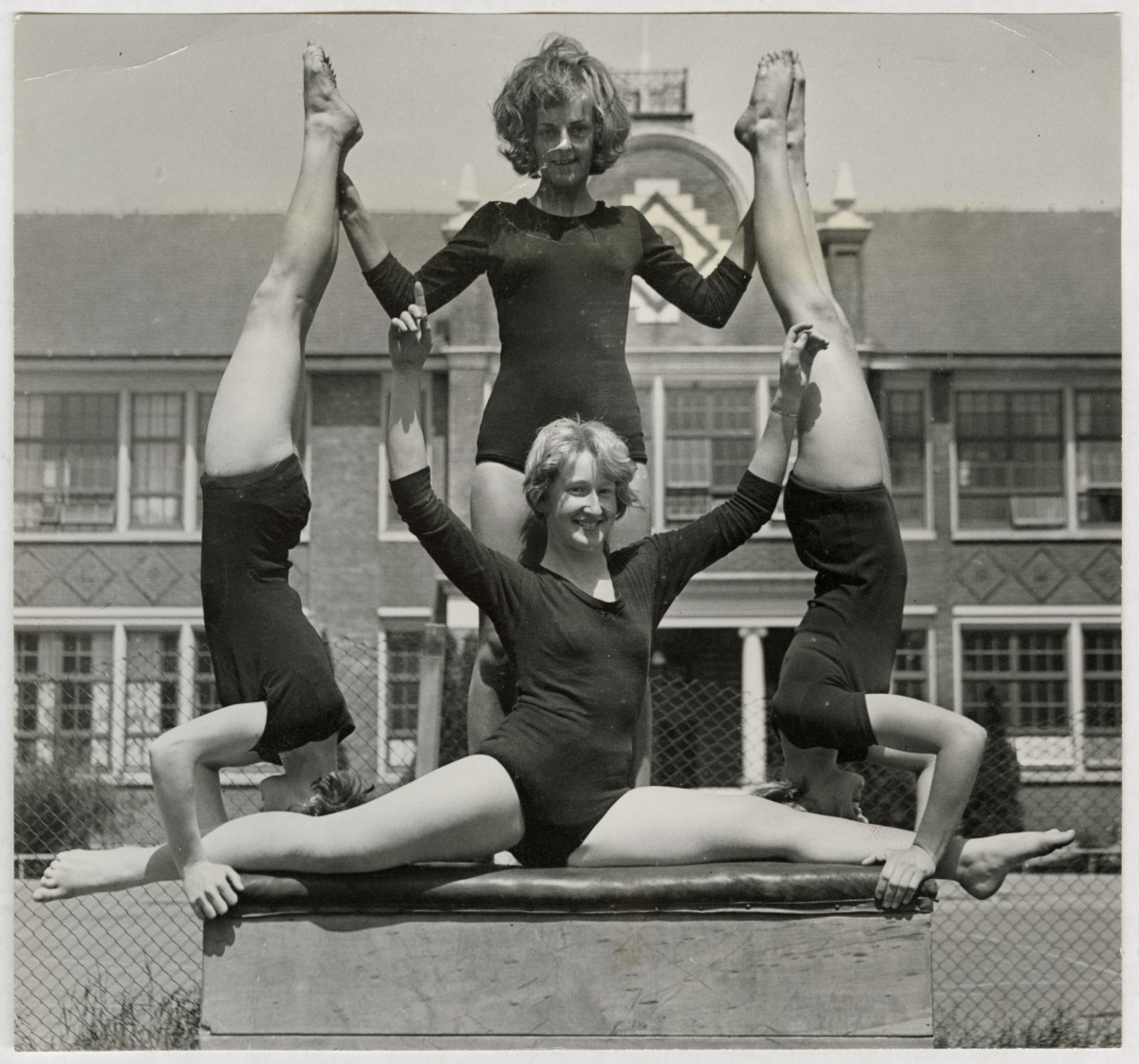
Living here in Florida feels like its own kind of gift. The sunny weather, year-round blooming flowers, and my three-wheeled bike allow me to enjoy morning rides nearly every day. My dog brightens every encounter, winning over neighbors and strangers alike, and making new friends daily.

I’m fortunate to live by a serene pond, surrounded by a remarkable variety of wildlife: ducks, cranes, hawks, eagles otters, turtles, and countless others. My garden flourishes with vibrant hibiscuses, bougainvilleas, and blooming milkweed that attract butterflies and pollinators. These things remind me of the beauty that is all around me, even on my tougher days.

When my physical limitations weigh heavily on me, I can find escape in books, allowing my mind to wander freely even when my body cannot. Despite challenges, I can still build a life with meaning and joy. I know it’s important to reflect on all the opportunities and blessings I have rather than focus solely on my struggles.

Some days, I can walk short distances with little trouble. Other days, I use an upright rollator, canes, or even wheelchair services. My abilities vary—some days I move with relative ease (though never without pain), and others, I can’t manage even a few steps. My balance and strength shift unpredictably, reminding me daily to listen to my body and respect its limits.

It’s not always easy to stand firm in those limits, especially when others misunderstand or dismiss them. On good days, people may assume I should always function at that level, and their disbelief or invalidation can tempt me to push myself beyond what’s safe. I’ve learned—sometimes the hard way—that doing so often leads to pain, injury, and days of immobility.

Still, I recognize my progress. I’m better at navigating my limitations now, though I’m far from perfect. When someone dismisses my pain or assumes I’m lazy or faking because I can’t do something I did before, it invalidates what I know to be true about myself: my “normal” is ever-changing. Between neuropathy, joint inflammation, fatigue, and muscle exhaustion, I must adapt daily—sometimes even hourly.

If you’ve never experienced this, I understand why it might be hard to recognize or comprehend it. But please understand that your inability to see my limitations doesn’t make them any less real. If you cannot accept this, I will protect my well-being by limiting how much I rely on you for emotional support.

Instead of focusing on what I can’t do, I have found strength and empowerment in recognizing what I can do. My abilities may be fewer, but they hold great value. I’ve learned to adapt, to problem-solve creatively, and to remain resilient in the face of adversity. These qualities allow me to live within my limits while continuing to find joy and purpose.

I have the intelligence to educate myself, the self-awareness to reflect deeply, and the courage to advocate for my needs. I’ve learned to persist—kindly but firmly—until I get the support I require. While there are days I feel exhausted and overwhelmed, I remind myself that others might face similar challenges. Often, when I struggle to find strength for myself, I find it by helping them.

Ultimately, I know my resilience is my power. By focusing on my strengths and embracing my abilities, I can live a life of meaning, even in the face of on-going challenges.

We Are All Worth It! A Call to Action

Our government is rolling back the ADA requirements that enable people with disabilities to exist and function in a world that is already less-than-accessible. These protections, once a lifeline, are being sacrificed to pad the profits of companies that are already immensely wealthy. This isn’t just an issue of greed—it’s a fundamental failure to value the humanity of people with disabilities.

Right now, our ability to work, to support our families, and to live with dignity is under attack. For those who can’t work due to the severity of their disabilities or a lack of accessibility, the safety net is already riddled with holes, leaving many condemned to a life of poverty. And the changes being made now will make it worse.

Americans are losing access to healthcare, especially through Medicaid, a program that provides vital medical treatment to millions of people, including children. Let this sink in: 36% of Medicaid recipients are children. Our government is choosing to deprive children of the medical care they need to survive and thrive, simply because they are poor, or because they are disabled. How can we call ourselves a compassionate society if we allow this to continue?

People with disabilities did not choose their circumstances. We did not choose to be born this way, to endure accidents or illnesses that left us disabled, or to grow old and face the challenges that aging naturally brings. And yet, instead of support, we are met with barriers—both literal and systemic.

The truth is, accessibility benefits everyone. A building with open-access ramping welcomes all. A system designed with inclusion in mind uplifts entire communities. So why are we allowing new buildings to be designed with grand stairs and inaccessible layouts, locking out 25% of the population? Why are we gutting the very regulations that make it possible for us to participate in society?

The answer is as simple as it is infuriating: Too many decision-makers see no value in accessibility because they see no value in us. And we cannot let this stand.

Here’s what you can do:

• Speak up. Contact your representatives. Demand that they protect the ADA and expand accessibility. Ask them to support Medicaid and other healthcare programs that serve the most vulnerable.

• Amplify our voices. Share stories of people with disabilities. Show the world that we are not a burden but a vital part of society.

• Support accessibility in your community. Advocate for accessible design in public spaces, workplaces, and businesses.

• Hold corporations accountable. Push back against the greed that prioritizes profits over people.

• Educate yourself and others. Learn about the challenges faced by people with disabilities and share that knowledge with those around you.

This is a fight for equality, for dignity, and for the basic human rights of 25% of our population. People with disabilities are not asking for handouts; we are asking for the opportunity to live, work, and contribute. But we cannot do it alone.

Stand with us. Fight with us. Together, we can create a world where accessibility is the norm, not the exception—a world that values every person, regardless of ability.

It is time to wake up. Time to recognize that people with disabilities are not a burden, but an integral part of our society – a society that claims to value inclusion, equality, and opportunity for all.

These attacks on accessibility, medical care, and the foundational protections of the ADA are not just attacks on the disabled community – they are attacks on our shared humanity. We cannot stand by as the doors to opportunity, healthcare, and dignity are slammed shut for 25% of our population.

We deserve better. Our children deserve better. Our communities deserve better. The strength of a society is measured not by how it treats its wealthiest and most privileged, but by how it uplifts its most vulnerable. Accessibility and accommodations are not luxuries – they are necessities that allow us to live, thrive, and contribute.

To anyone listening, I urge you to stand with us. Amplify our voices. Advocate for accessibility, inclusion, and fairness. Demand that our government and corporations do what is right, not what is easiest or most profitable. Together, we can build a future where everyone, regardless of ability, is seen, heard, and valued. We are ALL worth it.

Resilience and Wisdom You Never Knew You Had

There are so many hardworking people who poured their hearts and souls into life, only to be brought to their knees by chronic illness. I was one of them. I used to believe that hard work could conquer anything, that if I just gave my all, I could overcome any obstacle. But chronic illness taught me a humbling truth: sometimes, no amount of effort can fix what’s broken. And that’s not a failure—it’s reality.

This realization can feel devastating, like a piece of who you are has been taken away. But it doesn’t mean you’re not enough. It doesn’t mean you’re weak or broken. It means you’re human. Chronic illness forces you to find strength in surrender, grace in struggle, and courage in simply existing.

Even when the road seems impossible, you are still worthy of love, purpose, and joy. You are enough—not because of what you do, but because of who you are. This journey may reshape you, but it can also uncover a resilience and wisdom you never knew you had. Keep going, even on the hardest days. You are more powerful than you realize.

My battles with cancer taught me something else, just as important. The clock is ticking for all of us, though we can’t see it. So, cherish the ones who love you deeply, and let them know how much they mean to you.
Don’t wait for the “perfect moment” to find joy—create it now.

Happiness isn’t something you’ll find later, and life is far too precious to leave any love or laughter unspoken. Embrace every day, because you never know when your time will run out. Live fully and let gratitude guide your path.

Choose Joy

Choosing joy in the midst of life’s challenges and among life’s darkest hours isn’t just naive optimism. Joy is, in itself, an act of ongoing resistance – resistance to the near-overwhelmingness that threatens to lead us wandering in our journey through life, down the darkest paths.

I could choose anguish and walk through life with leaden footsteps, seeing only gray clouds, dusty roads, and empty faces, focusing on the sadness that threatens to consume all of us, if we let it.

I could choose despair and find myself without hope or any expectation of improvement. I could let hopelessness guide my days, and let loneliness overwhelm me, even in a crowded room.

Choosing joy is direct defiance against despair and hopelessness. Once you have chosen joy, you will see it everywhere – in a butterfly fluttering by, in the calm sunshine of the early morning, in a tiny, defiant flower thriving amidst a pavement crack – you will find joy even amidst the gravel and dust of everyday life.

I, for one, choose intellect over ignorance. I choose hope over desperation. I choose composure over chaos. I choose to smile rather than to grimace in pain.

There is nothing false in these choices. They are not a denial of my life’s reality. They are simply an adjustment to my reaction when faced with life’s trials.

Tragedies, struggles, hardships and challenges affect us all. We do not choose them, and we cannot avoid them. We can only choose how we react to them, and how we respond.

My response to life’s calamities is steady and enduring. Quite simply, I choose joy.

A Different Kind of Exclusion

When you have a chronic illness or are living with multiple life-changing conditions, it impacts every aspect of your life.  Progressive disabilities are thieves who steal our inclusion in daily life, as well.  Things you once did and enjoyed slowly and relentlessly are stolen from you, until even with adaptation they merely bring you frustration and irritation instead of the joy they once contained.

Your friends and former colleagues drift away because they don’t know what to say or what to do.  Phone calls, video calls, and even social media posts and messages grow more and more difficult because it is hard for people who care about you to see you in pain, especially when there is nothing that can be done about it.  Communication between you and former dear friends becomes infrequent, shorter in duration, further apart in frequency, and often ceases altogether. 

It becomes harder and harder for you to maintain friendships and relationships as your world becomes smaller, and the only events or experiences you have to share are medical or pain-related ones.  While your friends discuss the activities in their lives, you really have nothing to add unless you discuss your illness, and that gets tiresome to all involved. 

While they are happily telling you about a concert they attended last week, you are all too aware that you haven’t been to a concert in several years.  As they tell you about all the goings-on at work, you are reminded that you are no longer able to work, and very well may never be able to work again.  As you listen to them tell you about a recent vacation, it saddens you to recall that you are no longer able to enjoy such holidays.   If they talk about a wonderful restaurant they recently visited, you regretfully remember that you are unable to eat those types of food anymore, that you can’t have any alcoholic drinks anymore, and that even sweet treats are something from which you must abstain.  It doesn’t make for an enjoyable conversation for either person. 

When you are dealing with a variety of issues (such as sun sensitivity, food restrictions, urinary incontinence, fecal incontinence, overwhelming fatigue, blurry vision that prevents you from driving, extreme nausea, intractable pain, taking strong medications that leave you drowsy and unable to logically converse, etc.) it can make social events all but impossible. 

The unexpected nature of many chronic illnesses can cause you to frequently have to cancel plans, even though you really want to participate.  When you frequently cancel, or when it takes a herculean effort to include you, people stop asking you, and your social life can become non-existent. 

You may have to cancel because you are extremely unwell that day, because of an unplanned hospitalization or medical treatment, or an unexpected reaction to a new medication.  Sometimes, you have to cancel for reasons you really don’t want to share – like the lack of a handicapped restroom where you are going, a long walk from the parking lot to the event site, or the realization that the event is held in a historic building and you’d have to climb stairs, which you can’t do.

When the world is not as accessible as it needs to be, when illness takes your strength and energy, and chronic fatigue and malaise leave your thoughts muddled and confused, it is difficult to feel included and hard to be involved. The barriers to inclusion sometimes seem insurmountable and leave you with a quality of life that you wouldn’t wish on your worst enemy. How many times can you be the scorekeeper in the kickball game of life?

And Just Like That, It Was Gone.

I was born with a disability that progressed as I grew and aged. My loss of mobility was much greater than was ever expected. Nineteen surgical reconstructions helped slow it down a bit, but nothing could stop the eventual loss of my mobility.

I had a career I loved. My disability’s progression ended my ability to do that job (even with accommodations, which were not an available option back when this happened.) I had a master’s degree in my field, 12 years of successful experience, and had worked my way from an entry-level position to a top management position in a relatively short time.

And just like that, it was gone. I couldn’t physically do it anymore.

Losing your mobility is difficult. Losing your job at the same time (which also meant losing my health insurance, at a time when a disabled person couldn’t get health insurance outside of a workplace) was devastating.

That was over 25 years ago. I took some classes, got certified in another field that I could physically do, and began a new career. Again, it was a job I loved. And then, after 20 years in my new career, once again, a physical issue made me unable to continue at that job, or any job.

Inflammatory arthritis and ankylosing spondylitis left me almost bedridden and in so much pain. Just when I thought it couldn’t get worse, I was diagnosed with invasive cancer.

Throughout all of this, adaptability was my best ally. A bit lost without the ability to work anymore, I took the chance to write and publish a book, which had been a dream of mine since I was a teen.

When your circumstances alter your life, you really only have two options — let it destroy you or embrace adaptability.

Gun Violence in Schools – There is No One Simple Solution

In case you’ve lost track:

Thurston High School

Columbine High School

Heritage High School

Deming Middle School

Fort Gibson Middle School

Buell Elementary School

Lake Worth Middle School

University of Arkansas

Junipero Serra High School

Santana High School

Bishop Neumann High School

Pacific Lutheran University

Granite Hills High School

Lew Wallace High School

Martin Luther King, Jr High School

Appalachian School of Law

Washington High School

Conception Abbey

Benjamin Tasker Middle School

University of Arizona

Lincoln High School

John McDonogh High School

Red Lion Area Junior High School

Case Western Reserve University

Rocori High School

Ballou High School

Randallstown High School

Bowen High School

Red Lake Senior High School

Harlan Community Academy High School

Campbell County High School

Milwee Middle School

Roseburg High School

Pine Middle School

Essex Elementary School

Duquesne University

Platte Canyon High School

Weston High School

West Nickel Mines School

Joplin Memorial Middle School

Henry Foss High School

Compton Centennial High School

Virginia Tech

Success Tech Academy

Miami Carol City Senior High School

Hamilton High School

Louisiana Technical College

Mitchell High School

EO Green Junior High School

Northern Illinois University

Lakota Middle School

Knoxville Central High School

Willoughby South High School

Henry Ford High School

University of Central Arkansas

Dillard High School

Dunbar High School

Hampton University

Harvard College

Larose-Cut Off Middle School

International Studies Academy

Skyline College

Discovery Middle School

University of Alabama

DeKalb School

Deer Creek Middle School

Ohio State University

Mumford High School

University of Texas

Kelly Elementary School

Marinette High School

Aurora Central High School

Millard South High School

Martinsville West Middle School

Worthing High School

Millard South High School

Highlands Intermediate School

Cape Fear High School

Chardon High School

Episcopal School of Jacksonville

Oikos University

Hamilton High School

Perry Hall School

Normal Community High School

University of South Alabama

Banner Academy South

University of Southern California

Sandy Hook Elementary School

Apostolic Revival Center Christian School

Taft Union High School

Osborn High School

Stevens Institute of Business and Arts

Hazard Community and Technical College

Chicago State University

Lone Star College-North

Cesar Chavez High School

Price Middle School

University of Central Florida

New River Community College

Grambling State University

Massachusetts Institute of Technology

Ossie Ware Mitchell Middle School

Ronald E McNair Discovery Academy

North Panola High School

Carver High School

Agape Christian Academy

Sparks Middle School

North Carolina A&T State University

Stephenson High School

Brashear High School

West Orange High School

Arapahoe High School

Edison High School

Liberty Technology Magnet High School

Hillhouse High School

Berrendo Middle School

Purdue University

South Carolina State University

Los Angeles Valley College

Charles F Brush High School

University of Southern California

Georgia Regents University

Academy of Knowledge Preschool

Benjamin Banneker High School

D H Conley High School

East English Village Preparatory Academy

Paine College

Georgia Gwinnett College

John F Kennedy High School

Seattle Pacific University

Reynolds High School

Indiana State University

Albemarle High School

Fern Creek Traditional High School

Langston Hughes High School

Marysville Pilchuck High School

Florida State University

Miami Carol City High School

Rogers State University

Rosemary Anderson High School

Wisconsin Lutheran High School

Frederick High School

Tenaya Middle School

Bethune-Cookman University

Pershing Elementary School

Wayne Community College

JB Martin Middle School

Southwestern Classical Academy

Savannah State University

Harrisburg High School

Umpqua Community College

Northern Arizona University

Texas Southern University

Tennessee State University

Winston-Salem State University

Mojave High School

Lawrence Central High School

Franklin High School

Muskegon Heights High School

Independence High School

Madison High School

Antigo High School

University of California-Los Angeles

Jeremiah Burke High School

Alpine High School

Townville Elementary School

Vigor High School

Linden McKinley STEM Academy

June Jordan High School for Equity

Union Middle School

Mueller Park Junior High School

West Liberty-Salem High School

University of Washington

King City High School

North Park Elementary School

North Lake College

Freeman High School

Mattoon High School

Rancho Tehama Elementary School

Aztec High School

Wake Forest University

Italy High School

NET Charter High School

Marshall County High School

Sal Castro Middle School

Marjory Stoneman Douglas High School

Great Mills High School

Central Michigan University

Huffman High School

Frederick Douglass High School

Forest High School

Highland High School

Dixon High School

Santa Fe High School

Noblesville West Middle School

University of North Carolina Charlotte

STEM School Highlands Ranch

Edgewood High School

Palm Beach Central High School

Providence Career & Technical Academy

Fairley High School (school bus)

Canyon Springs High School

Dennis Intermediate School

Florida International University

Central Elementary School

Cascade Middle School

Davidson High School

Prairie View A & M University

Altascocita High School

Central Academy of Excellence

Cleveland High School

Robert E Lee High School

Cheyenne South High School

Grambling State University

Blountsville Elementary School

Holmes County, Mississippi (school bus)

Prescott High School

College of the Mainland

Wynbrooke Elementary School

UNC Charlotte

Riverview Florida (school bus)

Second Chance High School

Carman-Ainsworth High School

Williwaw Elementary School

Monroe Clark Middle School

Central Catholic High School

Jeanette High School

Eastern Hills High School

DeAnza High School

Ridgway High School

Reginald F Lewis High School

Saugus High School

Pleasantville High School

Waukesha South High School

Oshkosh High School

Catholic Academy of New Haven

Bellaire High School

North Crowley High School

McAuliffe Elementary School

South Oak Cliff High School

Texas A&M University-Commerce

Sonora High School

Western Illinois University

Oxford High School

Robb Elementary SchoolThurston High School

Columbine High School

Heritage High School

Deming Middle School

Fort Gibson Middle School

Buell Elementary School

Lake Worth Middle School

University of Arkansas

Junipero Serra High School

Santana High School

Bishop Neumann High School

Pacific Lutheran University

Granite Hills High School

Lew Wallace High School

Martin Luther King, Jr High School

Appalachian School of Law

Washington High School

Conception Abbey

Benjamin Tasker Middle School

University of Arizona

Lincoln High School

John McDonogh High School

Red Lion Area Junior High School

Case Western Reserve University

Rocori High School

Ballou High School

Randallstown High School

Bowen High School

Red Lake Senior High School

Harlan Community Academy High School

Campbell County High School

Milwee Middle School

Roseburg High School

Pine Middle School

Essex Elementary School

Duquesne University

Platte Canyon High School

Weston High School

West Nickel Mines School

Joplin Memorial Middle School

Henry Foss High School

Compton Centennial High School

Virginia Tech

Success Tech Academy

Miami Carol City Senior High School

Hamilton High School

Louisiana Technical College

Mitchell High School

EO Green Junior High School

Northern Illinois University

Lakota Middle School

Knoxville Central High School

Willoughby South High School

Henry Ford High School

University of Central Arkansas

Dillard High School

Dunbar High School

Hampton University

Harvard College

Larose-Cut Off Middle School

International Studies Academy

Skyline College

Discovery Middle School

University of Alabama

DeKalb School

Deer Creek Middle School

Ohio State University

Mumford High School

University of Texas

Kelly Elementary School

Marinette High School

Aurora Central High School

Millard South High School

Martinsville West Middle School

Worthing High School

Millard South High School

Highlands Intermediate School

Cape Fear High School

Chardon High School

Episcopal School of Jacksonville

Oikos University

Hamilton High School

Perry Hall School

Normal Community High School

University of South Alabama

Banner Academy South

University of Southern California

Sandy Hook Elementary School

Apostolic Revival Center Christian School

Taft Union High School

Osborn High School

Stevens Institute of Business and Arts

Hazard Community and Technical College

Chicago State University

Lone Star College-North

Cesar Chavez High School

Price Middle School

University of Central Florida

New River Community College

Grambling State University

Massachusetts Institute of Technology

Ossie Ware Mitchell Middle School

Ronald E McNair Discovery Academy

North Panola High School

Carver High School

Agape Christian Academy

Sparks Middle School

North Carolina A&T State University

Stephenson High School

Brashear High School

West Orange High School

Arapahoe High School

Edison High School

Liberty Technology Magnet High School

Hillhouse High School

Berrendo Middle School

Purdue University

South Carolina State University

Los Angeles Valley College

Charles F Brush High School

University of Southern California

Georgia Regents University

Academy of Knowledge Preschool

Benjamin Banneker High School

D H Conley High School

East English Village Preparatory Academy

Paine College

Georgia Gwinnett College

John F Kennedy High School

Seattle Pacific University

Reynolds High School

Indiana State University

Albemarle High School

Fern Creek Traditional High School

Langston Hughes High School

Marysville Pilchuck High School

Florida State University

Miami Carol City High School

Rogers State University

Rosemary Anderson High School

Wisconsin Lutheran High School

Frederick High School

Tenaya Middle School

Bethune-Cookman University

Pershing Elementary School

Wayne Community College

JB Martin Middle School

Southwestern Classical Academy

Savannah State University

Harrisburg High School

Umpqua Community College

Northern Arizona University

Texas Southern University

Tennessee State University

Winston-Salem State University

Mojave High School

Lawrence Central High School

Franklin High School

Muskegon Heights High School

Independence High School

Madison High School

Antigo High School

University of California-Los Angeles

Jeremiah Burke High School

Alpine High School

Townville Elementary School

Vigor High School

Linden McKinley STEM Academy

June Jordan High School for Equity

Union Middle School

Mueller Park Junior High School

West Liberty-Salem High School

University of Washington

King City High School

North Park Elementary School

North Lake College

Freeman High School

Mattoon High School

Rancho Tehama Elementary School

Aztec High School

Wake Forest University

Italy High School

NET Charter High School

Marshall County High School

Sal Castro Middle School

Marjory Stoneman Douglas High School

Great Mills High School

Central Michigan University

Huffman High School

Frederick Douglass High School

Forest High School

Highland High School

Dixon High School

Santa Fe High School

Noblesville West Middle School

University of North Carolina Charlotte

STEM School Highlands Ranch

Edgewood High School

Palm Beach Central High School

Providence Career & Technical Academy

Fairley High School (school bus)

Canyon Springs High School

Dennis Intermediate School

Florida International University

Central Elementary School

Cascade Middle School

Davidson High School

Prairie View A & M University

Altascocita High School

Central Academy of Excellence

Cleveland High School

Robert E Lee High School

Cheyenne South High School

Grambling State University

Blountsville Elementary School

Holmes County, Mississippi (school bus)

Prescott High School

College of the Mainland

Wynbrooke Elementary School

UNC Charlotte

Riverview Florida (school bus)

Second Chance High School

Carman-Ainsworth High School

Williwaw Elementary School

Monroe Clark Middle School

Central Catholic High School

Jeanette High School

Eastern Hills High School

DeAnza High School

Ridgway High School

Reginald F Lewis High School

Saugus High School

Pleasantville High School

Conniston Middle School

Waukesha South High School

Oshkosh High School

Catholic Academy of New Haven

Bellaire High School

North Crowley High School

McAuliffe Elementary School

South Oak Cliff High School

Texas A&M University-Commerce

Sonora High School

Western Illinois University

Oxford High School

Bridgewater University

Robb Elementary School

Michigan State University

Covenant Christian School

This list seems endless! The one thing each of these schools have in common is a child/young person with emotional problems or mental illness got a hold of weapons and did the unthinkable — killed other people — most of them other children or young adults.

I can tell you, as a former teacher, young people with emotional problems, mental illness, uncontrolled rage (which is a mental illness) or reactive behavior are not helped in schools. They are either lost in the shuffle or given an IEP (individualized education plan) and placed in a “general ed” class, possibly with 10 or more other students also with such issues, and 20 or more students who are frustrated with their inability to learn because these students are placed into regular ed classrooms that are not given the support and resources they need.

General ed teachers are overwhelmed by this — wouldn’t you be? They are teachers, surrounded by students with undiagnosed, underdiagnosed, or “accommodated” mental health issues, in overcrowded classrooms, with very little assistance, limited training, and no time for dealing with these students, and school counselors (if the school even has them) who may have a caseload of 500 students! Schools can’t be “everything” — or they are so busy trying to be everything that the majority fall between the cracks.

Something has to be done if this many children feel isolated and ostracized enough to become school annihilators. Something has to be done if so many children with emotional problems and mental illness are plopped into regular ed classrooms without the support and assistance they need. Something has to be done when school counselors have such huge caseloads that they can’t get to the students who really need them. And just putting more responsibility on schools, without providing the staff, infrastructure, resources, and funding they need to do anything about it is not the answer either.

I also have to say this — it is indecent that in our society that so many children and young people find access to guns, and guns with rapid-fire capabilities, and no one in their lives even notices!

It boggles my mind when I see a parent on the news who had no idea their 6-year-old child has been carrying around the parents’ legally purchased loaded gun to school, and that they shot a teacher with it. It boggles my mind that a high school student can get access to and store 4 or 5 rapid fire assault rifles, ammo, and protective vests, and no one in their family is even aware of it.

We have to step up as a society and realize the problem isn’t just guns. It isn’t just lack of mental health options. It isn’t just school overcrowding and mainstreaming that is not being done properly. It isn’t just parents who are not present in their child’s life, or those who do not actively parent at all. It isn’t just classrooms where the aggressive and emotionally reactive kids outnumber the “behavior-typical” students, or where classes are so overcrowded and counselors are so unavailable that students are bullied, feel unwanted, and want revenge, or feel they are a “nobody” with nothing to lose who think mass murder of other children is a great way to “prove” they are not “nothing.” It is such a combination of things. There is no one simple thing that will instantly fix this ongoing tragedy in American culture. We, as a nation, are failing our most vulnerable kids in so many areas. We are all looking for a quick fix, when this problem is systemic of so many overlapping and interlocking issues.

Fake It ’til You Make It


I realized a few days ago that I’ve become depressed since my gallbladder surgery. (I’ve fought depression my entire life, though not many outside my immediate friend group would know that.) When I’m depressed, I just quietly sit and stare, and my life and heart feel very “blank.”

I had my emergency surgery, everything went well, I came home, and I’ve been recovering well, so I have no reason to be depressed, but sometimes, when I’m alone for any length of time, and recovering keeps me tired and uninspired, I find myself drawn into a very blank, empty state of mind that I have a hard time putting into words.

I’ve tried to push through this for the past three days now, but instead, I’ve just been sitting here, staring aimlessly, and wondering why I feel this way. Sometimes, the best way to push through it is to “fake it ’til you make it.”

So finally, around 3pm today, I said to myself, “Enough!” I took a long, hot shower, washed and dried my hair, put on clean clothes (instead of staying in my nightgown all day) and went for a fairly long walk with my upright rollator. It’s 77 degrees, sunny, and bright here today, and I let the sun and its warmth surround me.

I felt the sun surround me, and before I knew it, I was smiling and feeling good. Never underestimate “faking it until you make it.” Sometimes, your soul is begging to be happy, but you just can’t find the way to start. That fake smile turns into pure joy before you even realize it.

Embracing Life’s Limitations

As children, we are told we can achieve any goal if we just try hard enough and don’t give up. Television commercials tell us this. Motivational speakers tell us this. Often, our own parents tell us this. The harsh reality is that, sometimes, we choose goals and paths that are beyond our physical, emotional, financial, or intellectual abilities. We all have limitations, whether or not we choose to acknowledge them.

The reality is there are many goals we can choose from, many ambitions we can follow, many careers to choose from, so the thought that each of us has only one path to follow is erroneous. There are thousands of things in our universe that can make us feel valuable, worthy, needed, and successful.

By learning to adapt to life’s inevitable upheavals, we can start to embrace life’s limitations, make life choices that will fulfill our reasonable dreams and expectations, and stop worrying about who other people think we should be. Resilience, flexibility, and adaptability are the traits that lead us to a happy and fulfilling life.

In November 2022, I fulfilled my lifelong ambition of writing a book. I have been piecing together the parts of my story for the past two years through my online blog http://www.janmariet.com along with at least 100 pages of new material. I hope you will enjoy reading part of my life remembrances and responses in “Embracing Life’s Limitations: Letting Go of Who You Were Supposed to Be.

While my book is still very new to the market, it already has 5-star reviews on both Amazon and Goodreads.com. I’d like to share a couple of the reviews with you.

I hope you decide to share my life story. There’s so much more to tell!

My New Book Just Released!

I have exciting news! My book, “Embracing Life’s Limitations: Letting Go of Who You Were Supposed to Be” is available on Amazon.

You can follow this link to find it. https://www.amazon.com/Embracing-Lifes-Limitations-Letting-Supposed-ebook/dp/B0BL94PHJH/?_encoding=UTF8&pd_rd_w=CxvDY&content-id=amzn1.sym.f05f10a7-d30f-4cc9-9521-a1dfe37686ab&pf_rd_p=f05f10a7-d30f-4cc9-9521-a1dfe37686ab&pf_rd_r=JAYN9H244QZ1E8ANGSX9&pd_rd_wg=f9bPx&pd_rd_r=48106e0e-ef73-4d69-9675-08ae089a9c21&ref_=pd_gw_ci_mcx_mi

I hope you’ll take a look. Best wishes!

The Last Thing You Said

I came across this quote today. “Speak to people in a way that if they died the next day you’d be satisfied with the last thing you said to them.” It brought to mind a memory from the 1990s, when I was a Girl Scout leader.

We met in the evening (which was a very unusual time for a scout meeting but met our schedules very well.) We met in a church in a very bad part of town, just past the very nice historic district where I lived. The church hired the custodian to stay and watch the cars (so they didn’t get broken into) and to make sure we were safe, coming and going from the building. It was very kind of them to do that for us.

From day one, I told parents, don’t be late picking up your child. If you can’t come, arrange with one of the other parents to pick up your child. If you come late and the windows are dark, and the doors are locked up, you can be assured your child is safe and with me…wherever it is I was going.

This was before cell phones, and you couldn’t call into the church at night (although we could make outgoing calls, it was tricky to do so; we had to make them from the emergency phone in the elevator.) So, I told parents, if you are late, your child will be safe, but you’ll need track me down. I may be at the grocery. I may be at the drug store. I may be at a restaurant eating my dinner. I worked really long hours and sitting waiting for half an hour or more was not something I was willing to do. I set a very firm boundary about this.

My troop parents were excellent about accepting my boundary. I didn’t want to be left alone with one child in an unsafe neighborhood at night. I had things I needed to do before bedtime. If I didn’t do them after the meeting, they didn’t get done.

One of the girls in my troop was being raised by her grandfather. After a meeting one night, he wasn’t there to pick her up. He was always the first one there. He didn’t send anyone to pick her up, and he didn’t ask any of the parents to drop her off at his house. I called the house, but no one answered. The answering machine came on, but I didn’t leave a message.

I was a bit worried, but I was more angry. I ended up doing what I promised I wasn’t going to do. The custodian was ready to leave, and I wasn’t willing to stay there by myself with one child, in a dark church in a very unsafe neighborhood.

I started to go to the emergency phone in the elevator and call and leave an angry message on his answering machine. “How dare you not show-up and leave me in such a predicament. Why didn’t you get another parent to pick up your child if you were going to be late?” I thought about it, but I didn’t leave that message.

Thank goodness, I didn’t make that call or leave that message.

I finally decided to drive the girl to her grandfather’s house, which was on the way to my house, just to see if his car was there. I decided if he wasn’t there, I was going to drop the girl off at my assistant leader’s house (she had two children in the same age group, and they were in the same group of friends. Because I was a single person living alone, taking a child to my home was just not a great idea.)

I drove to the grandfather’s house, and saw his car in the driveway. I pulled up behind it. There were lights on inside. At first, that made me angry, thinking he had just neglected to come get his granddaughter. How inconsiderate, I thought.

The girl started to get out to run up to the door, but I got the strangest feeling, and I told her to stay put. It was then I noticed the front door was slightly ajar. I told her to stay in the car and lock the doors.

I slowly and quietly crept up to the slightly open door and peeked in. Then I swung the door open as I realized the grandfather was laying on the floor just inside, gasping for air, and clutching at his chest. He had been on his way to the car when he had a heart attack!

Long story short, I called 9-1-1, he went to the hospital in an ambulance, while I followed with the granddaughter. A relative was called to get the girl from the hospital. The grandfather recovered, and, in the end, all was well.

But just imagine if I had left that angry message on his answering machine. I often wonder what stopped me from doing just that.

How awful I would have felt knowing my last words to him would have been angry accusatory ones. (Remember that back then, answering machines recorded the message aloud – everyone in the room could hear the message as it was left. He would have heard it, while laying there having a heart attack.) Those could have been the last words he ever heard.

Imagine if I hadn’t broken my cardinal rule of taking kids with me wherever I was going if the parent was late, and drove to his house instead. If I hadn’t, he probably would have died on that living room floor while I did my grocery shopping for the week or ran by the drugstore.

I sometimes think God and the universe whispers to us. Sometimes we hear words, but mostly, we feel a strange disquieting feeling. We just instinctively know there is something we are supposed to do, or something we are not supposed to do.

It often takes time for us to figure out what that something is. The hard part is following those whispers, even when we aren’t exactly sure what they are saying to us.

The part that is even harder yet, is never leaving harsh or angry words between us, because we never know when those words will be last that one or the other will ever speak.

Lies My Parents Told Me

When I was growing up, my parents taught me that I could do anything, be anything, if only I wanted it bad enough, worked hard, and never gave up. These are the lies my parents told me.

It was a hard reality when I was a young adult, and faced the truth – that what I had been taught as a child wasn’t true at all. It took me a long time to realize that it wasn’t my lack of trying, or working, of believing – it was having unrealistic expectations of life that were my greatest downfall, and my ultimate victory.

I had a great “work ethic” – I didn’t mind working 80 hours a week (at no additional pay) or earning advanced graduate degrees and certifications while working full time and having a second job. I had a professor in college who had a sign in his office. It said, “Hard work makes happy people.” I remember reading it, and saying to myself, “I’m going to be very happy, then.”

I had many jobs I liked, and many jobs I loved. I watched and struggled as each one became beyond my physical means. I was born with a disability, although we never called it that when I was a child. I had “a hip problem, and the doctors had fixed it when I was a little girl.” That was another lie my parents told me.

I was in college before I even knew that my “condition” had a name – severe bilateral congenital hip dysplasia, with complete unilateral dislocation. I was in college when I learned that I could never have children. I had just finished college when I learned that my childhood repairs would not last much longer. My mother, who I loved very much, could not bring herself to tell me these things, although she had been told these things when I was still quite young. I learned them after I was 18 and went to my first orthopedic appointment by myself. The surgeon who blurted out the part about not having children assumed I had been told long ago, but I hadn’t ever been told. He started talking about the bone spurs I had been developing, the need to go in and surgical remove some of them that were causing me pain, and how I needed to start on steroid therapy immediately so I could tolerate the pain until I was a bit older, since hip replacements (at that time) only had a life expectancy of about 10 years. To say I was stunned by this news is quite an understatement.

The doctors had “fixed me” through a series of 12 childhood surgeries, that broke my pelvis and restructured it, broke my femurs and adjust the angles, cut notches into my restructured pelvis so I had some semblance of hip sockets, and reshaped my acetabulums and misshaped femoral heads. My first surgery was when I was 18 months old. From that time, until I was 4 and half, I had to wear body casts after each surgery and retrieval procedure. When I wasn’t in a body cast, I had to wear a position brace. I could not walk or use the bathroom in either of these devices. Can you imagine being a toddler trapped in body cast after body cast? But those 12 surgeries gave me the ability to walk. It was a miracle. In my mind, I was “fixed.” If only that had turned out to be true.

What I never knew was that this “fix” would not last my whole life, and that in my early 20s, the wear-and-tear of walking as a child and teen would wear-away every part of my childhood “repairs.” I had no idea how many more surgeries were in my future, or how long each recovery would be.

Being in your mid-twenties and needing bilateral hip replacements was not an easy place to be. I had my first replacement in my late twenties, which simply wasn’t done back then. My second total hip replacement was in my thirties, after suffering an AVN which cut off the blood supply to my left hip and pelvis, causing the bone there to die and crumble away. It required bone harvesting from another part of my body, multiple bone grafts, a modular hip replacement, and months of recovery time and physical therapy. The incision for that surgery was 16 inches long!

I worked so hard throughout my life, but my lifestyle never reflected that hard work. I always had inexpensive compact cars, and I kept my cars for 15 years or so, until the engines finally just gave way. I had to give up the jobs, and careers, I loved so much, because I simply became physically unable to do them anymore. As my body declined, I simply couldn’t do the work anymore, and each time this happened, it felt like a defeat – like a failure on my part. I have to tell you, this crushed me.

But each time, I found a way to get through it, a way to survive it, and found something else I could do with my decreased physical abilities, and most importantly, I found a way to love my new job or circumstance. I had so much joy, despite my circumstances.

My medical expenses over my adult years almost bankrupted me several times, and left me without savings for fun things, like vacations, going to the theater, to concerts, to sporting events, out with my friends, or virtually to anything fun. I never had enough money to pay for my adult surgeries, x-rays, injections, physical and occupational therapy, my medications, my ongoing doctors’ appointments, etc. Before the ACA (the Affordable Care Act,) every time I changed jobs, my disability was considered a “pre-existing condition” and wasn’t covered by health insurance for the first year. My second hip replacement happened while in one of these “pre-existing condition” periods, which meant I had to pay everything myself.

That hip replacement (which included multiple bone grafts and bone harvesting) left me no choice but to sell my home to pay for my surgery and rehab expenses. This meant, when I finished recovering, I would be homeless, unemployed, and once again, without insurance.

Thank goodness a family member stepped in and purchased my house from me, and then let me live there rent-free for a year while I retrained for a new, less physically demanding career. Once I started working full-time again, I paid back every penny for that “free rent” and I made the mortgage payments on the house until I had bought it back completely. It took me 11 years to recover from that surgery financially, but I paid every penny I owed.

I have always taken great pride in the fact that I have never left a debt unpaid. By doing this, though, I lived paycheck-to-paycheck, and did without so many things. I always repeated my grandmother’s words “if you don’t have cash for it, you don’t really need it.” so many times, as I walked away from something I really wanted, but couldn’t afford. Her depression-era advice helped me to avoid debt, other than medical debt.

My money always had to go for some medical issue that wasn’t covered by insurance, or for co-pays, or for out-of-pocket, or for self-paying my own insurance premiums. It went for physical therapy, and leg braces, and rollators, and walkers, and crutches, and $8,000 annual out-of-pocket I had to pay before my health insurance even kicked in each year.

In my twenties, I worked as a therapeutic recreation instructor and martial arts teacher (I’m a 3rd degree black belt in Aikido.) I also taught women’s weightlifting, self-defense, and wheelchair weightlifting. When I was 24, that came to a crashing halt as my physical condition deteriorated, and I was unable to do these things anymore.

I got my master’s degree in education and recreation, and became a recreation specialist at a rec center. I moved up quickly to a recreation supervisor, and then a recreation superintendent. But then my right hip failed. I was out for 16 weeks having it repaired and recovering. (I had enough leave time accumulated to cover the entire 16 week absence, and even found someone who was willing to do my job while I was gone.)

About a month after I came back to work full time, my boss called me into his office and said “You no longer have the physical stamina to do this job. You can’t walk long distances, you struggle with stairs to the stage at festivals, and you can’t do multiday festival work anymore. It is your choice, you can either quit today, or we will fire you tomorrow.” (This was before ADA or FMLA, so there was nothing I could do about it.)

Sadly, this ended my twelve-year career in recreation. Physically and financially, things got much worse before they got better. After my second hip replacement surgery (which required bone harvesting and multiple bone grafts) I decided to go back to school and become an elementary teacher. It only took me two semesters to complete these classes, and then one more semester to student teach.

I worked as a teacher for 20 years, but my physical condition continued to decline, until I had to give up teaching as well. I struggled with the physicality of it for years before I had to give it up completely. Again, I blamed myself because my body was failing.

Now, after losing my mobility, battling cancer for a year and a half (surgery, radiation, chemotherapy, and brachytherapy), I also lost one third of my intestines because they were so damaged by radiation they were no longer functional. When you lose this much of your intestines, you will never have regular bathroom habits, and you can never eat normally again. To say the past 3 years have been difficult is an understatement.

I also have to take a medicine twice a day which costs more than my entire monthly early retirement payment. (I cannot survive without this medicine, and there is no assistance program that covers it.) My disability check isn’t even enough for my basic expenses (housing, food, heat and air conditioning, car insurance, internet, taxes, etc.) I also have to pay for house cleaning and yard work that I am not physically able to do. I watch each day as I have to pull money out of the small investments that were supposed to take care of me in my old age, just to pay for basic expenses and medication. Knowing I will not ever be able to work again leaves me very concerned for my future, but I try not to think about it too much, simply because it will overwhelm me if I do.

I’m also on immunotherapy, which costs over $52,000 per year. Fortunately, I was able to find a medical foundation that covers most of this expense, as Medicare doesn’t cover any of it, and without it, I am completely immobile and homebound, and in incredible pain. Immunotherapy has been life-changing for me.

So I have learned in my adult life that what my parents taught me was not true. (I’m sure they believed it was, but that doesn’t change reality.) I worked hard. I gave it my all. I paid my debts, didn’t buy things I couldn’t afford, and didn’t waste money on vacations, movies, concerts, or nights out with friends.

My spirit has been so close to broken many times, but I’ve always bounced back. I’ve always adjusted and found another way to get by. And throughout it all, I’ve found great joy in everyday life.

I don’t want you to think that even in this financial crisis, that I am hopeless. I have had so many miracles in my life, how can I not rejoice in that? I have survived countless surgeries, psoriatic arthritis, ankylosing spondylitis, a battle with cancer, loss of a large part of my intestines/colon, loss of my mobility, and being medically homebound for the past three years.

I have even come to terms with my latest diagnosis, Myotonic Dystrophy type 2 (DM2), which is genetic disorder that causes proximal muscle weakness around the shoulders and pelvis or a “limb-girdle weakness.” This form of adult-onset muscular dystrophy started when I was around 38 years old, but wasn’t actually diagnosed until earlier this year, when my GI surgeon noticed my symptoms, and had genetic testing done. For 20 years, my doctors had said my increasing weakness, stiffness, and declining mobility was caused by my congenital disability. They never even looked for another cause. It turns out, it had nothing to do with hip dysplasia or my autoimmune disease.

The clinical onset of Myotonic Dystrophy type 2 is in a person’s third or fourth decade of life (which is exactly when it happened to me,) and leads to weakness that typically affects proximal muscles around the shoulders and pelvis causing problems with climbing stairs, brushing and drying hair as well as getting out of a chair. I present with all of these symptoms, as well as the genetic marker. It explains why my mother, who also had bilateral congenital hip dysplasia, was so much more able-bodied throughout her life than I was.

I used to think I could be anything I wanted, I could fix any problem, I could achieve any goal, if I just tried hard enough and didn’t give up. Reality is much different. So many times, your spirit is willing, but your body just can’t do it. I struggled with this for most of my adult life – feeling like a failure because I couldn’t achieve it, no matter how much I tried. I’m here today to tell you that it wasn’t because I didn’t try hard enough, didn’t work hard enough, didn’t believe hard enough. I blamed myself for most of my adult life for a failure I had no control over.

To end my story, I’m going to tell you something a wonderful professor (and dear friend) told me when I was in my late twenties. He said “In the universe, there are a million things you can do, and a million things you can’t do. And in your entire life, there is only time to do a thousand or so things. You can spend your life mourning what you can’t do or enjoying what you can do. The choice is entirely up to you.”

Thank you to my friend and mentor, (the late) Dr. Charles Smith, for those amazing words of wisdom, that have gotten me through the past 40 years of challenges and joy. I wonder if he ever knew how life changing his words were. I truly hope he did.

I do try to enjoy what I can do, and not focus on what I can’t do. Sometimes, that is harder than other times, but I’ve gotten pretty good at it over the years. Life is full of joy, if you just know where to look, and to ignore the (well intentioned) lies our parents told us.

My Advice to Young People

I spent my entire life working 60-80 hours per week, for no extra pay, and being so proud of my work ethic. I didn’t take vacations, hurried back from illnesses before I was ready (or came to work sick) and was very proud of my commitment and dedication. I worked in two different low-paying professions throughout my life because “I was making a difference” and “serving my community.”

If I could give any advice to young people today, I would say, “Don’t give your life away. Don’t be complicit in a lifestyle that always puts you last, and some noble cause first.” I’m not saying people should be selfish or self-centered, but to realize that people treat you the way you let them treat you, the way you encourage them to treat you, the way you direct them to treat you.

Your life is just as worthy if take time for yourself, your family, your friends, and set reasonable boundaries. It actually makes you a better person. You have more to give, because you haven’t been drained of your energy by an unbalanced life. Stand up and realized that living your own life is just as valuable, and that there are greater virtues than working hard and giving all.

I always thought that when I got to retirement age, there would be time to spend with family, to share good times with friends, to travel, to do all the things I never had time for before. Then I got sick, and realized my family is gone now, I never had the time to make deep, lasting friendships, I’m no longer able to travel, and I’m not able to do all those things I tucked-away until “later.”

For me, later isn’t coming. It is my one great regret in life.

An October Kind of Friend (Poetry)

Introduction: Years ago, an old friend found me on Facebook. I’ll never forget his first message. He asked if I remembered him, and went on to say that he would understand if I didn’t. I was a little shocked by that statement, because we had been really close friends during junior high and high school, we used to talk on the phone all the time, and we shared the most personal thing in the world to either of us – our writing. I could have never forgotten him.

We both aspired to be writers. We both went on to do something completely different with our lives, while keeping our love of expressing ourselves in writing — he in the form of poetry, and me in the form of prose.

We both went on to experience physical problems that changed our lives in ways we never anticipated. With me, it was my legs. With him, it was his vision. And still, we both found ways to have happy, meaningful lives.

The funny thing is, Mike and I didn’t go to any of the same schools. We didn’t even live in the same city. We met in 9th grade when we both were selected for the all-state chorus. There were four of us from my junior high who were selected and went together. We were all sopranos. We all sat together in that huge group of strangers for rehearsals and the performance.

We were in the last row of sopranos, and right behind us were the tenors and basses. There was a young man sitting right behind us, and somehow one of the girls I was with picked-up on the fact that he was by himself. That was Norene, and true to her beautiful spirit, she turned around and introduced herself, and drew that young man into our group for the rest of time. We all became fast friends that weekend.

We all shared a love of singing. Eventually, we all joined the same youth church group, and we remained close through high school. Eventually, our lives took us into different directions and different places, until years later, when we found each other again on Facebook. To this day, I enjoy reading some of his current poetry, which he sometimes posts online.

While going through my books this week, I came across a notebook I had in high school, where I wrote poems from age 14 through 18. Now, I admit, looking back on them, that most of them were just plain dreadful, but hey, I was just a kid.

In my old notebook, I came across this poem that I wrote on October 18, 1981 (for Mike’s birthday the next day) while sitting, watching a fire burn in the fireplace on a chilly October evening.

It brought back such good memories of two friends who shared their writing with each other. I decided to share it with “vintage” friends (you notice I didn’t say “old” friends.) Even after all the years, Mike is still my October kind of friend.

An October Kind of Friend (Written for Mike)

Bleak October, cold and gray,
Thy quiet nights and whispy days
Made my soul lain-back and weary,
Quiet, dim, and all but dreary;

‘Til a tiny flame arose
Into a fire did transpose
And fire turned to blazing roar
And then the flame was seen no more

The fire blaze with warmth and ember
Warmth to last me through September
‘Til October comes again.
You’re my October kind of friend.

-JMT 10/18/1981

Patriots Day — Remembering 9/11

Today is Patriots Day — the day we remember what we promised we’d never forget!

Nineteen years have passed since that fateful day, and I still tear-up remembering as I sat, glued to the TV screen, in utter disbelief. No matter what channel you turned to, it was the only thing on. Networks shared news footage for the first time ever, soap operas didn’t air, and home shopping channels (all the rage then) respectfully went off the air.

We watched as we thought the first plane crash was an accident. At first, everyone thought it was a small aircraft that hit. We listened to news reporters speculating on what type of plane could have done that much damage, but we were still in the dark about what was happening. It wasn’t until the second plane hit that we realized we were under attack.

I distinctly remember when the second plane hit. A startled news reporter asking “was that another plane?” One of the reporters “on the street” was interviewing a father who had rushed to his daughter’s day care after the first tower was hit, to pick her up. The little girl, who couldn’t have been 5, was tightly gripping her daddy’s hand when the second plane hit. She looked up at him and said “Look daddy, they’re doing it on purpose!” That little girl so easily saw what the rest of us had not yet figured out. But in the next few seconds, it all became perfectly clear — America was under attack.

Then it all became a whirl — the first tower collapsing, our President being informed of the situation while in front of a group of small school children, and maintaining his composure, the Pentagon being hit, our President being quickly whisked-off in Air Force One to destinations unknown, and then later, those brave passengers on the fourth plane and their tragic goodbye phone calls, as they took matters into their own hands, crashing the plane — preventing even more carnage.

We remember those horrific scenes we can never erase from our minds, of people trapped above the fire on the second tower, choosing to jump to their deaths to avoid the inevitable flames. We remember the collapse, and the white ash, and the boats that showed up in droves to transport trapped New Yorkers from harm’s way. We remember every US plane ordered to land, leaving Americans stranded all over our country and Canada, and the communities that stepped-up to care for them.

And how can we ever forget the days after — when we are all proud to be Americans, and we banded together. We promised we’d never forget. American flags were everywhere. We all took strength from those brave first responders who lost their lives trying to save others, and those heroic passengers on the fourth plane. We felt a surge of pride at that great bravery and selflessness. For one brief time, we didn’t care about politics, we weren’t Democrats and Republicans, we weren’t liberals and conservatives — we were Americans! If only it didn’t take great tragedy to bring us all together.

“Life Unworthy of Living” Response

{This post was written in response to a news article on July 3, 2020, by the NY Post about a quadriplegic gentleman who was refused Covid-19 treatment simply because of his disability. https://nypost.com/2020/07/03/quadriplegic-dies-of-covid-19-after-hospital-refuses-treatment-family/ }

As a 5th grade teacher, one topic I had to teach each year towards the end of the year was about the Holocaust — in terms a 10 year old could comprehend. As a teacher, this was a difficult subject, but I took the importance of it very seriously. For most of my students, this was the first time they had ever heard of it. This subject opens a door, that once opened, can never be closed again. It marks a very specific end of innocence. I took this very seriously.

I was very careful to not show extremely graphic photos or list unfathomable atrocities. (They would see these soon enough as they grew older.) All parents had the right to opt their child out of this instruction. I never had even one parent opt out.

I always began my instruction by telling them a little story. You see, if I had been born back then, none of the surgeries I had that allowed me to walk or live a normal life would have been available. I would have ended up in one of the many “hospitals” (warehouses, actually) for people who were disabled. I never would have walked, and I would have been a burden to my family.

The Nazis, you see, didn’t actually start the Holocaust with the Jews (although their hatred of them was absolute.) They “tested the waters” with a different population. They started with the disabled, both physically and mentally disabled, and they made no distinction between babies, children, and adults. The word they used was “life unworthy of living.”

The doctors and nurses involved were complicit, as they chose which people, which babies, which children, which adults, were worthy of living, and which were not. They did not make these choices with deep caring concern for their patient’s well-being. They were not seeking to end their “misery.” They decided, very systematically, which were a burden on society, and they singled them out, and sent them to special “hospitals” for “treatment.”

They knew it was wrong, because they lied to the families of the “chosen” people. If they had thought it was the right thing to do, why not shout it from the rooftops, instead of using lies and subterfuge? They told families that these children and adults had suddenly taken ill, and needed special treatment. They put them on buses and sent them to special “hospitals.” Then they slowly, painfully, starved them to death.

In some cases, they injected drugs to cause the end more quickly, especially with vocal, mentally handicapped people. And they even used poison gas in rooms disguised as showers, because some of the medical staff’s mental health began to suffer from the slow, tedious starvation deaths. They decided to use something quicker, not to benefit these patients and end their despair, but to spare the medical staff from seeing the slow, agonizing deaths day-in and day-out.

Then they sent false letters and death certificates to the unknowing families, claiming these “chosen” people had died from natural causes like pneumonia.

These were not ignorant, uneducated people who did this. They were doctors and nurses, many of them were the top of their class and high ranking in their profession. Many convinced themselves they were doing this for the “greater good” and the benefit of mankind.

The chose themselves as the arbiter, the decider, the judge, and the executioner. They held themselves as the authority of who is worthy of life, and who is unworthy of “wasting” resources in our society. They assigned a value to human beings, and eliminated those they felt did not contribute significantly.

This series of mass murders by the best and the brightest of their medical institutions basically went unnoticed or un-confronted by society. Many who did know either felt helpless to stop it, or actually agreed with the decisions. And this was the start of it all, this thing we call the Holocaust. There was no uprising in response. There were no demonstrations. It happened quietly and without anyone choosing to stand up and say “this is wrong.”

And so, the Nazis felt empowered, the “Final Solution” began – this time it was directly aimed at the Jews, homosexuals, Poles, political dissidents, and others deemed to also be inferior and unworthy of life.

It has never been Man’s place to decide who is worthy of living, and who is not. This is a moral issue humans have struggled with for generations. I realize it is a narrow line between the rights of majority and the rights of “hopelessly” disabled. I realize that sometimes it is a choice made with the disabled person’s best interests in heart – not wanting them to physically continue suffering, but in this situation, that was not the case.

If this had been a case of one ventilator and two dying patients, and only one could be chosen to be saved, I would pity the medical professional who had to make that tragic decision and try not to second-guess it. But that wasn’t the case in this situation. The claim that there might not be enough ventilators was a “what if” decision — a “what if we use the ventilator on him, and then another more-worthy-of-life person then needs it?”

So in this case, I question the decision that was made. I’m not reminded of the kind, tormented family member who sees their family member in agonizing pain and decides to stop artificial means of respiration. Instead, I’m reminded of those fateful years back in the 1930s, when doctors and nurses, encouraged and instructed by a political machine and one man’s blithering insanity, to decide what makes a human life worthy of living.

I’m reminded of what happens when humanity turns a blind-eye to mere humans making the choices of God and the universe.

If you read history, then you know the phrase “life unworthy of life” (in German it is lebensunwertes leben.) It was a Nazi designation for the segments of the populace which, according to the Nazi regime, had no right to live, and who were targeted to be euthanized by the state, usually through the compulsion of their caretakers. They were seen as inferior and unworthy of life, and were treated accordingly.

“Those who do not learn history are doomed to repeat it.” Make no mistake, I do not compare those medical professionals who decided that life as a quadriplegic was not life worthy of life to the Nazi regime. But I do see that slippery slope of mere mortals deciding the value of life based on their preconceived notions of who is “worthy of life,” and who is not. It is a line, once crossed, that becomes blurred beyond recognition.

Life with a Disability

Originally from Michigan, I’ve spent most of my  life in Virginia and North Carolina. An avid writer, I now reside in sunny Florida.

Born with a congenital skeletal abnormality called bilateral congenital hip dysplasia/dislocation (also sometimes now called bilateral developmental hip dysplasia,) I was born without functioning hip sockets or joints.  I began treatment at the ripe old age of 24 months old. 

I’ve had a variety of procedures to allow me to walk, including multiple femoral osteotomies, acetabular osteotomies, a PAO, fractural lengthening/release of paoas tendons, bone realignment, notching procedures, bone spur removal, multiple bone grafts, avascular necrosis repair, and two total hip replacements.  Right now, I’m waiting on a hip revision to repair my 24 year-old right hip replacement, which has worn out. 

Jan Mariet, Age 2 in body cast

I’ve run the gambit when it comes to mobility.  I’ve walked with a limp, a waddling gait, and Trendelenburg gait.  I’ve had braces, body casts, and more surgeries and treatments than you can imagine.  I’ve had to use canes, dual canes, hiking sticks, crutches, walkers, rollators, and now, even an electric cart to get around. 

Throughout my life, I’ve had many physical challenges.  Severe muscle weakness and atrophy in my legs, and limited abduction are the biggest issue.  Multiple surgeries in the same areas have left me with nerve damage, and spondylitis has left me with a balance impairment.  But then,  about ten years ago, I started having some medical issues I simply couldn’t explain. 

First, came some very strange rashes.  My balance became more affected.  I started feeling a numbness in my hands and wrists.  I honestly thought that was because I use a rollator, and that puts so much pressure on your hands and arms.  It made sense, so my doctor and I didn’t explore it further.

I began to have generalized weakness in my legs and core, and much greater difficulty in walking or standing.  That isn’t so unusual for someone who has had so many surgeries.  My doctor sent me to have some more physical therapy.  It helped a little, but then it quickly faded, and the problem reappeared with more veracity. 

Then came the fatigue.  No matter how much sleep I got, I had trouble staying awake during the day.  We even looked into seeing if I had narcolepsy, but I didn’t have that.  Even if I went to bed at 8:30pm, I was still exhausted the next day.  The exhaustion never went away.

Again, we explained it away.  I was working full-time at a very demanding job and caring for my father, who had Alzheimer’s.  We assumed that was the cause of my exhaustion.  Truth be told, I was so busy taking care of my father and all of his medical appointments, that I started neglecting my own medical care.  I’ve paid a very heavy price for that.

Last year, after my father passed away, I moved to Florida, and just weeks after I got here, my medical issues became so intense that I could no longer avoid them.  My hands kept “freezing up” as I slept.  My fingers curled and were stiff and swollen.  I assumed this might be rheumatoid arthritis, because my mother had RA.  My back and neck became stiff.  My exhaustion made it almost impossible to do anything.

And then one night, I got up to use the restroom, and my back was “frozen.”   I fell, and ended up in the hospital.  The next weeks and months were a whirlwind of finding doctors in my new home state, getting in to see specialist after specialist, as we tried to figure out exactly what was wrong.

Some of the treatment helped a little, but it was all “hit or miss” since we really didn’t know exactly what was wrong.  After a seven month wait, I finally got in to see a rheumatologist. 

After reviewing all my medical records and history for the past twenty years, running dozens of x-rays, ultrasounds, bone density scans, and more labs than anyone can imagine, my rheumatologist knew exactly what was wrong.  I didn’t have rheumatoid arthritis.  I had a fairly uncommon autoimmune disease called psoriatic arthritis (PsA.)   My doctor felt I’d had this for at least 15 years.  It isn’t uncommon for PsA to be mis-diagnosed becasue people look at the symptoms and never put it all together to see the disease.

The PsA didn’t come alone.  It brought with it diabetes, high cholesterol, high blood pressure, kidney failure, liver damage, gallstones, connective tissue disorders, enthesitis, crippling arthritis in my fingers and toes, neuropathy in my feet, spondylitis, psoriasis rashes, thinning hair, dry, itchy eyes, blurry vision, dry mouth, mouth sores, inflammation, and stiff, swollen joints.    Some of these are symptoms of PsA, while others are co-morbidities.

I never in my life thought I’d wake up “sick” one day and find out that I was never going to recover.  That is the reality of chronic autoimmune diseases like PsA.  There are some treatments, but there is no cure. 

So that is what this blog is about – my journey through living with a lifelong disability coupled by a chronic disease.  This may sound discouraging and overwhelming, and truthfully, sometimes it is, but this is also the story of hope, determination, and forging a new life in the face of adversity.

I hope you will become an active participant in my story, by leaving your comments and sharing your frustrations and your uplifting experiences.  As my grandmother used to say, “A burden shared is a burden halved.”  Let the sharing begin! 

Welcome to My World

Starting a blog is an idea I’ve thought about for a while. I enjoy sharing my ideas and experiences with others. I realized the therapeutic power of writing as far back as 4th grade. It is a format that has served me well throughout my life.

I especially want to thank my friend Leeann for encouraging me to start this blog. The support of friends is what makes life worth living.

And so I begin. I hope you enjoy the show!